Antidepressants are among the most widely used medications in psychiatry and are prescribed primarily for depressive disorders, but they are also used in several anxiety disorders, obsessive-compulsive disorder, panic disorder, post-traumatic stress disorder, and other psychiatric conditions. Their purpose is not simply to make a person feel happier. Rather, antidepressants influence biological processes involved in mood regulation, anxiety, emotional processing, sleep, motivation, and stress responses. Understanding how these medications work is important because their effects are often more complex and gradual than patients initially expect.
Depression itself is a complex disorder with biological, psychological, and social components. It cannot be explained simply by having “too little serotonin.” Genetic vulnerability, chronic stress, trauma, inflammation, sleep disruption, brain-network activity, hormonal factors, personality, and life circumstances may all contribute. Antidepressants interact with some of these biological systems, but they do not address every cause of depression. This is why medication is often combined with psychotherapy and other forms of support.
One of the most commonly prescribed groups is the selective serotonin reuptake inhibitors, usually called SSRIs. Examples include sertraline, fluoxetine, escitalopram, and paroxetine. These medications increase the availability of serotonin in certain areas of the brain by reducing its reuptake between nerve cells. Serotonin is involved in many functions, including mood, anxiety, sleep, appetite, and emotional regulation.
However, the biological action of an SSRI begins much sooner than its full clinical effect. Changes in serotonin transmission occur relatively quickly, while noticeable improvement in depression or anxiety often develops over several weeks. This delay suggests that antidepressant treatment involves more than simply increasing the amount of a neurotransmitter. Longer-term changes in receptors, neural circuits, gene expression, and neuroplasticity may contribute to therapeutic effects.
Another major group is the serotonin-norepinephrine reuptake inhibitors, or SNRIs. Medications such as venlafaxine and duloxetine affect both serotonin and norepinephrine systems. Norepinephrine is involved in attention, alertness, motivation, and responses to stress. Because of their effects on several neurotransmitter systems, SNRIs can be useful for depression and certain anxiety disorders, and some are also used for particular pain conditions.
Older antidepressants include tricyclic antidepressants such as amitriptyline and clomipramine. These medications can be highly effective, but they affect several neurotransmitter systems and therefore tend to produce more side effects than many newer antidepressants. Depending on the specific medication, side effects may include dry mouth, constipation, dizziness, sedation, changes in heart rhythm, or other effects. For this reason, clinicians carefully consider individual medical circumstances before prescribing them.
Another medication is mirtazapine, which has a distinctive pharmacological profile. It affects several receptor systems and can have sedating effects, particularly at lower doses. Because sleep and appetite may be severely disrupted in some depressed patients, clinicians may consider the medication’s effects on these symptoms when selecting treatment. However, increased appetite and weight gain can occur in some people.
Bupropion is another antidepressant with a different mechanism. It primarily influences norepinephrine and dopamine systems rather than acting as a conventional serotonin reuptake inhibitor. It is sometimes selected when particular symptoms or side-effect concerns make another antidepressant less suitable. Like all psychiatric medications, it has its own contraindications and potential adverse effects.
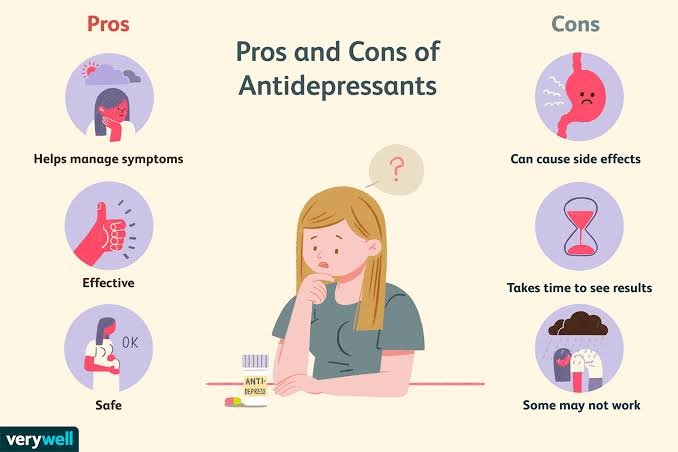
Antidepressants can produce side effects, especially during the first days or weeks of treatment. Depending on the medication, individuals may experience nausea, headache, dizziness, changes in sleep, sweating, gastrointestinal symptoms, sexual difficulties, or changes in appetite. Not everyone experiences these effects, and some become less noticeable as the body adjusts.
One important issue is that side effects can appear before therapeutic benefits. A person may experience nausea or increased anxiety shortly after starting a medication while still feeling depressed. This can create the impression that the medication is making the condition worse or that it will never work. For this reason, early follow-up with the prescribing clinician is important.
Antidepressants also do not work equally well for everyone. One person may experience substantial improvement with a particular medication, while another may experience little benefit or unacceptable side effects. Differences in genetics, metabolism, diagnosis, symptom pattern, other medications, medical conditions, and previous treatment history can influence the response.
Treatment therefore often involves a process of individualization. A psychiatrist considers the person’s symptoms, previous medication response, other health conditions, potential side effects, interactions, age, and treatment preferences. If the first medication is not effective enough, the clinician may adjust the dose, switch to another medication, or consider another treatment strategy.
Antidepressants are sometimes misunderstood as medications that artificially create happiness. This is not their purpose. A successful treatment generally aims to reduce pathological symptoms so that a person can regain normal emotional functioning. The goal is not to eliminate ordinary sadness, disappointment, or other normal emotions.
Another important question concerns dependence. Traditional antidepressants are not considered addictive in the same way as substances that produce compulsive drug-seeking and intoxication. However, some antidepressants can produce discontinuation symptoms if they are stopped suddenly after regular use. These may include dizziness, nausea, sleep disturbances, irritability, anxiety, or unusual sensory sensations. Therefore, medication should generally be reduced under medical guidance rather than stopped abruptly.
Antidepressants can also be prescribed for people who do not primarily have depression. SSRIs and SNRIs are commonly used in anxiety disorders because they can reduce excessive fear, worry, panic, and physiological arousal over time. They may also be used for obsessive-compulsive disorder, where treatment often requires adequate doses and a longer period before improvement becomes clear.
In some psychiatric conditions, antidepressants require particular caution. For example, a person with bipolar disorder may experience mood destabilization if an antidepressant is used without appropriate mood-stabilizing treatment. This is one reason accurate diagnosis is essential before beginning psychiatric medication.
Medication is also only one part of psychiatric treatment. Psychotherapy can help patients identify unhelpful thought patterns, develop coping strategies, improve relationships, process difficult experiences, and build healthier behaviors. Medication may reduce symptom intensity, while psychotherapy can help address psychological and interpersonal factors that maintain distress.
The relationship between medication and lifestyle is also important. Regular sleep, physical activity, social connection, balanced nutrition, and reduction of chronic stress can support recovery. These factors do not replace prescribed treatment when medication is clinically necessary, but they can contribute to better overall functioning.
Patients should also understand that psychiatric medications should be taken according to the prescribing clinician’s instructions. Changing the dose independently, combining medications without professional advice, or stopping treatment suddenly can create unnecessary risks. If a patient experiences severe side effects, worsening mood, unusual behavioral changes, or thoughts of self-harm, professional medical help should be sought promptly.
In conclusion, antidepressants affect the brain through complex changes in neurotransmitter systems and longer-term processes involved in neural adaptation and emotional regulation. SSRIs, SNRIs, tricyclic antidepressants, mirtazapine, bupropion, and other medications differ in their mechanisms, benefits, and side-effect profiles. Their effects are highly individual, and improvement often develops gradually rather than immediately. The most effective psychiatric treatment is therefore not simply about choosing a medication but about finding an appropriate treatment plan through accurate diagnosis, medical monitoring, patient education, and, when appropriate, psychotherapy. Antidepressants can be valuable tools in psychiatric care, but they work best when their benefits, limitations, and risks are understood clearly.