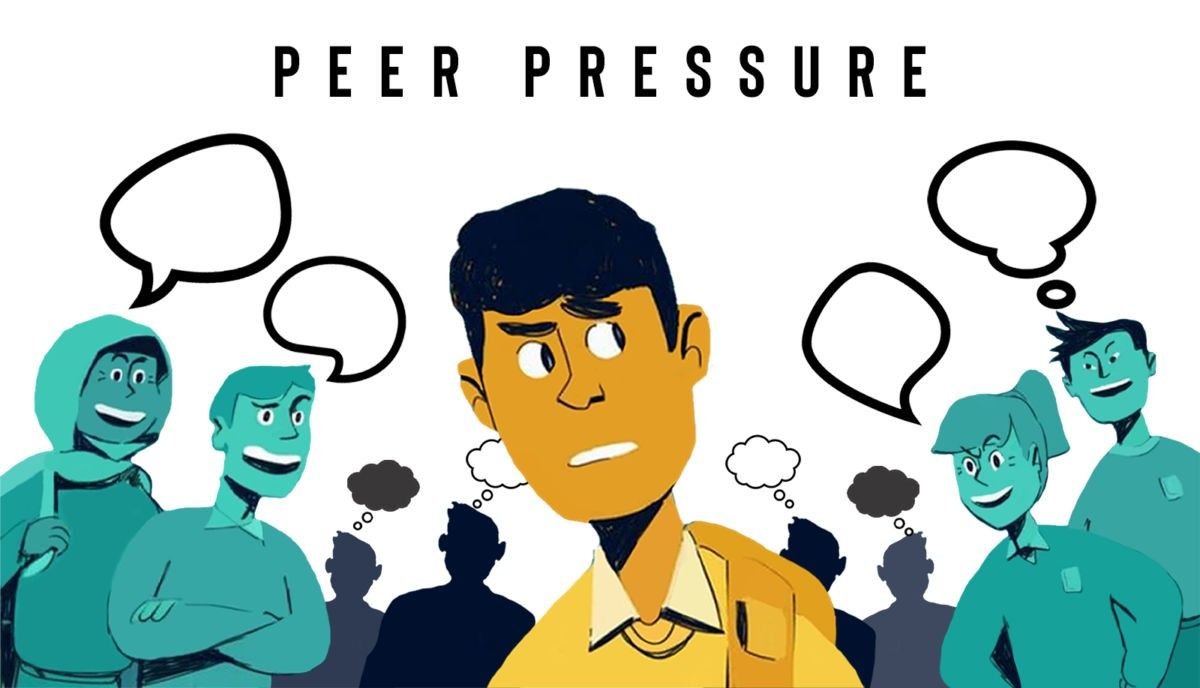
Human identity develops within a social environment. People learn who they are partly through their own experiences and partly through interactions with family members, friends, teachers, colleagues, partners, and broader communities. From early childhood, individuals receive messages about what is acceptable, desirable, successful, respectable, or inappropriate. These messages can provide structure and guidance, but they can also create psychological pressure when external expectations become more important than a person’s own developing sense of identity.
Identity is not a completely fixed psychological structure. It can change throughout life as individuals encounter new experiences, relationships, responsibilities, and perspectives. People may reconsider their professional goals, relationships, values, beliefs, interests, and priorities at different stages of development. Such changes do not necessarily represent instability. In many circumstances, they may reflect psychological development and adaptation.
Social pressure becomes particularly relevant when individuals feel that certain versions of themselves are more acceptable than others. A person may learn that being quiet is valued in one environment but confidence is expected in another. Someone may discover that a particular career is highly respected by their family, while their own interests point toward a different direction. Another person may feel pressure to behave according to expectations concerning appearance, relationships, financial success, gender roles, education, or social status.
When external expectations are repeatedly experienced as requirements rather than suggestions, individuals may begin to organize their behavior around maintaining approval. Instead of asking what they genuinely want, they may increasingly ask what others expect from them. Over time, this shift can make it difficult to distinguish personal preferences from socially acquired expectations.
This process can begin during childhood. Children depend on adults and are therefore highly sensitive to approval and disapproval. Parents and caregivers naturally communicate values and behavioral expectations. Such guidance is necessary for development. However, when acceptance appears strongly conditional on particular characteristics, a child may begin to associate certain aspects of the self with being worthy of love and others with rejection.
For example, a child who receives consistent approval for being exceptionally obedient may gradually learn that disagreement is dangerous. A child who is praised primarily for academic achievement may begin to associate intelligence and performance with personal value. Another child may learn that emotional expression is unacceptable and therefore suppress feelings that do not fit the expected image of the family.
These experiences do not automatically produce psychological difficulties. Individuals interpret experiences differently, and supportive relationships can provide alternative messages. Nevertheless, repeated conditional approval may contribute to the development of an identity that is strongly organized around external expectations.
During adolescence, questions of identity may become especially prominent. Young people begin to develop greater independence while simultaneously becoming increasingly aware of peer groups and social evaluation. They may experiment with clothing, interests, friendships, beliefs, academic goals, and ways of communicating. This exploration is an important part of development.
At the same time, adolescents may experience pressure to present themselves in ways that increase social acceptance. A young person may change interests because of friends, hide certain opinions, imitate a popular group, or avoid activities that might appear unusual. Such behavior can sometimes be temporary experimentation rather than a serious psychological problem.
The distinction between exploration and suppression is important. Exploring different identities allows an individual to discover what feels authentic. Suppression occurs when a person repeatedly rejects or hides important aspects of themselves primarily because they fear social consequences.
Fear of rejection can therefore influence identity development. If an individual believes that being authentic will lead to exclusion, they may construct a socially acceptable version of themselves. This version may function effectively in the short term because it protects relationships. However, maintaining a large difference between the experienced self and the presented self may become emotionally demanding.
Some individuals become highly skilled at adapting themselves to different environments. They may speak differently with family, friends, colleagues, and acquaintances. Flexibility of this kind is not inherently unhealthy. Social competence requires adaptation. The psychological difficulty arises when adaptation becomes so extensive that the person feels uncertain about what they themselves actually think, feel, or want.
This uncertainty can be experienced as a form of identity confusion. An individual may say, “I don’t know what I want,” even when they have many preferences. The difficulty may not be an absence of identity but rather a lack of opportunity to recognize and express personal preferences independently of external evaluation.
People-pleasing can contribute to this process. A person who is strongly motivated to maintain harmony may automatically adjust to the needs of others. They may agree with opinions they do not share, accept responsibilities they do not want, or change plans to avoid disappointing someone. If this pattern continues for years, personal preferences may become increasingly difficult to access.
The problem is not kindness or consideration. Healthy relationships require compromise, empathy, and sensitivity to other people’s needs. The difficulty occurs when consideration consistently moves in one direction and the individual’s own needs are repeatedly ignored.
Social expectations can also influence career identity. In many families and communities, certain professions are associated with prestige, financial security, intelligence, or social respect. Young people may therefore experience pressure to choose careers that satisfy external expectations rather than personal interests.
A person may successfully complete a degree and enter a respected profession while privately experiencing a lack of meaning. Another individual may avoid a personally meaningful career because it does not appear prestigious enough. In both situations, external evaluation can become more influential than internal values.
Career decisions are rarely purely personal because economic and family responsibilities are real. Choosing a profession involves practical considerations, and taking those considerations seriously is not the same as abandoning authenticity. The psychological question is whether the individual has meaningful participation in the decision or experiences the decision as something imposed entirely from outside.
Relationships can create similar pressures. Individuals may receive expectations about when they should marry, whom they should choose as a partner, how a relationship should look, or what roles partners should occupy. A person may remain in a relationship primarily because leaving would disappoint family or challenge social expectations.
Again, external considerations can be legitimate. Family opinions may sometimes contain useful information, and relationships involve responsibilities toward others. However, when social approval becomes the primary basis for major personal decisions, the individual’s sense of agency may become reduced.
Social identity is also influenced by cultural context. Communities provide language, traditions, values, norms, and shared meanings through which people understand themselves. Cultural belonging can be deeply meaningful and can strengthen identity. Social expectations become psychologically difficult when individuals feel that deviation from a particular norm will make them unacceptable.
This does not mean that cultural norms are inherently restrictive. Norms can provide continuity, belonging, and a sense of shared identity. The psychological challenge is often the individual’s ability to negotiate between cultural expectations and personal development.
People may experience internal conflicts when different aspects of identity appear incompatible. A person may value family closeness while also valuing independence. Someone may want professional achievement while also wanting a slower lifestyle. An individual may value social connection while also needing substantial solitude. Identity does not necessarily require choosing one side permanently.
Psychological maturity may involve integrating apparently conflicting characteristics rather than eliminating one of them. A person can be both independent and connected, ambitious and relaxed, emotionally sensitive and psychologically resilient. Social pressure sometimes creates false alternatives in which individuals feel they must become one particular type of person.
The desire to fit into a social group can make these conflicts stronger. Groups often develop implicit expectations about how members should behave. Individuals who violate those expectations may be treated differently. Even without explicit criticism, people may notice subtle changes in attention, approval, or inclusion.
Such experiences can create self-monitoring. A person may continuously observe their own behavior and ask whether they are performing the expected identity correctly. This can increase psychological effort and reduce spontaneity.
Chronic self-monitoring may also contribute to anxiety. When individuals believe that social acceptance depends on presenting themselves correctly, ordinary interactions may become evaluative situations. They may replay conversations afterward, worry about how they appeared, or regret expressing an unpopular opinion.
This process can overlap with social anxiety, although social pressure and social anxiety should not be treated as the same phenomenon. A person may experience social pressure without having a clinical anxiety disorder. Conversely, someone with social anxiety may experience pressure more intensely because of an existing fear of negative evaluation.
The emotional consequences of prolonged identity suppression can vary. Some individuals may experience frustration or resentment. Others may experience sadness, anxiety, emotional exhaustion, or a sense of emptiness. Some may become increasingly detached from their own preferences.
Emotional suppression can be particularly relevant. If individuals learn that certain feelings are unacceptable, they may become accustomed to hiding them. Anger may be suppressed because it is considered inappropriate. Sadness may be hidden because vulnerability is discouraged. Excitement may be restrained because enthusiasm is perceived as embarrassing.
Over time, the individual may become less aware of emotional signals. This does not necessarily mean that emotions disappear. They may instead become harder to identify, communicate, or integrate into decision-making.
A similar process can occur with personal values. Values are broad principles that help individuals determine what is meaningful to them. When people repeatedly organize their lives around other people’s priorities, they may become uncertain about which goals genuinely belong to them.
This uncertainty can become particularly visible during periods of transition. University graduation, marriage, parenthood, career changes, relocation, or other major life events can disrupt established roles. A person who previously defined themselves primarily as a successful student, employee, parent, or partner may suddenly ask what remains when that role changes.
Such periods are not necessarily pathological. Identity naturally develops through transitions. However, individuals who have relied heavily on external roles for self-definition may experience greater difficulty adapting when those roles change.
The psychological concept of the “false self” has been used in developmental and clinical discussions to describe situations in which individuals present themselves primarily according to external expectations rather than spontaneous experience. The concept should not be interpreted as meaning that a person is deliberately dishonest. People may genuinely become accustomed to functioning through an adapted social identity.
A person can become so familiar with pleasing others that pleasing others feels natural. They may not consciously experience themselves as performing. The distinction between adaptation and authenticity may therefore be subtle.
One sign of this difficulty may be an inability to answer simple questions about personal preferences. When asked what they want to do, they may immediately consider what would be easiest for everyone else. When asked what they think, they may first predict which answer will receive approval. When asked what they need, they may focus on another person’s needs.
Psychological treatment may involve helping individuals gradually develop greater awareness of these patterns. Rather than immediately making major life changes, therapy may begin by examining small decisions and identifying whether they reflect personal preference, fear, obligation, habit, or genuine choice.
Cognitive behavioral approaches can be useful when rigid beliefs maintain social conformity. An individual may hold beliefs such as “If people disagree with me, they will reject me,” “I must make everyone happy,” or “Being different means something is wrong with me.” Examining the evidence for these beliefs can help create more flexible interpretations.
Schema-focused approaches may also explore deeper beliefs about approval, abandonment, defectiveness, subjugation, or unrelenting standards. Such patterns can develop through repeated interpersonal experiences and may influence relationships long after the original circumstances have changed.
Acceptance-based approaches may emphasize psychological flexibility. The goal is not necessarily to eliminate uncomfortable emotions associated with disagreement. A person may still feel fear when expressing an independent opinion. Psychological flexibility involves being able to experience that discomfort while acting in accordance with personally meaningful values.
Self-compassion can also be important. Individuals who have spent years meeting external expectations may criticize themselves when they begin setting boundaries. They may feel selfish for saying no or guilty for choosing something different. Self-compassion can provide a framework in which personal needs are acknowledged without treating other people’s needs as irrelevant.
Boundary development is closely connected with identity. Boundaries communicate where one person’s responsibilities end and another person’s begin. Healthy boundaries are flexible rather than rigid. They allow closeness without requiring complete psychological fusion.
Difficulty with boundaries may make identity development particularly challenging. If a person feels responsible for regulating everyone else’s emotions, personal preferences may continually be sacrificed. Learning to tolerate another person’s disappointment can therefore be an important part of developing autonomy.
Importantly, autonomy does not mean rejecting relationships. Human beings need connection, and healthy identity develops within relationships rather than outside them. A psychologically mature identity can accommodate influence without becoming completely controlled by it.
People also change naturally because of relationships. Partners may influence one another’s interests. Friends may introduce new perspectives. Teachers may transform how students think. Cultural experiences may alter values. Such influence is not necessarily a loss of authenticity. Identity is partly relational and continues to develop throughout life.
The important distinction concerns whether change is chosen, integrated, and meaningful or primarily driven by fear and coercion. A person who adopts a new interest because they genuinely enjoy it is experiencing development. A person who adopts it only because they fear rejection may experience a different psychological process.
Social media can intensify identity pressure because individuals are exposed to highly visible models of how a successful or attractive person is expected to look. People may compare not only achievements but entire lifestyles. They may feel pressure to construct an identity that is visually appealing, professionally successful, socially active, emotionally positive, or constantly productive.
This can create unrealistic expectations about ordinary life. Human experience includes boredom, uncertainty, failure, conflict, and periods of low motivation. When social environments emphasize only idealized versions of identity, individuals may conclude that their ordinary experiences are evidence of inadequacy.
Digital identity can also become separate from private identity. People may carefully manage what they reveal online while experiencing very different emotions privately. Again, selective presentation is normal. Psychological difficulty may arise when maintaining the public identity becomes emotionally exhausting or when the individual becomes dependent on external reactions.
The need for approval can therefore become intertwined with identity. Likes, compliments, praise, professional recognition, and social inclusion may temporarily confirm that the presented identity is acceptable. When approval decreases, the individual may experience uncertainty about personal value.
This creates a potentially unstable form of self-worth. If identity depends heavily on external validation, positive feedback may produce temporary confidence while criticism produces disproportionate distress. The individual may continually modify behavior to restore approval.
A more stable sense of identity does not require complete immunity to criticism. Feedback is valuable, and other people sometimes identify problems that individuals cannot see themselves. The goal is not to ignore feedback but to evaluate it rather than automatically accepting it as a definition of the self.
An individual’s identity can therefore be understood as an ongoing psychological process rather than a single fixed answer to the question “Who am I?” People may discover new preferences, revise beliefs, change goals, and develop new roles. Stability can coexist with change.
Social pressure becomes particularly problematic when change is no longer experienced as personal development but as psychological surrender. When individuals repeatedly suppress meaningful aspects of themselves to maintain acceptance, they may gradually lose contact with their own values and preferences.
Recognizing this process does not necessarily require rejecting family, culture, friendship, or social norms. Instead, it may involve developing a more differentiated relationship with them. An individual can respect family values without adopting every expectation. A person can belong to a community while maintaining personal opinions. Someone can value a relationship while still having boundaries.
This differentiation can be psychologically protective because it allows connection without complete dependence. The individual remains capable of saying, “This matters to me, but I may see it differently from you.”
For parents, educators, and other influential adults, encouraging identity development means creating space for children and young people to express preferences and opinions safely. Guidance remains important, but so does the experience of making age-appropriate choices. A child who is allowed to develop an individual perspective may gradually become more comfortable with responsible independence.
For adults, identity development may involve revisiting assumptions that have been accepted for many years. Some expectations may still be meaningful. Others may no longer fit the individual’s current life. Psychological development can involve deciding which values to retain, which expectations to modify, and which pressures to release.
There is no universal formula for authenticity. What feels authentic to one person may not feel authentic to another. Psychological health cannot be reduced to behaving differently from society. Sometimes conformity reflects genuine personal values. Sometimes adaptation is necessary. Sometimes compromise is an important part of mature relationships.
The central issue is psychological agency: the ability to recognize one’s own thoughts, feelings, values, and preferences and participate meaningfully in decisions about how to live. Agency allows individuals to consider social expectations without being completely defined by them.
Ultimately, identity under social pressure is not simply a question of whether people conform. It is a question of how much freedom they experience within relationships and social environments. A person may follow a social expectation and still feel authentic if the choice reflects personal values. Another person may behave independently while still being psychologically controlled by the desire to prove something to others.
A stable identity therefore does not require complete separation from society. Human identity develops through relationships, culture, and shared experiences. Psychological well-being may instead depend on developing the capacity to participate in these environments without losing awareness of personal values and individual needs.
When people can maintain meaningful relationships while expressing disagreement, changing their minds, setting boundaries, and making personally meaningful choices, social connection and individuality do not have to become opposing forces. Identity can remain flexible without becoming undefined, and social belonging can coexist with a genuine sense of self.