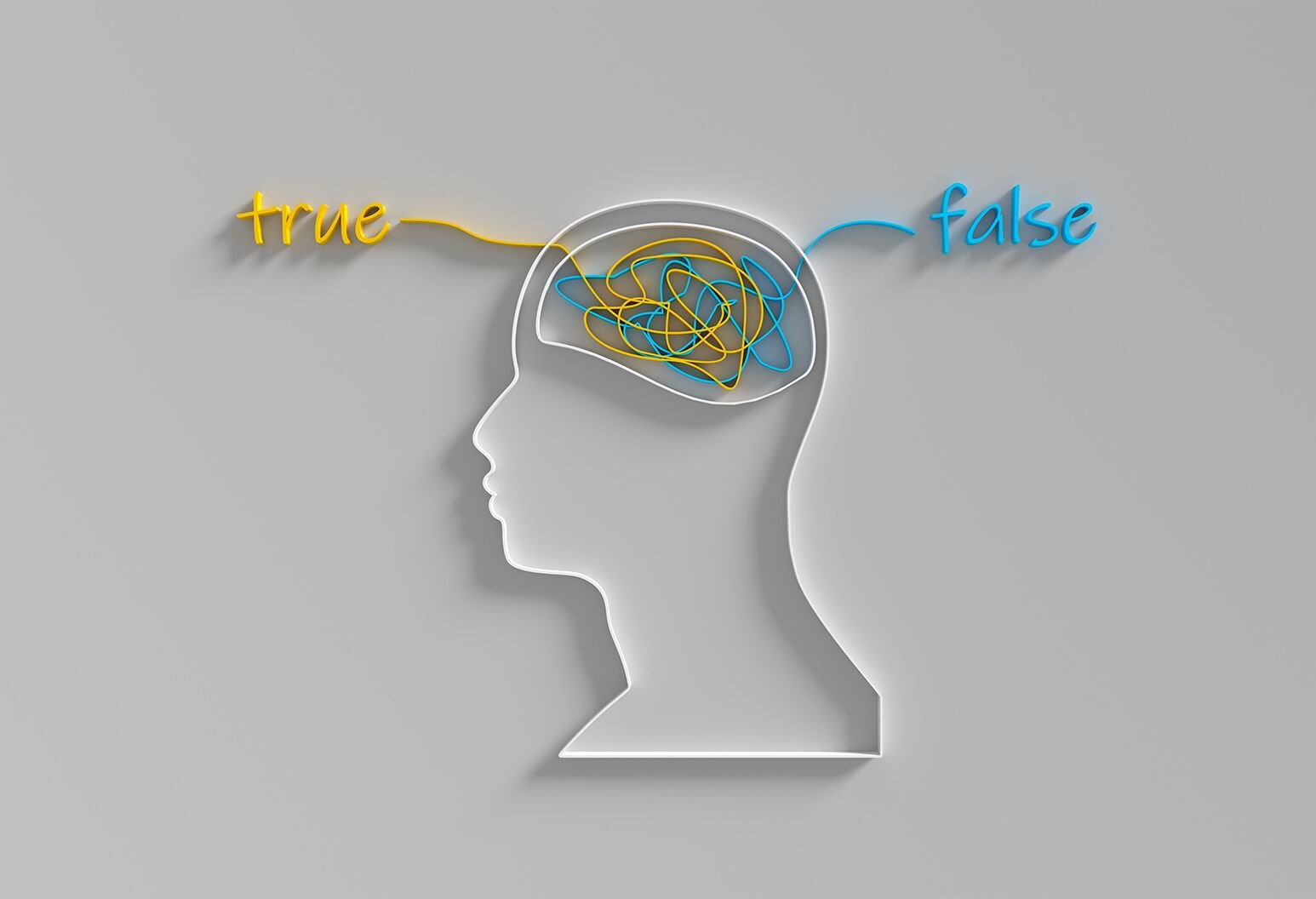
Human memory is often treated as one of the most reliable aspects of mental life. People trust memories when making decisions, forming identities, maintaining relationships, and understanding their personal histories. Courts rely on eyewitness testimony, families preserve stories across generations, and individuals frequently use memory as evidence for what is true. Yet modern psychology and psychiatry have revealed a surprising and unsettling fact: memory is not a perfect record of the past. Instead, it is a dynamic and reconstructive process capable of producing detailed recollections of events that never occurred or occurred very differently from how they are remembered.
The existence of false memories challenges one of the most fundamental assumptions about human consciousness. If people can vividly remember experiences that never happened, what does this reveal about the nature of memory itself? More importantly, why would the brain evolve a system that sometimes sacrifices accuracy?
To answer these questions, it is necessary to understand that memory was not designed primarily to preserve the past. From an evolutionary perspective, memory exists to help organisms survive in the future. The brain stores information because past experiences can improve future predictions. In this sense, memory functions less like a video recorder and more like a simulation system that extracts useful patterns from previous events.
This distinction is crucial.
A video recorder captures details regardless of their importance.
The brain does not.
Instead, it selectively stores information that appears meaningful, emotionally relevant, or useful for future behavior. During this process, large amounts of information are discarded. What remains is not a complete record but a simplified representation.
Most of the time, this strategy works remarkably well.
The brain remembers enough information to guide future decisions without becoming overwhelmed by unnecessary details.
However, this efficiency comes with a cost.
Because memories are reconstructed rather than replayed, they are vulnerable to distortion.
The traditional view of memory imagined stored experiences waiting passively to be retrieved. Modern neuroscience paints a different picture. Each time a memory is recalled, it becomes temporarily unstable. During this period, the memory can be modified before being stored again.
This process is known as reconsolidation.
Rather than retrieving a fixed record, the brain actively rebuilds the memory each time it is remembered.
New information can become incorporated.
Old details may disappear.
Emotions can reshape interpretation.
Over time, memories may drift significantly from the original event.
Importantly, individuals are usually unaware that these changes are occurring.
The memory still feels authentic.
The confidence associated with recollection often remains intact even when accuracy declines.
This phenomenon explains why sincerity and accuracy are not always the same thing.
A person can be completely honest while remembering something incorrectly.
One of the most influential discoveries in memory research emerged from studies examining suggestion. Researchers found that subtle suggestions could alter recollections dramatically. Participants exposed to misleading information after witnessing an event frequently incorporated that information into later memories.
For example, changing a single word in a question could influence how participants remembered an accident.
Those asked about cars that “smashed” into each other often recalled greater damage than those asked about cars that merely “hit” each other.
The event itself remained unchanged.
Only the language used afterward differed.
Yet memory changed accordingly.
These findings demonstrated that memory is highly sensitive to context.
Recall is not isolated from present circumstances.
Current information interacts continuously with stored experiences.
As a result, memories are partly shaped by what happens after events occur.
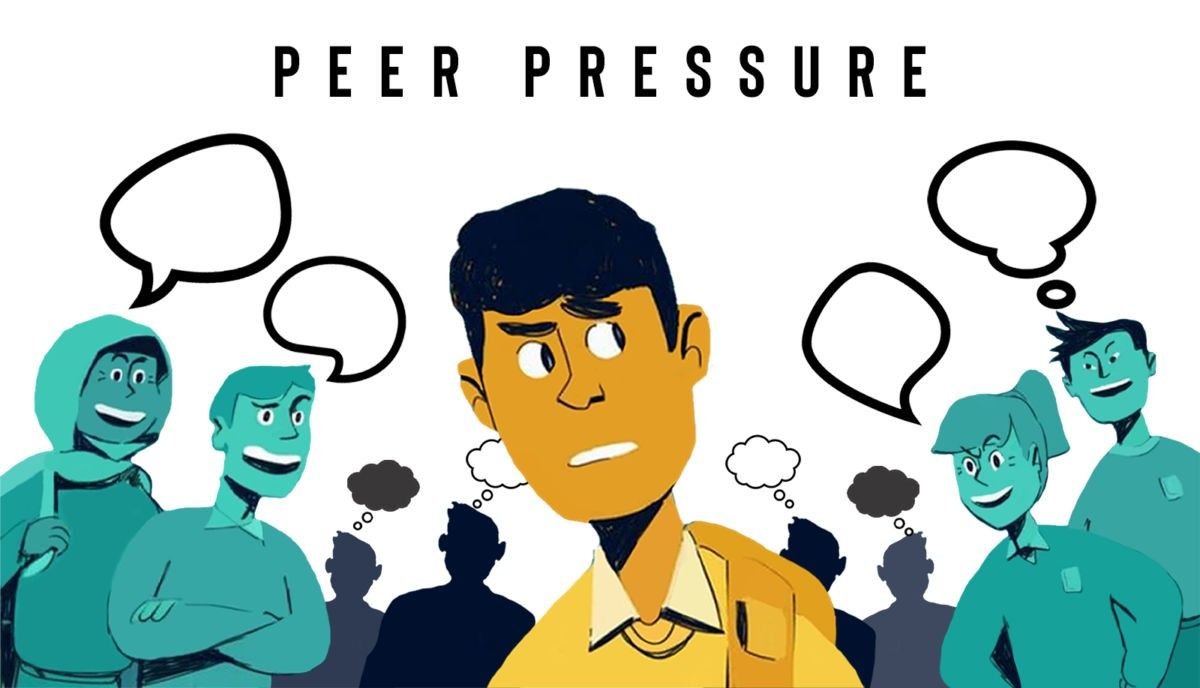
The social environment plays a particularly important role.
Human beings rarely remember in isolation.
People discuss experiences with family members, friends, colleagues, and communities. Through these conversations, memories become shared, revised, and sometimes transformed.
A detail introduced by another person may eventually become integrated into one’s own recollection.
After repeated discussions, individuals may no longer remember where a particular memory originated.
The borrowed detail feels entirely personal.
This process helps explain how collective false memories sometimes emerge.
Groups may gradually converge on versions of events that differ from historical reality.
These shared recollections can become extraordinarily convincing because they receive social reinforcement.
The relationship between imagination and memory further complicates matters.
Many of the same neural systems involved in remembering the past are also involved in imagining the future.
When individuals envision hypothetical scenarios, similar brain networks become active.
This overlap creates opportunities for confusion.
Repeated imagination can increase familiarity.
Familiarity can sometimes be mistaken for evidence that an event actually occurred.
Consequently, imagined experiences may gradually acquire qualities normally associated with genuine memories.
Researchers have demonstrated that simply imagining events repeatedly can increase confidence that those events took place.
The phenomenon is particularly interesting because the individual is not deliberately creating falsehoods.
The brain interprets familiarity as a clue regarding authenticity.
The more mentally accessible something becomes, the more likely it may be judged as real.
Emotion exerts powerful influence as well.
Highly emotional experiences are often remembered more vividly than neutral events.
However, vividness does not guarantee accuracy.
In fact, emotional intensity can sometimes increase distortion.
During emotionally charged situations, attention narrows toward perceived threats or significant details.
Peripheral information receives less processing.
Later, when the memory is reconstructed, missing details may be filled in automatically.
The result can be a memory that feels exceptionally clear while containing substantial inaccuracies.
Trauma provides a particularly complex example.
Popular culture often assumes traumatic memories function like perfect recordings.
Psychiatric research suggests otherwise.
Some traumatic experiences are remembered with extraordinary detail.
Others become fragmented, incomplete, or difficult to access.
Memory under extreme stress behaves differently from memory under ordinary conditions.
Stress hormones influence encoding processes, altering how information is stored.
Consequently, trauma survivors may remember certain aspects of events vividly while struggling to recall others accurately.
This complexity has significant implications for clinical practice.
Therapists must balance respect for subjective experience with awareness that memory is inherently reconstructive.
Another major contributor to false memory formation involves expectations.
Human perception and memory are strongly influenced by prior beliefs.
The brain continuously generates predictions about the world.
These predictions help organize experience efficiently.
However, they can also introduce distortions.
People tend to remember information in ways consistent with existing beliefs.
Details that fit expectations are often easier to recall.
Details that conflict with expectations may be forgotten or altered.
Over time, memories become increasingly aligned with broader personal narratives.
Identity plays an important role in this process.
Individuals construct stories about who they are.
These stories help create continuity across time.
Memories contribute to identity, but identity also shapes memory.
Experiences inconsistent with self-concept may be reinterpreted or forgotten.
Experiences supporting self-concept may receive greater emphasis.
Thus, memory and identity influence each other continuously.
The person people believe themselves to be partly determines how they remember their past.
Developmental psychology offers additional insights.
Children are particularly susceptible to memory distortion because cognitive systems responsible for source monitoring are still developing.
Source monitoring refers to the ability to identify where information originated.
Young children may struggle to distinguish between events they experienced, events they imagined, and events they heard about from others.
This vulnerability helps explain why childhood memories are often less reliable than adults assume.
Many early recollections contain elements reconstructed long after the original events occurred.
Neuroscience has identified several brain regions involved in these processes.
The hippocampus plays a central role in memory formation and retrieval.
The prefrontal cortex contributes to organization, evaluation, and source monitoring.
Interactions between these and other regions help determine how memories are encoded and reconstructed.
False memories appear to arise not from failure of a single brain area but from normal operations of multiple systems working together.
In other words, false memories are not evidence that memory is broken.
They are byproducts of how memory normally functions.
This realization represents one of the most important shifts in modern cognitive science.
Historically, memory errors were viewed as malfunctions.
Contemporary research increasingly views them as consequences of adaptive mechanisms.
The same flexibility that permits learning, imagination, creativity, and future planning also creates opportunities for distortion.
A perfectly accurate memory system might preserve details more effectively.
However, it could also become less flexible and less capable of extracting general patterns.
The brain appears to prioritize usefulness over perfect precision.
Psychiatric disorders sometimes amplify these processes.
Individuals experiencing psychosis may incorporate unusual interpretations into autobiographical memories.
Severe depression can bias recollection toward negative experiences.
Anxiety may enhance memory for perceived threats.
Certain neurological conditions can produce profound confabulation, in which individuals generate memories without intending deception.
These phenomena demonstrate that memory is deeply interconnected with broader psychological functioning.
It cannot be understood in isolation from emotion, perception, and belief.
Philosophically, false memories raise challenging questions about personal identity.
If autobiographical memory contains inaccuracies, what becomes of the self built upon those memories?
The answer may be that identity depends less on perfect historical accuracy than on narrative coherence.
Human beings understand themselves through stories.
These stories need not be completely precise to provide meaning and continuity.
Indeed, some degree of reconstruction may be unavoidable.
The self is not a static archive but an evolving interpretation of experience.
Every remembered event passes through layers of perception, emotion, language, and reflection.
Each layer introduces opportunities for transformation.
The result is a personal history that is psychologically meaningful even when not perfectly factual.
Importantly, recognizing the fallibility of memory should not lead to cynicism.
Most memories are not wildly inaccurate.
The memory system generally functions well enough to support daily life, learning, and social relationships.
The existence of false memories does not mean everything remembered is unreliable.
Rather, it highlights the complexity of remembering.
Memory is neither perfect truth nor complete fiction.
It occupies a space between the two.
The study of false memories ultimately reveals something profound about human consciousness. The brain is not primarily concerned with preserving the past exactly as it occurred. Instead, it seeks to create coherent, useful, and meaningful representations that help individuals navigate the future. In pursuing this goal, memory becomes flexible, creative, and adaptive.
Yet these same qualities sometimes allow events that never happened to feel entirely real.
The mind creates false memories not because it is defective, but because it is designed to interpret, organize, and predict rather than simply record. The remarkable abilities that allow humans to imagine possibilities, construct identities, learn from experience, and plan for the future emerge from the very mechanisms that occasionally blur the boundary between reality and recollection.
In this sense, false memories are not merely errors. They are windows into the deeper architecture of the human mind, revealing that remembering is not the recovery of the past but the continuous reconstruction of meaning.