Many people experience periods in which life appears objectively stable—work or study continues, relationships may exist, basic needs are met, and no major crisis is occurring—yet they still feel emotionally empty. This feeling is often described as inner emptiness, hollowness, numbness, or a sense that something important is missing. Because outsiders may see no obvious problem, individuals frequently feel confused or guilty about these feelings. Psychological emptiness is a meaningful emotional experience that deserves careful attention rather than dismissal.
Emptiness is different from ordinary sadness. Sadness is usually connected to a specific loss, disappointment, or painful event. Emptiness is often more difficult to identify. People may say, “I do not know what is wrong,” or “Everything is okay, but I feel nothing.” The absence of a clear external cause can make the experience especially distressing.
One important reason for emotional emptiness is disconnection from personal meaning. Human beings need more than survival; they also need a sense that their actions matter. When daily life becomes a sequence of obligations without personal purpose, individuals may continue functioning while feeling internally detached. Success achieved according to others’ expectations may not provide fulfillment if it is not connected to one’s own values.
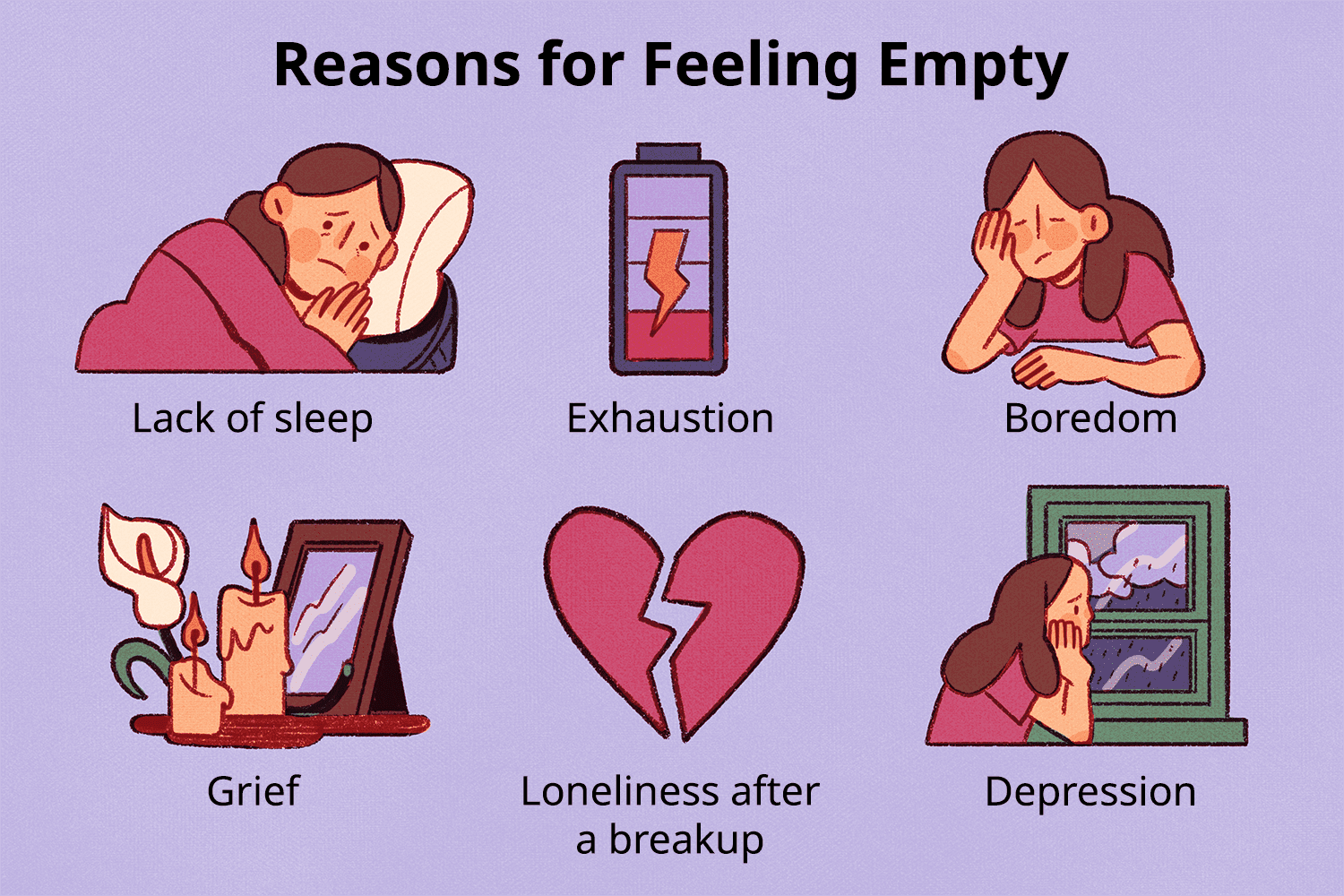
Chronic stress can also contribute to emptiness. People who spend long periods meeting responsibilities, caring for others, studying intensely, or working under pressure may gradually suppress emotional needs in order to continue functioning. Over time, emotional exhaustion may appear as numbness rather than obvious distress. The person may not feel intensely sad; instead, they may feel emotionally unavailable.
Another common factor is emotional avoidance. Some individuals learn early in life that expressing feelings is unsafe, weak, or unacceptable. They may become skilled at ignoring anger, sadness, fear, or disappointment. Suppressed emotions do not disappear completely; they may contribute to a general sense of inner emptiness because emotional experience becomes restricted.
Loneliness is closely related to emptiness. A person can have many social contacts yet still lack emotional intimacy. Superficial interaction does not always satisfy the human need to be understood and accepted. When individuals cannot share their authentic thoughts and feelings, they may feel emotionally isolated despite being surrounded by people.
Social media can intensify this experience. Constant exposure to carefully edited images of happiness, success, and excitement may create the impression that everyone else is living a meaningful life. Individuals may then judge their own ordinary emotions as inadequate and become increasingly disconnected from their genuine experiences.
Identity confusion is another psychological source of emptiness. People often occupy many roles—student, employee, parent, spouse, friend—and may become so focused on fulfilling these roles that they lose contact with their own interests, desires, and values. When the question “Who am I beyond my responsibilities?” becomes difficult to answer, feelings of emptiness may emerge.
Unresolved grief can produce a similar effect. After the loss of a loved one, a relationship, a dream, or an important stage of life, people sometimes continue functioning outwardly while internally feeling that a significant part of themselves has disappeared. Emptiness may represent the emotional space left by that loss.
Depression sometimes presents primarily as emptiness rather than sadness. Individuals may report loss of interest, reduced pleasure, emotional numbness, fatigue, and a sense that life lacks color or meaning. Because they are not crying constantly, they may fail to recognize that they are experiencing depressive symptoms.
Perfectionism can paradoxically increase emptiness. When self-worth depends entirely on achievement, accomplishments provide only temporary relief. As soon as one goal is reached, another appears. The individual remains trapped in constant striving without experiencing lasting satisfaction.
Emptiness often affects relationships. People may withdraw emotionally, feel unable to connect deeply, or become dependent on others to fill the inner void. Neither extreme usually resolves the underlying issue because emotional fulfillment cannot be obtained solely through external validation.
The experience can also influence behavior. Some individuals respond by seeking constant stimulation through shopping, social media, food, work, exercise, relationships, or entertainment. Temporary stimulation may distract from emptiness, but the feeling often returns when the activity ends.
Psychological healing begins with recognizing emptiness as a signal rather than a personal failure. The feeling may indicate unmet emotional needs, lack of meaning, unresolved emotions, insufficient connection, or excessive self-neglect. Exploring these areas with curiosity is often more helpful than criticizing oneself for feeling empty.
Several practices can support recovery. Spending time reflecting on personal values, engaging in activities that feel meaningful, strengthening emotionally honest relationships, allowing difficult emotions to be experienced safely, reducing chronic overwork, and practicing self-compassion can gradually restore a sense of inner connection.
Professional support may be especially helpful when emptiness persists for a long time, interferes with daily functioning, is accompanied by depression or anxiety, or leads to hopelessness. Therapy can help individuals explore hidden emotions, identity concerns, relationship patterns, and sources of meaning.
Importantly, emptiness does not mean that a person is broken or incapable of happiness. Many psychologically healthy people experience periods of emptiness during transitions, stress, grief, or self-disconnection. Such periods can sometimes become opportunities for deeper self-understanding and life re-evaluation.
In conclusion, people may feel empty even when life appears fine because emotional well-being depends on more than external circumstances. Meaning, connection, authenticity, emotional expression, rest, and self-understanding are essential psychological needs. When these needs are neglected, inner emptiness can emerge despite outward stability. Listening to this feeling with compassion and curiosity can become the first step toward a more meaningful, connected, and emotionally alive life.