Few questions in psychiatry, psychology, neuroscience, and philosophy are as profound as the question of whether the self actually exists. Every human being experiences life from a first-person perspective. People think of themselves as stable individuals who possess memories, desires, beliefs, emotions, and identities. The feeling of being “someone” appears so natural that most people rarely question it. Yet modern research has increasingly challenged this assumption. Some neuroscientists, psychiatrists, and philosophers argue that the self may not be a fixed entity at all. Instead, it may be a psychological construction continuously generated by the brain.
At first glance, this idea appears absurd.
After all, if the self does not exist, who is reading these words? Who experiences emotions? Who remembers childhood? Who makes decisions?
The difficulty lies in how the word “self” is defined.
Few researchers claim that subjective experience does not exist. People clearly experience thoughts, sensations, memories, and emotions. The deeper question concerns whether there is a permanent, unified entity behind these experiences or whether the feeling of such an entity is itself a product of brain activity.
Human intuition strongly favors the first possibility.
Most individuals feel as though a stable observer exists within them. Memories change, emotions fluctuate, and the body ages, yet the sense of being “me” often appears remarkably continuous. A person may look at childhood photographs and feel that despite enormous changes, the same self has persisted throughout life.
Psychological research suggests that this feeling of continuity may be partly constructed.
The brain constantly creates narratives connecting past experiences to present identity. These narratives generate coherence across time. Without them, life would appear as disconnected fragments rather than a continuous story.
Memory plays a central role in this process.
People often assume memories function like stored recordings. In reality, memory is reconstructive. Every recollection involves active rebuilding rather than passive retrieval. The brain selectively organizes experiences into meaningful narratives. Certain events become central to identity while others fade into obscurity.
When individuals describe themselves, they typically rely upon autobiographical stories.
They mention childhood experiences, achievements, relationships, failures, values, and goals.
These stories create the impression of a stable self.
Yet if memories are constantly reconstructed, then the self built upon those memories may also be undergoing continuous revision.
The philosopher David Hume noticed this problem centuries ago. When he examined his own mind, he reported finding perceptions, thoughts, emotions, and sensations, but never discovering a separate self existing independently from those experiences. He concluded that what people call the self might actually be a collection of constantly changing mental events rather than a permanent psychological substance.
Modern neuroscience has unexpectedly revived similar questions.
Brain imaging studies reveal no single location where the self appears to reside. Instead, multiple neural systems contribute different aspects of selfhood.
Some networks support autobiographical memory.
Others contribute bodily awareness.
Others participate in social identity.
Still others regulate emotional experience.
The self emerges not from one structure but from interactions among many systems.
This distributed architecture raises an important possibility.
Perhaps the self resembles an orchestra more than a conductor.
The sense of unity may arise from coordination among many processes rather than from a central controlling entity.
Psychiatric disorders provide some of the strongest evidence for this perspective.
Conditions involving disturbances of identity reveal how fragile and constructed selfhood can be.
For example, individuals experiencing depersonalization often report feeling detached from themselves. They may describe observing their thoughts from a distance or feeling unreal despite remaining fully conscious.
Importantly, intelligence remains intact.
Memory often remains intact.
Perception remains largely intact.
Yet the feeling of being oneself becomes altered.
Such experiences suggest that selfhood depends upon specific psychological mechanisms rather than existing as an unquestionable given.
Other disorders reveal different aspects of the same phenomenon.
Certain neurological injuries can disrupt recognition of one’s own body parts. Some patients deny ownership of limbs that objectively belong to them. Others experience the sensation that external forces control their actions.
These extraordinary cases demonstrate that aspects of selfhood normally taken for granted are actively constructed by the brain.
The sense that a thought belongs to oneself.
The sense that a body belongs to oneself.
The sense that an action was voluntarily chosen.
Each depends upon complex neural processes.
When those processes change, the experience of self changes as well.
One particularly fascinating area of research involves the phenomenon of split-brain patients.
In rare cases, surgeons have severed connections between the brain’s hemispheres to treat severe epilepsy. Studies revealed surprising consequences.
Under certain conditions, the two hemispheres appeared capable of acting somewhat independently.
Even more remarkable, when one hemisphere initiated behavior, the other often invented explanations without recognizing the true cause.
These findings suggested that the brain continuously generates narratives explaining actions after they occur.
The conscious self may therefore function partly as an interpreter rather than a central commander.
This challenges conventional assumptions about free will and personal agency.
Many people imagine themselves consciously directing every action.
Neuroscientific experiments have complicated this picture.
Some studies suggest neural activity associated with decisions begins before individuals become consciously aware of choosing.
Although interpretations remain controversial, such findings raise questions about the relationship between conscious intention and behavior.
Perhaps consciousness often observes decisions already emerging from unconscious processes.
If so, the self may possess less direct control than subjective experience implies.
The predictive processing framework offers another influential perspective.
According to this model, the brain continuously generates predictions about the world and updates them based on incoming information.
Importantly, these predictions extend inward as well as outward.
The brain predicts bodily states, emotional responses, and personal identity.
The self may therefore represent a model the brain constructs to organize experience efficiently.
Rather than discovering a self, the brain creates one.
This model helps coordinate behavior, maintain continuity, and navigate social relationships.
Its usefulness may explain why it feels so real.
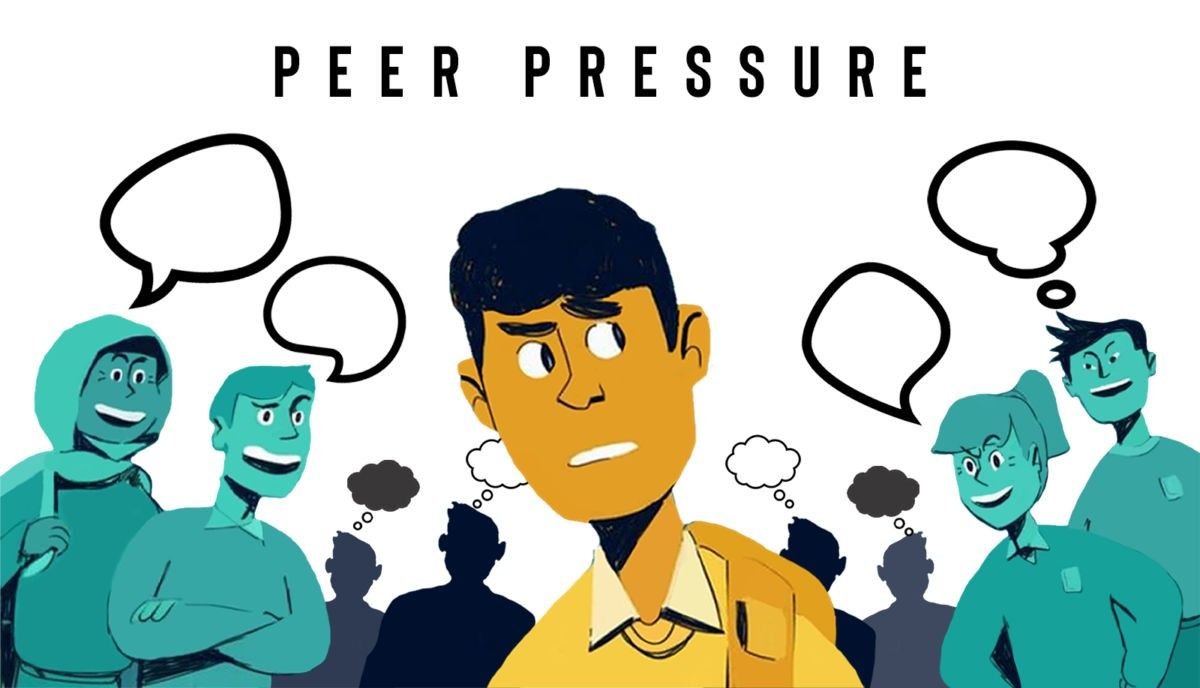
Social psychology further supports the idea that identity is highly constructed.
Different situations often evoke different aspects of personality.
Individuals behave differently with friends, family, colleagues, romantic partners, and strangers.
Values, emotions, and goals shift according to context.
Yet despite these variations, people typically experience themselves as unified individuals.
The brain appears remarkably skilled at integrating diverse behaviors into a coherent self-concept.
This integration sometimes requires selective remembering and reinterpretation.
Contradictions are minimized.
Consistency is emphasized.
The resulting narrative feels stable even when underlying behavior varies considerably.
Developmental psychology reveals that selfhood emerges gradually.
Infants are not born with mature identities.
Self-awareness develops through interactions among perception, language, memory, and social experience.
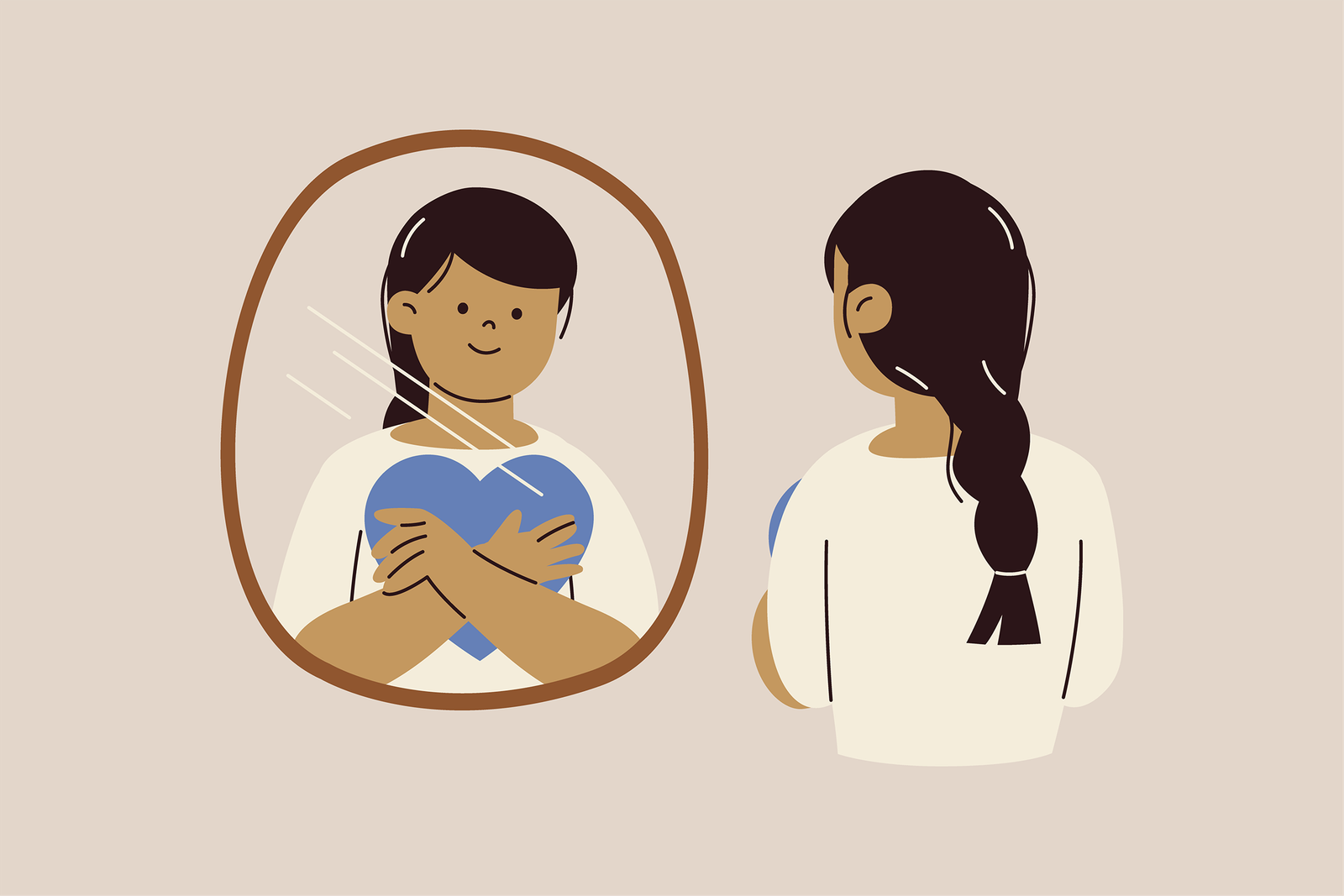
Children slowly learn to recognize themselves in mirrors, distinguish their thoughts from others’ thoughts, and construct autobiographical narratives.
The self therefore appears to develop rather than exist automatically.
If selfhood can emerge during development, it becomes easier to imagine it as a process rather than a fixed entity.
Cultural differences provide additional evidence.
Western societies often emphasize individuality, personal achievement, and independent identity.
Many Eastern traditions place greater emphasis on interconnectedness and relational identity.
These cultural differences influence how people experience themselves.
The self is not perceived identically across all societies.
This variability suggests that aspects of selfhood are shaped by social and cultural forces.
Religious and contemplative traditions have explored similar ideas for thousands of years.
Several philosophical systems propose that the sense of a permanent self is ultimately illusory.
According to these perspectives, suffering often arises from attachment to a fixed identity that does not actually exist.
Meditative practices sometimes aim to observe mental activity closely enough to reveal its transient nature.
Practitioners frequently report experiences in which the usual boundaries of self temporarily dissolve.
Interestingly, neuroscience has begun investigating such states scientifically.
Brain imaging studies of experienced meditators suggest alterations in networks associated with self-referential thinking.
These findings do not prove philosophical claims, but they demonstrate that the experience of self can be modified significantly through mental training.
Perhaps the strongest argument against a fixed self comes from the reality of constant change.
Virtually every component of human existence changes over time.
The body changes.
Memories change.
Beliefs change.
Relationships change.
Goals change.
Personality traits shift gradually across the lifespan.
Even the brain continuously reorganizes itself through neuroplasticity.
Yet despite this ongoing transformation, people continue experiencing themselves as the same person.
This paradox suggests that continuity may arise not from permanence but from narrative integration.
The self may resemble a story more than an object.
A story can remain recognizable even as details evolve.
It possesses continuity without requiring complete stability.
Importantly, describing the self as a construction does not imply that it is unreal in the ordinary sense.
Money is socially constructed, yet it has real effects.
Language is constructed, yet communication depends upon it.
Similarly, the self may be constructed while remaining psychologically essential.
Its existence may resemble a process rather than a thing.
A hurricane exists despite lacking a permanent core.
A nation exists despite constant changes among its citizens.
The self may exist in a comparable manner—as a dynamic pattern rather than a fixed substance.
Psychiatric practice reflects this complexity.
Many forms of therapy involve revising self-narratives. Individuals often enter treatment with rigid identities shaped by trauma, shame, anxiety, or depression.
Through therapy, these narratives may change.
People begin understanding themselves differently.
Remarkably, such changes can alter emotional experience, behavior, and even neural functioning.
If the self were entirely fixed, these transformations would be difficult to explain.
Instead, therapy demonstrates the flexibility of identity.
The stories people tell about themselves influence how they live.
As those stories evolve, so does the experience of self.
Ultimately, the question of whether the self is an illusion may depend upon what one means by illusion.
If the self refers to an unchanging, independent entity existing somewhere inside the brain, current evidence provides little support for its existence.
Neuroscience has not discovered such a structure.
Psychology has revealed extensive variability and reconstruction.
Psychiatry has documented conditions in which selfhood changes dramatically.
However, if the self refers to an ongoing process that organizes experience, maintains continuity, guides behavior, and creates meaning, then it is undeniably real.
The self may not be a thing that exists behind experience.
It may be the pattern emerging from experience itself.
This possibility represents one of the deepest insights offered by modern psychiatry and neuroscience. The mind may not contain a permanent observer watching life unfold. Instead, the observer may be part of the unfolding process. What people call “I” may be a continuously evolving construction generated by memory, perception, emotion, social interaction, and biological activity.
Far from diminishing human existence, this perspective reveals its extraordinary complexity. The self is not a static object waiting to be discovered. It is a living process constantly being created, revised, and transformed. And perhaps the greatest mystery is not whether the self exists, but how the brain creates such a powerful and convincing experience of being someone at all.