Movement seems simple when the nervous system is healthy. We decide to stand up, walk across a room, pick up a cup, or write a sentence, and the body usually follows these instructions without requiring conscious attention to every individual muscle. Behind these ordinary actions, however, is a complex network involving the brain, spinal cord, nerves, muscles, and chemical signals. When part of this system is damaged, movement can change significantly. Parkinson’s disease is one of the best-known neurological disorders that demonstrates how closely movement depends on the brain.
Parkinson’s disease is a progressive neurological disorder that primarily affects movement, although it can also produce many symptoms that are not directly related to movement. The condition is associated with the gradual loss of certain nerve cells in a region of the brain called the substantia nigra. These cells produce dopamine, an important chemical messenger involved in controlling movement. As dopamine-producing neurons are lost, communication within the brain’s movement circuits becomes increasingly disrupted.
Dopamine is often described as a chemical associated with pleasure and reward, but its role is much broader. In the motor system, dopamine helps regulate the activity of brain circuits that make movement possible. It does not simply tell the muscles to move. Instead, it helps the brain select, initiate, and coordinate appropriate movements.
The brain contains several interconnected structures known as the basal ganglia that are particularly important for movement control. These structures work together with the cerebral cortex, thalamus, and other parts of the nervous system. Movement depends on a balance between pathways that facilitate desired actions and pathways that suppress unnecessary ones. Dopamine helps maintain this balance.
When dopamine-producing neurons in the substantia nigra are progressively lost, this balance changes. The result can be difficulty initiating and controlling movement. A person may notice that everyday activities that were once automatic require more effort. Walking may become slower, handwriting may become smaller, and movements may appear less fluid.
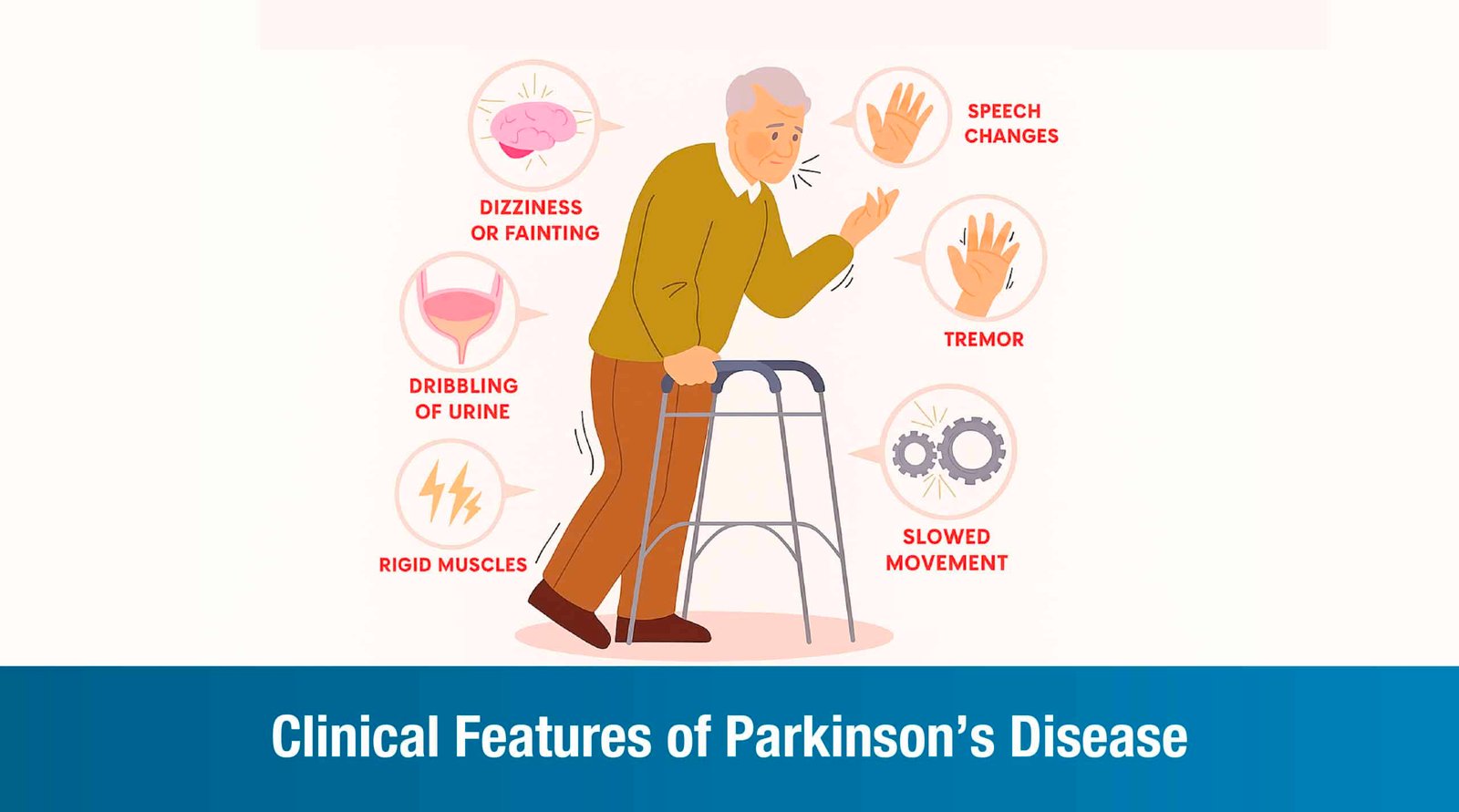
One of the most recognizable symptoms of Parkinson’s disease is tremor. Parkinsonian tremor often appears when the affected body part is at rest. A person may notice shaking in one hand while sitting quietly, for example. The tremor may decrease during purposeful movement, although this pattern is not identical in every individual.
Tremor, however, is not the only or even the most important movement symptom. Bradykinesia, meaning slowness of movement, is a central feature of Parkinson’s disease. A person may take longer to get dressed, button clothing, turn in bed, rise from a chair, or begin walking. Movements may become smaller and less automatic.
This slowing can be difficult to understand from the outside. The muscles themselves may not simply be “weak.” Instead, the brain has increasing difficulty generating and regulating normal movement. A person may know exactly what they want to do but find that the body does not respond with its previous speed and ease.
Another common feature is muscle rigidity. Muscles may feel stiff or resistant when a person or clinician tries to move a limb. This stiffness can contribute to discomfort and can make ordinary movements more difficult. It may affect the arms, legs, neck, or other parts of the body.
Postural and balance problems can also develop, particularly as the disease progresses. Changes in posture may cause a person to lean forward while standing or walking. Maintaining balance may become more difficult, increasing the risk of falls. These symptoms are particularly important because falls can result in serious injuries.
Walking itself may change. A person may develop shorter steps, reduced arm swing, or difficulty turning. Some people experience “freezing,” a phenomenon in which the feet temporarily feel as though they are stuck to the floor. Freezing can be particularly noticeable when beginning to walk, turning, passing through a narrow space, or approaching a doorway.
These symptoms illustrate the importance of automatic movement. Healthy people usually do not consciously plan every step while walking. The nervous system performs much of the work automatically. Parkinson’s disease can interfere with these automatic processes, making movement more dependent on conscious attention.
This is one reason external cues can sometimes help people with Parkinson’s disease move more effectively. A person who has difficulty walking may respond to visual markers on the floor, rhythmic sounds, counting, or deliberate instructions. These strategies can provide alternative ways for the brain to organize movement.
Parkinson’s disease does not affect everyone in exactly the same way. Symptoms can begin on one side of the body and may remain more pronounced on that side for a period of time. Over the course of the disease, symptoms may gradually involve both sides. The speed and pattern of progression vary considerably among individuals.
Although Parkinson’s disease is often associated with older age, age itself is not the only factor involved. Most people who develop the disease are older adults, but younger people can also develop Parkinson’s disease. When symptoms begin before the age of 50, the condition is often described as young-onset Parkinson’s disease.
The exact cause of Parkinson’s disease is complex. Researchers believe that a combination of genetic and environmental factors may contribute to risk. In most cases, however, there is no single identifiable cause. Having a genetic susceptibility does not necessarily mean that a person will develop the disease, and many people with Parkinson’s have no known family history.
An important pathological feature of Parkinson’s disease is the presence of abnormal accumulations of a protein called alpha-synuclein in certain nerve cells. These structures are commonly known as Lewy bodies. Their precise role in causing neuronal damage is still an active area of research.
The disease is also more complicated than a simple lack of dopamine. Dopamine deficiency explains many of the classic movement symptoms, but Parkinson’s disease can affect several other neurological systems. This helps explain why people can experience symptoms that have little obvious connection with movement.
For example, some people develop changes in their sense of smell before their movement symptoms become noticeable. Constipation, sleep disturbances, fatigue, and changes in mood can also occur. Depression and anxiety are relatively common among people with Parkinson’s disease. These symptoms are not simply understandable reactions to receiving a diagnosis; they may also be related to changes in brain systems affected by the disease.
Sleep can be particularly complicated. Some people have difficulty falling asleep or staying asleep. Others experience excessive daytime sleepiness. A condition known as REM sleep behavior disorder can cause people to physically act out vivid dreams during sleep. Such symptoms may sometimes appear years before the classical motor symptoms of Parkinson’s disease.
Cognitive changes can also occur. Some people experience problems with attention, executive functions, memory, or other aspects of thinking. Not everyone with Parkinson’s develops dementia, and the severity of cognitive symptoms varies. However, the possibility demonstrates that Parkinson’s disease is a disorder of the nervous system as a whole rather than simply a disease of movement.
Speech and swallowing can also be affected. A person’s voice may become quieter or less expressive, and speech may become less clear. Swallowing difficulties can develop in some individuals and require careful medical management because they can increase the risk of complications.
Treatment therefore involves much more than attempting to reduce tremor. The main medical treatment for Parkinson’s disease is aimed at improving symptoms and maintaining function. Levodopa, usually administered with another medication such as carbidopa, is one of the most effective treatments for motor symptoms. Levodopa is converted into dopamine in the brain, helping compensate for reduced dopamine production.
Other medications can also influence dopamine pathways or provide alternative approaches to symptom management. The appropriate treatment depends on the individual’s symptoms, age, other health conditions, response to medication, and stage of disease. Treatment should therefore be individualized by a qualified medical professional.
Medication is only one part of management. Physical therapy can help people maintain mobility, strength, flexibility, balance, and independence. Occupational therapy can help individuals adapt everyday activities and their environment. Speech and swallowing therapy can address communication and swallowing difficulties.
Regular physical activity is also considered an important component of Parkinson’s disease management. Exercise does not cure the disease, but it can support physical function and quality of life. Depending on the person’s condition, activities may include walking, cycling, strength training, stretching, balance exercises, or other forms of appropriately supervised movement.
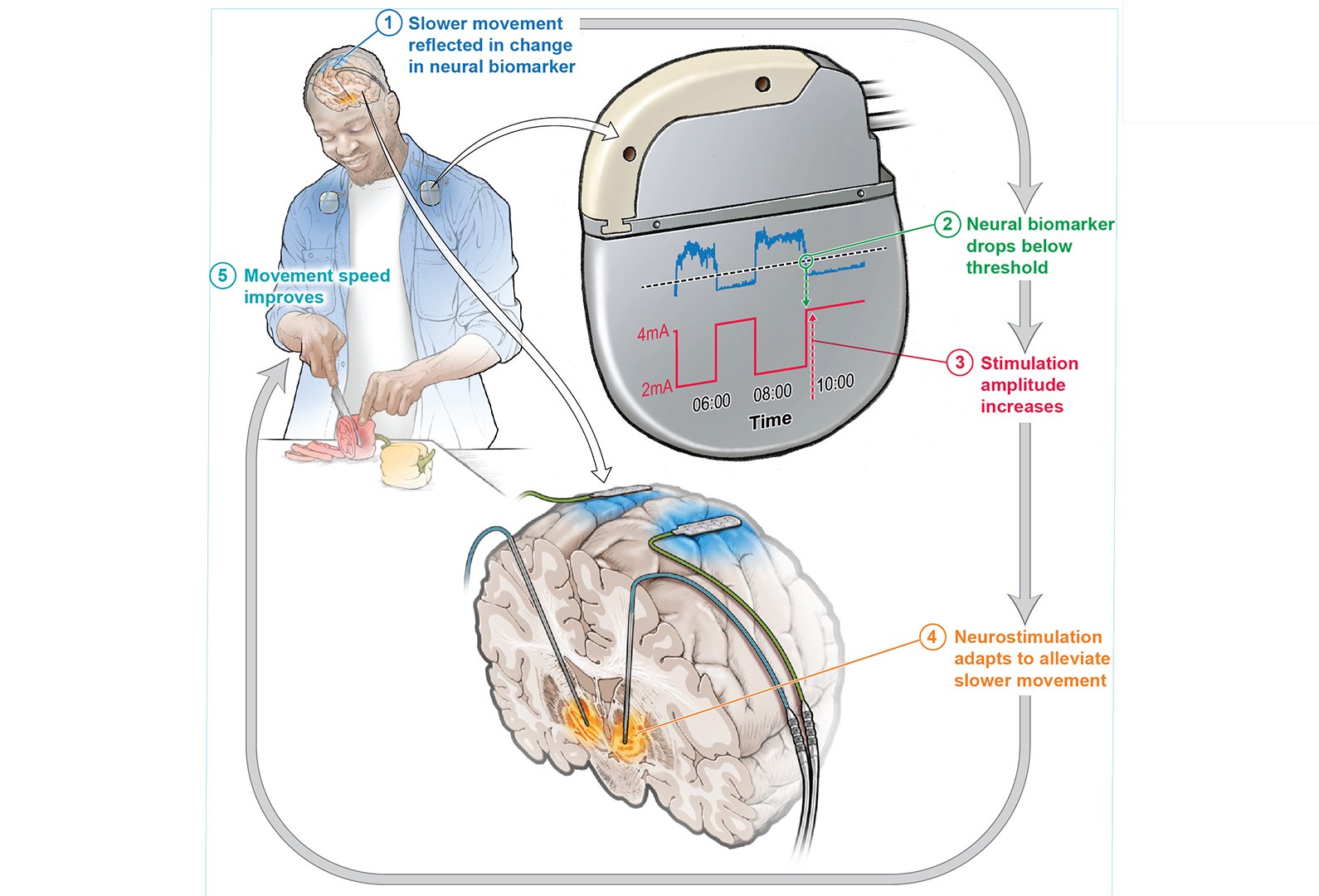
In some people with advanced Parkinson’s disease whose symptoms are not adequately controlled with medication, surgical treatments may be considered. Deep brain stimulation is one such treatment. It involves implanting electrodes in specific areas of the brain and using electrical stimulation to influence abnormal activity within movement circuits. It does not cure Parkinson’s disease, and it is not appropriate for everyone.
Researchers continue to investigate treatments that might slow or prevent the underlying neurodegenerative process. This is one of the major challenges in Parkinson’s research. Current treatments can significantly improve symptoms for many people, but they do not eliminate the underlying disease.
The psychological impact of Parkinson’s disease should not be overlooked. Losing the ability to perform familiar movements easily can affect independence and identity. A person who once walked quickly may become cautious about leaving home. Someone who enjoyed writing may struggle with handwriting. Activities such as cooking, dressing, driving, or participating in social events may require adaptation.
Family members can also experience emotional and practical challenges. As symptoms progress, relatives may gradually take on more responsibilities. At the same time, it is important not to assume that a person with Parkinson’s disease is incapable of making decisions or participating independently. Support should preserve autonomy whenever possible.
It is also important to understand that Parkinson’s disease is not simply “old age.” Slowness, tremor, stiffness, or changes in balance can have many possible causes. A person should not diagnose themselves based on a single symptom. Neurological assessment is necessary to determine whether Parkinson’s disease or another condition is responsible.
Diagnosis is primarily clinical. Doctors consider the person’s symptoms, medical history, neurological examination, and response to treatment. There is no single routine test that can definitively diagnose every case of Parkinson’s disease. In certain situations, imaging or specialized tests may be used to help clarify the diagnosis or exclude other conditions.
Early recognition can be valuable because treatment and rehabilitation can begin before symptoms significantly interfere with independence. However, early symptoms may be subtle. A person may initially notice reduced arm swing on one side, changes in handwriting, a quieter voice, difficulty with fine motor tasks, or a mild resting tremor.
The complexity of Parkinson’s disease reminds us how dependent human movement is on the brain. Walking, writing, speaking, and reaching for an object may feel like simple physical actions, but they depend on sophisticated communication between many neural systems. A small disruption in one part of this network can produce visible changes throughout the body.
Parkinson’s disease also demonstrates why neurological disorders cannot always be understood by looking only at the most obvious symptom. Tremor may attract attention, but the disease can also affect sleep, mood, smell, speech, cognition, digestion, and other functions. The nervous system is highly interconnected, and changes in one network can influence many aspects of daily life.
Although Parkinson’s disease is currently a chronic and progressive condition, a diagnosis does not mean that a person’s life immediately loses its independence or meaning. Symptoms can often be managed, rehabilitation can support function, and many people continue to work, maintain relationships, pursue interests, and participate in daily activities for many years.
The most important point is that Parkinson’s disease is not simply a disorder in which the hands shake. It is a complex neurological condition involving changes in brain cells and communication between neural circuits. Understanding the disease helps explain why movement becomes slower, why automatic actions can become difficult, and why treatment must address the whole person rather than one symptom.
Research into Parkinson’s disease continues to reveal more about how the brain controls movement and how neurodegenerative diseases develop. Every discovery about dopamine, alpha-synuclein, brain circuits, genetics, and neuroprotection brings researchers closer to more effective treatments. Until disease-modifying therapies become available, early medical care, appropriate medication, rehabilitation, physical activity, and social support remain important tools for helping people live as fully and independently as possible.