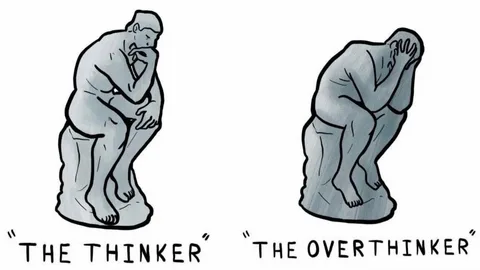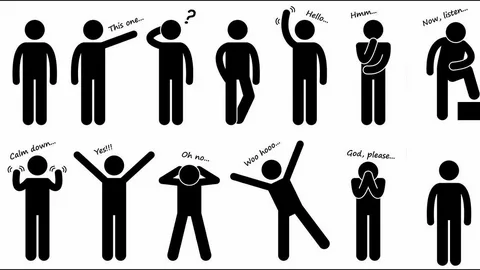
Human communication extends far beyond spoken words. During a conversation, people also communicate through facial expressions, eye movements, posture, gestures, physical distance, and the tone and rhythm of their voices. These nonverbal behaviors influence how messages are interpreted, how relationships develop, and how individuals perceive one another. A sentence may express agreement while the speaker’s tone conveys uncertainty, or a person may say very little while communicating considerable emotion through posture and facial expression. Understanding body language can therefore provide useful information about social interaction, provided that nonverbal behavior is interpreted cautiously rather than treated as a direct window into another person’s thoughts.
Body language is often described as the language of the body, but this expression can create the misleading impression that every movement has a fixed meaning. In reality, nonverbal communication is influenced by context, culture, personality, physical condition, emotional state, and individual habits. Crossed arms, for example, may indicate discomfort in one situation, but they may simply be a comfortable resting position in another. Looking away can reflect distraction, concentration, cultural expectations, shyness, or a desire to avoid a particular interaction. No isolated gesture reliably reveals what another person is thinking or feeling.
The psychological study of nonverbal communication examines how people express and interpret information through channels other than words. These channels include facial expressions, gestures, posture, gaze, interpersonal distance, touch, and vocal characteristics such as pitch, volume, and speaking speed. Although these channels frequently operate together, they do not always communicate the same message. A person may smile while feeling nervous, speak confidently while experiencing uncertainty, or maintain a neutral expression while paying close attention. Human communication is complex because individuals can experience several emotions simultaneously and may not express all of them openly.
One of the most important aspects of body language is the face. Facial expressions can provide information about emotional states, reactions, and interpersonal intentions. A smile may communicate enjoyment, friendliness, politeness, reassurance, or an attempt to reduce social tension. A furrowed brow may accompany confusion, concentration, frustration, or physical discomfort. Raised eyebrows can occur in response to surprise, interest, or uncertainty. However, these movements should not be interpreted as definitive evidence of a particular emotion. Facial expressions vary between individuals, and the same expression can occur in different circumstances.
The face is particularly interesting because people often assume that it reveals emotions more accurately than other forms of communication. In practice, facial expressions can be intentionally managed, socially shaped, or misunderstood. People learn to smile when greeting others, conceal disappointment during professional interactions, and maintain a neutral expression when they do not wish to reveal their reactions. Some individuals are naturally more expressive than others, while others communicate emotion more subtly. Differences in neurodivergence, culture, personal experience, and social expectations can also influence how facial expressions are produced and interpreted.
Consequently, the absence of a visible emotional response does not necessarily indicate the absence of emotion. Someone who appears calm may be experiencing considerable anxiety, while someone who expresses distress openly may recover relatively quickly. Observers who assume that visible expression must correspond directly to internal experience can misjudge people whose communication styles differ from their own. A more reliable approach is to consider facial behavior alongside the person’s words, the surrounding circumstances, and information gathered over time.
Eye contact is another widely discussed aspect of body language. In many social environments, appropriate eye contact can communicate attention, involvement, and willingness to engage. However, the meaning of eye contact differs across cultures and situations. In some contexts, sustained direct gaze may be associated with confidence or sincerity. In others, prolonged eye contact may be considered intrusive, confrontational, or disrespectful, particularly when there are differences in age, status, or social role.
Individual differences are equally important. Some people find eye contact comfortable, while others experience it as distracting or emotionally demanding. A person may look away while thinking carefully, listening attentively, or trying to regulate strong emotions. People with certain neurodevelopmental differences may use eye contact differently without being less interested in the conversation. Therefore, the common assumption that honest people always maintain eye contact is unreliable. Gaze behavior alone cannot establish whether someone is telling the truth.
The direction of a person’s gaze is also insufficient to determine what they are thinking. Popular body-language advice sometimes claims that looking in a particular direction reveals whether someone is remembering an event or inventing a story. Such simplified rules lack sufficient reliability for judging individual thoughts or detecting deception. Eye movements are influenced by many factors, including attention, memory demands, environmental distractions, and ordinary habits. Attempting to infer hidden intentions from a single glance can encourage false confidence and unnecessary suspicion.
Posture can provide additional information about how a person is experiencing an interaction. An individual who leans slightly forward may be engaged in the conversation, while someone who repeatedly shifts position may be uncomfortable, restless, or simply physically tired. An upright posture may communicate readiness or formality, but it does not automatically indicate confidence. Similarly, a person who lowers their head may be expressing sadness, concentrating on a task, or responding to a social expectation.
Posture is meaningful partly because it affects how people experience their own bodies and how others respond to them. Physical comfort can influence concentration, while restricted movement may make an interaction feel more formal or tense. Nevertheless, claims that a particular posture automatically produces a specific psychological state should be approached carefully. Body position may influence experience in some circumstances, but its effects are not universal and should not be exaggerated.
Gestures also contribute to communication. People use their hands to emphasize important points, describe the shape or movement of objects, indicate direction, and organize spoken explanations. Some gestures have widely recognized meanings within a particular culture, while others are highly individual. A hand movement that communicates agreement in one setting may have a different or even offensive meaning elsewhere. The interpretation of gestures therefore requires cultural awareness rather than the assumption that body language forms a universal code.
Gestures can also help people think. When explaining a complicated idea, an individual may use their hands to represent relationships, sequence, size, or movement. Such gestures do not merely decorate speech; they can support the organization of thought and help listeners understand abstract information. Teachers, researchers, and speakers frequently use gestures to make complex explanations more accessible. The effectiveness of these movements depends on whether they clarify the message or distract from it.
The tone of voice is another important component of nonverbal communication. Although words provide the literal content of a message, vocal qualities influence how that content is received. The same sentence can sound reassuring, sarcastic, impatient, affectionate, or threatening depending on pitch, rhythm, emphasis, and volume. A brief response such as “That’s fine” may express genuine agreement or concealed frustration, but the interpretation cannot be established from tone alone. Some people naturally speak loudly or with little variation in pitch, while others use a softer voice even when they feel strongly about a subject.
Silence is equally significant. A pause may indicate reflection, uncertainty, emotional regulation, disagreement, or a desire to allow another person to speak. In some conversations, silence creates comfort and communicates that no immediate response is required. In others, it may be experienced as rejection or tension. The meaning of silence depends on the relationship, the conversational context, and the expectations of the participants. Assuming that silence always represents hostility or avoidance can lead to misunderstandings.
Personal space, sometimes called proxemics in the study of communication, also influences interpersonal relationships. People generally have preferences regarding how close others should stand or sit during an interaction. These preferences vary according to culture, familiarity, personality, environmental conditions, and the purpose of the conversation. A person who steps backward may be seeking additional physical space rather than rejecting the other individual. Someone who stands closer may be communicating warmth in one context but violating a boundary in another.
Respecting personal space requires attention to the other person’s comfort rather than rigidly applying universal measurements. Physical distance can be particularly important when individuals differ in cultural background, sensory preferences, or experiences that affect their sense of safety. A respectful communicator notices discomfort when possible and adjusts their behavior without demanding that the other person justify every preference.
Touch is another nonverbal channel whose meaning depends heavily on context. A handshake, a supportive touch on the shoulder, or a hug may communicate greeting, encouragement, affection, or solidarity. Yet touch can also be unwelcome, intrusive, or inappropriate. The relationship between the individuals, the setting, cultural norms, and consent all matter. The assumption that physical contact is always reassuring ignores the fact that people have different boundaries and experiences. Effective communication requires sensitivity to those differences.
One particularly important question is whether body language can reveal deception. People are often attracted to the idea that lies can be identified through particular movements, such as avoiding eye contact, touching the face, shifting in a chair, or speaking with unusual hesitation. However, research on deception detection has found that commonly assumed behavioral signs are generally weak and unreliable indicators of lying. Nervousness can occur in truthful people, and individuals who are deceptive may appear calm. Someone may also seem inconsistent because they are anxious, tired, confused, or trying to remember an event accurately.
This distinction matters because false judgments about honesty can damage relationships and lead to serious consequences. An observer who assumes that discomfort indicates deception may accuse an innocent person of dishonesty. Conversely, a confident speaker may be believed simply because their presentation appears convincing. Confidence and truthfulness are not the same thing, and visible calmness does not establish accuracy. Assessing a factual claim requires attention to evidence, consistency, corroboration, and the circumstances in which the information was provided, rather than reliance on body-language stereotypes.
Body language is also relevant to empathy. People often notice changes in another person’s expression, posture, or tone before that person explicitly describes an emotional experience. A normally talkative friend who becomes unusually quiet may be experiencing distress. A colleague who repeatedly sighs during a demanding meeting may be frustrated or fatigued. Such observations can encourage compassionate questions, but they should not be treated as certain conclusions. The most respectful response is often to acknowledge the observation gently and allow the person to explain their experience in their own words.
For example, instead of saying, “You are clearly angry with me,” a person might say, “You seem quieter than usual. Is something bothering you?” The second statement distinguishes observation from interpretation and leaves room for correction. This approach reduces the risk of imposing an inaccurate emotional explanation on another person. It also communicates interest without demanding disclosure.
Understanding body language can be especially useful in professional and educational environments. Teachers may notice when students appear confused, disengaged, or uncomfortable, even when they do not ask questions. However, a student’s silence or lack of eye contact should not automatically be interpreted as a lack of knowledge or motivation. The student may be anxious, tired, distracted, unfamiliar with the classroom culture, or processing information in a different way. Observing nonverbal behavior can help educators identify moments that deserve attention, but direct and supportive communication is needed to understand what is actually happening.
In clinical settings, nonverbal behavior may contribute to an assessment of a person’s emotional presentation, communication patterns, and immediate comfort. A clinician might observe speech rhythm, facial expression, movement, eye contact, or changes in behavior during a conversation. Yet these observations must be interpreted within a broader clinical context. A single movement cannot establish a diagnosis, reveal a hidden memory, or prove that a patient is concealing information. Clinical interpretation requires careful assessment, awareness of alternative explanations, and respect for individual and cultural differences.
There is also an ethical dimension to learning about body language. When people become interested in interpreting nonverbal signals, they may begin treating ordinary interactions as puzzles to solve. They may monitor every gesture, analyze every pause, and search for hidden meanings behind minor changes in expression. This can increase social anxiety and encourage confirmation bias, in which individuals notice behaviors that support their existing beliefs while overlooking evidence that contradicts them.
For example, someone who already fears rejection may interpret a friend’s brief reply as proof of disinterest. If the friend later appears distracted, the individual may treat that behavior as further confirmation. Yet the friend may be dealing with an unrelated problem. When uncertain interpretations are repeatedly treated as facts, relationships can become increasingly tense. A more balanced approach recognizes that nonverbal observations are clues, not verdicts.
The same caution applies to self-awareness. People sometimes attempt to change their posture, facial expressions, or gestures because they believe that certain movements make them appear more confident or attractive. Becoming aware of one’s nonverbal habits can be useful, especially when preparing for a presentation, interview, or difficult conversation. However, constant self-monitoring may interfere with natural communication. A person who concentrates excessively on where to place their hands or how long to maintain eye contact may become less attentive to the actual conversation.
A more effective goal is communicative congruence: making a reasonable effort to ensure that one’s words, tone, and behavior support the intended message. If someone wants to express appreciation, they can communicate it verbally while also giving the other person their attention. If they disagree, they can state the disagreement clearly without relying on aggressive gestures. If they feel uncertain, they can acknowledge that uncertainty instead of attempting to perform absolute confidence. Congruence does not require every internal feeling to be displayed; it requires thoughtful communication rather than the pursuit of a perfectly controlled image.
Developing this skill begins with observation. People can learn to notice patterns in their own nonverbal behavior without immediately judging them. They might recognize that their voice becomes louder when they feel rushed, that they look away while searching for words, or that they become physically tense during disagreements. Such observations can provide useful information about the situations in which communication becomes difficult. The aim is not to eliminate every habitual movement, but to understand how behavior may affect interactions and whether a different response would be helpful.
Listening is just as important as observing. Effective nonverbal communication does not consist of decoding another person’s body while ignoring their words. It requires attention to both verbal and nonverbal information, an awareness that these channels may not perfectly align, and a willingness to ask for clarification. When a person’s words and behavior appear inconsistent, it is usually more useful to explore the discrepancy respectfully than to assume that one channel reveals the truth and the other conceals it.
Ultimately, body language is an important but limited part of human communication. Facial expressions, posture, gaze, gestures, physical distance, and vocal qualities can enrich our understanding of social interactions. They may help us notice discomfort, express warmth, clarify meaning, and respond more thoughtfully to others. Yet no single movement provides a reliable formula for identifying personality, detecting lies, or discovering another person’s private thoughts.
The most valuable lesson is that nonverbal communication should increase curiosity rather than certainty. When we notice a change in someone’s behavior, we can treat it as a reason to pay attention, not as permission to decide what that person must be feeling. When we become aware of our own gestures and expressions, we can use that awareness to communicate more clearly without trying to control every aspect of how we appear. Human beings are too complex to be understood through a collection of gestures alone. Genuine understanding develops when observation is combined with context, empathy, direct communication, and respect for the fact that another person’s inner experience can never be reduced to a single movement.