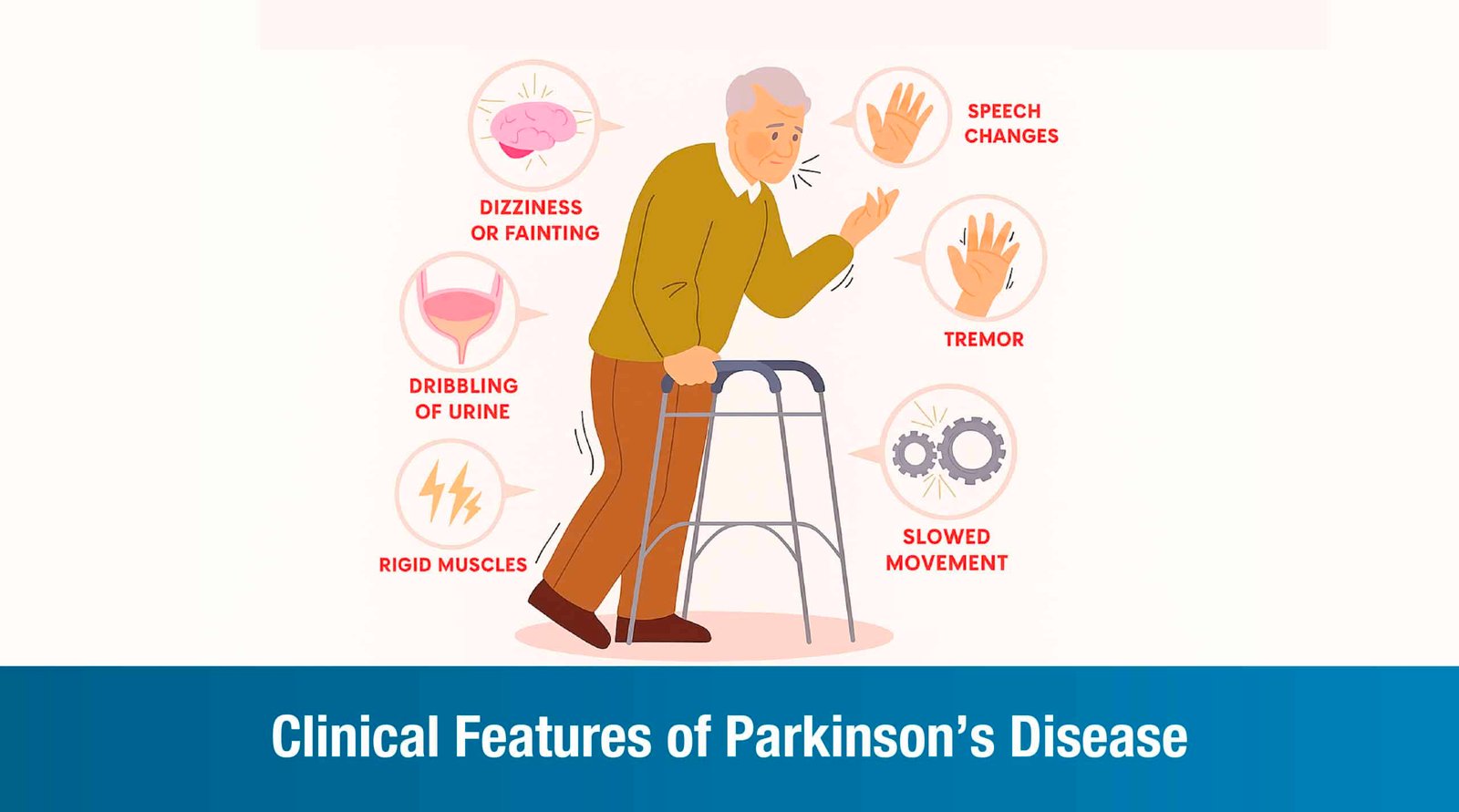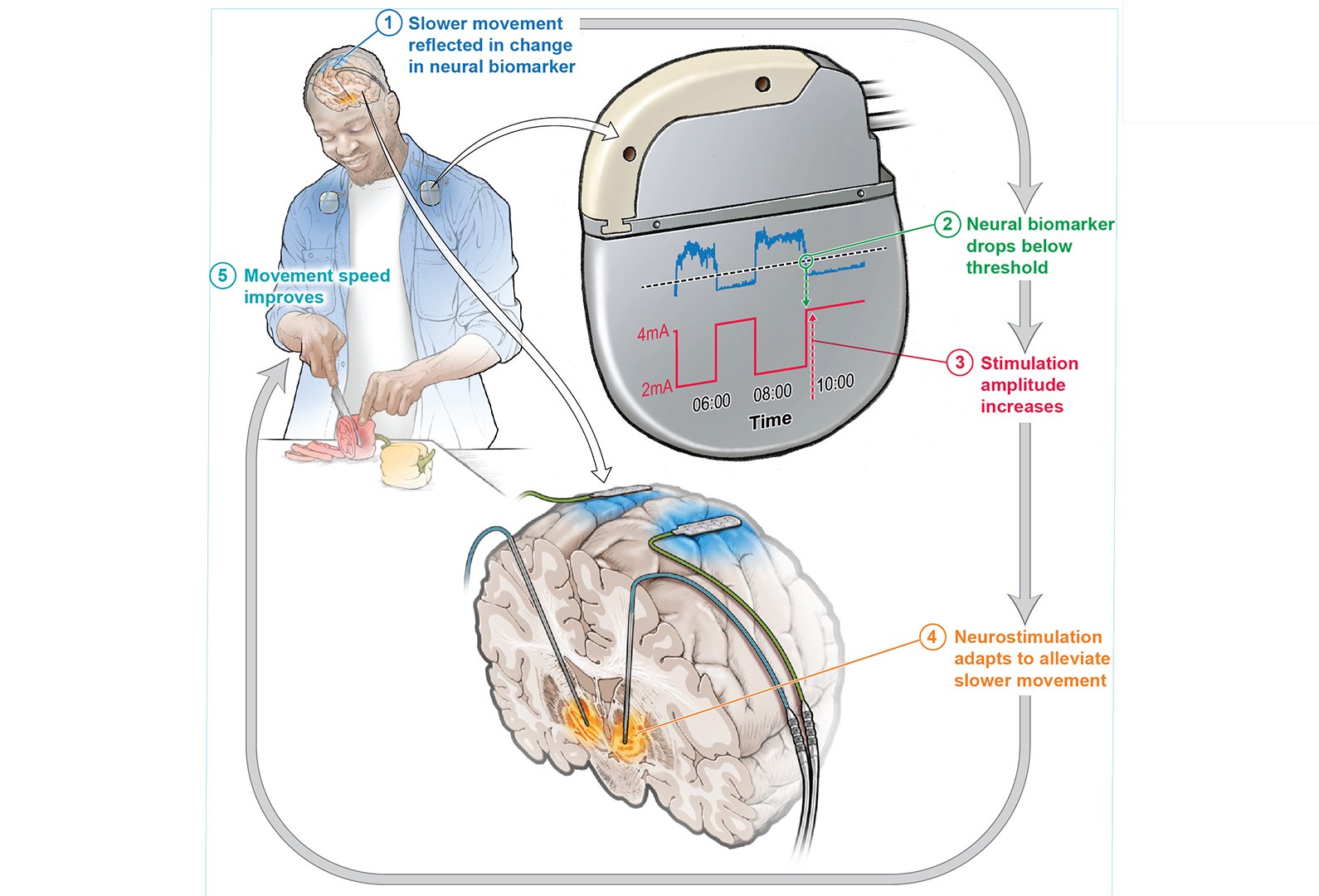
Parkinson’s disease is one of the most important neurodegenerative disorders affecting older adults around the world. It is commonly associated with tremor, slow movement, muscle stiffness, and problems with balance, but the disease is much more complex than these visible symptoms. Parkinson’s disease develops as nerve cells involved in movement gradually become damaged, particularly dopamine-producing neurons in a region of the brain called the substantia nigra.
The number of people living with Parkinson’s disease has increased substantially over recent decades. According to estimates from the Global Burden of Disease study, the global number of people living with Parkinson’s disease increased from approximately 3.5 million in 1992 to nearly 11.8 million in 2021. The global age-standardized prevalence rate also increased considerably during this period.
However, Parkinson’s disease is not distributed equally across countries. The prevalence varies considerably between populations, and differences become particularly visible when countries are compared using age-standardized rates. Age-standardization is important because Parkinson’s disease is strongly associated with age. Countries with older populations can have more cases simply because a larger proportion of their population has reached the ages in which Parkinson’s becomes more common.
Recent Global Burden of Disease estimates provide prevalence data for countries and territories around the world. The data are expressed as the estimated number of people living with Parkinson’s disease per 100,000 population. The latest Our World in Data dataset, based on IHME’s Global Burden of Disease 2023 study, covers the period from 1990 to 2023.
One of the most striking findings from recent research is the high prevalence estimated for China. In the GBD 2021 analysis, China had the highest age-standardized prevalence rate among countries in 2021, at approximately 245.73 cases per 100,000 people. Israel followed at approximately 199.71 cases per 100,000, while Canada had approximately 197.61 cases per 100,000.
These figures do not mean that China simply has the largest number of patients because its population is large. There is an important difference between the total number of cases and the prevalence rate. China, India, and the United States have very large populations, so they can have extremely high numbers of people living with Parkinson’s disease even when their rate per 100,000 people is not the highest in the world. In the GBD 2021 analysis, China, India, and the United States were consistently among the countries with the largest numbers of Parkinson’s cases.
The distinction between absolute numbers and rates is essential when interpreting international statistics. A country with 20 million people and a relatively high prevalence rate may have fewer total patients than a country with 1.4 billion people and a moderate rate. Therefore, researchers usually examine both the number of cases and the age-standardized prevalence rate.
Historical data also demonstrate that the geographical pattern has changed over time. In 1990, Israel had one of the highest age-standardized prevalence rates, at approximately 164.48 cases per 100,000 people. Italy and the Netherlands were also among the countries with the highest rates. By 2021, China had moved to the highest position in the GBD estimates.
The reasons for differences between countries are complex. Population ageing is one of the most important factors. As people live longer and the proportion of older adults increases, more people survive into ages when Parkinson’s disease becomes more common. This demographic change is occurring in many regions of the world.
Population ageing, however, cannot explain every difference. Researchers also investigate genetic susceptibility, environmental exposures, lifestyle factors, healthcare systems, diagnostic practices, and differences in disease registration. Some countries may identify more cases because their healthcare systems have better access to neurologists and diagnostic services. In other countries, people with Parkinsonian symptoms may never receive a formal diagnosis.
This creates an important problem when comparing countries. A lower reported prevalence does not necessarily mean that fewer people actually have the disease. If diagnosis is less accessible, some patients may remain undiagnosed. Consequently, international statistics should generally be interpreted as estimates rather than perfect counts of every person with Parkinson’s disease.
The quality and availability of health data also vary between countries. The Global Burden of Disease project attempts to address this problem by combining information from multiple sources and producing comparable estimates across countries. The GBD 2021 study examined Parkinson’s disease across 204 countries and territories using estimates of incidence, prevalence, mortality, and disability burden.
Another important finding is that Parkinson’s disease has generally become more common over time. Between 1992 and 2021, the estimated global number of cases increased by more than three times. The age-standardized prevalence rate also increased, meaning that the rise cannot be explained entirely by population growth and ageing.
Researchers have observed particularly notable increases in several countries. Norway, for example, experienced one of the largest increases in age-standardized prevalence between 1990 and 2021. Taiwan also experienced a substantial increase. China showed a marked increase in both prevalence and incidence during the period studied.
The situation is also changing in countries where Parkinson’s disease has historically received less attention. In many developing and middle-income countries, populations are ageing while healthcare systems are simultaneously expanding. As life expectancy increases, neurological disorders that were previously less visible may become a larger public-health concern.
Azerbaijan is part of this broader pattern. Earlier GBD estimates reported approximately 7,307 people living with Parkinson’s disease in Azerbaijan in 2016, with an estimated prevalence of about 11.9% in the specific age-standardized measure reported in that study. These historical figures should not be confused with a current national prevalence estimate, because the underlying dataset and methodology have since been updated.
The relationship between age and Parkinson’s disease is particularly important when looking at national statistics. Parkinson’s is much more common in older adults than in younger populations. Therefore, countries with rapidly ageing populations may experience a substantial increase in the number of patients even if the underlying risk at each age remains relatively stable.
This creates a major challenge for healthcare systems. Parkinson’s disease can require long-term medication, neurological monitoring, rehabilitation, physical therapy, speech therapy, and support for daily activities. As the number of patients increases, countries need more healthcare professionals with expertise in movement disorders and more accessible rehabilitation services.
The disease also affects families. A person with Parkinson’s may gradually need assistance with walking, dressing, cooking, medication management, or other everyday activities. Caregivers may therefore experience emotional, physical, and financial pressure. The burden of Parkinson’s disease is consequently larger than the number of diagnosed patients alone suggests.
The increasing global prevalence also raises an important question: why are people living with Parkinson’s disease for longer periods? Improvements in medical care may allow patients to survive longer with chronic neurological conditions. Better diagnosis and greater awareness can also increase the number of people identified as having the disease. These factors may contribute to the growing number of people living with Parkinson’s even when they do not necessarily indicate that the biological risk has increased to the same extent.
Environmental factors remain another area of scientific investigation. Researchers have studied possible relationships between Parkinson’s disease and exposure to certain pesticides, air pollution, industrial chemicals, and other environmental factors. However, the causes of most individual cases remain complex, and it would be inaccurate to attribute national differences to one environmental factor alone.
Genetic differences may also contribute to geographical variation. Certain genetic variants are associated with an increased risk of Parkinson’s disease, but genetics alone cannot explain the worldwide distribution. Most cases involve a combination of genetic susceptibility and other biological or environmental factors.
The statistics also demonstrate why researchers use age-standardized prevalence rather than simply comparing raw numbers. Imagine two countries: one has a very young population and another has a much older population. Even if people in both countries had identical age-specific risks, the older country would be expected to have more Parkinson’s cases. Age-standardization attempts to make this comparison fairer by adjusting for differences in population age structures.
According to the GBD 2021 analysis, the global age-standardized prevalence of Parkinson’s disease reached approximately 292.93 cases per 100,000 people in 2021. This represented a substantial increase compared with 1992.
Country-level estimates, however, should not be interpreted as exact measurements. They are statistical estimates based on available evidence, models, and demographic information. Every estimate has uncertainty. This is particularly important for countries where high-quality neurological disease registries are limited.
For this reason, saying that one country “has more Parkinson’s disease” than another requires clarification. It may mean that the country has a greater total number of patients, a higher crude prevalence, or a higher age-standardized prevalence. These are different measurements and can produce different rankings.
Despite these limitations, international statistics provide an important picture of the global neurological burden. The overall trend is clear: Parkinson’s disease is becoming an increasingly important public-health issue, particularly as populations age.
The future burden may become even greater in countries experiencing rapid demographic ageing. Health systems will need to prepare not only for medication and diagnosis but also for rehabilitation, fall prevention, mental-health support, caregiver assistance, and long-term neurological care.
Parkinson’s disease therefore represents more than an individual medical condition. Its increasing prevalence affects families, healthcare professionals, social services, and national health budgets. Understanding where the disease is most common and how its prevalence is changing can help governments and healthcare systems plan for future needs.
International statistics also remind us that the number of people living with Parkinson’s disease is not fixed. It changes with population age, life expectancy, diagnosis, healthcare access, environmental conditions, genetics, and other factors. As the world’s population continues to age, Parkinson’s disease is likely to remain an important subject in global neurological research.
The most useful way to understand the worldwide distribution of Parkinson’s disease is therefore not simply to create a list of countries from highest to lowest. The statistics need to be interpreted in relation to population size, age structure, healthcare access, diagnostic practices, and the quality of available data. When these factors are considered together, the global picture becomes much clearer: Parkinson’s disease is a growing neurological challenge, and its burden is increasingly visible across many different parts of the world.