Why do some children react calmly to unfamiliar situations while others immediately become nervous? Why does one person enjoy social interaction and stimulation, while another prefers silence and needs time alone? Why are some people naturally energetic, emotionally expressive, and quick to react, while others seem slower, more cautious, and more reserved? These differences can appear very early in life, sometimes before a child has developed a clear personality. One concept that helps explain these individual differences is temperament.
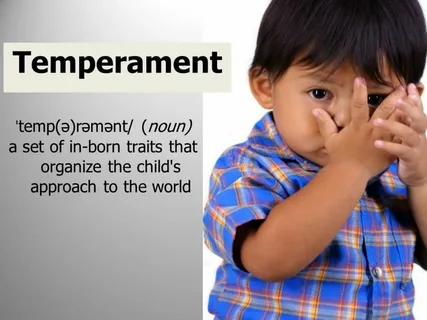
Temperament refers to relatively stable patterns in the way a person responds emotionally and behaviorally to the world. It influences how strongly someone reacts to stimulation, how quickly they become excited or upset, how easily they adapt to change, and how much energy they naturally display. Temperament is not the same as personality, although the two concepts are closely related. Temperament is often considered one of the biological and early-developing foundations from which personality develops over time.
The idea of temperament is very old. Ancient Greek physician Hippocrates proposed a theory involving four bodily fluids, or “humors,” which he believed influenced human behavior. Later, Galen associated these humors with four temperamental types: sanguine, choleric, melancholic, and phlegmatic. Although this ancient biological explanation is not supported by modern science, the four traditional names have remained influential in popular psychology and everyday language.
Modern psychology approaches temperament differently. Researchers generally do not divide all human beings into four simple categories. Instead, temperament is understood through dimensions or traits. These may include emotional reactivity, activity level, sociability, attention, persistence, adaptability, sensitivity to stimulation, and the ability to regulate emotional responses.
One of the most influential modern approaches came from researchers Alexander Thomas and Stella Chess. Their longitudinal research on children identified different patterns of temperament and showed that children can differ considerably in their reactions to everyday experiences. Some children were relatively easy to adapt to changes, while others reacted more intensely or needed more time to adjust. Their work also introduced the important idea of “goodness of fit,” meaning that a child’s development is influenced not only by temperament itself but also by how well the environment fits the child’s characteristics.
This idea is particularly important in understanding children. Imagine a highly sensitive child who becomes overwhelmed by loud environments, unfamiliar people, or sudden changes. If adults interpret the child’s reaction as deliberate disobedience, they may respond with punishment. However, if they understand that the child may have a naturally higher sensitivity to stimulation, they can provide gradual transitions, predictable routines, and opportunities to recover from overwhelming situations. The child has not necessarily changed temperament, but the environment has become more supportive.
Temperament has a biological component. Research suggests that genetic factors contribute substantially to individual differences in temperament. However, genes do not determine a person’s future in a simple or absolute way. Temperament develops through interactions between biological characteristics and environmental experiences. Parenting, relationships, culture, education, stress, and life experiences can all influence how temperamental tendencies are expressed.
This means that a naturally cautious child does not necessarily become a socially anxious adult. Similarly, a highly active child does not automatically become impulsive or irresponsible. Temperament creates tendencies, but development involves many additional factors. The environment can help individuals learn how to regulate their reactions and use their natural characteristics effectively.
Emotional reactivity is one important dimension of temperament. Some people respond strongly to events that others may consider minor. Their happiness may be intense, but so may their frustration or sadness. Other individuals have a lower emotional intensity and may appear calm even during stressful situations. Neither pattern is automatically better. A highly reactive person may experience strong empathy and enthusiasm, while a less reactive person may remain calm during situations that overwhelm others.
Sensitivity is another important characteristic. Some individuals notice subtle changes in their surroundings, facial expressions, sounds, smells, or social atmosphere. They may quickly recognize when another person is uncomfortable or when the emotional tone of a room changes. High sensitivity can be an advantage, but it can also become exhausting when the environment provides too much stimulation.
Activity level is also associated with temperament. Some people naturally prefer movement, variety, and frequent activity. Others are comfortable spending long periods sitting, reading, thinking, or engaging in quiet activities. These differences can become visible in childhood. A very active child may have difficulty remaining still for extended periods, while a quieter child may prefer independent play.
Sociability is another dimension. Some people gain energy from interaction with others and actively seek social stimulation. Others may need more time alone and may prefer smaller groups or deeper one-to-one conversations. These differences are sometimes described through the broader concepts of introversion and extraversion, although temperament and personality cannot be reduced entirely to these two categories.
Adaptability is particularly important during childhood. Some children quickly accept changes in routines, new teachers, unfamiliar environments, or new foods. Others require more time. A child who reacts negatively to change is not necessarily being difficult. Their nervous system may simply require a longer adjustment period. Giving such children preparation and predictable information can reduce unnecessary stress.
Temperament can also affect sleep, eating patterns, attention, and reactions to sensory experiences. For example, some children may be naturally more regular in their daily rhythms, while others have less predictable patterns. Some may become easily distracted by sounds or movement, while others can concentrate despite environmental stimulation. These characteristics can influence how children experience school and family life.
Understanding temperament can therefore change the way adults interpret behavior. A child who frequently moves may not simply be “bad.” A child who takes a long time to answer may not be unintelligent. A child who avoids unfamiliar people may not be rude. A child who reacts strongly to criticism may not necessarily be manipulative. Behavior becomes easier to understand when adults consider the individual characteristics behind it.
However, temperament should not become an excuse for harmful behavior. Having a naturally strong emotional reaction does not mean that a person is unable to learn emotional regulation. A person may be temperamentally sensitive but can still learn how to communicate anger without hurting others. A highly active child can learn appropriate ways to use energy. A cautious person can gradually develop confidence in unfamiliar situations.
This distinction between tendency and behavior is essential. Temperament may influence the first emotional response, but learning and experience can influence what happens next. Someone may naturally become angry quickly but learn to pause before speaking. Another person may naturally become anxious in unfamiliar situations but learn strategies for managing that anxiety. Development involves the ability to regulate and adapt to one’s natural tendencies.
Temperament also influences relationships. Two people with very different temperaments may misunderstand each other. One partner may want frequent conversation and social activity, while the other needs quiet time. One may express emotions immediately, while the other needs time to process them. Without understanding these differences, each person may interpret the other’s behavior personally.
A highly expressive person may think a quiet partner does not care. A reserved person may think an emotionally expressive partner is overwhelming. Yet these reactions may reflect differences in temperament rather than differences in love or commitment. Recognizing this can reduce unnecessary conflict.
The same principle applies to parenting. Parents sometimes expect children to respond to situations in the same way they would. An outgoing parent may not understand why a child does not immediately greet strangers. A calm parent may become confused by a child’s intense emotional reactions. When parents recognize that children have individual temperamental characteristics, they can adjust expectations accordingly.
This does not mean that children should never be encouraged to develop new skills. On the contrary, understanding temperament can help adults choose more effective methods. A cautious child may benefit from gradual exposure rather than being forced into unfamiliar situations. A highly active child may benefit from opportunities for movement before activities that require concentration. A sensitive child may need preparation before entering a noisy or crowded environment.
The concept of “goodness of fit” is especially useful here. Difficulties may arise when the expectations of an environment strongly conflict with an individual’s characteristics. A child with a high need for movement may struggle in an environment requiring long periods of sitting. A person who needs quiet concentration may struggle in a constantly noisy workplace. The solution is not always to change the person. Sometimes the environment can be modified.
Culture can also influence how temperament is interpreted. A behavior considered confident in one cultural environment may be considered excessive in another. Quietness may be interpreted as respect in one context and lack of confidence in another. Therefore, temperament should not be evaluated without considering cultural expectations and social context.
It is also important to avoid labeling people too rigidly. Statements such as “I am an introvert, so I cannot speak to people” or “My child is difficult because that is their temperament” can turn a useful psychological concept into a limitation. Temperament describes tendencies; it does not define the complete range of human behavior.
Modern research also suggests that temperament can be related to later psychological development. Certain temperamental characteristics may increase or decrease vulnerability to particular difficulties, depending on environmental conditions. For example, a child with high emotional reactivity may be more sensitive to stressful experiences. However, supportive relationships and effective emotional regulation can influence outcomes significantly. A temperament trait is therefore not equivalent to a psychological disorder.
This distinction is especially important for parents. Children should not be diagnosed or labeled simply because they are energetic, shy, sensitive, emotional, or cautious. Normal variation in temperament is broad. Professional assessment becomes important when behavior is persistent, severe, significantly different from developmental expectations, or seriously interferes with everyday functioning.
For adults, understanding temperament can also encourage self-acceptance. People sometimes spend years believing that something is wrong with them because they do not behave like others. A person who needs solitude may think they are antisocial. A highly emotional person may believe they are weak. Someone who needs time to adapt may consider themselves incapable. Recognizing natural differences can replace unnecessary self-criticism with greater self-understanding.
At the same time, self-acceptance does not mean refusing to grow. A person can accept that they are naturally sensitive while learning better emotional regulation. Someone can accept an introverted temperament while developing communication skills. A cautious person can respect their need for preparation while gradually becoming more flexible. Healthy development involves both acceptance and adaptation.
Temperament may also explain why two siblings raised in the same family can be remarkably different. They may have the same parents, live in the same home, and attend the same schools, yet respond differently to identical experiences. Their biological characteristics, developmental histories, relationships, and interpretations of events may differ. This is one reason why parenting cannot be completely standardized.
Ultimately, temperament reminds us that human beings do not begin life as identical psychological blank slates. People differ in their sensitivity, activity, emotional intensity, adaptability, and social tendencies from an early age. These differences interact with family, culture, education, relationships, and life experiences to shape development.
Understanding temperament can make us more patient with both children and adults. Instead of immediately asking, “What is wrong with this person?” we can ask, “How does this person naturally respond to the world, and what environment helps them function well?” This shift does not eliminate responsibility, but it creates a more accurate and compassionate understanding of human behavior.
Temperament is not destiny. It is better understood as a starting point: a set of natural tendencies that interact with experience throughout life. People may not be able to choose their initial reactions, but they can often learn how to understand, regulate, and express those reactions more effectively. In this sense, being different is not necessarily a problem to be corrected. It is one of the fundamental characteristics of human development.