Among the countless psychological needs that shape human experience, the search for meaning may be one of the most powerful and least understood. Human beings do not merely seek pleasure, safety, food, status, or social connection. They also seek explanation. People want to know why events happen, why suffering exists, why relationships end, why death occurs, why they themselves exist, and whether their experiences possess significance beyond immediate circumstances. When meaning collapses, emotional stability often deteriorates even when material survival remains secure. This suggests that meaning is not a luxury added onto consciousness but a fundamental psychological function. The question is why.
Why does consciousness need meaning at all?
To answer this, it is necessary first to understand that human beings possess a unique cognitive capacity rarely seen elsewhere in nature: the ability to perceive themselves across time. The human mind remembers the past, imagines the future, evaluates the present, and continuously compares these temporal perspectives.
This ability provides extraordinary advantages. It allows planning, learning, cooperation, and complex culture. Yet it also creates psychological burdens.
Unlike most animals, humans recognize mortality. They understand that relationships end, bodies age, opportunities disappear, and life itself possesses limits. Consciousness therefore confronts uncertainty, loss, and impermanence constantly.
Meaning functions partly as a response to this awareness.
Without meaning, experiences become isolated events lacking narrative connection. Suffering feels random. Success feels temporary. Relationships appear fragile. Mortality becomes psychologically overwhelming.
Meaning organizes experience into a coherent structure.
From a psychological perspective, coherence is essential because the brain evolved to identify patterns. Randomness creates uncertainty, and uncertainty activates threat systems. Consequently, the mind continuously searches for explanations capable of transforming confusion into understanding.
Importantly, meaning does not require objective truth to provide psychological stability. A belief system may reduce distress because it organizes experience coherently, even if certain aspects of that system cannot be empirically verified.
This explains why meaning-making appears universally across cultures.
Religions, philosophies, myths, political ideologies, scientific frameworks, and personal narratives all attempt answering fundamental questions regarding existence. Although their conclusions differ dramatically, they serve similar psychological functions: they reduce ambiguity and organize experience.
The search for meaning becomes especially intense during suffering.
When painful events occur, individuals rarely ask only “What happened?”
They ask “Why did this happen?”
This distinction is crucial.
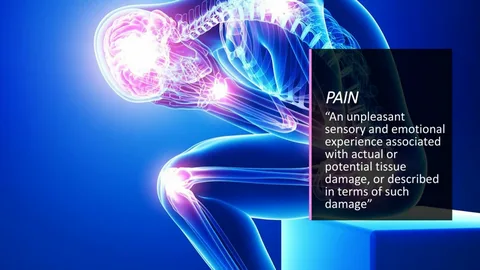
The factual description of an event often fails to satisfy consciousness emotionally. People seek significance because emotional systems require contextual integration. Pain without meaning becomes psychologically difficult to tolerate.
Consider grief.
The death of a loved one creates more than emotional loss. It often disrupts the narrative structure through which individuals understood themselves and their future. The bereaved person must reconstruct meaning because the previous psychological world no longer exists.
This reconstruction process explains why grief frequently involves existential reflection. Individuals question identity, purpose, mortality, and relationship significance because meaning structures have been destabilized.
Trauma reveals similar dynamics.
Traumatic experiences often shatter assumptions regarding safety, fairness, predictability, and control. Recovery therefore involves more than symptom reduction. It frequently requires rebuilding meaning systems capable of integrating overwhelming experiences.
People commonly ask:
Why did this happen to me?
What does this experience mean?
Who am I now?
These questions emerge because consciousness seeks narrative coherence even under devastating circumstances.
Memory plays an important role here.
Human beings do not remember experiences simply as isolated data. Memories become embedded within broader stories regarding identity and life trajectory. Meaning determines which memories receive emphasis, how they are interpreted, and how they influence future behavior.
Two individuals may experience similar events yet construct entirely different meanings.
One person interprets hardship as evidence of personal failure.
Another interprets the same hardship as evidence of resilience and growth.
The emotional consequences differ dramatically because meaning alters psychological reality.
Importantly, meaning is not merely intellectual.
Many people assume meaning exists primarily in philosophical reflection or religious belief. In reality, meaning operates continuously at emotional and perceptual levels.
Relationships provide meaning.
Work provides meaning.
Creativity provides meaning.
Parenthood provides meaning.
Community provides meaning.
Even small daily routines often contribute meaning by creating continuity and structure.
When these sources disappear suddenly, individuals frequently experience profound disorientation because meaning systems have been disrupted.
Loneliness demonstrates this clearly.
Human beings evolved within social groups where identity and purpose emerged relationally. Isolation therefore threatens not only emotional comfort but existential orientation itself.
Lonely individuals often report feelings of emptiness extending beyond sadness. They struggle with questions regarding significance, belonging, and purpose because social connection contributes heavily to meaning construction.
Neuroscience provides additional insight.
The brain continuously attempts integrating information into coherent models. Predictive systems organize perception, memory, emotion, and expectation into narratives that guide behavior.
Meaning may therefore represent a large-scale expression of predictive organization.
Without meaning, experiences remain fragmented.
With meaning, experiences become integrated.
This integration reduces cognitive load because the brain no longer processes every event independently. Instead, events become components within larger explanatory structures.
The desire for meaning is therefore partly a desire for psychological efficiency.
Uncertainty complicates this process significantly.
As discussed previously, the brain dislikes ambiguity because uncertainty undermines prediction. Meaning reduces uncertainty by providing explanatory frameworks.
However, this creates an important vulnerability.
People sometimes accept inaccurate explanations because explanation itself feels emotionally preferable to uncertainty.
Conspiracy theories, extreme ideologies, and rigid belief systems often become attractive during periods of social instability because they provide certainty and narrative structure.
Psychologically, a coherent explanation may feel safer than admitting complexity and ambiguity.
This tendency reveals that meaning can both stabilize and distort perception.
The same cognitive mechanisms supporting resilience and purpose may also reinforce dogmatism when flexibility disappears.
Existential psychology explores these issues deeply.
According to existential thinkers, humans confront four fundamental realities: mortality, freedom, isolation, and uncertainty.
Meaning emerges partly as a response to these realities.
Mortality creates urgency.
Freedom creates responsibility.
Isolation creates longing for connection.
Uncertainty creates desire for understanding.
Meaning helps organize these tensions into psychologically survivable forms.
Importantly, meaning is not always discovered.
Often it is created.
This distinction matters because many individuals search for meaning as though it exists objectively waiting to be found. While some philosophical and religious traditions support this view, psychology frequently emphasizes active meaning construction.
People create meaning through values, commitments, relationships, creativity, and interpretation.
In this sense, meaning resembles a psychological activity rather than a static object.
Art illustrates this beautifully.
A painting, novel, or piece of music rarely possesses a single objective meaning. Instead, meaning emerges through interaction between creator, audience, culture, and emotional experience.
Human life may function similarly.
Experiences acquire significance through interpretation and engagement rather than existing independently of consciousness.
Dreams demonstrate related processes.
Many dreams appear emotionally significant because they organize unresolved concerns symbolically. The dreaming mind continuously attempts integrating memory, emotion, and identity into coherent forms.
Even bizarre dream narratives often reflect underlying efforts toward psychological meaning-making.
This tendency suggests that meaning construction continues automatically beneath conscious awareness.
The mind is constantly organizing experience.
Spiritual experiences frequently emerge from similar mechanisms.
Whether interpreted religiously, philosophically, or psychologically, such experiences often involve intensified feelings of connection, unity, significance, or transcendence.
These states reduce perceived fragmentation and increase experiential coherence.
As a result, they often produce lasting psychological impact regardless of metaphysical interpretation.
Modern life presents unique challenges regarding meaning.
Technological societies provide unprecedented access to information while sometimes weakening traditional sources of existential structure. Communities become fragmented, identities more fluid, and cultural narratives increasingly diverse.
While this diversity expands freedom, it may also increase meaning-related uncertainty.
Individuals must construct personal frameworks within environments offering countless possibilities but fewer universally shared narratives.
This contributes partly to rising experiences of existential anxiety.
People struggle not merely with practical problems but with questions regarding significance, direction, and identity.
Psychological resilience appears closely linked to meaning capacity.
Research consistently suggests that individuals possessing strong senses of purpose often tolerate adversity more effectively than those lacking such orientation.
Meaning does not eliminate suffering.
Rather, it changes the relationship to suffering.
Pain integrated into a meaningful narrative becomes more psychologically manageable because it contributes to something larger than immediate distress.
This principle appears across numerous domains, including recovery from illness, trauma adaptation, caregiving, and personal development.
Even difficult experiences may become bearable when perceived as meaningful.
However, meaning should not be confused with certainty.
One of the most important psychological developments involves learning that meaning and ambiguity can coexist.
Many people initially seek absolute explanations capable of eliminating uncertainty completely.
Yet reality rarely provides such closure.
Psychological maturity often involves creating meaningful engagement with life despite unresolved questions.
In other words, meaning does not require complete understanding.
A person may never know exactly why certain events occurred, why suffering exists, or what ultimate reality entails.
Yet meaningful living remains possible.
This realization reduces dependence upon rigid certainty while preserving existential coherence.
Ultimately, consciousness needs meaning because human beings are narrative creatures living within awareness of time, mortality, uncertainty, and change.
Meaning transforms isolated events into connected experiences.
It organizes memory, guides behavior, supports resilience, and reduces existential fragmentation.
Without meaning, consciousness encounters reality as disconnected pieces lacking structure.
With meaning, those pieces become part of a larger story.
Whether that story emerges through relationships, creativity, spirituality, knowledge, service, love, or personal values, the psychological function remains remarkably similar.
Meaning does not remove life’s uncertainty.
It makes uncertainty inhabitable.