Bipolar disorder is one of the most complex psychiatric illnesses because it affects far more than mood alone. It is characterized by recurrent episodes of depression, mania, hypomania, or mixed states that alter emotional regulation, cognition, behavior, sleep, energy, motivation, and perception. Rather than representing simple fluctuations between happiness and sadness, bipolar disorder reflects a disruption in the brain’s ability to maintain emotional stability. Modern psychiatry recognizes it as a chronic neuropsychiatric condition involving genetic vulnerability, altered neural connectivity, circadian rhythm disturbances, and dysregulation of multiple neurotransmitter systems.
Historically, bipolar disorder was known as manic-depressive illness.
Although the terminology has changed, the central concept remains the same.
The disorder involves pathological shifts between different mood states.
However, these shifts are not always dramatic or predictable.
Some individuals experience prolonged depressive episodes with only occasional hypomania.
Others develop severe mania requiring hospitalization.
Still others experience mixed episodes in which symptoms of depression and mania occur simultaneously.
This variability contributes to the diagnostic complexity of the disorder.
Depressive episodes often resemble major depressive disorder.
Individuals experience persistent sadness, loss of interest, reduced energy, impaired concentration, hopelessness, guilt, changes in appetite, sleep disturbance, and, in severe cases, suicidal ideation.
Because depression is frequently the first manifestation of bipolar disorder, many patients are initially diagnosed with unipolar depression.
The underlying bipolar illness may remain undetected for years until a manic or hypomanic episode emerges.
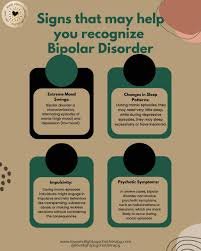
Mania represents the defining feature of bipolar disorder.
It involves an abnormally elevated, expansive, or irritable mood accompanied by increased energy and goal-directed activity.
Sleep requirements decrease dramatically.
Some individuals function on only two or three hours of sleep while reporting no fatigue.
Speech becomes rapid and difficult to interrupt.
Thoughts accelerate.
Attention shifts quickly from one idea to another.
Confidence may increase to unrealistic levels, sometimes progressing into grandiose delusions.
Risk-taking behaviors become common.
Impulsive spending, reckless driving, substance misuse, and inappropriate sexual behavior may occur despite serious consequences.
Not every manic episode appears euphoric.
Many patients become predominantly irritable.
Minor frustrations provoke disproportionate anger.
Arguments become frequent.
Impulsivity increases.
Family relationships often deteriorate because the individual no longer recognizes the impact of their behavior on others.
Hypomania resembles mania but occurs with lower intensity.
Psychotic symptoms are absent.
Daily functioning remains relatively preserved.
Some individuals even describe hypomania as a period of exceptional productivity, creativity, or confidence.
Because hypomania may feel pleasant rather than distressing, many patients fail to report it during psychiatric evaluation.
This contributes significantly to delayed diagnosis.
Mixed episodes illustrate the complexity of mood regulation.
Patients may simultaneously experience hopelessness, guilt, suicidal thoughts, racing thoughts, agitation, insomnia, and increased energy.
This combination represents one of the highest-risk clinical presentations because individuals possess both the despair associated with depression and the energy characteristic of mania.
The biological basis of bipolar disorder extends beyond individual neurotransmitters.
Earlier theories focused primarily on serotonin or dopamine deficiencies.
Current neuroscience emphasizes abnormalities within large-scale neural networks regulating emotional processing, executive function, reward sensitivity, and circadian timing.
Functional neuroimaging consistently demonstrates altered communication among the prefrontal cortex, amygdala, anterior cingulate cortex, hippocampus, and other limbic structures.
These regions collectively regulate emotional stability.
Disruption within these networks contributes to mood instability.
Circadian rhythms play an especially important role.
The brain relies upon internal biological clocks to regulate sleep, hormone secretion, body temperature, metabolism, and emotional function.
Many individuals with bipolar disorder exhibit abnormalities in these rhythms.
Sleep disruption often precedes manic episodes by several days.
Reduced need for sleep is therefore not merely a symptom.
It may actively contribute to mood destabilization.
Maintaining regular sleep schedules has become an important component of long-term management.
Genetics strongly influence bipolar disorder.
Family and twin studies consistently demonstrate substantial heritability.
However, inheritance is polygenic rather than deterministic.
Multiple genes interact with developmental experiences, environmental stress, sleep patterns, substance use, and other biological factors.
Possessing genetic vulnerability increases risk but does not guarantee illness.
Environmental stressors frequently influence episode onset.
Major life changes, interpersonal conflict, bereavement, occupational stress, sleep deprivation, childbirth, and psychoactive substances may trigger episodes in susceptible individuals.
These events do not cause bipolar disorder independently.
Instead, they interact with existing biological vulnerability.
Cognition changes significantly across mood episodes.
During depression, thinking becomes slow and pessimistic.
Memory and concentration deteriorate.
Decision-making becomes difficult.
During mania, thinking accelerates but often loses organization.
Ideas emerge rapidly, yet critical evaluation declines.
Attention becomes easily distracted.
Judgment weakens despite increased confidence.
Even during periods of mood stability, some patients experience subtle impairments in executive functioning, verbal memory, or cognitive flexibility.
Psychotic symptoms may occur during severe episodes.
In mania, delusions commonly involve grandiosity, exceptional abilities, wealth, fame, or special missions.
During depressive episodes, psychotic beliefs often revolve around guilt, worthlessness, punishment, or catastrophic illness.
Hallucinations may also occur, although they are less common than mood-congruent delusions.
Differential diagnosis remains challenging.
Bipolar disorder shares symptoms with major depressive disorder, attention-deficit/hyperactivity disorder, borderline personality disorder, schizoaffective disorder, substance-induced mood disorders, and certain neurological conditions.
Accurate diagnosis therefore requires careful longitudinal assessment rather than reliance upon a single clinical interview.
Treatment aims not only to control acute episodes but also to prevent recurrence.
Mood stabilizers remain the cornerstone of pharmacological management.
Certain atypical antipsychotic medications also demonstrate effectiveness during acute mania and bipolar depression.
Antidepressants require particular caution because, in some individuals, they may precipitate mania or accelerate mood cycling if prescribed without adequate mood stabilization.
Psychotherapy complements pharmacological treatment.
Psychoeducation helps patients recognize early warning signs of relapse.
Cognitive-behavioral interventions improve coping strategies.
Interpersonal and social rhythm therapy emphasizes stable daily routines, especially consistent sleep and activity patterns.
Family-focused therapy improves communication and reduces interpersonal stress that may contribute to relapse.
Recovery should not be understood as the permanent disappearance of symptoms.
Instead, modern psychiatry views bipolar disorder as a lifelong condition requiring ongoing management.
Many individuals achieve excellent occupational, academic, and interpersonal functioning when episodes are recognized early and treatment remains consistent.
Adherence to medication, regular psychiatric follow-up, healthy sleep habits, avoidance of recreational drugs, and strong social support substantially improve long-term outcomes.
Perhaps the greatest misconception surrounding bipolar disorder is the belief that it simply involves changing moods. In reality, it is a disorder of emotional regulation affecting nearly every aspect of brain function. Mood, cognition, motivation, sleep, behavior, perception, and self-awareness become interconnected within a cycle of instability that varies widely among individuals.
Modern neuroscience increasingly views bipolar disorder not as isolated episodes of mania and depression but as a disorder of neural regulation. The brain systems responsible for maintaining emotional balance become less stable, allowing shifts between pathological mood states. Understanding these biological mechanisms has transformed psychiatric care, replacing simplistic explanations with a deeper appreciation of the complex interactions among genetics, neural networks, circadian biology, and environmental influences that together shape the course of this challenging yet increasingly treatable disorder.