The relationship between mind and body has long occupied a central place in both medicine and psychology. Traditionally, physical symptoms were understood as the direct consequence of biological dysfunction, while psychological experiences were treated as separate and immaterial. However, the field of psychosomatics challenges this dichotomy by demonstrating that mental processes can profoundly influence bodily states. Psychosomatic phenomena reveal that the body is not merely a passive biological system but an active participant in the expression of psychological conflict, stress, and meaning. This raises a fundamental question: when does the body begin to “speak” the mind?
Psychosomatic processes are not limited to rare or extreme conditions; they are embedded in everyday human experience. Emotional states routinely produce physiological changes—heart rate increases during anxiety, muscle tension rises under stress, and gastrointestinal activity shifts in response to emotional arousal. These responses are adaptive in the short term, preparing the organism to respond to environmental demands. However, when psychological stress becomes chronic or unresolved, these physiological patterns may become dysregulated, leading to persistent bodily symptoms.
To understand how the body expresses the mind, it is necessary to examine the mechanisms through which psychological states are translated into physiological processes. One of the central pathways involves the autonomic nervous system, which regulates involuntary bodily functions such as heart rate, digestion, and respiratory activity. Emotional experiences activate this system, producing changes that are often experienced as physical sensations.
The autonomic nervous system operates through two primary branches: one associated with activation and mobilization, and the other with regulation and restoration. Under conditions of acute stress, activation mechanisms dominate, preparing the body for immediate action. Once the stressor resolves, regulatory processes restore equilibrium. However, when stress is prolonged or repeatedly triggered, this balance may be disrupted, leading to sustained physiological activation.
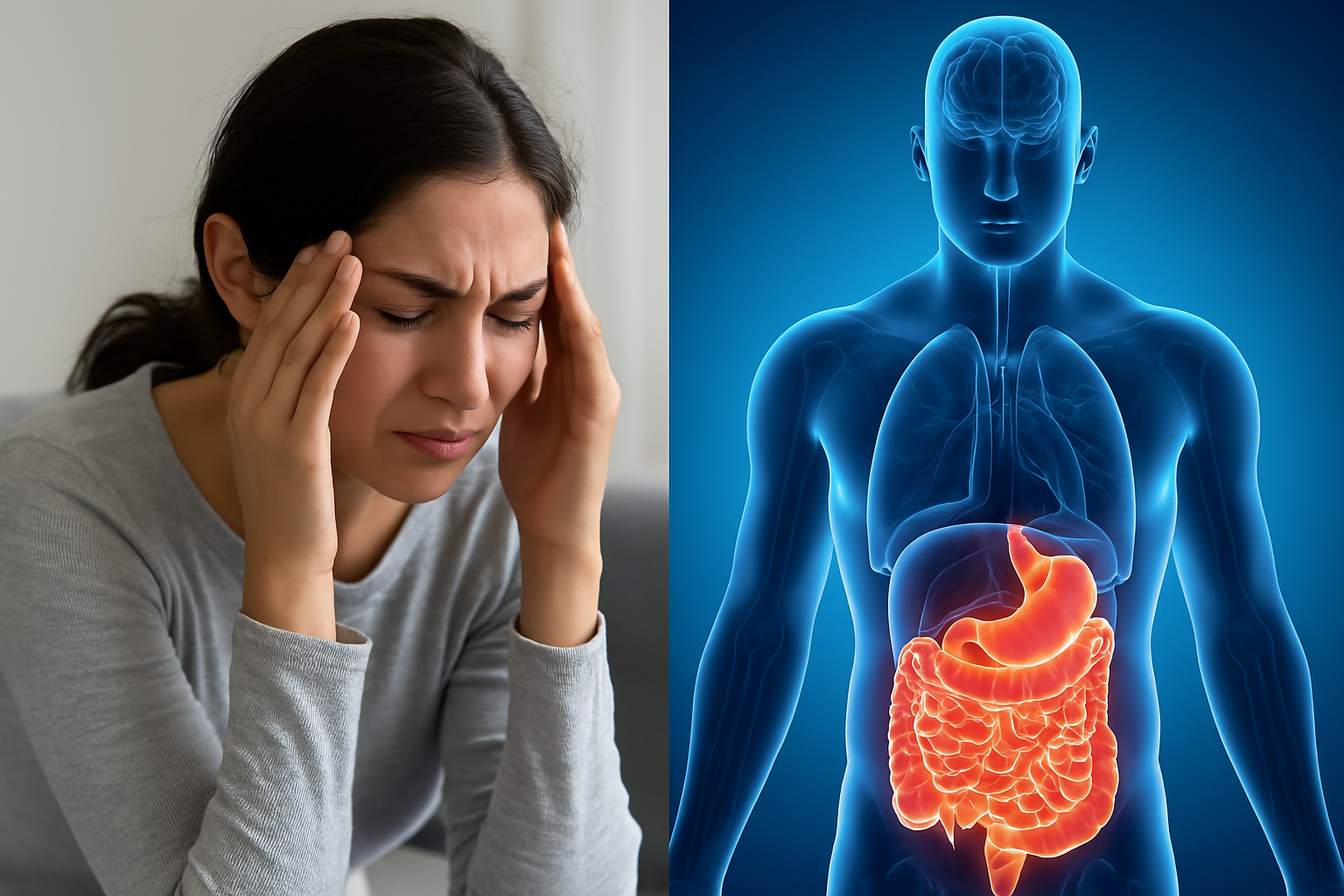
Such chronic activation can contribute to a range of psychosomatic symptoms. Individuals may experience headaches, gastrointestinal disturbances, muscle pain, fatigue, or cardiovascular irregularities without a clear organic cause. These symptoms are not imagined; they are real physiological experiences resulting from the interaction between psychological processes and bodily systems.
The role of perception and attention is also critical in psychosomatic phenomena. The brain continuously monitors internal bodily states, a process often referred to as interoception. This monitoring allows individuals to detect changes in physiological conditions and respond appropriately. However, heightened attention to bodily sensations can amplify their perceived intensity.
When individuals become hyper-aware of internal sensations, minor physiological fluctuations may be interpreted as significant or threatening. This interpretation can increase anxiety, which in turn further intensifies physiological responses. A feedback loop emerges in which perception, emotion, and bodily sensation reinforce one another.
Cognitive processes shape how these sensations are interpreted. Beliefs about health, illness, and the body influence whether sensations are perceived as normal or pathological. For example, an individual who interprets a rapid heartbeat as a sign of danger may experience increased anxiety, leading to further physiological activation. In contrast, interpreting the same sensation as a benign response to stress may reduce its impact.
Memory and prior experience also contribute to psychosomatic expression. Past experiences of illness or distress can shape expectations about bodily sensations. These expectations influence how new sensations are perceived and interpreted. Over time, patterns of association may develop, linking specific emotional states with particular physical symptoms.
Trauma plays a particularly significant role in psychosomatic processes. Traumatic experiences often involve intense emotional and physiological activation that may not be fully processed or integrated. The body may retain aspects of this activation, leading to persistent patterns of tension or dysregulation.
In such cases, bodily symptoms may represent not only current stress but also unresolved aspects of past experience. Individuals may experience physical sensations that do not correspond to present conditions but reflect stored physiological responses. These sensations can be triggered by reminders of the original trauma, even if the individual is not consciously aware of the connection.
The concept of somatization further illustrates how psychological distress can be expressed through the body. Somatization involves the manifestation of emotional or psychological conflict as physical symptoms. This process is not deliberate; individuals are typically unaware of the psychological origins of their symptoms. The body becomes a medium through which unarticulated experiences are expressed.
Language plays an important role in this process. When individuals lack the means to articulate emotional experiences, the body may assume a communicative function. Physical symptoms can be understood as a form of nonverbal expression, conveying distress that cannot be easily verbalized.
Cultural context influences how psychosomatic symptoms are experienced and interpreted. In some cultures, expressing psychological distress directly may be discouraged, leading individuals to express distress through physical symptoms. In other contexts, somatic expression may be more readily recognized as linked to emotional states.
The interaction between social environment and psychosomatic processes highlights the importance of context in understanding these phenomena. Social expectations, cultural norms, and interpersonal relationships all shape how individuals experience and communicate distress.
Neurobiological research provides further insight into the mechanisms underlying psychosomatic processes. Brain regions involved in emotion, perception, and bodily regulation are closely interconnected. These connections allow emotional states to influence physiological processes and vice versa.
For example, areas involved in emotional processing can modulate autonomic activity, while sensory regions convey information about bodily states to higher-order cognitive systems. This bidirectional communication creates a network through which mind and body continuously interact.
Hormonal systems also play a role in translating psychological states into physiological changes. Stress-related hormones influence multiple bodily systems, including immune function, metabolism, and cardiovascular activity. Prolonged activation of these systems can contribute to the development of chronic health conditions.
The immune system itself is sensitive to psychological factors. Research indicates that stress and emotional states can influence immune responses, affecting susceptibility to illness and recovery processes. This interaction further blurs the distinction between psychological and physical health.
Despite the complexity of these mechanisms, psychosomatic symptoms are often misunderstood or dismissed. Individuals experiencing such symptoms may feel invalidated if their condition is attributed solely to psychological factors. This highlights the importance of recognizing that psychosomatic does not mean imaginary. The symptoms are real, even if their origins involve psychological processes.
Clinical approaches to psychosomatic conditions emphasize integration rather than separation. Effective treatment often involves addressing both psychological and physiological aspects of the condition. Techniques that enhance emotional awareness, reduce stress, and improve regulation of bodily systems can alleviate symptoms.
Therapeutic interventions may focus on helping individuals recognize the connections between their emotional experiences and physical symptoms. By increasing awareness of these links, individuals can develop more adaptive ways of responding to stress and emotional challenges.
Relaxation techniques, mindfulness practices, and cognitive restructuring are among the approaches used to reduce physiological activation and alter patterns of interpretation. These methods aim to break the feedback loops that sustain psychosomatic symptoms.
Importantly, treatment does not require reducing the body to a mere reflection of the mind. Instead, it involves understanding the body as an active system that both influences and is influenced by psychological processes. The goal is to restore balance within this integrated system.
The question of when the body speaks the mind does not have a single answer. The body is always, in some sense, expressing the state of the mind, whether through subtle physiological changes or more pronounced symptoms. The distinction lies in the degree to which these expressions become dysregulated or maladaptive.
In everyday functioning, the interaction between mind and body remains largely adaptive, allowing individuals to respond effectively to their environment. However, when stress becomes chronic, emotions remain unprocessed, or cognitive interpretations amplify distress, this interaction may produce symptoms that disrupt well-being.
Understanding psychosomatic processes requires moving beyond dualistic thinking. Mind and body are not separate domains but interconnected aspects of a single system. The body does not merely respond to the mind; it participates in the ongoing construction of experience.
In this sense, psychosomatic symptoms can be understood not only as signs of dysfunction but also as signals—indications that the system is struggling to maintain balance. By attending to these signals, individuals and clinicians can gain insight into the underlying processes that require attention.
Ultimately, the body speaks the mind when the integration between psychological and physiological processes becomes visible. This expression may take the form of subtle sensations or significant symptoms, but in each case, it reflects the continuous dialogue between mental and bodily systems that defines human experience.