Most people assume they know themselves better than anyone else. After all, no one else has direct access to their thoughts, memories, emotions, and experiences. Yet there are moments when this assumption seems to collapse. A person may suddenly react in an unexpected way, make a decision that feels out of character, or experience emotions they cannot explain. Sometimes individuals look back on their past actions and wonder how they could have behaved so differently. At other times, they may feel disconnected from their own thoughts, as though part of their mind has become unfamiliar. These experiences raise an intriguing psychological question: why do people sometimes feel like strangers to themselves?
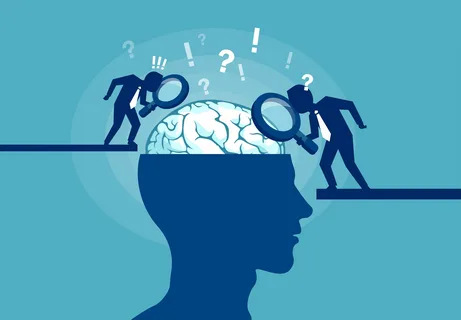
At first glance, the idea seems paradoxical. How can someone fail to understand the person they spend every moment with? The answer begins with recognizing that self-knowledge is far less complete than it appears. Human consciousness provides access to only a portion of mental activity. Beneath conscious awareness lies an enormous network of automatic processes, emotional patterns, memories, motivations, and associations that influence behavior without being fully visible.
The brain continuously performs countless operations outside awareness. It regulates bodily functions, interprets sensory information, predicts future events, and evaluates emotional significance. Most of this activity occurs automatically. Consciousness receives the final product rather than the entire process.
As a result, people often know the outcomes of their mental processes before they know the reasons behind them.
For example, an individual may instantly dislike a stranger without understanding why. Later reflection might reveal subtle reminders of a previous negative experience. Similarly, a person may feel drawn toward a particular place, career, or relationship without initially recognizing the deeper emotional factors involved.
In these situations, the mind has already reached conclusions before conscious awareness catches up.
This creates the impression that part of the self remains hidden.
Memory contributes significantly to this phenomenon.
People often imagine memory as a complete archive of personal experience. In reality, memory is selective, reconstructive, and imperfect. Many experiences are forgotten entirely. Others are remembered only partially. Even vivid memories change over time as they are repeatedly reconstructed.
Because identity depends heavily on memory, gaps in memory create gaps in self-understanding.
A person remembers fragments of childhood, important achievements, painful failures, and significant relationships. Yet countless experiences that shaped personality may no longer be accessible consciously.
The result is that individuals know themselves through an incomplete narrative.
Like reading only selected chapters of a book, they understand parts of the story while remaining unaware of many details that influenced its development.
Emotions further complicate self-knowledge.
Emotional reactions often emerge before conscious reasoning begins. Neuroscientific research suggests that emotional evaluation can occur extremely rapidly, sometimes before individuals consciously identify what they are feeling.
Someone may become irritated, anxious, or excited without immediately understanding the cause.
Only later does reflection provide possible explanations.
This delay reveals that emotional life is not fully transparent to consciousness.
The feeling arrives first.
The explanation arrives afterward.
In many cases, explanations themselves may be incomplete.
The brain prefers coherent stories.
When causes are unclear, people often create narratives that seem reasonable, even if they do not fully capture the true origins of their behavior.
Psychologists sometimes refer to this tendency as confabulation in its broader sense—the construction of explanations that feel convincing despite limited access to underlying processes.
Most of the time these explanations are not deliberate falsehoods.
They are sincere attempts to make sense of complex mental activity.
The social environment also shapes self-perception.
From early childhood onward, individuals learn about themselves partly through interactions with others. Parents, teachers, friends, and communities provide feedback that influences identity formation.
A child repeatedly praised for creativity may begin to view themselves as creative.
A child frequently criticized may develop a different self-concept.
Over time, these social reflections become integrated into personal identity.
However, social identities are not always perfectly aligned with inner experience.
Sometimes people adopt roles that satisfy expectations while suppressing other aspects of themselves.
Years later, they may discover interests, emotions, or values that feel unfamiliar because those parts of the self received little attention.
This discovery can produce a surprising sense of meeting oneself for the first time.
Life transitions often trigger such experiences.
Major events—graduation, marriage, parenthood, relocation, career changes, illness, or loss—can alter the psychological structures that previously supported identity.
The person who felt certain about who they were at twenty may feel very different at forty.
Not because the old self disappeared, but because identity continuously evolves.
The self is not a fixed object.
It is an ongoing process.
Many individuals struggle with this reality because they unconsciously expect consistency. They assume that personal identity should remain stable across time. When change occurs, it can feel disorienting.
Yet change is not evidence of inauthenticity.
It is evidence of adaptation.
The brain constantly updates beliefs, goals, and priorities in response to experience.
As circumstances change, the self changes as well.
Dreams provide another fascinating example of unfamiliarity within the mind.
During dreams, individuals often encounter thoughts, fears, desires, and symbols that seem unexpected. A dream may reveal emotions that were ignored during waking life or combine memories in unusual ways.
Although dreams are generated by the dreamer’s own brain, their content can feel strangely foreign.
This experience highlights an important truth: the mind contains far more information than conscious awareness normally accesses.
The dream state allows some of this information to emerge in symbolic and often surprising forms.
Neuroscience also suggests that the sense of self is distributed across multiple interacting brain systems rather than located in a single center.
Different neural networks contribute to memory, emotional regulation, bodily awareness, decision-making, and social cognition.
Under ordinary circumstances, these systems work together smoothly enough to create the impression of a unified self.
However, this unity is partly an achievement of integration.
When integration changes, the sense of self can change as well.
This becomes especially apparent in certain psychological conditions.
Individuals experiencing depersonalization sometimes report feeling detached from themselves, as though observing their life from outside. Their thoughts still occur, but ownership over those thoughts feels diminished.
Others describe moments of profound self-alienation during periods of depression, anxiety, or extreme stress.
These experiences demonstrate that the feeling of being oneself is not automatic.
It depends upon specific psychological and neurological processes.
Interestingly, feeling like a stranger to oneself is not always negative.
In some cases, it accompanies growth and self-discovery.
People often uncover hidden strengths during difficult circumstances.
They may discover unexpected resilience, creativity, compassion, or determination.
Such discoveries can feel surprising precisely because these qualities were previously unrecognized.
The unfamiliarity reflects expansion of self-understanding rather than loss of identity.
Philosophically, the experience raises deeper questions.
If people can be surprised by their own thoughts, emotions, and actions, how well can anyone truly know themselves?
Perhaps self-knowledge is not a destination but a continuous process.
The self may resemble an unexplored landscape more than a completed map.
Each new experience reveals previously unseen territory.
Each challenge exposes new capacities and limitations.
Each stage of life offers different perspectives on who one is.
From this viewpoint, feeling unfamiliar to oneself becomes inevitable.
The mind is not a static object waiting to be fully understood.
It is a dynamic system constantly changing through learning, memory, emotion, and experience.
Complete self-knowledge may therefore be impossible.
By the time one understands a particular version of oneself, that version has already begun to change.
Yet this uncertainty is not necessarily a problem.
In fact, it may be one of the most fascinating aspects of being human.
The capacity for surprise, growth, and transformation exists precisely because the self is never completely known.
There is always more to discover.
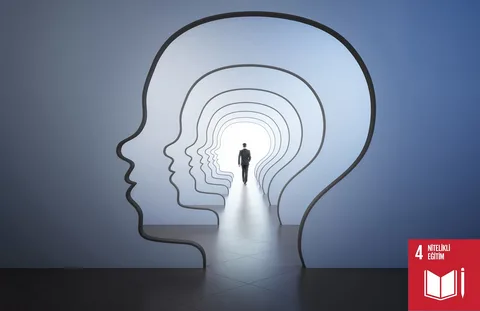
Ultimately, people sometimes feel like strangers to themselves because consciousness reveals only part of the mind’s activity. Hidden processes, evolving identities, incomplete memories, emotional complexity, and continuous adaptation ensure that self-understanding remains a lifelong project.
The self is not a finished story.
It is a story still being written.
And occasionally, when a new chapter begins, even the author is surprised by what appears on the next page.