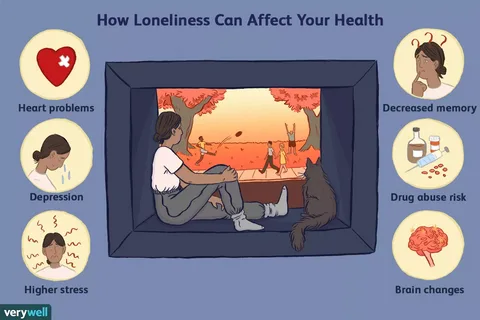
Loneliness is often described as an emotional experience, yet contemporary psychiatry increasingly recognizes it as a complex neurobiological state capable of influencing cognition, emotion, behavior, immunity, and even brain structure. Importantly, loneliness is not identical to being alone. A person may have few social contacts without feeling lonely, while another may experience profound loneliness despite living among family, friends, or colleagues. This distinction has led researchers to investigate a fundamental question: can prolonged loneliness alter the way the brain functions?
Human beings evolved as intensely social organisms.
Throughout evolutionary history, survival depended upon cooperation.
Food acquisition, protection from predators, child-rearing, and resource sharing all required stable social relationships.
Consequently, the brain developed mechanisms that treat social connection as a biological necessity rather than a psychological luxury.
From this perspective, loneliness functions much like hunger or thirst.
It signals that an essential survival need has not been adequately fulfilled.
When loneliness becomes chronic, however, the adaptive signal may gradually transform into a source of psychological distress.
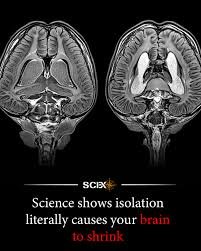
Neuroimaging studies suggest that prolonged loneliness influences communication among multiple large-scale brain networks.
Regions involved in emotional regulation, reward processing, social cognition, autobiographical memory, and threat detection all demonstrate altered patterns of activity.
Rather than affecting a single anatomical location, loneliness appears to modify interactions across distributed neural systems.
One of the earliest changes involves threat perception.
Chronically lonely individuals often become increasingly vigilant toward possible rejection.
Neutral facial expressions may appear less trustworthy.
Ambiguous social interactions become interpreted more negatively.
Small disagreements acquire exaggerated emotional significance.
The brain gradually prioritizes detecting signs of exclusion.
From an evolutionary standpoint, this adaptation makes sense.
If separation from the group once threatened survival, heightened sensitivity to rejection could encourage reconnection.
Ironically, excessive vigilance frequently produces the opposite effect.
Expecting rejection often alters behavior.
Individuals become more withdrawn.
Eye contact decreases.
Conversations become shorter.
Trust becomes difficult.
Potential relationships fail to develop.
The expectation of rejection unintentionally increases social isolation.
This self-reinforcing cycle has become a major focus within contemporary social neuroscience.
The brain’s reward system also changes.
Ordinarily, positive social interaction activates dopaminergic pathways associated with motivation and reinforcement.
Supportive conversations, physical affection, shared laughter, and emotional intimacy all contribute to psychological well-being.
During chronic loneliness, these reward systems may become less responsive.
Activities that once produced emotional satisfaction gradually lose their motivational value.
Social withdrawal therefore becomes progressively easier to maintain despite increasing distress.
Stress physiology provides another important explanation.
Loneliness activates biological systems associated with chronic stress.
The hypothalamic-pituitary-adrenal axis increases cortisol secretion.
Acute activation prepares the body for challenge.
Persistent activation, however, influences mood regulation, sleep quality, immune function, attention, and memory.
Individuals experiencing chronic loneliness frequently report insomnia, fatigue, impaired concentration, and heightened anxiety.
These symptoms often reinforce further withdrawal.
Sleep disturbance deserves particular attention.
Healthy sleep contributes to emotional regulation, memory consolidation, and neural recovery.
Loneliness frequently disrupts sleep continuity.
Although total sleep duration may remain relatively unchanged, sleep often becomes lighter and more fragmented.
Researchers propose that the brain maintains greater nocturnal vigilance when social security feels uncertain.
Even during sleep, the nervous system remains partially prepared for potential danger.
Social cognition becomes affected as well.
The human brain continuously interprets facial expressions, tone of voice, body language, and interpersonal intentions.
Loneliness appears to bias these interpretive processes.
Neutral interactions may seem emotionally distant.
Constructive criticism feels like rejection.
Delayed responses to messages become interpreted as evidence of abandonment.
These cognitive distortions do not arise from irrationality alone.
They reflect adaptive prediction systems operating within conditions of prolonged social deprivation.
The default mode network also attracts significant scientific interest.
This network contributes to self-reflection, autobiographical thinking, future planning, and understanding other people’s mental states.
Prolonged loneliness appears associated with altered activity within these regions.
Individuals spend increasing amounts of time engaged in internal reflection.
Unfortunately, this reflection often becomes repetitive rather than productive.
Rumination gradually replaces adaptive problem solving.
Negative self-evaluation becomes increasingly automatic.
Depression frequently develops through interaction with these mechanisms.
Importantly, loneliness and depression are not identical conditions.
Many lonely individuals never develop major depressive disorder.
Likewise, depression may occur without significant loneliness.
Nevertheless, chronic loneliness substantially increases vulnerability.
Reduced social reinforcement, persistent stress activation, negative cognitive bias, and diminished emotional support together create conditions favorable for depressive illness.
Immune function also appears remarkably sensitive to social experience.
Psychoneuroimmunology demonstrates that prolonged loneliness influences inflammatory activity.
Although these biological mechanisms remain under active investigation, chronic social isolation has been associated with altered immune regulation and increased inflammatory markers in numerous studies.
This relationship illustrates that psychological experiences and physical health remain deeply interconnected.
Developmental timing influences vulnerability.
Children and adolescents require social interaction for normal emotional development.
Peer relationships contribute to identity formation, emotional regulation, empathy, and interpersonal competence.
Chronic social exclusion during these developmental periods may influence later psychological functioning.
However, neuroplasticity remains present throughout life.
Supportive relationships established during adulthood continue shaping brain function.
The elderly also experience unique risks.
Retirement, bereavement, physical illness, sensory impairment, and reduced mobility frequently decrease opportunities for meaningful social interaction.
Yet research consistently demonstrates that quality matters more than quantity.
A few emotionally supportive relationships often provide greater psychological protection than numerous superficial contacts.
Modern psychotherapy increasingly addresses loneliness directly.
Treatment extends beyond encouraging greater social activity.
Therapists also target maladaptive beliefs regarding trust, rejection, self-worth, and interpersonal expectations.
Behavioral interventions gradually rebuild confidence within social situations.
Cognitive approaches reduce distorted interpretations of ambiguous interactions.
Group therapies simultaneously provide corrective relational experiences.
Perhaps the most encouraging discovery concerns neuroplasticity.
The brain remains capable of change throughout adulthood.
As meaningful social relationships develop, neural systems involved in reward, stress regulation, emotional processing, and social cognition gradually reorganize.
The biological effects of chronic loneliness are therefore not necessarily permanent.
Recovery reflects both psychological and neural adaptation.
Ultimately, loneliness demonstrates that the human brain was never designed to function in isolation. Social relationships are not merely pleasant additions to life but fundamental components of psychological health. The nervous system continuously monitors connection, belonging, and interpersonal safety because these experiences shaped human survival across evolutionary history.
Modern psychiatry increasingly understands loneliness as a biopsychosocial condition influencing emotion, cognition, physiology, and neural organization simultaneously. It reveals that the brain constructs not only an internal sense of self but also an equally essential sense of connection with others. When that connection is persistently absent, the brain adapts in ways that may initially promote survival yet ultimately increase psychological suffering. The remarkable capacity for neuroplasticity, however, offers hope that supportive relationships can gradually reshape these same neural systems toward recovery, resilience, and emotional well-being.