Loneliness is often understood as the absence of other people, but psychological experience suggests that it is more complex than physical isolation. A person may live with family, maintain friendships, communicate with colleagues, and participate in social activities while continuing to experience a profound sense of loneliness. This apparent contradiction reveals an important distinction between social contact and emotional connection. Being surrounded by people does not necessarily mean feeling understood, accepted, or psychologically close to them. Loneliness may emerge not because relationships are absent, but because the individual does not experience those relationships as emotionally meaningful.
From a psychological perspective, loneliness can be understood as a perceived discrepancy between the relationships a person has and the relationships they desire. This distinction is important because loneliness is subjective. Two individuals may live in similar social circumstances but interpret their experiences very differently. One may feel satisfied with a small circle of trusted relationships, while another may feel isolated despite having many acquaintances. The number of social interactions is therefore not always the most reliable indicator of emotional connectedness. What matters is whether those interactions provide a sense of belonging, mutual understanding, and personal significance.
One reason people experience loneliness within relationships is that communication does not always produce understanding. Individuals frequently exchange information without revealing their deeper thoughts and emotional experiences. Conversations may revolve around daily responsibilities, practical problems, social expectations, or other ordinary matters, leaving little room for vulnerability. A person may speak to others throughout the day while remaining silent about the experiences that matter most to them. Over time, this separation between outward communication and inward experience can create a sense of emotional distance. The individual is participating socially, but an important part of the self remains unexpressed.
The fear of being misunderstood may contribute to this pattern. Some individuals anticipate that their feelings will be dismissed, simplified, criticized, or interpreted incorrectly. Instead of explaining themselves, they may choose silence. This decision can provide immediate protection from embarrassment or disappointment, but it may also limit opportunities for meaningful connection. When a person repeatedly conceals their internal experience, others may assume that they are comfortable, independent, or emotionally unaffected. The resulting distance can reinforce the individual’s belief that nobody truly understands them, even when some people might be willing to listen if given the opportunity.
This process illustrates a psychological paradox: the strategies people use to protect themselves from emotional pain can sometimes intensify the very experience they are attempting to avoid. Emotional withdrawal may reduce the immediate risk of rejection, yet it can also reduce the possibility of acceptance. The person becomes less likely to experience disappointing interactions, but they also become less likely to encounter relationships that challenge their expectations. Consequently, loneliness may persist not because the individual does not want connection, but because connection feels psychologically risky.
Previous relational experiences can influence how people interpret present relationships. Individuals who have repeatedly experienced rejection, criticism, emotional neglect, or inconsistent affection may become more cautious about trusting others. They may learn to anticipate disappointment even in situations that are not necessarily threatening. A delayed reply, a distracted expression, or a brief conversation may be interpreted as evidence of disinterest. Such interpretations are not always deliberate; they may arise automatically from expectations shaped by earlier experiences. However, they can influence emotional reactions and interpersonal behavior in ways that make relationships more difficult to establish or maintain.
It is important to avoid assuming that every lonely person has experienced childhood adversity or insecure attachment. Loneliness can arise for many reasons, including life transitions, geographical separation, bereavement, discrimination, caregiving responsibilities, illness, changes in identity, and differences between personal values and the surrounding social environment. Nevertheless, early relationships may provide a framework through which some individuals learn what to expect from emotional closeness. If closeness has historically been associated with unpredictability or criticism, developing trust in adulthood may require patience and repeated experiences of relational safety.
Another factor is the difference between being liked and being known. A person may be appreciated for being helpful, competent, entertaining, or dependable without feeling that others recognize their more complex identity. They may become accustomed to fulfilling a particular role within relationships: the person who listens, the person who solves problems, the person who remains calm, or the person who takes responsibility. These roles can be meaningful, but they may also become restrictive when others rarely ask about the individual’s own needs. A person who consistently provides emotional support may eventually wonder whether others value them as a whole person or primarily value what they contribute.
This experience can be especially confusing because the relationships may appear positive from the outside. There may be affection, routine communication, and mutual assistance. Yet the individual may still feel that their inner life has little space within those relationships. They may hesitate to express sadness because they are accustomed to being the strong one, or they may avoid asking for support because they do not want to become a burden. Their loneliness is not necessarily caused by a lack of care from others. It may also reflect a pattern in which care flows in one direction more consistently than it flows in the other.
The ability to receive support is therefore as important as the ability to provide it. Some individuals find it easier to understand other people’s emotions than to communicate their own. They may listen carefully, notice subtle changes in mood, and offer thoughtful advice, while struggling to explain what they need. This imbalance can create relationships in which one person is emotionally visible and the other remains comparatively hidden. Over time, the person who rarely expresses vulnerability may feel unseen, even though they have participated actively in other people’s emotional lives.
Emotional awareness also influences loneliness. People do not always recognize their own feelings immediately. A person may describe themselves as tired, irritated, or uninterested in social activities without realizing that these experiences are connected to disappointment, sadness, or a desire for closeness. When emotional states remain difficult to identify, it becomes harder to communicate them clearly. Others may respond to the visible behavior rather than the underlying need, creating further misunderstandings. Developing emotional vocabulary can help individuals distinguish between different experiences, such as wanting solitude, feeling rejected, needing reassurance, or longing for a more meaningful conversation.
Solitude and loneliness should not be confused. Solitude is the experience of being alone, whereas loneliness involves a sense of insufficient connection. Solitude may be restorative, particularly for people who need quiet time to reflect, read, create, or recover from demanding social environments. An individual can enjoy solitude without feeling lonely, just as another person can feel lonely in a crowded room. The distinction depends partly on whether being alone is experienced as a chosen and satisfying condition or as an unwanted separation from meaningful relationships.
Introversion is similarly different from loneliness. Introverted individuals may prefer fewer social interactions, deeper conversations, and more time for private reflection. Such preferences do not automatically indicate social difficulty or emotional deprivation. Problems may arise when a person’s preferred way of relating is repeatedly misunderstood or when their environment offers few opportunities for compatible relationships. Someone who values thoughtful conversation may feel disconnected in a social setting dominated by superficial interaction, even if they are not afraid of people and do not lack interpersonal skills. In such cases, the issue may involve a mismatch between the individual’s relational needs and the available social environment.
Modern communication technologies introduce another layer of complexity. Digital platforms make it possible to remain in contact with many people, but frequent interaction does not necessarily produce emotional intimacy. Messages, reactions, and brief exchanges can create a sense of social activity without providing the sustained attention required for deeper understanding. At the same time, digital communication can be genuinely valuable, especially for people who live far from loved ones or have limited opportunities to meet others in person. Its psychological value depends less on the technology itself than on the quality, reliability, and meaning of the connection it supports.
Social comparison may also intensify loneliness. When people observe carefully selected images of other people’s relationships, celebrations, and social activities, they may conclude that everyone else is more connected or emotionally fulfilled. Such comparisons can make ordinary relational difficulties seem like personal failures. However, visible social activity reveals little about the emotional quality of a person’s private life. Someone who appears socially successful may also experience disconnection, while someone with a small social circle may feel deeply understood. Comparing one’s internal experience with the external presentation of others can therefore produce inaccurate conclusions about personal worth and belonging.
Loneliness may also occur when individuals change psychologically but their relationships remain organized around an earlier version of themselves. A person may develop new values, reconsider long-held beliefs, or become more aware of emotional needs that were previously ignored. Existing relationships may continue to function according to familiar expectations, leaving little room for this change. The individual may feel that others know their history but do not understand who they are becoming. This form of loneliness can accompany personal development because change sometimes requires renegotiating established roles and seeking relationships that accommodate a broader or more authentic expression of the self.
However, it would be misleading to suggest that loneliness always indicates personal growth or unusual depth. Loneliness is a common human experience, and it can affect people with different personalities, backgrounds, intellectual interests, and emotional capacities. Treating loneliness as proof that someone is more thoughtful or more sensitive than others may offer temporary comfort, but it can also encourage a sense of separation. The more useful question is not whether loneliness makes a person exceptional, but what the experience reveals about their needs, circumstances, expectations, and opportunities for connection.
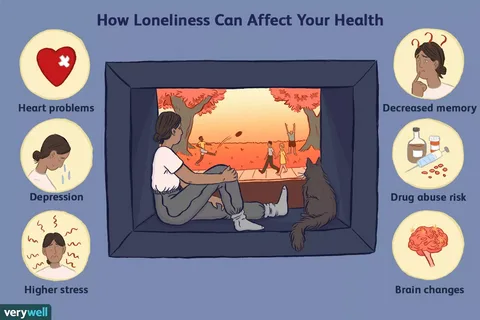
Psychological research has associated persistent loneliness with several aspects of well-being, including emotional distress, depressive symptoms, sleep difficulties, and stress. These associations do not mean that loneliness inevitably causes a mental health condition, nor do they imply that every lonely person is clinically depressed. The relationship can operate in multiple directions. Emotional difficulties may make social connection more challenging, while prolonged disconnection may contribute to further distress. Understanding this complexity is essential because loneliness should not be treated as a diagnosis in itself. It is an experience that deserves attention, particularly when it becomes persistent or interferes with daily functioning.
Reducing loneliness does not always require expanding one’s social circle. For some people, the more useful step is to strengthen a small number of existing relationships. A conversation that allows both individuals to speak honestly may be more meaningful than several interactions that remain superficial. Expressing a personal concern, asking a sincere question, sharing an uncertainty, or acknowledging a need for support can gradually create opportunities for greater intimacy. These actions do not guarantee understanding, because relationships depend on the responses of both people. Nevertheless, they make emotional connection more possible than consistently hiding important experiences.
At the same time, individuals should not assume that every relationship can provide the depth they desire. People differ in their emotional availability, communication styles, interests, and willingness to discuss personal experiences. Some relationships may be suitable for companionship or practical cooperation but not for intimate disclosure. Recognizing these differences can prevent repeated disappointment. It can also help individuals seek connection in settings where shared interests, values, or experiences make mutual understanding more likely. Communities organized around learning, creativity, professional interests, volunteering, or other meaningful activities may offer opportunities for relationships to develop gradually.
Boundaries are equally important. The desire to overcome loneliness should not lead a person to accept disrespectful treatment or remain in relationships that consistently undermine their well-being. Connection is not beneficial simply because another person is present. Emotional safety, reciprocity, respect, and reliability matter. Sometimes loneliness is intensified by remaining in relationships where the individual feels chronically criticized or invisible. In such circumstances, the solution may involve changing the quality of existing relationships rather than increasing contact with the same people.
Self-compassion can also influence the experience of loneliness. People who feel disconnected may interpret their situation as evidence that they are uninteresting, unlovable, or socially inadequate. These conclusions often extend beyond the available evidence. A period of loneliness does not establish a person’s value, and difficulty finding compatible relationships does not necessarily indicate a personal defect. Treating oneself with patience can reduce the additional suffering created by self-criticism. It allows the individual to examine their circumstances more accurately without turning a painful experience into a global judgment about identity.
Nevertheless, self-acceptance should not be confused with the belief that all change must occur internally. Loneliness is shaped by personal interpretations, but it is also influenced by social conditions. Long working hours, financial pressure, inaccessible public spaces, discrimination, relocation, caregiving demands, and limited opportunities for community participation can all restrict meaningful contact. Advising every lonely person simply to become more confident or improve their communication skills ignores these broader influences. A comprehensive understanding recognizes that individuals may need both personal strategies and more supportive social environments.
Professional support may be useful when loneliness becomes prolonged, particularly if it is accompanied by persistent sadness, hopelessness, anxiety, withdrawal, or difficulty managing everyday responsibilities. Psychological therapy can provide a space to examine relational expectations, recognize recurring interpersonal patterns, practice communication, and explore experiences that make trust difficult. The purpose is not to persuade individuals that they should be comfortable with constant social interaction. Instead, it is to help them understand what kind of connection they need and identify realistic ways of pursuing it. The appropriate approach depends on the individual’s circumstances rather than on a single explanation of loneliness.
Ultimately, feeling lonely among other people reveals that human connection is not merely a matter of physical presence. People generally need some combination of acceptance, recognition, shared experience, and the freedom to express themselves without excessive fear of rejection. These needs vary between individuals and across different stages of life. A person may require frequent companionship, while another may feel fulfilled through a small number of close relationships and substantial periods of solitude. Neither pattern is inherently superior. What matters is whether the person’s relationships and social circumstances provide a sufficient sense of connection for their own well-being.
Loneliness should therefore be approached neither as a personal weakness nor as an inevitable feature of a particular personality. It is a meaningful emotional signal, although its interpretation requires care. Sometimes it indicates a need for more contact; sometimes it points to a lack of emotional reciprocity, a mismatch between values and social surroundings, unresolved relational fears, or a period of transition. Learning to distinguish between these possibilities can help individuals respond more constructively. The goal is not to eliminate every moment of loneliness, but to develop a life in which solitude can be chosen without becoming isolation, relationships can provide more than routine contact, and the individual can experience being known without having to conceal essential parts of themselves.