Among all human emotions, fear is one of the most powerful and influential. It can alter perception, reshape memory, change behavior, and even affect physical health. While people commonly fear specific dangers such as illness, failure, loss, or physical harm, many fears ultimately share a deeper source: uncertainty. The unknown often produces stronger psychological reactions than dangers that are clearly defined. A person may cope with a confirmed diagnosis more effectively than with weeks of waiting for test results. An employee may handle a job loss better than months of uncertainty about whether dismissal will occur. In countless situations, the mind appears to fear what it does not know more than what it does know. Understanding why this occurs reveals important insights into the nature of consciousness, prediction, and survival.
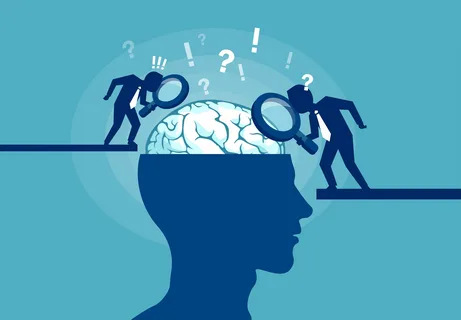
The human brain evolved primarily as a prediction system. Although people often think of the brain as a machine for processing information, neuroscience increasingly suggests that its central function is anticipating future events. The brain constantly generates expectations about the environment and compares them to incoming sensory information. These predictions help individuals respond quickly and efficiently without having to analyze every situation from scratch.
From an evolutionary perspective, prediction is essential for survival. An organism that can anticipate danger has a greater chance of avoiding harm than one that merely reacts after danger appears. As a result, natural selection favored nervous systems capable of forecasting potential threats.
However, prediction depends upon information.
When information is limited, predictions become uncertain.
When predictions become uncertain, the brain struggles to determine the safest course of action.
This uncertainty creates psychological tension.
In many ways, fear of the unknown emerges because uncertainty disrupts the brain’s fundamental goal of reducing surprise. The mind seeks patterns, regularities, and explanations. It prefers environments that can be understood and anticipated. Unknown situations provide none of these comforts.
Imagine walking through your home at night and hearing an unexpected sound. If you immediately identify the source as a falling object, anxiety usually decreases. If the source remains unknown, however, concern often grows. The lack of information allows multiple possibilities to compete for attention. Some of those possibilities may involve danger.
The brain generally treats uncertainty cautiously because caution has historically carried fewer survival costs than recklessness.
For ancient humans, assuming that a strange movement in the grass might indicate a predator was often safer than assuming it was harmless. Even if most uncertainties turned out to be benign, the occasional real threat rewarded vigilance.
This evolutionary tendency continues today.
Modern life contains far fewer predators, but the brain still responds to uncertainty as though it might conceal danger.
As a result, ambiguous situations often trigger stress responses disproportionate to actual risk.
This tendency is closely related to anxiety.
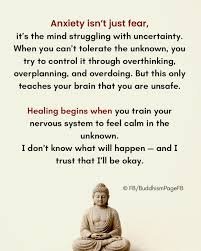
Anxiety differs from fear in important ways. Fear typically concerns an identifiable threat. Anxiety concerns potential threats that may or may not exist. Fear reacts to immediate danger. Anxiety reacts to uncertainty about future danger.
Because the future is inherently unknown, anxiety often focuses on possibilities rather than realities.
The mind begins generating scenarios.
“What if something goes wrong?”
“What if I fail?”
“What if I lose something important?”
“What if I am unprepared?”
These questions reflect the brain’s attempt to reduce uncertainty through simulation.
Humans possess an extraordinary capacity to imagine future events. This ability supports planning, creativity, and problem-solving. Yet it also enables prolonged worry.
The same imagination that helps individuals prepare for tomorrow can generate endless hypothetical dangers.
Consequently, the human mind often suffers not from actual events but from imagined possibilities.
Memory contributes significantly to this process.
Past experiences shape expectations about the future. If uncertainty previously led to pain, embarrassment, rejection, or loss, similar uncertainties may trigger heightened vigilance later.
The brain learns associations.
An unpleasant outcome becomes linked to uncertainty itself.
Eventually, uncertainty begins to feel threatening even when no specific danger exists.
This learning process helps explain why individuals differ greatly in their tolerance for ambiguity.
Some people adapt relatively easily to uncertain circumstances.
Others experience substantial distress.
These differences reflect variations in temperament, life experiences, cognitive habits, and emotional regulation.
Research suggests that individuals with high intolerance of uncertainty are more likely to experience anxiety disorders. They often interpret ambiguous situations negatively and struggle to tolerate incomplete information.
For them, uncertainty feels less like a temporary absence of knowledge and more like a direct threat.
Interestingly, certainty itself can sometimes feel more comforting than positive outcomes.
People frequently prefer unpleasant certainty to uncertain possibility.
For example, waiting for important news may feel worse than receiving disappointing news because certainty ends psychological tension.
Once an outcome becomes known, the brain can reorganize around reality.
Planning becomes possible.
Adaptation begins.
The endless cycle of prediction and speculation decreases.
This phenomenon highlights an important psychological principle: humans often need predictability as much as they need pleasure.
Control plays a central role as well.
Unknown situations reduce perceived control over events.
The less control individuals believe they possess, the more vulnerable they often feel.
This perception activates stress responses designed to prepare the body for potential challenges.
Heart rate increases.
Attention narrows.
Muscles become more tense.
Stress hormones rise.
These reactions evolved to support survival during uncertain conditions.
Yet in modern environments, they are frequently activated by symbolic threats rather than physical ones.
A difficult conversation, financial uncertainty, or social evaluation can produce physiological responses similar to those triggered by physical danger.
The brain reacts not only to what is happening but also to what might happen.
Social uncertainty is particularly powerful.
Humans are profoundly social beings whose survival historically depended upon group membership. Rejection, exclusion, and loss of status could have serious consequences in ancestral environments.
As a result, uncertainty involving relationships often generates intense emotional reactions.
People worry about how others perceive them.
They analyze ambiguous messages.
They search for hidden meanings.
They imagine future conflicts.
Much of this behavior reflects attempts to reduce uncertainty regarding social belonging.
Another important factor is the mind’s tendency to seek closure.
Psychologists describe a “need for cognitive closure,” which refers to the desire for definite answers and stable understanding. When questions remain unresolved, mental tension often persists.
The brain continues searching for explanations.
This explains why unresolved mysteries, unfinished tasks, and unanswered questions frequently occupy attention for long periods.
Closure provides psychological relief because it restores predictability.
However, reality rarely offers complete certainty.
Life contains ambiguity at every level.
The future remains unknown.
Other people remain partly unpredictable.
Many important questions lack definitive answers.
Consequently, learning to tolerate uncertainty becomes a crucial aspect of psychological resilience.
Resilience does not require eliminating uncertainty.
It requires functioning despite uncertainty.
This distinction is important.
Many individuals attempt to reduce anxiety by seeking absolute certainty. Unfortunately, absolute certainty is rarely attainable.
The more certainty one demands, the more elusive it becomes.
Instead, emotional well-being often depends upon developing comfort with incomplete knowledge.
Confidence is sometimes misunderstood as certainty.
In reality, confidence often involves acting effectively despite uncertainty.
A confident person does not necessarily know what will happen.
Rather, they trust their ability to respond to whatever happens.
This shift in perspective changes the relationship between uncertainty and fear.
Instead of viewing the unknown as purely threatening, it becomes a space containing multiple possibilities.
Some possibilities may indeed be negative.
Others may be positive.
The future remains open rather than predetermined.
Curiosity can also transform the experience of uncertainty.
Fear asks, “What if something bad happens?”
Curiosity asks, “What might I discover?”
Both responses confront the unknown.
Yet they lead to very different emotional outcomes.
Curiosity encourages exploration.
Fear encourages avoidance.
The balance between these tendencies shapes much of human behavior.
Scientific progress, artistic creativity, and personal growth all require entering uncertain territory. Every discovery begins with unanswered questions. Every meaningful change involves outcomes that cannot be fully predicted beforehand.
If humans feared uncertainty completely, exploration would cease.
Development would stagnate.
The remarkable achievements of civilization depend partly upon the willingness to move beyond what is known.
Ultimately, the mind fears the unknown because uncertainty challenges its predictive nature. The brain evolved to anticipate events, reduce surprise, and protect survival. Unknown situations interfere with these goals, creating tension that is experienced as anxiety, caution, or fear.
Yet the unknown is not merely a source of danger.
It is also the source of possibility.
Every opportunity, relationship, achievement, and discovery once existed within uncertainty. The same future that conceals potential threats also conceals potential growth.
The challenge of human existence is therefore not eliminating the unknown but learning how to coexist with it. Reality will always contain unanswered questions, unpredictable events, and uncertain outcomes. Psychological maturity emerges not when uncertainty disappears, but when individuals develop the capacity to move forward despite it.
In that sense, courage is not the absence of fear. It is the decision to continue exploring a world that can never be fully known.