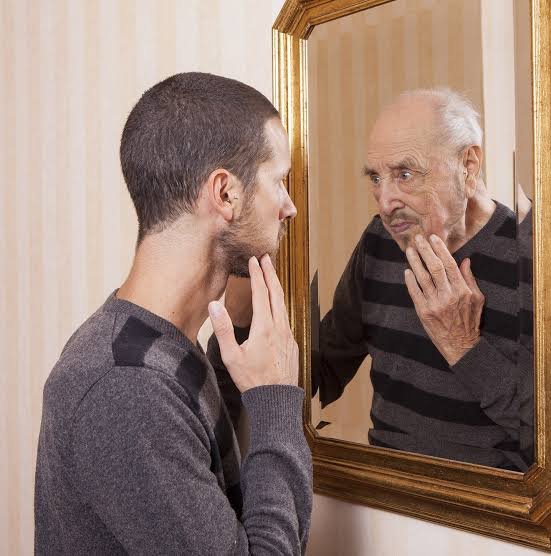
One of the most common experiences reported by adults is the feeling that time passes increasingly quickly with age. Childhood summers once seemed endless, school years felt long, and waiting for birthdays or holidays often appeared almost unbearable. Yet many adults describe entire years passing in what feels like a matter of months. This phenomenon is so widespread that it appears nearly universal, raising an intriguing psychological question: why does time seem to accelerate as people grow older?
At first glance, this experience appears paradoxical. Time itself does not change speed. A year contains the same number of days regardless of age. The Earth continues orbiting the Sun at the same rate, clocks measure the same intervals, and physical laws remain unchanged. The difference lies not in time itself but in how the human brain experiences and remembers it.
To understand this phenomenon, it is important to recognize that psychological time differs from physical time. Physical time is measured objectively through clocks and calendars. Psychological time is the subjective sense of duration experienced by consciousness. These two forms of time often diverge significantly.
One of the most influential explanations involves proportional perception. When a person is five years old, one year represents twenty percent of their entire life. By age fifty, one year represents only two percent of their lifetime experience. As people age, each additional year occupies a smaller proportion of the life already lived.
Although the brain does not consciously perform this calculation, subjective experience may be influenced by relative comparisons. Early years feel larger because they constitute a greater portion of personal history. Later years appear smaller against the backdrop of an increasingly extensive lifetime.
However, proportional perception alone cannot fully explain the phenomenon. Memory also plays a crucial role.
Human beings do not experience the passage of time directly. Instead, they often judge time retrospectively by examining memories. When looking back on a period filled with numerous distinctive experiences, that period tends to feel longer. When looking back on a period dominated by routine and repetition, it often feels shorter.
Childhood is filled with novelty.
Children encounter new environments, new skills, new friendships, and new discoveries almost constantly. They learn language, explore social rules, develop interests, and experience countless firsts. Because these events are highly memorable, they create a dense network of recollections.
When adults reflect on childhood, the abundance of stored memories makes that period seem expansive and lengthy.
In contrast, adulthood often involves greater routine. Many days resemble one another. Work schedules repeat. Responsibilities become predictable. Familiar environments replace unfamiliar ones. Because fewer experiences stand out as unique, fewer detailed memories are stored.
As a result, when looking back, large stretches of time may appear compressed.
The brain essentially asks, “How much happened during this period?” If relatively few memorable events come to mind, the period may feel surprisingly short.
Novelty is therefore one of the most important factors influencing subjective time.
Research suggests that new experiences require more extensive neural processing. The brain pays closer attention to unfamiliar information, creating richer memory traces. These detailed memories contribute to the impression that more time has passed.
This explains why vacations often seem to pass quickly while they occur but feel long in retrospect. During the vacation, enjoyment may cause attention to focus on immediate experiences, making time seem to move rapidly. Later, the abundance of memorable events expands the period in memory, making it appear longer than it felt at the time.
Routine often produces the opposite effect.
A repetitive week may feel slow while it is happening, especially if boredom is present. Yet when recalled later, the same week may seem to have disappeared almost instantly because few distinctive memories were created.
Attention itself influences time perception.
The brain does not measure time continuously like a clock. Instead, subjective duration depends partly on how much attention is directed toward the passage of time.
When individuals focus intensely on waiting, time often feels slow. Minutes seem longer because attention repeatedly returns to the clock. Conversely, during engaging activities, attention shifts away from time monitoring, causing hours to pass unnoticed.
This principle helps explain why childhood often feels longer. Children frequently pay closer attention to experiences themselves. Their worlds contain mystery, uncertainty, and discovery. Because so much is unfamiliar, attention remains highly engaged.
Adults, however, often process familiar situations automatically. Activities that once required conscious attention become routine. The brain spends less effort encoding details, reducing the richness of experience.
Another important factor involves prediction.
The human brain functions as a prediction system, constantly anticipating future events. Familiar environments are easier to predict than unfamiliar ones. As life becomes more predictable, experiences require less active processing.
This efficiency is beneficial for survival and decision-making, but it has an interesting side effect. Highly predictable experiences often leave weaker memory traces. The result is a sense that time has passed quickly because fewer details were consciously registered.
Emotional states also affect time perception.
Periods of stress, uncertainty, or crisis often feel longer while they occur because the brain allocates increased attention to potential threats. Emotional intensity heightens awareness and strengthens memory formation.
Conversely, stable periods characterized by repetition and low emotional variation may seem shorter in retrospect.
Interestingly, major life events often serve as temporal landmarks. People frequently organize memories around graduations, relationships, relocations, career changes, births, illnesses, or losses. These events divide life into meaningful chapters.
When many landmarks are present, time appears more detailed and expansive. When fewer landmarks exist, years may blend together, creating the impression that time is accelerating.
Technology may further contribute to this experience.
Modern life provides constant stimulation and information. Many activities that once required effort now occur instantly. Communication, entertainment, shopping, and information retrieval happen with remarkable speed.
This acceleration of daily life can create the feeling that entire weeks or months disappear before they are fully noticed. Continuous engagement with digital environments may also reduce reflective moments that help individuals register the passage of time consciously.
From a neurological perspective, some researchers have proposed that age-related changes in information processing may influence time perception. While the exact mechanisms remain debated, alterations in attention, memory formation, and sensory processing likely contribute to differences in how time is experienced across the lifespan.
The feeling that time speeds up with age is therefore not caused by a single factor but by the interaction of multiple psychological processes. Memory, attention, novelty, routine, emotional intensity, and life structure all influence how duration is experienced.
Importantly, this understanding suggests that subjective time is not entirely fixed.
Individuals can influence their perception of time by increasing novelty, seeking new experiences, learning new skills, exploring unfamiliar environments, and paying greater attention to everyday life. Activities that encourage curiosity and engagement often create richer memories, expanding the subjective sense of time.
This may explain why certain periods remain vivid decades later. They contained enough novelty, emotion, and significance to leave lasting impressions. The brain remembers them in greater detail, making them seem larger within personal history.
Ultimately, the sensation that time accelerates with age reveals something profound about human consciousness. People do not measure life primarily through clocks. They measure it through experience.
A year filled with discovery feels different from a year filled with repetition.
A month rich in meaningful moments occupies more psychological space than a month barely remembered.
In this sense, the passage of time is shaped not only by duration but by attention, memory, and meaning.
Time may move at a constant speed, but the mind does not travel through it uniformly. Instead, consciousness stretches, compresses, expands, and reshapes time according to how life is experienced. And perhaps that is why some moments seem to last forever while entire years can vanish in what feels like the blink of an eye.