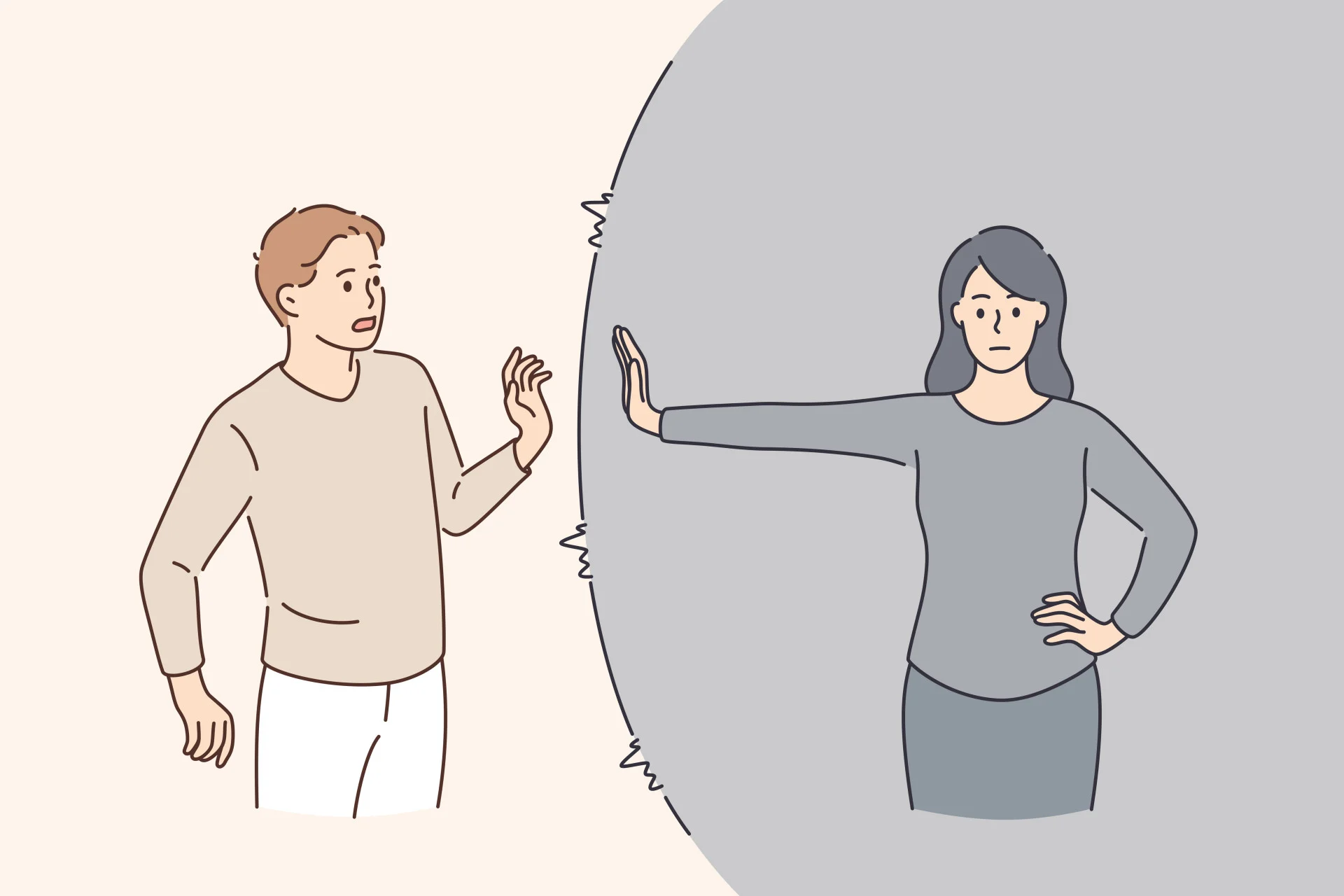
Fear is often described emotionally, yet its effects extend far beyond feeling alone. Under fear, the world itself changes psychologically. Time slows or accelerates unpredictably, sounds become sharper, shadows appear threatening, faces seem unreadable, distances distort, and ordinary environments acquire emotional hostility. Individuals experiencing intense fear frequently report certainty about dangers later revealed to be exaggerated, misinterpreted, or entirely absent. This raises a fundamental psychological and neurobiological question: why does fear distort perception so profoundly, and what mechanisms transform emotional threat into altered reality itself?
To answer this question, it is necessary first to recognize that perception is never neutral observation. Human beings do not passively receive reality through the senses. Instead, the brain continuously constructs perception through predictive interpretation. Sensory input provides incomplete information, which cognitive systems organize into coherent experience using memory, expectation, emotional significance, and survival priorities.
Fear radically alters this interpretive process because survival becomes the dominant organizational principle.
From an evolutionary perspective, fear exists not to produce objective understanding but to maximize protection under uncertainty. The nervous system evolved in environments where failing to detect danger could result in death, while overestimating threat often carried comparatively smaller costs. Consequently, human perception became biased toward false-positive threat detection.
This means the frightened brain intentionally sacrifices accuracy for survival probability.
Under fear, attentional systems narrow dramatically toward potentially threatening stimuli. This process, often called attentional bias, allows rapid focus on environmental danger while suppressing less immediately relevant information. In survival contexts such narrowing can be adaptive because it prioritizes reaction speed over reflective analysis.
However, attentional narrowing also distorts perception by reducing contextual integration. Individuals become hyperfocused on isolated cues interpreted through fear while ignoring contradictory evidence that might otherwise moderate emotional conclusions.
For example, a harmless sound at night may immediately acquire threatening significance because fear directs attention toward ambiguity itself. The nervous system assumes danger first and evaluates alternatives later.
Physiologically, fear activates extensive autonomic changes involving the sympathetic nervous system. Heart rate increases, muscle tension rises, breathing alters, pupils dilate, and stress hormones flood the body. These changes prepare rapid defensive action but simultaneously transform subjective experience.
Time perception becomes particularly unstable during fear. Many individuals report that frightening moments feel unusually prolonged. This phenomenon likely emerges because heightened arousal increases attentional density. The brain encodes more sensory information per subjective moment during threat states, creating retrospective impressions that events lasted longer than they objectively did.
Yet fear may also produce the opposite effect. In overwhelming situations individuals sometimes experience temporal fragmentation or abrupt memory gaps because extreme stress disrupts coherent encoding. Time may feel simultaneously slowed and unreal.
This instability reveals that temporal experience is psychologically constructed rather than mechanically fixed.
Visual perception changes profoundly under fear as well. Threat-related stimuli become perceptually prioritized, while neutral information fades into the background. Ambiguous shapes are more likely interpreted as dangerous, facial expressions appear more hostile, and environmental uncertainty becomes emotionally magnified.
Importantly, these distortions occur automatically rather than consciously. Fear changes perception before deliberate reasoning begins.
One powerful mechanism underlying these effects involves predictive processing. The brain continuously generates expectations about the environment based on prior experience and emotional context. Sensory information is then interpreted relative to these predictions rather than processed objectively from scratch.
Fear shifts predictive models toward threat anticipation.
Once the nervous system expects danger, ambiguous stimuli become integrated according to fear-consistent interpretation. A shadow resembles a figure, silence feels occupied, distant footsteps imply pursuit, and uncertain social interactions appear rejecting or hostile.
This predictive bias explains why fear can feel self-confirming. The frightened mind perceives evidence supporting its own expectations because perception itself becomes organized around anticipated threat.
Trauma intensifies these mechanisms dramatically. Traumatic experiences reorganize predictive systems around survival models developed during overwhelming danger. After trauma, the nervous system may continue interpreting ordinary environments through frameworks optimized for past threat rather than present safety.
Hypervigilance emerges from this persistent predictive adaptation. Traumatized individuals often scan environments continuously for signs of danger, even when objective threat is minimal. Because attention remains organized around detection, ambiguous stimuli repeatedly activate fear responses.
Importantly, hypervigilance is not irrational in its original context. It represents survival learning extended beyond the circumstances that initially required it. The nervous system prefers maintaining readiness rather than risking vulnerability.
Fear also alters auditory perception significantly. Under threat, unexpected sounds become amplified emotionally and perceptually. Silence itself may become psychologically threatening because ambiguity increases predictive uncertainty. The frightened brain fills informational gaps with imagined possibilities consistent with danger anticipation.
This explains why isolated or dark environments often intensify anxiety. Reduced sensory certainty increases reliance upon internally generated prediction, and fearful prediction naturally prioritizes hidden threat.
Social perception becomes distorted under fear as well. Human beings evolved within intensely social environments where group rejection or hostility historically carried survival consequences. Consequently, fear strongly affects interpretation of facial expressions, tone of voice, and interpersonal behavior.
Anxious individuals frequently overestimate social threat, perceiving criticism, judgment, or rejection where ambiguity exists. Neutral expressions may appear hostile because fear biases interpretation toward negative outcomes. Social anxiety therefore involves not merely excessive emotion but altered social perception itself.
Memory interacts closely with these distortions. Fear enhances encoding of emotionally salient threat-related details while impairing broader contextual integration. Later recall may therefore emphasize danger disproportionately relative to the full situation.
Repeated fearful remembering further strengthens these patterns through reconsolidation. Each fearful recollection reinforces emotional associations, making future threat perception increasingly automatic. The world gradually appears more dangerous because memory continuously reorganizes perception around prior fear.
Dissociation represents another important response to overwhelming fear. When threat exceeds coping capacity, consciousness may partially detach from direct experience. Individuals report unreality, emotional numbness, altered bodily perception, or dreamlike surroundings.
Paradoxically, dissociation functions protectively by reducing unbearable emotional intensity. Yet because perception becomes fragmented, environments may feel strange, artificial, or threatening afterward. Fear therefore destabilizes not only emotional regulation but reality integration itself.
Children illustrate fear-based perception particularly clearly. Young children frequently perceive monsters, hidden presences, or threatening figures in darkness because predictive systems strongly prioritize agency detection under uncertainty. Development gradually improves reality discrimination, yet the underlying mechanisms remain present throughout adulthood.
Cultural narratives shape fearful perception profoundly too. Societies teach individuals what kinds of danger deserve attention through stories, media, religion, and collective memory. Horror films repeatedly exploit predictable fear distortions involving darkness, silence, isolation, and uncertainty because these conditions naturally activate threat-processing systems.
Importantly, fear is contagious socially. Human beings unconsciously synchronize emotional states through facial expression, body language, vocal tone, and behavioral signaling. Group fear amplifies threat perception collectively, often producing mass panic or exaggerated danger interpretation.
Historically, moral panics, witch hunts, conspiracy movements, and collective paranoia demonstrate how socially reinforced fear can distort entire communities’ perception of reality. Once fear becomes culturally organized, contradictory evidence may be dismissed automatically because emotional certainty overrides reflective evaluation.
Technology intensifies these processes significantly. Continuous exposure to alarming information through digital media increases perceived environmental threat regardless of actual statistical danger. The nervous system responds more strongly to emotionally vivid narratives than abstract probability.
As a result, repeated exposure to fear-inducing media may reorganize perception chronically around danger anticipation. Individuals begin experiencing the world as increasingly unsafe because predictive systems adapt to continuous symbolic threat exposure.
Neurobiologically, fear involves complex interactions among emotional processing systems, attentional networks, memory structures, and autonomic regulation. The amygdala plays a central role in rapid threat detection, while stress hormones alter cognitive flexibility and sensory prioritization.
Importantly, these systems evolved for immediate survival rather than philosophical objectivity. Fear therefore produces adaptive distortion rather than accidental malfunction. The nervous system intentionally biases perception toward caution because uncertainty historically favored defensive interpretation.
Yet modern environments complicate this evolutionary design. Psychological threats, chronic stress, abstract anxieties, and symbolic dangers activate ancient survival systems not originally adapted for prolonged activation. Consequently, fear may become chronic and generalized rather than situational.
Under chronic fear, perception itself reorganizes persistently. The world appears hostile, unpredictable, or unsafe not because objective reality changed entirely, but because predictive systems continuously interpret experience through defensive expectation.
Therapeutically, reducing fear-based distortion requires more than rational reassurance because these processes operate beneath conscious reasoning. Effective approaches often involve gradual exposure, emotional regulation, bodily stabilization, and corrective relational experience capable of retraining predictive systems.
Mindfulness practices help by increasing awareness that perception is interpretive rather than perfectly objective. Individuals learn observing fearful thoughts and sensations without automatically treating them as accurate representations of external reality.
This metacognitive shift is crucial because fear often feels convincing precisely due to its perceptual immediacy. The frightened person does not merely think danger exists—they perceive it directly. Recognizing perception as constructed rather than purely received weakens fear’s absolute authority gradually.
Ultimately, fear distorts perception because perception itself evolved primarily for survival rather than objective truth. The brain continuously constructs reality through predictive interpretation shaped by emotion, memory, and biological priority. Under fear, these systems reorganize experience around threat detection automatically.
The unsettling implication is that human beings never encounter reality entirely free from emotional mediation. Fear changes not only what individuals feel but what they literally experience as real. Shadows darken, time alters, ambiguity becomes dangerous, and the ordinary world transforms psychologically according to survival expectation.
Yet these distortions also reveal the extraordinary adaptability of consciousness. The same mechanisms capable of generating paranoia, hypervigilance, and catastrophic interpretation are also responsible for intuition, rapid danger detection, and emotional learning.
Fear therefore exposes both the vulnerability and evolutionary brilliance of the human mind: a nervous system so committed to survival that it willingly reshapes reality itself in the service of protection.