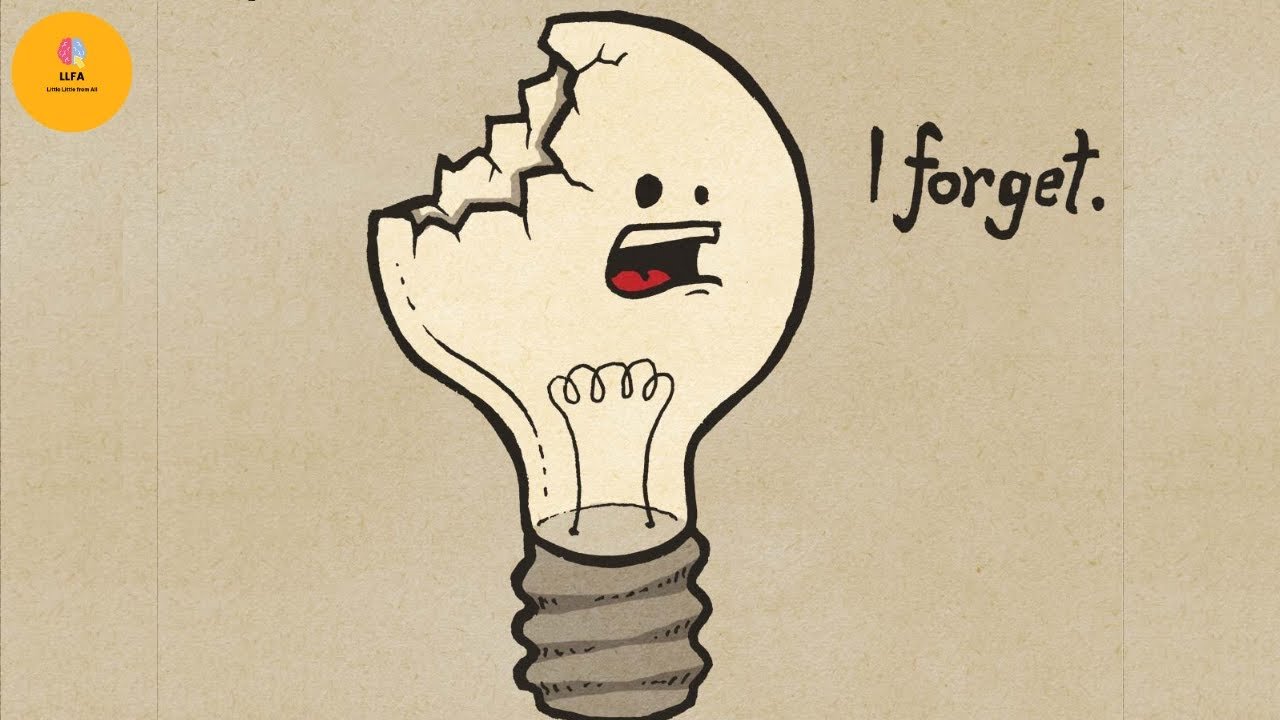
Forgetting is one of the most ordinary experiences of human life. We forget names, appointments, conversations, passwords, lessons, and sometimes even important events. Although forgetting can be frustrating, it is not necessarily a sign that the brain is malfunctioning. In many cases, forgetting is a normal and useful part of how memory works. The human brain receives an enormous amount of information every day, and it cannot preserve every detail permanently. Instead, memory is selective. The brain constantly decides, through complex biological processes, which information should be strengthened, which should become less accessible, and which may eventually disappear.
Memory is not a single system located in one specific part of the brain. It involves several interconnected regions and processes. The hippocampus plays an especially important role in forming and organizing new memories. The prefrontal cortex contributes to attention, planning, retrieval, and working memory, while other brain regions help store information about emotions, movements, sounds, and visual experiences. Because memory depends on a network rather than a single structure, forgetting can occur for many different reasons.
One of the simplest reasons we forget something is that we never encoded it properly in the first place. Encoding means transforming information into a form that the brain can process and store. If a person is distracted while someone is speaking, the information may never be encoded strongly enough to become a stable memory. This is why people sometimes say, “I heard the name, but I immediately forgot it.” In reality, the name may never have been deeply processed.
Attention is therefore closely connected to memory. When attention is divided, memory formation becomes weaker. Modern life provides many examples of this problem. A person may be talking to someone while checking a phone, thinking about another problem, and listening to background noise. Even though the person is physically present during the conversation, only part of the information may be processed deeply. Later, they may believe they have forgotten the conversation, when in fact the information was never fully stored.
Another important factor is repetition. Information that is repeated or used regularly is more likely to become stable. When a student studies a new concept only once, the memory may remain fragile. When the student reviews it several times over a period of days or weeks, the neural connections associated with the information can become stronger. This is one reason spaced repetition is generally more effective than trying to learn everything in one long session.
Sleep also plays a major role in memory. While sleeping, the brain continues processing information acquired during the day. Some memories become more stable through a process called memory consolidation. During this process, recently acquired information interacts with existing knowledge and becomes more firmly integrated into neural networks. Lack of sleep can interfere with attention, learning, and memory formation. A person who studies for many hours but sleeps very little may therefore remember less than expected.
Forgetting can also occur because memories compete with one another. When similar pieces of information are stored, one memory may interfere with the retrieval of another. This is called interference. For example, after learning a new phone number, a person may have difficulty remembering an older number. Similarly, learning several similar concepts can make it harder to recall the exact details of each one.
There are two important forms of interference. Proactive interference occurs when older information makes it difficult to remember newer information. Retroactive interference occurs when new information makes it harder to remember older information. These processes demonstrate that memory is not simply a collection of separate files. Memories interact with one another, and learning something new can change how easily older information can be accessed.
Another reason for forgetting is that memories become less accessible when they are not retrieved. Retrieval means bringing stored information back into conscious awareness. A memory that is rarely used may become increasingly difficult to access. This does not necessarily mean that the memory has completely disappeared. Sometimes the information remains stored but the brain has difficulty finding the appropriate pathway to it.
This explains a common experience: knowing that you know something but being unable to remember it at a particular moment. A person’s name may seem completely inaccessible, yet several minutes later it suddenly comes back. The information was probably not completely erased. Instead, the retrieval process temporarily failed.
Context can also influence retrieval. People often remember information more easily when they return to the environment or emotional state in which they originally learned it. A student may remember a lesson more easily in the classroom where it was taught. Similarly, a familiar smell, song, or place can suddenly bring back an old memory. This happens because memories are connected to many aspects of the original experience.
Emotions have a particularly powerful relationship with memory. Strong emotional experiences can produce vivid memories because emotional brain systems interact with memory-related regions. The amygdala, for example, helps determine the emotional significance of an experience. This can strengthen certain aspects of memory. However, emotional memories are not necessarily completely accurate. A person may remember how an event felt very strongly while remembering some factual details incorrectly.
Stress can have both positive and negative effects on memory. A moderate level of arousal can sometimes improve attention and help a person remember important information. However, prolonged or intense stress can interfere with learning and retrieval. Stress hormones influence brain regions involved in memory, and chronic stress may negatively affect the functioning of the hippocampus and prefrontal cortex.
This may explain why people sometimes forget information during an examination even though they studied it successfully. The problem may not be that the information disappeared. High anxiety can interfere with attention and retrieval, making previously learned information temporarily difficult to access. Once the stressful situation ends, the memory may return.
Age also influences memory. Some changes in memory are a normal part of aging. Older adults may take longer to learn new information, remember names, or retrieve specific details. However, normal aging does not mean that memory must decline dramatically. Many older adults maintain strong knowledge, vocabulary, and long-term memories. Regular physical activity, intellectual engagement, social interaction, adequate sleep, and management of cardiovascular risk factors can support healthy cognitive functioning.
It is also important to distinguish normal forgetfulness from serious memory problems. Occasionally forgetting where you put your keys is common. Forgetting an appointment and remembering later is also common. More concerning patterns include repeatedly forgetting important information, becoming lost in familiar places, having difficulty performing familiar tasks, or experiencing significant changes in daily functioning. Such symptoms should be discussed with a medical professional.
Memory disorders can have many causes. Alzheimer’s disease and other forms of dementia can progressively affect memory and other cognitive abilities. Brain injuries, strokes, certain neurological disorders, medications, substance use, sleep problems, nutritional deficiencies, and psychological conditions can also affect memory. Forgetfulness by itself does not indicate dementia, and a proper evaluation is necessary before drawing conclusions.
Interestingly, forgetting can sometimes be beneficial. If the brain remembered every detail of every experience with equal strength, daily life would become overwhelming. Imagine remembering every conversation you heard, every face you saw, every advertisement, every sound, and every movement you made throughout your entire life. Such an enormous amount of information could make it difficult to identify what is important.
Forgetting therefore helps the brain prioritize. Information that is repeatedly used or emotionally significant is more likely to remain accessible, while irrelevant information can become weaker. From this perspective, forgetting is not simply the opposite of memory. It is part of a healthy memory system.
Researchers have also discovered that memories are not permanently fixed after they are formed. When a memory is retrieved, it can temporarily become more flexible before being stored again. This process is sometimes called reconsolidation. During reconsolidation, a memory may be strengthened, modified, or influenced by new information. This means that remembering is not like opening an untouched recording. Every act of remembering can potentially change the memory itself.
This is one reason human memories are not perfectly reliable. People can confidently remember events that did not happen exactly as they believe. Small details can change over time, and information received after an event can influence later recollection. The confidence a person has in a memory is therefore not always a reliable measure of its accuracy.
False memories demonstrate this clearly. A person may remember a particular detail because they repeatedly imagined it, heard someone else describe it, or connected it with another event. Eventually, the detail can feel familiar enough to be experienced as a genuine memory. This does not mean that the person is deliberately lying. The brain can construct a sincere but inaccurate recollection.
The relationship between forgetting and memory therefore reveals something important about the brain. Memory is not designed to create a perfect historical record of everything that happens. Instead, it is an adaptive system that helps us use past information to understand the present and prepare for the future.
The brain constantly balances preservation and elimination. It strengthens information that appears useful and allows other information to become less accessible. Attention determines what enters the system, sleep helps consolidate what has been learned, emotions influence what becomes important, and retrieval determines which memories remain accessible.
Forgetting can be frustrating, especially when we cannot remember something that seems important. However, occasional forgetfulness is usually a normal consequence of the brain’s limited capacity and complex organization. The goal of a healthy memory system is not to remember everything. It is to remember what matters, learn from previous experiences, and adapt to new information.
Understanding forgetting can therefore change the way we think about memory. Instead of seeing every forgotten detail as a failure, we can recognize that forgetting is one of the mechanisms that allows the brain to function efficiently. A brain that could never forget might not necessarily be a better brain. In many ways, the ability to forget is part of the ability to remember.