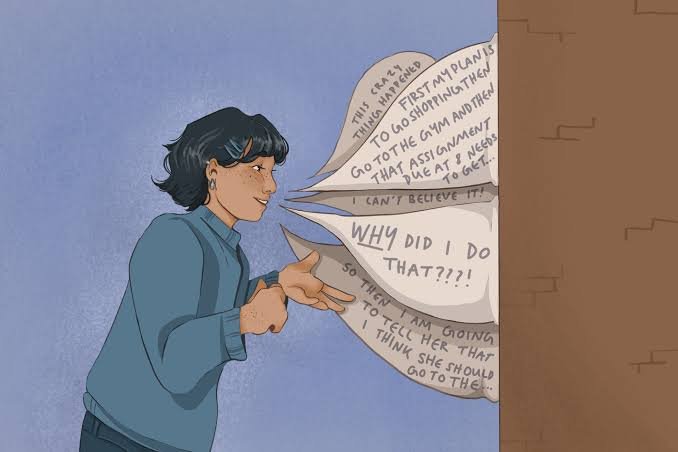
Many people occasionally speak to themselves while thinking, solving a problem, remembering a task, or reacting to an emotional event. A student may whisper while studying, a driver may say “Turn left here,” and a person who loses an object may say “Where did I put it?” Although self-talk is extremely common, it is often misunderstood. Some individuals worry that talking to oneself is strange or a sign of mental illness. Psychological research suggests that self-talk is usually a normal cognitive process and can serve important functions in thinking, emotion regulation, memory, and behavior. The more interesting question is not whether people talk to themselves, but why they do so.
Self-talk begins early in development. Young children frequently speak aloud while playing, building, drawing, or completing tasks. The Russian psychologist Lev Vygotsky proposed that this “private speech” helps children guide their behavior. A child may say, “First this block, then that block,” while solving a puzzle. Over time, much of this speech becomes internal and develops into inner speech, the silent conversation that adults experience as thinking. Thus, talking to oneself is closely connected to the development of thought itself.
One important function of self-talk is cognitive organization. Speaking aloud can help people structure complex information. When thoughts are vague or overwhelming, verbalizing them often makes them clearer. People may list options, repeat instructions, or explain a problem to themselves in order to understand it better. In this sense, self-talk acts like an external tool for organizing the mind.
Self-talk also supports memory. Repeating information aloud can strengthen recall. Individuals often say phone numbers, names, shopping items, or directions to themselves because auditory repetition increases the likelihood that the information will be remembered. This strategy is especially common when people are trying to hold information in working memory.
Another major function is self-regulation. People frequently use self-talk to guide behavior, maintain attention, and persist during difficult tasks. Athletes may say “Stay focused,” students may say “Keep going,” and workers may say “Finish this step first.” Encouraging self-talk can increase motivation and task persistence, particularly during challenging activities.
Emotional regulation is equally important. During stressful situations, people often speak to themselves in calming or reassuring ways: “It will be okay,” “Take a deep breath,” or “You can handle this.” Such statements can reduce anxiety by providing emotional support from within. In effect, self-talk allows individuals to become both the speaker and the listener, offering themselves comfort when external support is unavailable.
Self-talk becomes especially noticeable during problem-solving. Verbalizing a problem can help individuals evaluate alternatives and predict consequences. Saying thoughts aloud slows the thinking process and makes it easier to examine reasoning step by step. This is why many people instinctively talk to themselves when assembling furniture, cooking a new recipe, fixing a device, or making an important decision.
Psychologists have found that the tone of self-talk matters greatly. Supportive self-talk is associated with greater confidence, persistence, and emotional resilience. Harsh self-talk, in contrast, is linked to anxiety, low self-esteem, perfectionism, and depression. Statements such as “I always fail” or “I am useless” can strengthen negative beliefs and increase emotional distress. Thus, the psychological impact depends less on the existence of self-talk than on its content.
An interesting phenomenon is the use of one’s own name during self-talk. Research suggests that speaking to oneself as if speaking to another person—for example, “Aynur, stay calm”—may create psychological distance from intense emotions. This distance can make it easier to think more objectively and regulate emotional reactions.
Creativity is another area in which self-talk may be beneficial. Writers, artists, scientists, and inventors often report engaging in internal dialogues while generating ideas. Imagined conversations, questions, and explanations can stimulate new perspectives and creative associations. In this way, self-talk may contribute to imagination and innovation.
Self-talk can also serve social purposes even when no other person is present. Humans are highly social beings, and internal dialogue may reflect the social nature of thought. People often rehearse future conversations, imagine how others might respond, or review past interactions. Such mental simulations help prepare for social situations, although excessive rehearsal may increase anxiety.
A common concern is whether talking to oneself indicates a psychological disorder. In most cases, the answer is no. Occasional or frequent self-talk is common among psychologically healthy individuals. It becomes a clinical concern only when it is accompanied by symptoms such as hearing voices that seem to come from outside oneself, losing touch with reality, severe confusion, or significant impairment in daily functioning. Ordinary self-talk is recognized as one’s own speech and thoughts.
Stress and loneliness can increase self-talk. People who spend long periods alone may speak aloud more often because verbal expression provides a sense of companionship and mental stimulation. During stressful periods, self-talk may increase as individuals attempt to cope with uncertainty and emotional tension.
Cultural attitudes toward self-talk vary. In some societies, speaking aloud to oneself in public is viewed as unusual, while in others it attracts little attention. These cultural expectations influence whether individuals feel embarrassed about self-talk, but they do not determine whether the behavior is psychologically normal.
Modern technology has created new forms of self-talk. People now speak to voice assistants, record voice notes, and talk through tasks while using digital devices. These behaviors blur the boundary between private speech and communication with technology, yet they continue to reflect the human tendency to use language as a tool for thinking.
Self-talk can be deliberately improved. Psychological interventions often teach individuals to replace self-critical statements with more balanced and compassionate ones. Instead of saying “I cannot do this,” a person might practice saying “This is difficult, but I can try step by step.” Such changes in internal dialogue can significantly influence emotions and behavior.
Mindfulness approaches encourage individuals to observe self-talk without automatically believing every thought. This perspective helps people recognize that thoughts are mental events rather than objective facts. Learning to notice self-talk without becoming trapped in it can reduce anxiety and rumination.
Parents and educators can model healthy self-talk for children by verbalizing constructive coping strategies: “I made a mistake, so I will try again,” or “This problem is hard, but I can solve it.” Children often internalize the language they hear from important adults, so supportive external speech can become supportive internal speech.
In conclusion, people talk to themselves because self-talk is a natural extension of human thought. It helps organize thinking, improve memory, guide behavior, regulate emotions, solve problems, maintain motivation, and sometimes enhance creativity. Far from being inherently abnormal, self-talk is a common psychological tool that supports daily functioning. The crucial issue is not whether people talk to themselves, but how they do so. Compassionate, realistic, and constructive self-talk can strengthen resilience and mental well-being, whereas harsh and self-critical self-talk can contribute to emotional distress. Understanding self-talk therefore offers valuable insight into the intimate relationship between language, thought, and psychological health.