Trauma can profoundly influence the way individuals experience themselves, other people, and the world around them. An event that involves actual or threatened death, serious injury, or sexual violence may overwhelm a person’s ability to respond effectively and create lasting psychological consequences. Although many people experience distress after frightening or life-threatening events, some continue to experience symptoms that interfere with their daily functioning. One possible consequence is post-traumatic stress disorder (PTSD), a mental health condition characterized by persistent difficulties following exposure to traumatic events.
PTSD is more complex than simply remembering something frightening. It involves changes in how the brain and body respond to reminders of danger, how memories are experienced, and how individuals interpret their present environment. A person may intellectually understand that a dangerous event has ended while continuing to experience emotional and physiological reactions as though the threat were still present. This difference between knowing that one is safe and feeling safe is central to understanding post-traumatic stress.
Not everyone who experiences trauma develops PTSD. Many individuals experience temporary fear, sadness, sleep disturbances, or intrusive memories during the period following a traumatic event. These reactions may gradually decrease as the person receives support and adapts to what happened. PTSD is considered when characteristic symptoms persist for more than one month, cause clinically significant distress or impairment, and meet diagnostic criteria. The severity and duration of post-traumatic reactions vary considerably between individuals.
Traumatic experiences can take many forms. They may include combat exposure, physical or sexual violence, serious accidents, natural disasters, life-threatening medical events, or witnessing the death or serious injury of another person. Direct exposure is not the only possible pathway. Learning that a traumatic event has happened to a close family member or friend, or repeated exposure to disturbing details of traumatic events through professional responsibilities, may also be relevant in certain circumstances.
However, not every painful or stressful experience meets the formal diagnostic definition of trauma used for PTSD. Emotional neglect, humiliation, relationship difficulties, bullying, and prolonged interpersonal conflict can have serious psychological consequences, even when they do not satisfy the specific exposure criterion for PTSD. Such experiences may contribute to other mental health difficulties or trauma-related symptoms. It is therefore important to recognize psychological suffering without applying a diagnosis automatically.
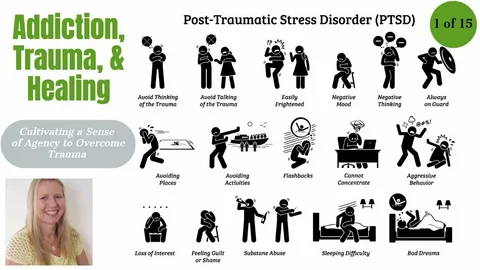
One of the most characteristic features of PTSD is the experience of intrusive memories. These memories may appear unexpectedly and involve images, sounds, sensations, or emotions associated with the traumatic event. A person may be occupied with an ordinary activity when a particular smell, sound, place, or conversation suddenly brings the experience back into awareness.
Intrusive memories are not necessarily deliberate acts of remembering. They may occur without the individual’s intention and can produce significant distress. Some people experience nightmares involving the event, while others report vivid emotional or sensory memories that feel unusually immediate. In more intense cases, individuals may experience flashbacks, during which they feel or behave as though the traumatic event is happening again. The intensity of these experiences varies, and not every person with PTSD experiences flashbacks.
The psychological difficulty of intrusive memories is partly related to how traumatic experiences are processed and stored. Ordinary autobiographical memories generally become integrated into a person’s broader understanding of their life. They can be remembered as events that happened in the past, even when they remain emotionally meaningful. Traumatic memories may sometimes be experienced in a more fragmented, sensory, or emotionally intense manner. Their connection with present-day reminders can produce the feeling that the past has entered the present.
This does not mean that traumatic memories are always inaccurate or that every person with PTSD has fragmented memory. Memory is reconstructive, and recollection can change over time for many reasons. The important point is that remembering a traumatic event can involve more than consciously recalling information. Emotional responses, bodily sensations, and environmental cues may become strongly associated with the experience.
Avoidance is another central feature of PTSD. Individuals may attempt to avoid thoughts, feelings, conversations, people, places, or activities that remind them of the traumatic event. For example, someone involved in a serious road accident may avoid driving, traveling as a passenger, or even looking at photographs of cars. A person who experienced interpersonal violence may avoid particular locations or social situations associated with the event.
Avoidance can provide short-term relief because it reduces contact with distressing reminders. However, when avoidance becomes extensive, it may interfere with everyday life and maintain fear. The individual may gradually organize more and more activities around preventing emotional discomfort. A place that was once ordinary may become associated with danger, and the person’s world may become increasingly restricted.
Avoidance can also be psychological rather than physical. Some individuals try not to think about the event, avoid discussing their feelings, or remain constantly occupied to prevent unwanted memories from appearing. These strategies may be understandable attempts to manage overwhelming emotions. Nevertheless, persistent avoidance can make it difficult to process the experience and regain confidence in ordinary situations.
Negative changes in thoughts and mood may also develop following trauma. A person may experience persistent guilt, shame, fear, anger, or emotional numbness. Some individuals blame themselves for what happened, even when they had little or no control over the circumstances. Others develop broad beliefs that the world is entirely dangerous, that other people cannot be trusted, or that they themselves are permanently damaged.
These beliefs can influence relationships and personal identity. Someone who previously felt comfortable depending on others may become suspicious or emotionally distant. A person who once enjoyed social activities may begin to withdraw because interactions feel exhausting or unsafe. Some individuals report difficulty experiencing positive emotions, including happiness, affection, or satisfaction.
Emotional numbness should not automatically be interpreted as a lack of feeling or concern. In some trauma-related presentations, it may reflect an attempt to reduce overwhelming emotional activation. A person may appear detached while experiencing considerable distress internally. They may care deeply about family members but struggle to express affection or remain emotionally present.
Another important symptom group involves changes in arousal and reactivity. Individuals with PTSD may remain unusually alert to possible danger. They may startle easily, feel constantly watchful, become irritable, or have difficulty concentrating. Ordinary sounds may produce disproportionate reactions because the nervous system has become highly sensitive to potential threats.
This state is sometimes described as hypervigilance. The person may continually monitor the environment, observe other people’s behavior, check doors and windows, or feel uncomfortable when they cannot see what is happening around them. Such behaviors may be attempts to prevent another frightening experience. However, maintaining a constant state of alertness requires considerable mental and physical energy.
Sleep disturbances are also common. Some individuals experience nightmares, difficulty falling asleep, frequent awakenings, or a sense of being unsafe during the night. Poor sleep can then affect emotional regulation, attention, memory, and physical health. Fatigue may increase irritability and make it more difficult to manage reminders of the traumatic event, creating a cycle in which sleep problems and psychological distress reinforce one another.
The relationship between trauma and the brain has been the subject of extensive research. Several neural systems involved in threat detection, memory, and emotional regulation are relevant to PTSD. The amygdala, hippocampus, and prefrontal regions are frequently discussed in this context.
The amygdala plays an important role in detecting emotionally significant information, including potential threats. Research has associated PTSD with differences in amygdala activity and responses to threatening stimuli. These findings may help explain why some individuals react strongly to reminders of danger even when the present situation is relatively safe.
The hippocampus contributes to memory formation and the contextual organization of experiences. It helps distinguish between different situations and their associated contexts. Research has identified differences in hippocampal structure or functioning in some individuals with PTSD, although findings vary and cannot be used to diagnose an individual. Difficulties in contextual processing may contribute to the experience of reacting to a present-day reminder as though it were part of the original traumatic situation.
The prefrontal cortex is involved in several functions, including planning, attention, decision-making, and the regulation of emotional responses. Certain prefrontal regions participate in evaluating whether a threat is present and modulating reactions to emotionally significant information. Differences in activity across these networks have been observed in PTSD research. Nevertheless, PTSD cannot be explained by a single brain region, and the condition involves complex interactions among neural systems, learning processes, physiological responses, and personal experience.
The stress-response system is another important part of the picture. When a person encounters danger, the body activates physiological processes that prepare for survival. Heart rate may increase, breathing may become faster, muscles may tense, and attention may narrow toward the perceived threat. These responses are adaptive when immediate action is necessary.
After a traumatic event, some individuals continue to experience heightened stress responses in situations that resemble the original danger. The body may react before conscious evaluation has taken place. A sudden sound can produce intense fear, or a particular tone of voice may trigger tension without the individual immediately understanding why. These reactions are not signs of weakness. They reflect learned associations and changes in how threat-related information is processed.
The autonomic nervous system is involved in regulating many of these responses. Its sympathetic branch contributes to mobilization during threat, while parasympathetic processes participate in recovery and regulation. PTSD has been associated with alterations in autonomic functioning, although physiological patterns differ between individuals. Some may experience persistent activation, while others report emotional shutdown or episodes of detachment.
Dissociation is an experience that can occur in some trauma-related conditions. It may involve feelings of detachment from one’s body, surroundings, emotions, or sense of identity. A person may describe feeling unreal, as though observing life from a distance, or experiencing the environment as strangely unfamiliar. Dissociation can occur during or after overwhelming experiences, but it is not present in every person with PTSD and can have other psychological or medical explanations.
There are also different patterns of PTSD presentation. Some individuals primarily experience intrusive memories and hyperarousal, while others struggle more with avoidance, emotional numbness, or negative beliefs. The intensity of symptoms can change over time. Stressful life events, reminders, relationship difficulties, and sleep disruption may influence symptom severity.
Certain factors may increase the likelihood of developing persistent post-traumatic symptoms. These include the severity and duration of exposure, repeated traumatic experiences, previous mental health difficulties, limited social support, and ongoing exposure to danger. However, these are risk factors rather than guarantees. People with extensive trauma histories do not inevitably develop PTSD, and individuals with no previous mental health difficulties can experience it after a single event.
Social support can be an important part of recovery. Feeling believed, respected, and supported may help individuals regain a sense of safety and connection. However, the way support is offered matters. Pressuring someone to describe traumatic experiences before they are ready can increase distress. Statements that minimize suffering, such as telling someone simply to forget the event or move on, may leave the person feeling misunderstood.
A supportive response generally involves listening without judgment, respecting personal boundaries, and allowing the individual to decide what they are comfortable discussing. Practical assistance may also be valuable. Help with daily responsibilities, access to healthcare, and reliable social contact can reduce some of the pressures that complicate recovery.
One of the most important principles in trauma-informed care is the recognition that recovery is not necessarily linear. Individuals may experience periods of improvement followed by temporary increases in distress. A reminder of the event may reactivate symptoms even after considerable progress. Such fluctuations do not automatically mean that treatment has failed or that recovery is impossible.
Evidence-based psychological treatments can help many individuals with PTSD. Trauma-focused cognitive behavioral therapy is one major treatment category. It involves examining the relationship between traumatic experiences, beliefs, emotions, and behavior. Depending on the specific approach, treatment may help individuals reconsider self-blaming interpretations, reduce avoidance, and develop more adaptive responses to reminders.
Cognitive Processing Therapy is a trauma-focused treatment that addresses beliefs that may develop following trauma. These beliefs can concern safety, trust, power, control, esteem, and intimacy. For example, a person may conclude that because they experienced danger once, no environment can ever be safe. Treatment can help examine how such conclusions developed and whether they accurately represent present circumstances.
Prolonged Exposure therapy is another evidence-based approach. It involves carefully and systematically approaching trauma-related memories and situations that have been avoided, under the guidance of a trained clinician. The purpose is not to force a person to relive trauma without support. Rather, treatment aims to reduce avoidance and help the individual learn that reminders can be experienced without the feared consequences necessarily occurring.
Eye Movement Desensitization and Reprocessing, commonly known as EMDR, is also used in PTSD treatment. It involves recalling aspects of a traumatic memory while engaging in structured bilateral stimulation, such as guided eye movements. The precise mechanisms through which EMDR produces therapeutic effects remain under investigation, but clinical research supports its use for many people with PTSD.
Not every treatment is appropriate for every individual. The choice of therapy depends on symptom patterns, personal circumstances, preferences, safety, and professional assessment. A qualified mental health professional can discuss treatment options and help determine an appropriate approach. In some cases, medication may also be considered, particularly when symptoms are severe or when depression or anxiety occurs alongside PTSD. Medication decisions should be made with a qualified prescriber, taking potential benefits and adverse effects into account.
It is important to distinguish treatment from the informal advice that people sometimes receive after traumatic experiences. Suggestions such as staying busy, avoiding all reminders, or simply thinking positively may be insufficient. Some lifestyle measures can support general well-being, but they do not replace appropriate treatment when PTSD symptoms are persistent and impairing.
Physical activity, regular sleep routines, balanced nutrition, and relaxation practices may contribute to overall health. Grounding techniques can also help some individuals reconnect with the present moment during distress. For example, they may identify objects in the room, notice their feet touching the floor, or describe the sounds around them. Such techniques are not universal solutions, and their usefulness depends on the individual’s response.
A particularly important aspect of recovery involves rebuilding a sense of control. Trauma can create the experience that safety, predictability, and personal agency have been taken away. Treatment and supportive relationships can help individuals gradually recognize choices that remain available to them. These choices may initially be small: deciding when to discuss a difficult subject, choosing a comfortable environment, establishing boundaries, or returning to an activity that had previously been avoided.
Recovery does not require forgetting the traumatic event. The aim is not necessarily to remove every memory or eliminate all emotional reactions. Rather, treatment seeks to reduce the extent to which the past controls present experience. A person may remember what happened while also recognizing that the event belongs to a particular period of life and does not determine every aspect of the future.
There is also a difference between resilience and the expectation that individuals should become stronger because of trauma. Some people report personal growth after difficult experiences, but this is not universal, and growth should never be treated as an obligation. Trauma can produce lasting suffering, and individuals do not need to identify a positive meaning in what happened to deserve support and respect.
Post-traumatic stress is a serious but treatable psychological condition. Its effects can involve memory, emotion, attention, relationships, sleep, and bodily responses. Understanding these interconnected processes helps replace simplistic judgments with a more accurate view of trauma-related difficulties. A person who remains alert, avoids reminders, or experiences sudden fear may not be choosing these reactions. They may be responding to learned patterns that require time, safety, and appropriate treatment to change.
Ultimately, recovery is not about returning to exactly the same person one was before the traumatic event. Experiences can influence identity, values, and relationships. The more realistic objective is to develop a life in which the traumatic experience no longer dominates everyday functioning. With appropriate care, supportive relationships, and evidence-based treatment, many individuals can experience meaningful improvement and regain a greater sense of safety, connection, and personal agency.