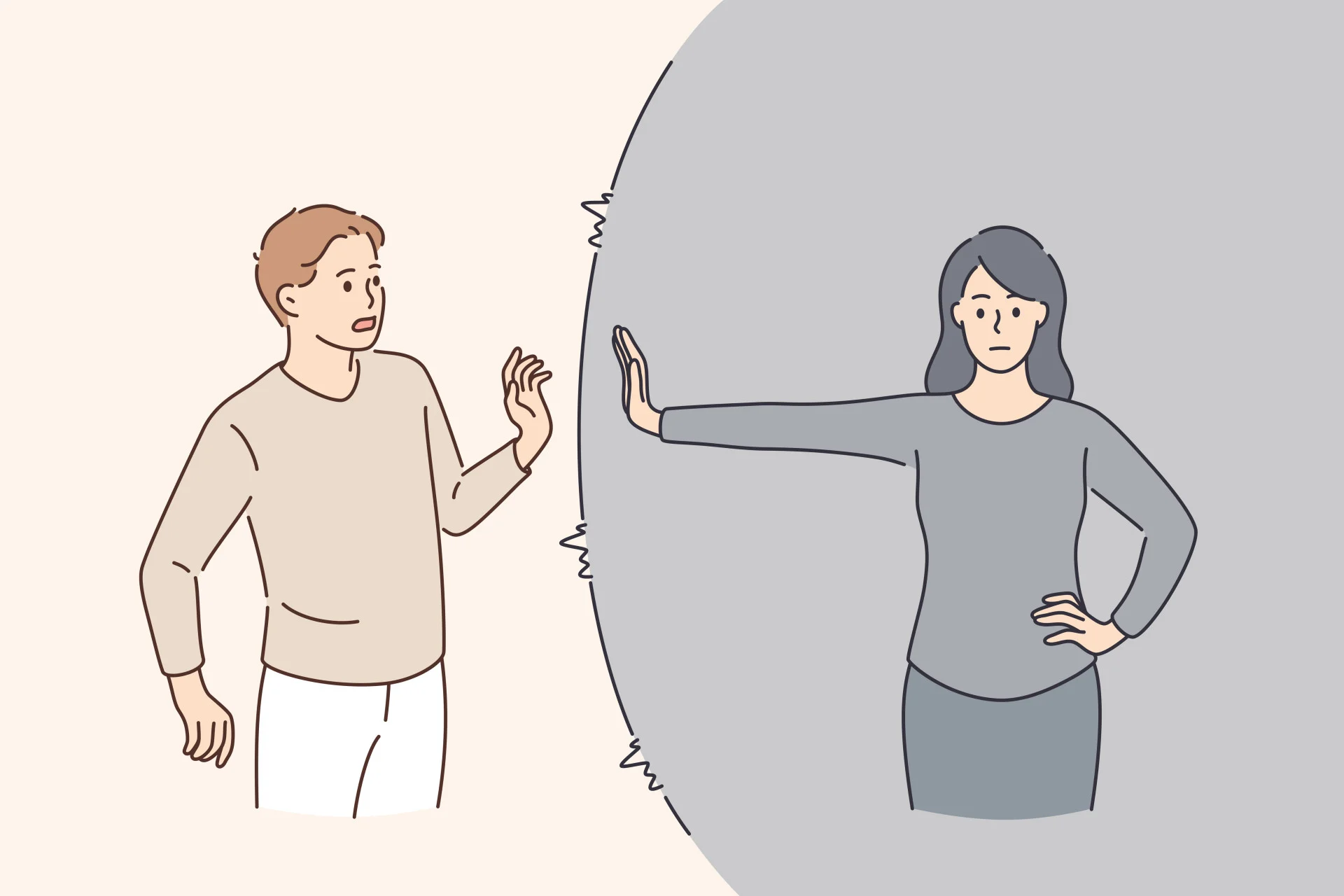
Rejection is a common part of human social experience. People may experience rejection in friendships, romantic relationships, family interactions, education, or professional environments. A person may be excluded from a social activity, receive negative feedback, experience the end of a relationship, or simply interpret another person’s behavior as a sign of disinterest. Although rejection can be emotionally painful, most people gradually adapt to such experiences. For some individuals, however, the possibility of rejection becomes a persistent source of concern and influences the way they perceive themselves and other people. This psychological pattern is often described as rejection sensitivity.
Rejection sensitivity generally refers to a tendency to anxiously expect, readily perceive, and strongly react to possible rejection. It is important to understand that rejection sensitivity is not itself a psychiatric diagnosis. People can vary considerably in their sensitivity to rejection without meeting criteria for any mental disorder. In clinical psychology, the concept is useful because heightened sensitivity to rejection may interact with anxiety, depression, low self-esteem, interpersonal difficulties, and certain personality-related patterns.
A central feature of rejection sensitivity is anticipation. The person may begin to expect rejection before there is clear evidence that rejection is actually occurring. A neutral situation can therefore become psychologically threatening. For example, if a friend takes several hours to respond to a message, a person with heightened rejection sensitivity may immediately wonder whether the friend is angry, losing interest, or intentionally ignoring them.
The important point is that the external event and the psychological interpretation are not necessarily identical. A delayed message is an observable event. The conclusion that “this person no longer likes me” is an interpretation. The interpretation may sometimes be correct, but it may also be influenced by previous experiences, expectations, or emotional state.
This distinction is particularly relevant in clinical psychology because emotional reactions are often influenced by the meaning individuals assign to events. Two people can experience the same interpersonal situation and respond differently because they interpret it differently.
A person with heightened rejection sensitivity may monitor other people’s behavior very carefully. Facial expressions, tone of voice, pauses, changes in communication frequency, or small differences in attention can become highly significant. This increased monitoring may sometimes be understandable if the individual has previously experienced repeated rejection or unstable relationships. However, it can also increase the likelihood of interpreting ambiguous behavior negatively.
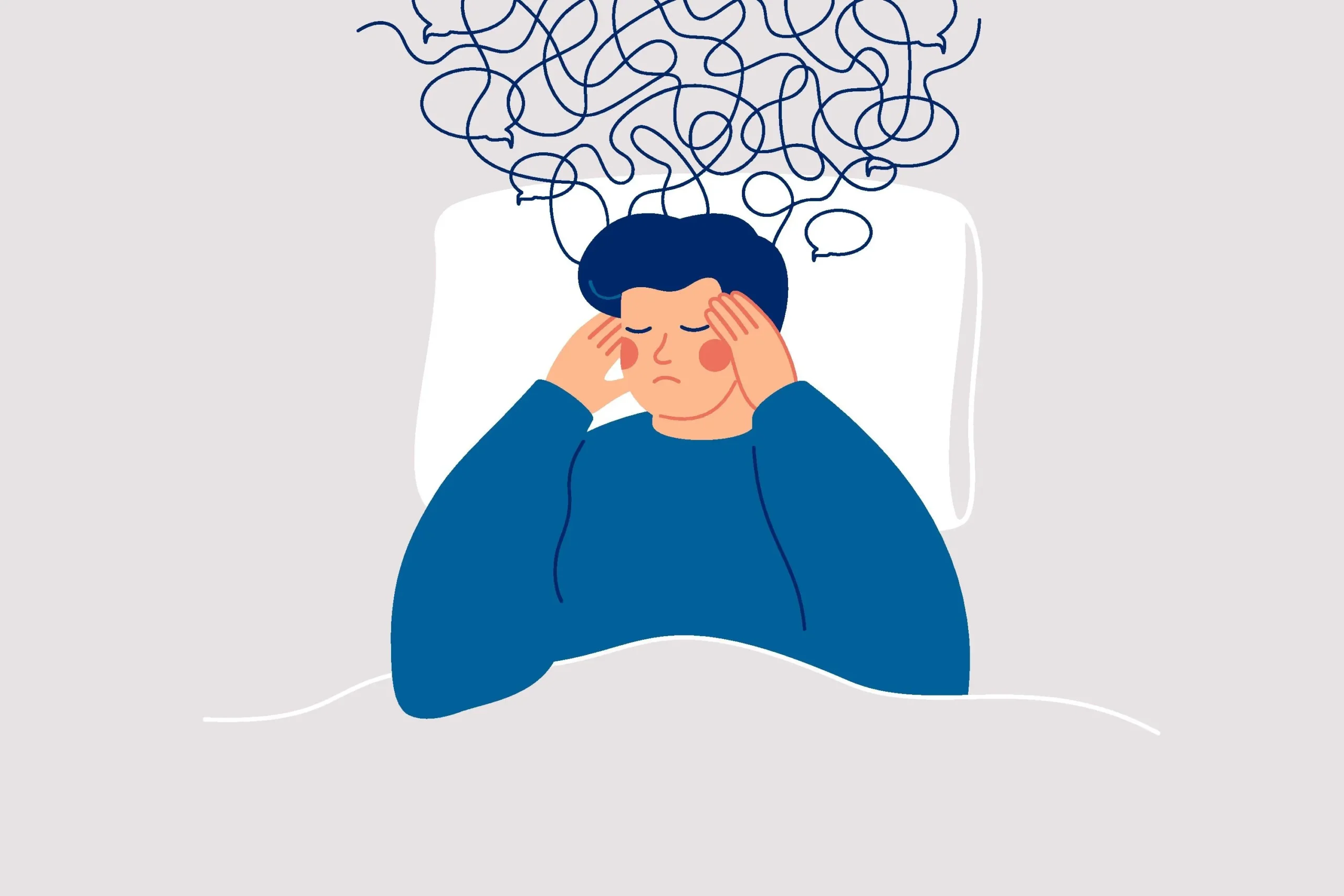
This creates a possible feedback cycle. The individual expects rejection, pays close attention to possible signs of rejection, notices ambiguous behavior, interprets it negatively, experiences anxiety or sadness, and then changes their own behavior. They may withdraw, become defensive, seek reassurance, or repeatedly ask whether something is wrong. These reactions can influence the relationship itself, potentially creating interpersonal tension.
In this way, rejection sensitivity can sometimes become self-maintaining. The person’s fear of rejection may influence their behavior in ways that unintentionally make relationships more difficult. This does not mean that the person causes their own rejection, nor does it mean that every relationship difficulty can be explained by rejection sensitivity. Rather, it describes one possible psychological mechanism through which expectations and behavior can interact.
Rejection sensitivity is closely connected to self-esteem. When a person’s sense of self-worth depends heavily on other people’s approval, signs of possible rejection may have a particularly strong emotional impact. A small criticism may be interpreted not simply as feedback about one behavior but as evidence that the person is fundamentally inadequate.
For example, receiving criticism about a work task does not necessarily mean that a person is incompetent. Yet someone who is highly sensitive to rejection may experience the criticism as a threat to their overall self-worth. The resulting emotional response may be much stronger than the immediate situation appears to require.
This does not mean that strong emotional reactions are always irrational. Criticism can genuinely be unfair, humiliating, or harmful. Clinical interpretation therefore requires attention to the actual interpersonal context. A person’s sensitivity should not be used to dismiss legitimate experiences of rejection, discrimination, manipulation, or mistreatment.
One of the most important developmental factors potentially associated with rejection sensitivity is previous interpersonal experience. Repeated rejection during childhood or adolescence may influence expectations about future relationships. A child who repeatedly experiences exclusion, bullying, criticism, or inconsistent acceptance may become increasingly alert to signs that similar experiences could happen again.
However, developmental experiences do not determine psychological outcomes in a simple way. People respond differently to similar experiences. Supportive relationships, personality characteristics, social environments, and later experiences can influence how earlier experiences are understood and incorporated into adult functioning.
Attachment theory provides one possible framework for examining these processes. Early relationships may contribute to expectations about whether other people are available, trustworthy, responsive, and accepting. Individuals who have experienced inconsistent or unpredictable interpersonal responses may become particularly attentive to signs of abandonment or rejection.
Attachment theory should not be used to classify a person after observing a few relationship behaviors. Attachment-related patterns are complex, and people’s expectations can change across relationships and over time. Nevertheless, attachment concepts can help explain why interpersonal uncertainty may feel particularly threatening for some individuals.
Rejection sensitivity may also be associated with social anxiety. A person who strongly fears negative evaluation may avoid social situations because they anticipate embarrassment or rejection. They may spend considerable time thinking about how others perceive them before, during, and after social interactions.
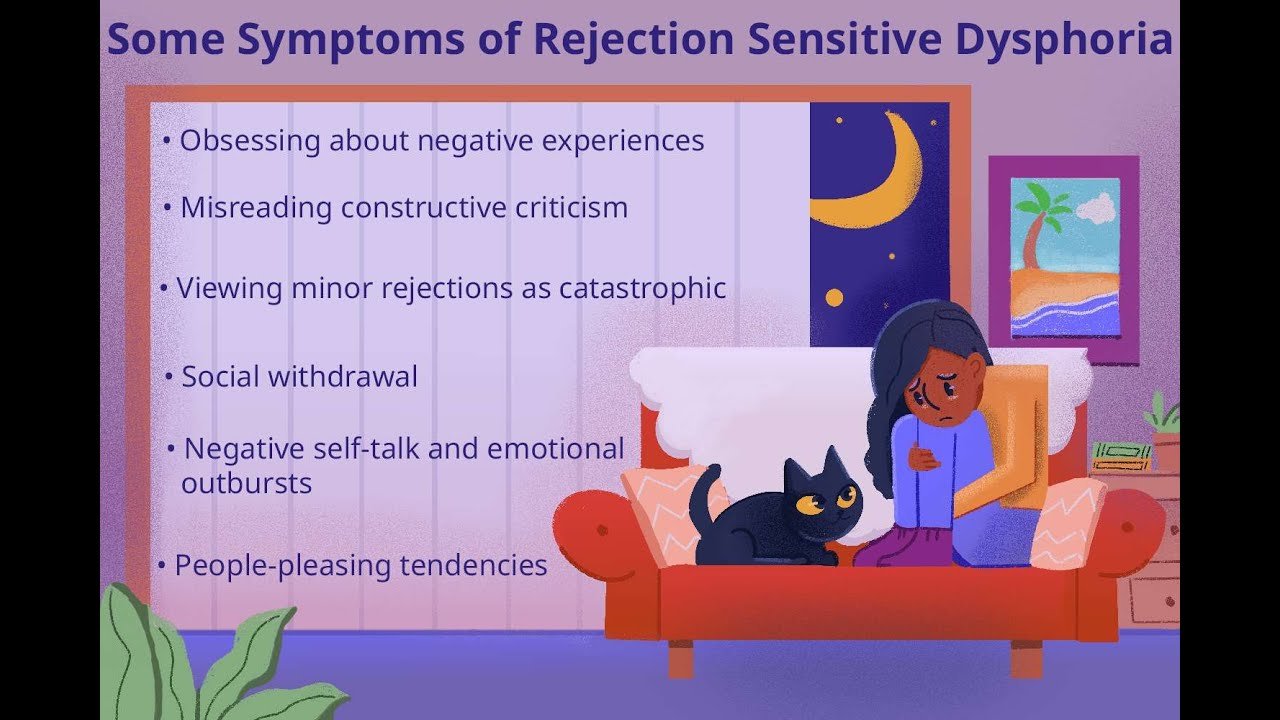
After a conversation, for example, the individual may repeatedly review what they said and wonder whether they sounded foolish or inappropriate. This process can resemble rumination. The person may search for evidence that the interaction went badly, while overlooking neutral or positive information.
Such post-event processing has been discussed in relation to social anxiety. However, rejection sensitivity and social anxiety are not identical. Rejection sensitivity is a broader interpersonal tendency that can occur in various contexts, while social anxiety disorder is a specific clinical condition involving significant fear or anxiety concerning social situations and possible evaluation.
Rejection sensitivity can also appear in romantic relationships. A person may become highly alert to changes in their partner’s behavior. A shorter message, reduced affection, or a change in routine may be interpreted as evidence that the relationship is deteriorating.
This can produce reassurance-seeking. The person may repeatedly ask, “Do you still love me?” or “Are you angry with me?” Reassurance may temporarily reduce anxiety, but if the underlying fear remains unresolved, the person may soon need reassurance again.
Another possible response is emotional withdrawal. Instead of asking for reassurance, the individual may distance themselves to protect against anticipated rejection. They may think, “If I leave first, I cannot be rejected later.” This behavior can provide a temporary sense of control but may also interfere with intimacy.
In some cases, rejection sensitivity may be associated with heightened anger. Rejection is not always experienced as sadness or anxiety. Some people respond to perceived rejection with irritation, resentment, or defensive behavior. The intensity of this response may depend on the person’s previous experiences, expectations, coping strategies, and the nature of the interpersonal situation.
Again, this should not be generalized to everyone who is sensitive to rejection. Emotional responses vary considerably between individuals.
The relationship between rejection sensitivity and depression is also clinically relevant. Repeated expectations of rejection may contribute to loneliness, social withdrawal, and negative beliefs about the self. Over time, these experiences may be associated with depressive symptoms in some individuals.
For example, someone who repeatedly thinks, “Nobody really wants me around,” may gradually reduce social activity. Reduced social contact can increase loneliness, and loneliness may reinforce the original belief. This can create a cycle involving negative expectations, withdrawal, and reduced opportunities for positive interpersonal experiences.
However, rejection sensitivity does not necessarily cause depression. The relationship can work in multiple directions. Depressive symptoms may also increase negative interpretations of social situations, making a person more likely to perceive rejection or disapproval.
This illustrates an important principle of clinical psychology: psychological processes are often bidirectional. Thoughts, emotions, behaviors, and interpersonal experiences can influence one another rather than operating as a simple one-way chain.
Rejection sensitivity can also affect professional environments. An employee may interpret constructive criticism as personal rejection. A student may avoid asking a teacher for clarification because they fear appearing unintelligent. Someone applying for a job may interpret a rejection letter as evidence of personal inadequacy rather than as the result of a complex selection process.
When rejection becomes strongly connected to self-worth, ordinary setbacks can become psychologically significant. The person may begin to avoid situations in which evaluation is possible. This can limit educational, professional, and interpersonal opportunities.
Cognitive processes are therefore particularly important. People do not simply react to social events; they interpret them. Some interpretations are relatively balanced, while others may be influenced by cognitive biases.
One possible pattern is mind reading, in which a person assumes they know what another person is thinking without sufficient evidence. Another is personalization, in which ambiguous events are interpreted as being specifically about oneself. Catastrophic interpretation may also occur when a relatively small interpersonal difficulty is perceived as evidence that an entire relationship is about to end.
These cognitive patterns do not mean that the person’s concerns are imaginary. They simply represent possible ways in which information can be processed under conditions of heightened interpersonal threat.
Cognitive behavioral therapy may address these processes by helping individuals identify automatic interpretations and examine the evidence supporting them. The goal is not necessarily to replace every negative thought with an unrealistically positive one. Instead, the individual may learn to consider multiple possible explanations.
For example, instead of immediately concluding, “My friend has not replied because they no longer like me,” the person might consider several possibilities: the friend may be busy, tired, distracted, dealing with a personal issue, or genuinely less interested. The objective is not to assume that everything is positive but to tolerate uncertainty until more information is available.
This ability to tolerate uncertainty is important because relationships cannot provide complete certainty. Even healthy relationships involve changing emotions, different needs, misunderstandings, and periods of reduced communication. A person cannot eliminate all possibility of rejection without also eliminating much of the vulnerability that makes close relationships meaningful.
Another therapeutic target may be self-worth. If a person interprets rejection as proof of personal inadequacy, psychological work may involve separating interpersonal outcomes from global self-evaluation.
A person can be rejected without being worthless. A job application can be unsuccessful without proving incompetence. A romantic relationship can end without establishing that either person is fundamentally defective. A friendship can change without meaning that one individual is universally unlikeable.
These distinctions may sound simple intellectually but can be difficult to experience emotionally. Longstanding beliefs about self-worth are often resistant to isolated pieces of evidence. Repeated experiences and gradual changes in interpretation may be more meaningful than a single reassuring statement.
Interpersonal approaches can also be useful when rejection sensitivity affects relationships directly. Therapy may examine patterns such as withdrawal, reassurance-seeking, excessive accommodation, fear of disagreement, or difficulty expressing needs.
A person may learn that attempting to avoid all possible rejection can itself interfere with authentic relationships. If someone constantly agrees with others because they fear disapproval, the relationship may become based on self-suppression rather than genuine communication.
People-pleasing can therefore sometimes overlap with rejection sensitivity. The individual may prioritize other people’s preferences, avoid setting boundaries, or apologize excessively because disagreement feels dangerous. While being considerate of others is healthy, persistent self-suppression can create resentment, exhaustion, and reduced sense of identity.
Boundary-setting can consequently become an important psychological skill. Healthy boundaries do not guarantee that others will always approve. Instead, they recognize that maintaining relationships sometimes requires tolerating the possibility of disagreement.
Rejection sensitivity can also influence how people interpret positive experiences. A person who expects rejection may have difficulty trusting acceptance. Compliments may be dismissed as politeness. Affection may be questioned. Support may be interpreted as temporary.
This phenomenon illustrates the influence of existing expectations on the processing of new information. When positive evidence conflicts with a deeply established belief, individuals may sometimes discount the evidence rather than revise the belief.
Psychological treatment may therefore involve creating opportunities for corrective interpersonal experiences. A corrective experience occurs when a person encounters a situation that differs meaningfully from an established expectation. For someone expecting inevitable rejection, experiencing disagreement without abandonment may be particularly important.
Such experiences should not be artificially created. They emerge naturally within relationships and therapeutic work. Over time, repeated experiences of safe communication, appropriate boundaries, repair after conflict, and acceptance of imperfection can contribute to more flexible interpersonal expectations.
Another relevant concept is emotional regulation. Rejection can trigger strong emotions, and people differ in how they manage those emotions. Some may withdraw, others may seek reassurance, while others may become angry or attempt to suppress their feelings.
Emotional regulation does not mean eliminating emotional responses. A more realistic goal is to recognize emotions, understand their function, tolerate their intensity, and choose behavior deliberately rather than reacting automatically.
For example, feeling hurt after criticism is not necessarily a problem. The clinically relevant question may be what happens next. Does the person reflect on the feedback? Ask for clarification? Withdraw completely? Attack the other person? Spend hours ruminating? The behavioral response can influence whether the emotional experience becomes a temporary event or part of a larger pattern.
Rejection sensitivity may also be influenced by current stress. During periods of exhaustion, relationship conflict, financial difficulty, or major life changes, people may become more emotionally reactive. Therefore, psychological assessment should consider current circumstances rather than assuming that every pattern reflects a stable personality characteristic.
It is also important to avoid labeling people as “too sensitive.” Sensitivity itself is not necessarily pathological. Human beings need social connection, and concern about acceptance is a normal part of social life. Sensitivity becomes clinically important when it is persistent, disproportionate to circumstances, difficult to regulate, or significantly interferes with functioning.
From a clinical perspective, assessment would examine the person’s experiences across multiple situations. A clinician might explore relationships, family history, social functioning, emotional responses, self-esteem, anxiety, mood, coping strategies, and previous experiences of rejection or trauma.
A diagnosis, when appropriate, would require more than evidence of rejection sensitivity. Several conditions can involve sensitivity to interpersonal rejection, and the same person may experience multiple overlapping difficulties. Careful differential assessment is therefore important.
Treatment depends on the underlying difficulties and individual needs. Possible approaches include cognitive behavioral therapy, interpersonal psychotherapy, schema-focused approaches, emotion-focused methods, and other evidence-based psychological interventions. The appropriate approach depends on the individual’s presentation rather than on rejection sensitivity alone.
The goal is not to make a person indifferent to rejection. Rejection can contain meaningful information, and relationships sometimes genuinely need to change. Instead, psychological flexibility involves being able to experience rejection or uncertainty without automatically interpreting it as proof of personal worthlessness.
A psychologically flexible person can think, “This person does not want this relationship,” without necessarily concluding, “Nobody will ever want me.” They can think, “I received criticism,” without automatically concluding, “I am completely incompetent.” They can experience disappointment without allowing the experience to define their entire identity.
Ultimately, rejection sensitivity demonstrates how interpersonal experiences can become connected to deeper beliefs about the self. The fear of rejection is often not simply a fear of one unpleasant event. It may represent a fear of humiliation, abandonment, loneliness, inadequacy, or loss of belonging.
Understanding these layers can help explain why apparently small social events sometimes produce disproportionately strong emotional reactions. The immediate event may be minor, but it can activate a much broader psychological meaning.
At the same time, rejection sensitivity should be approached without stigma. A person’s heightened response to rejection may have developed as an understandable adaptation to previous experiences. What once served a protective function may later become restrictive if the individual continues to anticipate danger in situations that are no longer dangerous.
The possibility of change remains important. Interpersonal expectations are not necessarily fixed. Through psychological treatment, supportive relationships, increased self-awareness, and new experiences, individuals may develop greater tolerance for uncertainty and a more differentiated understanding of rejection.
The objective is not to eliminate the need for acceptance or to become emotionally unaffected by other people’s responses. Human beings naturally care about relationships. Instead, the aim is to develop a more stable sense of self that can survive ordinary interpersonal disappointment.
Rejection sensitivity therefore represents an important area of clinical psychological study because it connects cognition, emotion, self-esteem, interpersonal relationships, and behavior. Understanding the processes involved can help explain why some individuals experience ordinary social uncertainty as particularly threatening and why avoidance, reassurance-seeking, or defensive behavior may develop in response.
Most importantly, experiencing rejection sensitivity does not automatically mean that a person has a mental disorder. It is a psychological characteristic that exists on a continuum. When it becomes persistent and significantly interferes with relationships or everyday functioning, however, professional assessment can help identify the underlying processes and determine whether psychological treatment may be appropriate.
The broader lesson is that rejection does not have a single psychological meaning. Its impact depends partly on the person’s history, beliefs, relationships, emotional regulation, and interpretation of the event. Developing the ability to distinguish an interpersonal outcome from a global judgment about personal worth can be an important part of psychological well-being.