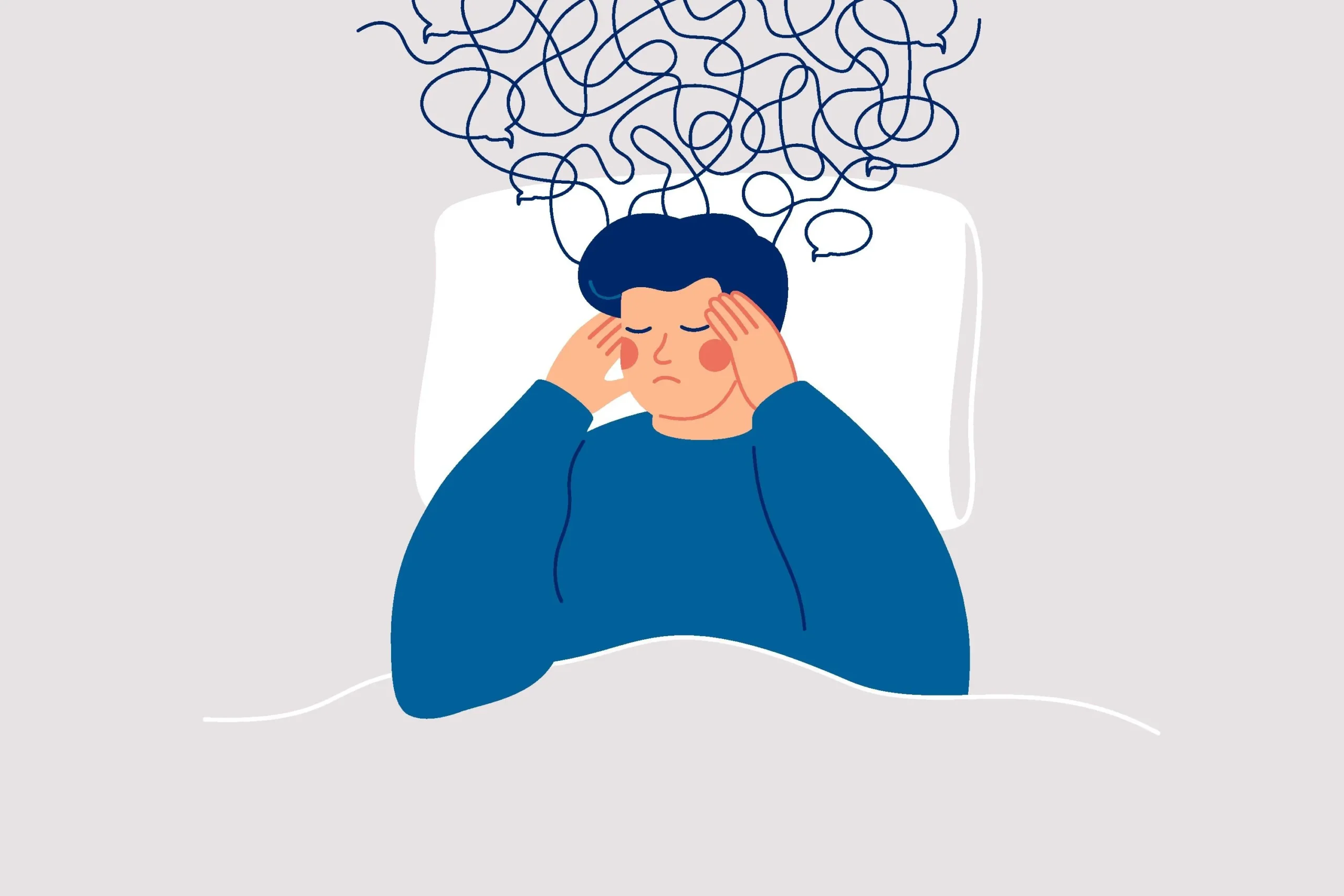
Intrusive thoughts are unwanted, repetitive, and often distressing thoughts, images, impulses, or mental ideas that enter a person’s awareness without being intentionally generated. Many people experience occasional intrusive thoughts, and their presence alone does not necessarily indicate a mental disorder. A person may suddenly imagine an accident, experience an inappropriate thought during a serious situation, remember something unpleasant, or briefly wonder about an unlikely danger. Such experiences can occur in psychologically healthy individuals.
The clinical significance of intrusive thoughts depends on several factors, including their frequency, intensity, emotional impact, interpretation, and influence on daily functioning. A person may experience an unwanted thought and simply recognize it as an irrelevant mental event. Another person may interpret the same type of thought as highly meaningful or threatening and consequently spend considerable time trying to suppress, analyze, neutralize, or avoid it. In some circumstances, this pattern may contribute to clinically significant distress.
Intrusive thoughts are particularly important in clinical psychology because the thought itself is not always the central problem. The individual’s interpretation of the thought may play an important role in determining the emotional response that follows. A disturbing thought can become psychologically powerful when the person concludes that having the thought means something dangerous, immoral, or revealing about their character.
For example, a person may suddenly have the thought, “What if I hurt someone?” The thought may be completely inconsistent with the person’s values and intentions. If the individual recognizes it as an unwanted mental event, it may disappear without significant consequences. However, if the person interprets the thought as evidence that they secretly want to hurt someone, intense anxiety or guilt may follow.
This distinction between experiencing a thought and assigning meaning to the thought is central to understanding intrusive cognition. Thoughts are mental events. They are not automatically intentions, predictions, memories, wishes, or facts. People can experience thoughts that are inconsistent with their values and still have no intention of acting on them.
Intrusive thoughts can take many forms. Some involve fears of causing harm. Others concern contamination, illness, accidents, religious or moral themes, relationships, sexuality, mistakes, or personal responsibility. Some may take the form of disturbing mental images rather than verbal thoughts. Others may involve doubts such as “Did I lock the door?” or “What if I made a serious mistake without noticing?”
The content of an intrusive thought does not, by itself, establish a diagnosis. Similar thoughts can occur in different psychological conditions and in people without a diagnosable disorder. Clinical assessment therefore focuses on the broader pattern rather than on one particular thought.
One condition in which intrusive thoughts are particularly well recognized is obsessive-compulsive disorder, or OCD. In OCD, people may experience recurrent unwanted thoughts, images, or urges that are difficult to dismiss and that are associated with significant distress. These experiences are commonly described as obsessions. Some individuals respond with repetitive behaviors or mental acts intended to reduce distress or prevent a feared outcome. These are generally referred to as compulsions.
However, not every intrusive thought represents an obsession, and not everyone who experiences intrusive thoughts has OCD. The distinction involves factors such as persistence, distress, functional impairment, and the presence of associated patterns of compulsive behavior or mental rituals.
For example, a person might briefly think that they left the door unlocked. This is a normal possibility that most people encounter occasionally. If they check once and continue with their day, the experience is unlikely to represent a clinically significant obsession. In contrast, someone who repeatedly checks the door despite knowing it is locked, experiences substantial distress, and feels unable to stop checking may be experiencing a clinically relevant pattern that warrants professional assessment.
The relationship between intrusive thoughts and compulsions can be understood through a cycle. An unwanted thought appears. The individual interprets it as threatening or significant. Anxiety or another unpleasant emotion increases. The person performs a behavior or mental ritual intended to reduce the distress. Relief follows temporarily. Because the behavior produced relief, the urge to repeat it may become stronger when the thought returns.
This process can be understood through negative reinforcement. The behavior is strengthened because it removes or reduces an unpleasant emotional state. The problem is that the short-term relief may prevent the person from learning that the thought could have been tolerated without performing the ritual.
Compulsions do not always involve visible behaviors. Some may occur entirely within the person’s mind. Mental reviewing, repeated reassurance-seeking, mentally repeating particular phrases, comparing possibilities, analyzing memories, or attempting to achieve absolute certainty can function as forms of mental neutralization in some individuals.
This is clinically important because a person may appear to be functioning normally from the outside while experiencing substantial internal distress. Someone may spend hours mentally reviewing conversations or trying to determine whether they have unintentionally harmed someone. The behavior may not be visible to family members or colleagues, but the psychological burden can still be significant.
One of the most important concepts associated with intrusive thoughts is thought suppression. People naturally attempt to push away thoughts that are unpleasant or frightening. However, deliberate attempts to suppress a thought can sometimes increase awareness of it.
A classic psychological illustration is the instruction not to think about a particular object. Once someone actively monitors whether the thought has appeared, they may paradoxically become more aware of it. This does not mean that thought suppression always makes intrusive thoughts worse, but it illustrates why fighting aggressively against unwanted mental content may sometimes be counterproductive.
A more flexible approach is to recognize the thought without automatically engaging with it. For example, instead of thinking, “Why am I having this terrible thought? What does it mean about me?” a person may notice, “I am experiencing an unwanted thought.” This creates some psychological distance between the individual and the content of the thought.
This distinction is related to cognitive defusion, a concept associated particularly with acceptance-based approaches. Cognitive defusion involves changing one’s relationship with thoughts rather than attempting to eliminate every unwanted thought. The objective is not necessarily to prove that the thought is false but to reduce the degree to which the thought automatically controls behavior.
Intrusive thoughts can also become associated with excessive responsibility. Some individuals may feel that simply having a thought creates a responsibility to prevent the feared event. For example, someone might think, “What if something happens to my family?” and then feel compelled to perform a particular behavior to ensure their safety.
This type of reasoning can create a strong sense of responsibility for events that are actually outside the person’s control. The individual may repeatedly seek certainty, check information, or perform rituals because uncertainty feels intolerable.
Intolerance of uncertainty is therefore another concept relevant to intrusive thoughts. Everyday life contains uncertainty. People cannot know with complete certainty that an accident will never happen, that a relationship will never change, or that they have remembered every detail correctly. For some individuals, uncertainty itself becomes highly distressing.
The attempt to achieve absolute certainty can paradoxically maintain anxiety. The person checks, researches, asks for reassurance, and analyzes the situation. Each action may provide temporary relief, but new doubts can appear. The search for certainty therefore becomes endless.
Intrusive thoughts may also be accompanied by shame. Some thoughts can be disturbing because they conflict strongly with the individual’s values. A person may think, “If I am capable of imagining this, perhaps I am a bad person.” Such interpretations can produce secrecy and isolation.
It is important to distinguish thoughts from intentions. Human cognition is varied and sometimes unpredictable. People can imagine scenarios they would never choose to experience in reality. An unwanted thought about violence does not automatically indicate violent intent. An unwanted sexual thought does not automatically indicate sexual desire. An unwanted religious thought does not automatically indicate a person’s beliefs.
The emotional reaction to a thought can sometimes provide useful information about its relationship to the individual’s values. If someone is deeply distressed by an unwanted thought precisely because it conflicts with what they consider important, the distress may reflect the importance of that value rather than an intention to act.
Nevertheless, clinical assessment should not rely on this observation alone. A professional would consider the person’s behavior, intentions, history, functioning, and broader psychological context.
Intrusive thoughts can also occur in the context of anxiety disorders. Individuals experiencing generalized anxiety may have repetitive worries about multiple areas of life. Although ordinary worry and intrusive thoughts are not identical, they can overlap in their repetitive and distressing nature.
In generalized anxiety, thoughts are often focused on possible future problems and may involve extensive attempts to predict or prevent negative outcomes. Intrusive thoughts associated with OCD may be more unwanted, ego-dystonic, or inconsistent with the individual’s values. However, these distinctions can be complex, and professional assessment is necessary when symptoms are severe.
Trauma-related conditions can involve unwanted memories, images, or sensations associated with past events. These experiences differ from typical intrusive thoughts because they may involve aspects of actual or perceived traumatic experiences. Again, the presence of an unwanted mental image does not establish a diagnosis.
Depressive states may also involve repetitive negative thinking. A person may repeatedly think about personal failures, guilt, hopelessness, or perceived inadequacy. This pattern is often discussed as rumination. Rumination and intrusive thoughts can overlap, but they are not identical concepts.
The broader lesson is that the same mental phenomenon can occur through different psychological mechanisms. Clinical psychology therefore avoids interpreting a single symptom in isolation.
The meaning a person assigns to intrusive thoughts can be influenced by previous experiences and beliefs about morality, responsibility, danger, or control. Someone who strongly believes that responsible people must prevent every possible negative outcome may be particularly distressed by thoughts involving harm.
Cognitive behavioral models often examine these interpretations. The goal is not to eliminate all unwanted thoughts, because doing so is neither realistic nor necessary. Instead, therapy may focus on changing unhelpful interpretations and reducing behaviors that maintain the cycle of distress.
For OCD specifically, exposure and response prevention, commonly abbreviated as ERP, is an evidence-based psychological treatment. In ERP, individuals gradually encounter feared thoughts, situations, or triggers while reducing compulsive responses, under appropriate clinical guidance. The purpose is not to force the person to accept danger but to help them learn that anxiety and uncertainty can be tolerated without relying on compulsive rituals.
The process should be individualized. Exposure is not simply a matter of deliberately making someone uncomfortable. Effective treatment involves assessment, planning, therapeutic support, and attention to the individual’s circumstances.
Cognitive behavioral therapy can also address beliefs associated with intrusive thoughts. A therapist may help the individual examine assumptions such as “Having a thought means I want it,” “If I imagine something, I am responsible for it,” or “I must be completely certain before I can continue with my life.”
The objective is generally to develop more flexible interpretations rather than replacing negative thoughts with unrealistic positive statements.
Acceptance-based approaches may take a somewhat different perspective. Instead of repeatedly evaluating whether a thought is true or false, the individual may learn to allow the thought to exist without assigning it excessive importance. This can reduce the struggle with internal experiences.
Mindfulness can sometimes be useful in this context. Mindfulness involves intentionally observing present-moment experiences with a relatively nonjudgmental attitude. When applied appropriately, it can help individuals notice thoughts as thoughts rather than automatically responding to them.
However, mindfulness should not be presented as a universal treatment or as a substitute for professional care when symptoms are severe. Different individuals require different interventions.
Another important issue is reassurance-seeking. When people are frightened by an intrusive thought, they may repeatedly ask others whether the thought means something terrible. They may search online for explanations, repeatedly compare memories, or ask family members to confirm that they are not dangerous or immoral.
Reassurance can be understandable and may provide temporary comfort. However, when reassurance becomes repetitive and compulsive, it can potentially maintain the cycle of doubt. The individual learns that anxiety can only be reduced by obtaining external certainty.
For family members, this can create a difficult situation. They may want to provide support but may not know whether repeated reassurance is helping or unintentionally maintaining the problem. Professional guidance can help families develop appropriate supportive responses.
Intrusive thoughts can also affect sleep. When a person lies awake analyzing a disturbing thought or attempting to achieve certainty, cognitive arousal may increase. Sleep deprivation can then make emotional regulation more difficult, potentially increasing the person’s sensitivity to distressing thoughts.
Stress can have a similar effect. During periods of significant stress, people may notice more unwanted thoughts or become more concerned about thoughts that they would normally ignore. This does not necessarily mean that a new disorder has developed. Psychological symptoms can fluctuate according to circumstances.
It is also important to avoid stigmatizing individuals who experience disturbing thoughts. The content of a thought can be shocking without reflecting the person’s character. People experiencing intrusive thoughts may already feel considerable shame and fear. Treating the thought itself as evidence of dangerousness can increase distress and discourage appropriate help-seeking.
At the same time, intrusive thoughts should not automatically be dismissed. When they become frequent, highly distressing, difficult to control, or associated with significant compulsive behavior, avoidance, sleep disruption, or impairment in work, education, relationships, or daily functioning, professional assessment may be appropriate.
A clinical psychologist or other qualified mental health professional can assess the nature of the experiences and determine whether they are consistent with OCD, an anxiety-related condition, a trauma-related condition, depression, another psychological difficulty, or a nonclinical experience.
The distinction between thought and action is especially important. Human beings do not have complete control over which thoughts enter consciousness. What people can often influence is how they respond to those thoughts. An unwanted thought may appear automatically, but the individual can gradually learn not to treat every thought as an instruction, prediction, or moral statement.
This perspective can be psychologically liberating because it reduces the assumption that the mind must be perfectly controlled. A healthy mental life does not require the absence of disturbing thoughts. Psychological well-being involves the ability to experience a range of thoughts and emotions without allowing every internal event to determine behavior.
Intrusive thoughts therefore provide an important example of the difference between mental content and psychological meaning. The mind continuously generates memories, predictions, images, associations, fears, and possibilities. Most of these mental events disappear without consequence. Problems may arise when an individual becomes convinced that a particular thought must be analyzed, prevented, neutralized, or eliminated.
From a clinical psychological perspective, the focus is not simply on removing unwanted thoughts. A more useful objective may be to understand the processes surrounding them: how the thought appears, how it is interpreted, what emotions follow, what behaviors are used to reduce distress, and how those behaviors affect the problem over time.
Ultimately, intrusive thoughts are part of the complexity of human cognition. Their presence does not automatically reveal a person’s intentions, personality, morality, or mental health status. For many people, they are occasional and insignificant experiences. For others, they can become part of a persistent cycle of anxiety, compulsive behavior, avoidance, and distress.
Understanding this distinction can reduce unnecessary shame while also encouraging appropriate clinical attention when symptoms interfere with daily life. The central psychological question is not simply, “Why did I have this thought?” but also, “What meaning am I giving this thought, and how am I responding to it?”
That shift—from judging the existence of a thought to understanding the relationship between thought, emotion, interpretation, and behavior—is one of the most useful perspectives offered by contemporary clinical psychology.