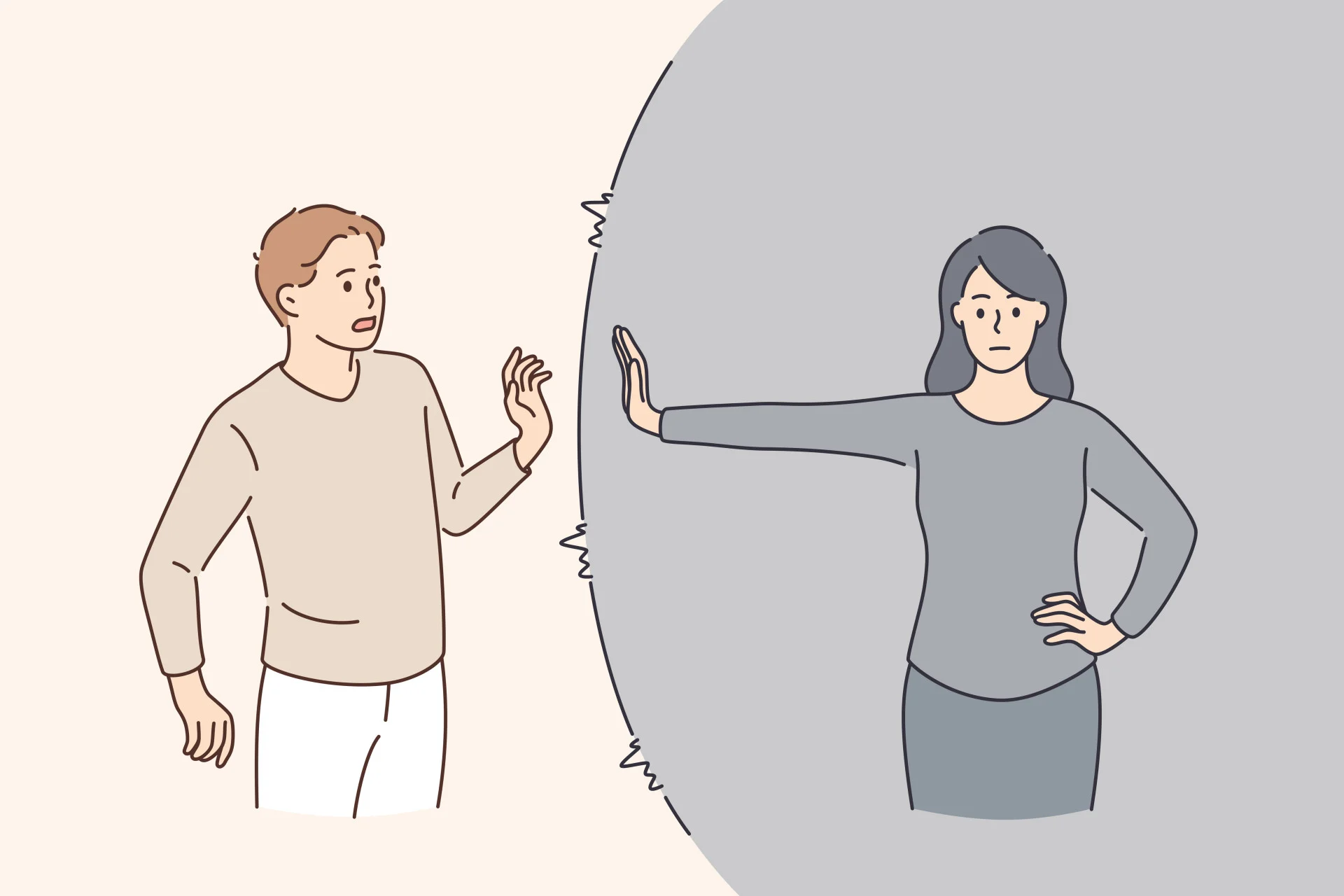
Avoidance is a common aspect of human behavior. People may avoid situations that make them uncomfortable, conversations that seem difficult, or relationships in which they fear rejection. In many circumstances, avoidance is temporary and adaptive. A person may step away from a stressful situation in order to regulate emotions, reconsider a decision, or protect themselves from immediate psychological pressure. However, when avoidance becomes persistent, generalized, and strongly connected to fears of rejection, criticism, embarrassment, or inadequacy, it may become clinically relevant.
In clinical psychology, avoidant personality patterns refer to enduring patterns of interpersonal and emotional functioning characterized by social inhibition, sensitivity to negative evaluation, feelings of inadequacy, and a tendency to avoid situations involving significant interpersonal risk. These patterns exist on a continuum. Experiencing social discomfort or avoiding certain situations does not by itself indicate a personality disorder. A clinical diagnosis requires a comprehensive professional assessment and consideration of the person’s developmental history, functioning across contexts, distress, and alternative explanations.
Avoidant personality patterns are particularly interesting because avoidance can provide short-term emotional relief while potentially maintaining difficulties over the longer term. A person may avoid a social situation because they anticipate embarrassment. After avoiding it, their anxiety may temporarily decrease. This reduction in distress can make avoidance more likely in the future. Over time, the person may receive fewer opportunities to discover that their feared outcome might not occur, and their negative expectations can remain unchallenged.
This process can be understood through the psychological concept of negative reinforcement. Negative reinforcement does not mean punishment or something morally negative. It refers to a behavior becoming more likely because it removes or reduces an unpleasant experience. If avoiding a social interaction reduces anxiety, the relief itself may strengthen the tendency to avoid similar interactions later.
For example, imagine a person who is invited to a small gathering. They immediately think that other people may judge their appearance, intelligence, communication style, or personality. Their anxiety increases, and they decide not to attend. Once the decision has been made, their anxiety decreases. The person may therefore experience avoidance as successful because it produced immediate relief. However, they also lost an opportunity to participate in a social experience and to gather evidence about whether their fears were accurate.
This cycle can become increasingly restrictive. The more situations a person avoids, the fewer opportunities they have to develop confidence through experience. Consequently, the person may begin to interpret their lack of social experience as evidence that they are incapable of social interaction. Avoidance can therefore contribute to a self-maintaining pattern involving fear, withdrawal, temporary relief, and reduced confidence.
One of the central psychological features associated with avoidant patterns is sensitivity to negative evaluation. The person may pay considerable attention to how they believe others perceive them. A neutral facial expression may be interpreted as disapproval. A delayed response to a message may be interpreted as rejection. A small mistake during a conversation may be remembered for a long time.
These interpretations are not necessarily conscious or deliberate. They may occur rapidly and automatically. Cognitive models of anxiety suggest that people can develop habitual expectations about social situations based on previous experiences. When someone expects criticism or rejection, ambiguous information may be interpreted in a way that confirms the expectation.
For example, if a colleague does not greet a person in the morning, someone with strong rejection expectations may think, “They do not like me.” Another person might consider several explanations, such as the colleague being distracted or preoccupied. The difference is not necessarily the event itself but the meaning assigned to the event.
This does not mean that all negative interpretations are irrational. People can genuinely experience rejection, criticism, bullying, or exclusion. A clinically relevant psychological pattern should therefore not be understood by simply telling someone that their fears are imaginary. Assessment requires attention to the actual interpersonal environment as well as the person’s interpretations and emotional responses.
Feelings of inadequacy may also be important. Some individuals with avoidant personality patterns may believe that they are socially inferior, uninteresting, unattractive, incompetent, or otherwise inadequate. These beliefs can influence how they approach relationships and social opportunities.
A person may think, “If people get to know me, they will eventually discover that I am not good enough.” This expectation can make intimacy particularly difficult. Avoidance can protect the person from immediate vulnerability, but it can also prevent the development of relationships that might challenge their negative self-perception.
The relationship between self-esteem and avoidance is therefore complex. Low self-esteem may contribute to avoidance, while repeated avoidance may further reduce opportunities for positive social experiences. This can create a feedback loop in which negative beliefs and avoidance reinforce one another.
However, not every person who avoids social situations has low self-esteem. Some people may avoid particular environments because of previous trauma, cultural expectations, interpersonal conflict, sensory sensitivity, depression, social anxiety, or other factors. Clinical interpretation should therefore remain individualized.
Avoidant personality patterns also need to be distinguished from ordinary introversion. Introversion generally refers to a preference for lower levels of social stimulation or a tendency to regain energy through solitude. An introverted person may enjoy spending time alone and still maintain satisfying relationships and participate comfortably in important social situations.
Avoidance becomes more clinically significant when it is associated with substantial distress, impairment, or persistent restriction of a person’s life. A person who prefers quiet evenings at home is not necessarily displaying pathological avoidance. By contrast, someone who wants relationships or professional opportunities but repeatedly avoids them because of intense fears of criticism or rejection may be experiencing a more significant difficulty.
Another important distinction is between avoidant personality patterns and social anxiety disorder. These conditions can overlap considerably, and some people may meet criteria for both. Social anxiety disorder is primarily characterized by marked fear or anxiety in social situations involving possible scrutiny or evaluation. Avoidant personality disorder, as described in contemporary diagnostic systems, involves a broader and more enduring pattern affecting interpersonal relationships, self-concept, and social functioning.
The distinction cannot be made reliably through a short questionnaire or a single symptom. A qualified clinician would consider the person’s history, the range of situations affected, duration, developmental course, functional consequences, and possible alternative explanations.
The developmental origins of avoidant patterns are also complex. There is no single cause. Psychological development is influenced by temperament, family relationships, social experiences, attachment experiences, peer relationships, cultural context, and stressful or traumatic events. Different combinations of these factors may contribute to similar patterns of behavior.
Some individuals may have experienced repeated criticism, humiliation, rejection, bullying, or social exclusion. Such experiences can influence expectations about future relationships. If a child repeatedly learns that expressing themselves leads to ridicule or rejection, they may become increasingly cautious about social participation.
However, childhood experiences should not automatically be interpreted as the direct cause of adult personality patterns. People respond differently to similar experiences, and protective relationships can have significant effects on development. Psychological development is influenced by multiple interacting factors rather than a single event.
Attachment theory can provide another useful framework for understanding interpersonal avoidance, although attachment concepts should not be used as a diagnostic shortcut. Early relationships may influence expectations about whether other people are trustworthy, whether one’s needs will be accepted, and whether emotional closeness is safe.
An individual who has repeatedly experienced relationships as unpredictable or rejecting may become cautious about dependence and intimacy. This does not mean that attachment style determines adult personality. People can develop new relational experiences and modify longstanding expectations throughout life.
Avoidance may also be connected to shame. Shame involves a negative evaluation of the self and can be associated with a desire to hide or withdraw. When a person anticipates that others will discover something they consider unacceptable about themselves, social situations may become threatening.
This can create a powerful internal conflict. The individual may desire friendship, intimacy, recognition, or professional success while simultaneously fearing the exposure required to achieve these goals. As a result, the person may experience loneliness not because they do not want relationships but because relationships feel psychologically risky.
This distinction is clinically important. Social withdrawal can have very different meanings in different people. One person may withdraw because they genuinely prefer solitude. Another may withdraw because of depression. Another may avoid people because of traumatic experiences. Another may strongly desire connection but fear rejection. Similar behavior can therefore arise from very different psychological processes.
Avoidant patterns can also influence romantic relationships. A person may want closeness but become highly sensitive to signs of disinterest. They may hesitate to express affection, avoid initiating relationships, or end relationships prematurely because they anticipate eventual rejection. They may also have difficulty accepting positive feedback because it conflicts with their negative expectations about themselves.
In some cases, reassurance may provide only temporary relief. If a person deeply believes that they are inadequate, another person’s positive statement may initially feel comforting but may not substantially change the underlying belief. The person may later question the sincerity of the reassurance and return to the original fear.
This illustrates why psychological difficulties are not always solved by simply receiving positive information. Longstanding beliefs and behavioral patterns can require repeated corrective experiences and deliberate psychological work.
Avoidance can also affect education and professional development. A person may avoid asking questions because they fear appearing unintelligent. They may decline presentations because they anticipate embarrassment. They may avoid applying for opportunities because they assume that other candidates are more qualified. They may remain silent during meetings despite having valuable ideas.
Such behavior can have significant consequences over time. The person may interpret missed opportunities as evidence that they are not capable, when the underlying issue may partly involve avoidance. Again, this is not universal, and professional hesitation can have many causes.
From a clinical perspective, treatment generally focuses not simply on forcing a person to socialize but on understanding the processes maintaining avoidance. Depending on the individual’s presentation and clinical needs, psychological treatment may involve cognitive-behavioral strategies, exposure-based techniques, work on self-concept, interpersonal approaches, schema-focused methods, or other evidence-informed interventions.
Cognitive-behavioral approaches may examine automatic thoughts and assumptions associated with social situations. The goal is not necessarily to replace every negative thought with an unrealistically positive one. Instead, therapy may help the person develop more balanced and flexible interpretations.
For example, the thought “Everyone will think I am stupid if I make one mistake” could be examined in terms of evidence, probability, alternative interpretations, and the consequences of maintaining the belief. The person may gradually learn that making a mistake does not necessarily produce the catastrophic social outcome they anticipated.
Exposure can also play an important role in some anxiety-related avoidance patterns. Exposure involves gradually approaching feared situations rather than consistently escaping them. In appropriately structured treatment, exposure is usually planned according to the person’s needs and tolerance rather than being imposed suddenly.
The psychological mechanism is important. If the person remains in a situation long enough to learn that anxiety can be tolerated and that feared outcomes may be less likely than expected, avoidance may gradually lose some of its reinforcing power. However, exposure should be individualized and, when used clinically, guided by an appropriately trained professional.
Another important treatment target can be self-criticism. People with strong avoidant tendencies may evaluate themselves according to unusually demanding standards. A small social mistake can become evidence of global personal failure. Psychological work may involve developing a more flexible and realistic way of evaluating one’s own behavior.
Interpersonal therapy and other relational approaches may focus on patterns that occur between the individual and other people. The therapeutic relationship itself can provide an opportunity to observe expectations about rejection, trust, vulnerability, and closeness. However, therapy is not simply a friendship. It is a structured professional relationship with specific boundaries and goals.
Schema-focused approaches may examine deeply held patterns concerning defectiveness, rejection, social isolation, or inadequacy. Schemas are enduring patterns of interpretation that can influence how people perceive themselves, others, and relationships. Such approaches can be particularly relevant when avoidance appears connected to longstanding beliefs rather than isolated situations.
It is also important to recognize the role of environmental factors. Psychological treatment should not automatically place responsibility entirely on the individual. If someone is currently experiencing bullying, discrimination, abuse, chronic criticism, or an unsafe environment, avoidance may sometimes represent an understandable response to real interpersonal threat.
Clinical assessment therefore needs to consider context. The objective is not simply to make a person more socially active regardless of circumstances. Instead, psychological care aims to understand whether the person’s behavior is helping them pursue their values and needs or whether fear and avoidance are unnecessarily restricting their life.
The possibility of change is an important part of understanding avoidant patterns. Personality-related characteristics can be relatively stable, but stability does not mean immutability. Psychological patterns can change through new experiences, relationships, learning, and treatment.
Progress may not necessarily mean becoming highly sociable or extroverted. A meaningful improvement could involve being able to communicate one’s needs, tolerate reasonable criticism, form relationships, attend important social events, pursue professional opportunities, or accept vulnerability without overwhelming fear.
The ultimate goal is therefore not to eliminate all discomfort. Anxiety and self-consciousness are normal human experiences. Psychological flexibility involves being able to experience discomfort while still making choices consistent with one’s values and goals.
Avoidance becomes particularly important when it begins to determine what a person believes they are allowed to do. If fear repeatedly decides which relationships can be formed, which opportunities can be pursued, which opinions can be expressed, and which situations can be entered, the person’s behavioral world may gradually become smaller.
A clinical psychological perspective encourages careful examination of this process without automatically labeling it as a disorder. The same outward behavior can have different meanings in different people, and diagnosis requires professional assessment rather than a list of internet symptoms.
Avoidant personality patterns can therefore be understood as complex patterns involving expectations, emotions, self-perception, interpersonal experiences, and learned behavioral responses. Rejection sensitivity, fear of criticism, feelings of inadequacy, and social withdrawal may interact in ways that maintain one another over time.
Perhaps the most important psychological insight is that avoidance can be both protective and restrictive. It may protect a person from immediate emotional discomfort, but persistent avoidance can also prevent experiences that could increase confidence, connection, and psychological flexibility. Understanding this contradiction is essential for approaching avoidance with compassion rather than judgment.
From a clinical perspective, the person should not be reduced to the behavior. Avoidance is something a person may experience or practice; it is not the entirety of their identity. Behind withdrawal there may be fear, previous experiences, unmet interpersonal needs, low confidence, or an understandable attempt to protect oneself from emotional pain.
For individuals experiencing significant distress or impairment related to these patterns, professional psychological assessment can help clarify what is happening and whether a diagnosable condition is present. Treatment can then be tailored to the individual’s specific difficulties, history, environment, and goals.
Ultimately, avoidant personality patterns demonstrate an important principle in clinical psychology: behavior often makes sense when viewed in the context of the beliefs and emotions that surround it. A person who repeatedly withdraws may not necessarily lack interest in other people. In some cases, the desire for connection may coexist with a strong fear of rejection. Understanding that conflict can be the beginning of meaningful psychological change.