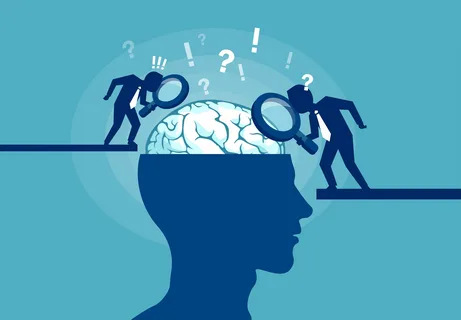
The intuition that there exists a stable, enduring self at the center of experience is among the most deeply ingrained assumptions of human cognition. Individuals typically perceive themselves as unified agents who think, feel, decide, and act in a coherent manner across time. This sense of self appears immediate and undeniable. Yet within contemporary psychology, neuroscience, and philosophy of mind, a growing body of work challenges the assumption that the self exists as a singular, stable entity. Instead, the self may be better understood as a constructed phenomenon—an emergent property of distributed neural processes rather than a fixed essence. This raises a profound question: is the self a neural illusion, and if so, what does that imply about identity, agency, and subjective experience?
To approach this question, it is necessary to distinguish between different aspects of what is commonly referred to as “the self.” At a minimum, the concept encompasses multiple dimensions: the bodily self, the experiential self, and the narrative self. The bodily self involves the sense of being located within a physical body, grounded in sensory integration and proprioception. The experiential self refers to the immediate sense of being a subject of experience—the “I” that perceives and feels in the present moment. The narrative self, in contrast, consists of the stories individuals construct about who they are across time, incorporating memory, values, and social roles.
These components are supported by distinct yet interacting neural systems. The bodily self relies on the integration of sensory signals that define the boundaries and position of the body. The experiential self emerges from ongoing patterns of awareness, while the narrative self depends heavily on memory systems and language-based processing. The apparent unity of the self arises from the coordination of these systems, rather than from a single underlying entity.
Neuroscientific evidence suggests that this coordination is both dynamic and fragile. When specific neural processes are disrupted, aspects of the self can be altered or even temporarily lost. For example, disturbances in sensory integration can produce experiences in which individuals feel detached from their bodies or perceive their limbs as belonging to someone else. Such phenomena indicate that the bodily self is constructed through ongoing neural activity rather than given as an inherent property.
Similarly, disruptions in memory can affect the narrative self. Individuals with severe memory impairments may lose access to large portions of their personal history, yet still retain the capacity for immediate experience. In such cases, the continuity of identity becomes compromised, revealing that the narrative self depends on the integrity of memory systems rather than existing independently.
The experiential self, often considered the core of subjectivity, also appears to be constructed. Studies of attention and awareness indicate that conscious experience is not continuous but consists of discrete moments integrated into a coherent flow. The sense of a stable observer may arise from the brain’s ability to link these moments together, creating the impression of continuity.
One of the most compelling arguments for the self as a neural construction comes from the study of predictive processing. According to this framework, the brain functions as a prediction-generating system that continuously models both the external world and its own internal states. The self, in this context, may be understood as a model that the brain uses to organize information about the body, actions, and experiences.
This model allows the brain to predict the consequences of actions, distinguish between self-generated and external events, and maintain a sense of agency. However, because it is a model, it is inherently subject to revision and error. The stability of the self depends on the accuracy and coherence of this predictive system.
When predictive processes become disrupted, the sense of self can change dramatically. In certain psychiatric conditions, individuals may experience alterations in agency, feeling as though their actions are controlled by external forces. Others may experience fragmentation of identity or a loss of coherence in their sense of self. These phenomena suggest that the self is not a fixed entity but a dynamic construct that depends on ongoing neural computation.
The concept of illusion in this context requires careful clarification. To describe the self as an illusion does not necessarily mean that it is false in the sense of being nonexistent. Rather, it suggests that the self is not what it appears to be. The intuitive sense of a singular, unchanging entity at the center of experience may be misleading, even though the processes that generate this sense are real and functionally significant.
In this sense, the self may be analogous to other perceptual constructs. Just as the brain constructs the experience of a stable visual world from incomplete and constantly changing sensory input, it constructs the experience of a stable self from distributed and dynamic processes. The resulting perception feels immediate and real, even though it is the product of underlying mechanisms that operate beyond conscious awareness.
Language and social interaction play crucial roles in reinforcing the sense of self. Through language, individuals learn to describe themselves, attribute intentions, and construct narratives about their experiences. Social feedback further shapes these narratives, providing validation or challenge to one’s self-concept. Over time, these interactions solidify the impression of a stable identity.
However, this stability can be disrupted under certain conditions. Rapid changes in social environment, traumatic experiences, or prolonged stress can alter the way individuals perceive themselves. These changes highlight the dependence of the self on both internal processes and external context.
The question of agency becomes particularly significant when considering the self as a neural construct. If the self is a model generated by the brain, what does this imply about free will and responsibility? Some interpretations suggest that agency itself may be part of the constructed self, arising from the brain’s need to predict and control behavior.
Experimental findings in neuroscience have shown that neural activity associated with decision-making can occur before individuals become consciously aware of their choices. This temporal gap raises questions about the extent to which conscious intention initiates action. However, rather than negating agency, these findings may indicate that conscious awareness represents only one component of a broader system involved in decision-making.
The constructed nature of the self does not necessarily eliminate the concept of responsibility. Instead, it reframes it within a system of interacting processes that include both conscious and unconscious elements. Individuals remain agents within this system, even if the mechanisms underlying their actions are more complex than intuitive models suggest.
Philosophically, the idea of the self as an illusion challenges traditional notions of identity. If there is no fixed core, then identity becomes a process rather than an entity. It is something that is continuously generated and updated rather than something that exists independently of experience.
This perspective aligns with certain psychological observations. Individuals often change significantly over time, adopting new values, roles, and beliefs. Despite these changes, they maintain a sense of continuity. This continuity may arise not from a stable core but from the brain’s ability to construct coherent narratives that link different stages of life.
The flexibility of the self can be both adaptive and problematic. On one hand, it allows individuals to adjust to new circumstances and learn from experience. On the other hand, it introduces the possibility of instability, particularly when integration among different aspects of the self becomes disrupted.
In clinical contexts, disturbances of the self can be deeply distressing. Individuals may feel fragmented, unreal, or disconnected from their own identity. These experiences highlight the importance of integration among neural processes in maintaining a stable sense of self.
Therapeutic approaches often focus on strengthening this integration. By helping individuals connect their experiences, regulate their emotions, and construct coherent narratives, therapy aims to restore a functional sense of self. Even if the self is a construct, its coherence remains essential for psychological well-being.
The question of whether the self is a neural illusion ultimately leads to a broader reconsideration of what it means to exist as a subject. If the self is not a fixed entity, then subjectivity itself becomes a dynamic process. Awareness arises from interactions among neural systems, and identity emerges from patterns of organization within these systems.
This perspective does not diminish the significance of personal experience. On the contrary, it emphasizes the complexity and richness of the processes that give rise to it. The self, even if constructed, remains the framework through which individuals engage with the world, make decisions, and form relationships.
In this sense, the self may be both real and illusory: real as a functional construct that organizes experience, and illusory in its apparent simplicity and stability. It is not a singular entity hidden within the brain, but a continuously evolving pattern generated by the interaction of multiple processes.
Understanding the self in this way opens new avenues for exploring identity, consciousness, and mental health. It invites a shift from viewing the self as something to be discovered to viewing it as something that is constantly being created.