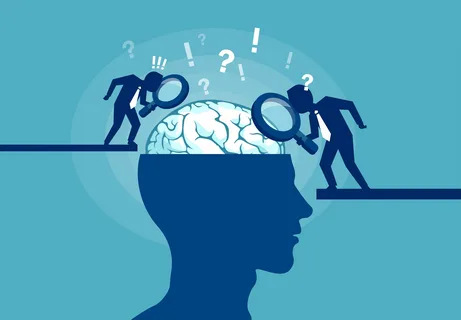
Consciousness is often described as the capacity to be aware of experience—of sensations, thoughts, emotions, and the surrounding world. Yet one of its most enigmatic features lies in its reflexivity: the ability not only to experience, but to become aware of that experience itself. This raises a profound psychological and philosophical question: can consciousness truly observe itself, or is this merely an illusion generated by layered cognitive processes? Exploring this question requires moving beyond surface-level descriptions of awareness and into the deeper architecture of self-referential cognition, metacognition, and the limits of introspection.
At first glance, the answer appears straightforward. Humans routinely report being aware of their own thoughts. A person might notice that they are anxious, reflect on a decision, or evaluate the validity of a belief. These experiences suggest that consciousness has access to itself, functioning both as subject and object. However, closer examination reveals that this process may not involve a single unified system observing itself directly, but rather a dynamic interaction between multiple levels of representation within the brain.
The concept of metacognition provides a useful entry point into this complexity. Metacognition refers to the capacity to think about one’s own thinking—to monitor, evaluate, and regulate cognitive processes. When individuals assess whether they understand a concept, question their memory, or plan how to approach a task, they engage in metacognitive activity. This capacity gives the impression of an observing self, a higher-level perspective that can oversee lower-level processes.
Yet metacognition does not necessarily imply that consciousness is directly observing itself. Instead, it may involve one set of neural processes generating representations of another. In this sense, what appears as self-observation might actually be a hierarchical system in which different levels of processing interact. One system produces thoughts, while another system models and evaluates those thoughts.
This distinction becomes clearer when considering the limitations of introspection. Although individuals can reflect on their mental states, this access is often incomplete and subject to distortion. People may misinterpret their own motivations, confabulate explanations for their behavior, or remain unaware of underlying influences on their decisions. These limitations suggest that self-observation is mediated rather than direct.
The brain’s architecture supports this interpretation. Neural systems responsible for generating experience are not identical to those involved in monitoring or evaluating it. For example, processes that produce emotional responses operate differently from those that interpret or regulate those responses. When a person becomes aware of their own emotion, this awareness likely emerges from the interaction between these systems rather than from a single entity observing itself.
The idea of a unified observer within the mind is further complicated by the distributed nature of neural processing. There is no single location in the brain where consciousness resides. Instead, conscious experience emerges from coordinated activity across multiple regions, each contributing different aspects of perception, memory, and cognition. Within this distributed system, the sense of a central observer may be a constructed feature rather than a literal entity.
This construction may serve an important functional purpose. By creating the impression of a coherent observing self, the brain simplifies the complexity of its own processes. This simplification allows individuals to navigate their mental experiences more effectively, making decisions and maintaining a sense of continuity over time.
However, this functional construction can also lead to conceptual confusion. When individuals attempt to observe their own consciousness, they may assume that there is a stable “self” separate from the observed experience. In reality, both the observing and the observed aspects may be products of the same underlying system.
This becomes particularly evident in states where the sense of self is altered. During certain forms of meditation, for example, individuals report experiences in which the distinction between observer and observed begins to dissolve. Thoughts and sensations arise without a clear sense of ownership, and awareness itself appears less centered around a fixed identity. Such experiences challenge the notion of a stable observing self and suggest that the boundary between subject and object is more fluid than it appears.
Psychiatric conditions also provide insight into the limits of self-observation. In some disorders, individuals experience disruptions in the sense of agency or ownership over their thoughts. They may feel as though their thoughts are being controlled by external forces or that their internal experiences do not belong to them. These phenomena indicate that the mechanisms underlying self-awareness can become unstable, further complicating the idea of consciousness observing itself.
Similarly, dissociative states can produce a sense of separation between different aspects of consciousness. Individuals may feel as though one part of their mind is observing another, creating the impression of multiple layers of self-awareness. While this experience may feel like direct observation, it likely reflects a breakdown in the integration of cognitive processes rather than the existence of independent observing entities.
The temporal dimension of consciousness also plays a role in this question. Self-observation often involves a delay between the occurrence of a mental event and the awareness of that event. For example, a thought arises, and only afterward does the individual become aware of having had that thought. This delay suggests that awareness may operate retrospectively, constructing representations of prior mental activity rather than observing it in real time.
This temporal structure aligns with theories proposing that consciousness involves continuous updating of internal models. The brain generates predictions about its own states and then revises these predictions based on incoming information. In this framework, self-awareness emerges from the brain’s attempt to model its own activity, rather than from direct observation.
Language further shapes how self-observation is experienced. Through language, individuals can label and describe their mental states, creating narratives about their thoughts and emotions. These narratives reinforce the impression of an observing self by organizing experiences into coherent structures. However, the act of describing a thought is itself a separate cognitive process, not the thought itself.
The distinction between experience and description highlights another limitation of self-observation. What individuals report about their mental states is not identical to the states themselves. Instead, it represents an interpretation filtered through memory, language, and conceptual frameworks. This filtering introduces the possibility of distortion, further complicating the idea of direct self-observation.
Despite these limitations, the capacity for self-reflection remains a central feature of human cognition. It allows individuals to evaluate their behavior, regulate their emotions, and plan for the future. Even if consciousness does not observe itself in a literal sense, the processes that create this impression are essential for adaptive functioning.
From a functional perspective, the question may not be whether consciousness can truly observe itself, but how the illusion or construction of self-observation supports behavior. By creating a model of itself, the mind gains the ability to simulate different scenarios, anticipate consequences, and adjust actions accordingly. This capacity provides a significant advantage in complex and unpredictable environments.
At the same time, excessive self-observation can become maladaptive. When individuals become overly focused on monitoring their thoughts and feelings, they may experience increased anxiety or reduced spontaneity. This phenomenon, sometimes described as hyper-reflexivity, illustrates how the mechanisms of self-awareness can become dysregulated.
Balancing self-awareness with engagement in the external world is therefore crucial. While reflection allows for insight and growth, excessive inward focus may lead to fragmentation or detachment. The mind must navigate between observing itself and participating in experience without becoming trapped in either extreme.
Ultimately, the question of whether consciousness can observe itself does not yield a simple answer. The evidence suggests that what appears as self-observation is a complex interplay of cognitive processes, involving representation, interpretation, and reconstruction. Rather than a single entity observing itself directly, the mind operates as a system in which different components generate models of one another.
This perspective does not diminish the significance of self-awareness. On the contrary, it highlights its complexity and adaptability. The capacity to reflect on one’s own mental processes, even if indirect, enables learning, self-regulation, and the development of identity.
In this sense, consciousness may not observe itself in the way a mirror reflects an image. Instead, it continuously reconstructs itself through layers of representation, each contributing to the evolving experience of being aware.