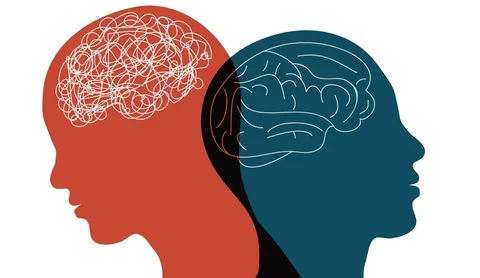
Childhood is often described as the foundation of human development, but its influence extends far beyond physical growth, education, and the acquisition of basic social skills. The experiences individuals have during their early years can influence how they understand themselves, interpret relationships, respond to emotions, and approach the world as adults. Some childhood memories remain vivid throughout life, while others become less accessible to conscious awareness. Nevertheless, early relationships, family environments, social expectations, and emotional experiences can contribute to the development of adult identity in complex ways.
Identity is not something that appears fully formed at a particular age. It develops through an ongoing interaction between personal characteristics, relationships, cultural influences, and individual experiences. During childhood, people begin to form ideas about who they are and how they are perceived by others. They learn whether their emotions are accepted, whether their opinions are valued, and whether they can express their needs without fear of rejection. These early experiences may become part of the psychological framework through which they understand themselves later in life.
One of the most important influences on childhood development is the family environment. Parents and caregivers are usually among the first people through whom children experience affection, protection, communication, and social boundaries. Their responses can influence how children understand emotional expression and personal worth. When a child receives consistent affection and attention, they may gradually develop a sense of security and belonging. They learn that their needs matter and that relationships can provide support during difficult situations.
However, children do not need perfect parents or completely problem-free childhoods to develop a healthy identity. Family relationships are complex, and even caring parents can make mistakes. What often matters is the general emotional environment, including the ability to repair misunderstandings, acknowledge feelings, and provide a reasonable level of stability.
In contrast, children who frequently experience rejection, humiliation, emotional unpredictability, or excessive criticism may develop different expectations about themselves and other people. For example, a child who is regularly criticized may begin to associate mistakes with personal inadequacy. Instead of understanding failure as a normal part of learning, they may interpret it as evidence that they are not intelligent or capable enough.
These beliefs can sometimes continue into adulthood. An adult who becomes extremely uncomfortable with criticism may not be reacting only to the immediate situation. Their emotional response may also be influenced by earlier experiences in which criticism was associated with rejection or humiliation. This does not mean that every adult reaction can be explained by childhood experiences, but early learning can contribute to the meaning individuals assign to later events.
Attachment theory provides an important perspective on this relationship. Developed initially through the work of John Bowlby and later expanded through the research of Mary Ainsworth, attachment theory examines how early relationships with caregivers influence emotional security and expectations about relationships. Children depend on caregivers for protection and emotional support. Through repeated interactions, they begin to develop expectations about whether other people are available, responsive, and trustworthy.
A child who experiences relatively consistent care may develop a sense that relationships can be dependable. This experience can contribute to what is described as secure attachment. In adulthood, secure attachment is often associated with greater comfort with emotional closeness, communication, and independence. However, attachment patterns are not fixed personality labels. They can be influenced by later relationships, experiences, and personal development.
When caregiving is inconsistent or emotionally unavailable, some children may develop anxious or avoidant patterns of relating to others. An individual who experienced unpredictable attention may become particularly sensitive to signs of rejection. As an adult, they might worry excessively when someone does not respond to a message or interpret temporary distance as evidence that a relationship is ending.
Another individual who learned that emotional expression was discouraged may become uncomfortable with vulnerability. They may prefer to solve problems independently, avoid discussing personal difficulties, or withdraw when relationships become emotionally demanding. Such behaviours can sometimes represent strategies that developed in response to earlier experiences rather than conscious decisions about how to live.
It is important to understand that attachment theory does not suggest that childhood determines every future relationship. Adults can develop new emotional experiences that challenge earlier expectations. Supportive friendships, healthy romantic relationships, psychotherapy, and greater self-awareness may all contribute to changes in how people experience emotional closeness.
Another significant aspect of childhood development is the formation of self-esteem. Children gradually construct an understanding of their own value through experiences of acceptance, achievement, encouragement, and social comparison. When adults recognize a child’s effort and communicate respect, the child may learn that personal worth is not dependent on constant success.
However, when affection appears conditional upon performance, obedience, or achievement, children may begin to believe that they must meet certain expectations to deserve approval. For example, a child who receives attention mainly when achieving high grades may gradually associate being successful with being worthy of love and recognition.
This belief can influence adult behaviour in several ways. Some individuals become perfectionistic, placing excessive pressure on themselves to avoid mistakes. Others develop a strong need for external validation, relying heavily on praise, recognition, or approval to feel confident. Even when they achieve important goals, they may struggle to experience satisfaction because their attention remains focused on what they have not yet accomplished.
The psychological concept of conditional self-worth helps explain this process. Conditional self-worth occurs when individuals base their sense of value on particular achievements, social approval, appearance, or other external standards. Although motivation and achievement can be positive, problems may arise when a person’s entire sense of identity depends on meeting these conditions.
Childhood experiences also influence emotional development. Children gradually learn to identify, understand, and regulate their emotions through interactions with adults and their surrounding environment. When caregivers respond to emotions with patience and understanding, children have opportunities to develop emotional awareness. They learn that sadness, anger, disappointment, and fear are understandable experiences rather than unacceptable personal weaknesses.
In some families, however, certain emotions are discouraged. A child may hear that crying is unnecessary, anger is unacceptable, or expressing fear is a sign of weakness. Over time, the child may learn to hide these feelings rather than understand them. As an adult, the individual might find it difficult to identify emotional needs or communicate discomfort.
This pattern can be associated with emotional suppression. Emotional suppression involves attempts to inhibit the outward expression of emotional experiences. It can be useful in certain situations, particularly when immediate emotional control is necessary. However, relying on suppression as a constant strategy may make it more difficult to understand and communicate personal feelings.
For example, someone who learned to remain silent during childhood conflicts may continue avoiding difficult conversations in adulthood. They might agree with others even when they disagree, not because they genuinely share the same opinion, but because disagreement produces emotional discomfort. In this way, a childhood strategy that once helped maintain a sense of safety may later restrict authentic self-expression.
The development of identity is also connected to the roles children occupy within their families. Some children are expected to be responsible, independent, and helpful from an early age. Others may become the family member who avoids conflict, provides emotional support, or attempts to meet everyone’s expectations. These roles can become familiar parts of their self-image.
A child who is constantly praised for being responsible may grow into an adult who finds it difficult to ask for help. They may feel uncomfortable resting because they have learned to associate their value with usefulness. Another person who has always been expected to maintain peace may struggle to express anger or establish boundaries.
Family roles are not automatically harmful. Responsibility, cooperation, and empathy are valuable qualities. Difficulties may arise when individuals feel that they are not allowed to exist outside a particular role. An adult may continue behaving as the responsible child even when their circumstances and personal needs have changed.
The concept of identity development is particularly relevant during adolescence. Erik Erikson described adolescence as a significant period in which individuals confront the psychosocial challenge of identity versus role confusion. During this stage, young people explore values, beliefs, interests, relationships, and possible future roles. They begin asking questions about who they are and what kind of life they want to create.
Although identity exploration becomes especially visible during adolescence, it does not end there. Adults may reconsider their identities after significant life events, such as changing careers, becoming parents, ending relationships, moving to another country, or experiencing personal loss. These experiences can challenge previously accepted beliefs and encourage individuals to reconsider their priorities.
Another important influence on childhood identity is the social environment outside the family. Schools, friendships, teachers, and wider cultural expectations contribute to the way children understand themselves. A supportive teacher may help a child recognize an ability that has not been encouraged at home. A negative experience with classmates may create uncertainty about appearance, intelligence, or social acceptance.
Peer relationships become increasingly important during childhood and adolescence. Children compare themselves with others and gradually develop ideas about what is considered normal, desirable, or acceptable. These comparisons may influence their interests, clothing choices, communication styles, and expectations about achievement.
A child who is repeatedly excluded from social groups may become more cautious in later relationships. Another who receives positive attention for academic success may begin to identify strongly with being intelligent or hardworking. Such experiences do not determine adult identity, but they can contribute to the personal narratives individuals construct about themselves.
Cultural expectations also influence identity formation. Families and communities communicate ideas about success, gender roles, responsibility, education, marriage, independence, and social behaviour. Children often absorb these expectations before they have the ability to evaluate them critically.
As adults, individuals may discover that some of their beliefs reflect personal values, while others were adopted primarily to gain acceptance or avoid criticism. This realization can create internal conflict. A person may have spent years pursuing a career because it was considered prestigious by their family, only to discover that the work does not provide personal satisfaction.
Similarly, someone may maintain relationships or follow particular life choices because they believe these are expected of them. They may struggle to distinguish between what they genuinely want and what they have learned to want. Self-discovery often involves examining these differences without automatically rejecting every influence from childhood.
The relationship between childhood and adult identity is also visible in the development of personal boundaries. Children learn about boundaries through everyday interactions. They observe whether their preferences are respected, whether they are allowed to say no, and whether their privacy is acknowledged.
When children are consistently encouraged to express preferences and communicate discomfort, they may develop greater confidence in establishing boundaries. In contrast, children who are punished for disagreement or expected to satisfy every adult demand may find it difficult to protect their personal limits later in life.
As adults, they might agree to responsibilities they do not want, tolerate disrespectful behaviour, or experience guilt when prioritizing their own needs. They may confuse setting boundaries with being selfish because they have learned that maintaining approval is more important than expressing personal preferences.
Understanding this connection can help individuals recognize that boundaries are not necessarily acts of rejection. They are part of maintaining healthy relationships and respecting both personal needs and the needs of others.
Childhood experiences may also influence how individuals respond to uncertainty and change. A relatively stable environment can provide opportunities to develop confidence in exploring unfamiliar situations. On the other hand, repeated unpredictability may contribute to heightened vigilance in some individuals. They may feel uncomfortable when circumstances are unclear and attempt to control details to reduce uncertainty.
For example, an adult who experienced unpredictable family conflict may become particularly sensitive to changes in other people’s moods. They might constantly monitor facial expressions, tone of voice, or small behavioural differences in an attempt to anticipate possible problems. Although this sensitivity may have developed as an adaptation to an earlier environment, it can become exhausting when applied to ordinary adult relationships.
Nevertheless, not every preference for planning or predictability originates in childhood adversity. Personality, temperament, current circumstances, and many other influences can contribute to these behaviours. Psychological interpretation should therefore remain cautious and avoid explaining every adult characteristic through a single early experience.
Another important issue is the role of memory. People often understand their childhood through the memories and interpretations they carry into adulthood. However, memory is not a perfect recording of past events. It can change through repeated recollection, later experiences, and the meanings individuals assign to particular moments.
Two siblings may remember the same family environment differently because they had different temperaments, relationships, developmental needs, and experiences. One may remember a parent as supportive, while another recalls feeling misunderstood. These differences do not necessarily mean that one person’s memories are false. They illustrate how personal experience is shaped by individual interpretation.
It is also possible for people to remember specific childhood events without fully understanding their emotional significance at the time. An ordinary interaction may become meaningful only years later, when the individual develops a better understanding of relationships, communication, or personal boundaries.
Self-awareness can help adults examine these experiences more carefully. Instead of assuming that every difficulty originates in childhood, individuals can ask questions about recurring patterns. Why do certain situations produce unusually strong emotional reactions? Why is criticism particularly difficult to accept? Why does asking for help feel uncomfortable? Why do some relationships create familiar feelings of insecurity?
These questions do not need immediate answers. Their purpose is to encourage curiosity rather than self-judgment. Understanding a behavioural pattern can be a useful first step toward deciding whether it still serves a meaningful purpose.
Psychotherapy can provide a supportive environment for exploring the relationship between childhood experiences and adult identity. Different therapeutic approaches examine early relationships, emotional patterns, beliefs, and present-day behaviour in different ways. For example, attachment-informed therapy may explore expectations within relationships, while cognitive behavioural therapy may examine beliefs that developed through earlier experiences and continue to influence current reactions.
The goal is not necessarily to blame parents or search for a single explanation for every personal difficulty. Childhood is one important part of a much larger developmental process. Individuals are influenced by their biological characteristics, social environment, education, relationships, culture, and personal choices throughout life.
It is equally important to recognize that positive childhood experiences can shape adult identity. Encouragement, curiosity, play, emotional support, and opportunities for independence can contribute to confidence and psychological flexibility. A child who is allowed to explore different interests may become an adult who feels more comfortable experimenting with new possibilities. A child whose questions are treated with respect may develop greater confidence in expressing ideas and thinking independently.
Even when childhood experiences were difficult, they do not necessarily prevent people from developing meaningful relationships, achieving personal goals, or establishing a positive identity. Human development remains open to change. New experiences can challenge earlier expectations and create different ways of understanding oneself.
This is one of the most important distinctions in developmental psychology: influence is not the same as destiny. Childhood experiences can contribute to adult identity, but they do not determine every aspect of an individual’s future. People continue learning, adapting, and redefining themselves throughout life.
Perhaps one of the most challenging aspects of self-discovery is recognizing that some familiar characteristics may have developed as responses to earlier circumstances. Being excessively independent, avoiding conflict, seeking constant approval, or feeling responsible for everyone’s emotions may once have helped someone navigate their environment. Understanding the possible origins of these patterns can create an opportunity to decide whether they remain useful.
The process of personal development does not require rejecting one’s childhood or abandoning every lesson learned from family and society. It involves distinguishing between the experiences that genuinely support personal growth and the beliefs that restrict it. Individuals can appreciate the people who influenced them while still questioning expectations that no longer reflect their values.
Ultimately, adult identity is neither completely independent of childhood nor permanently controlled by it. It is a developing expression of personal history, present relationships, individual choices, and future possibilities. Understanding childhood experiences can provide valuable insight into current behaviour, but the purpose of that understanding is not to remain trapped in the past.
The deeper purpose of self-discovery is to recognize how the past has influenced the person you are today while allowing yourself to become someone different tomorrow. You may not have chosen every experience that shaped your early identity, but you can gradually become more conscious of the beliefs, emotional patterns, and decisions that influence the life you create.