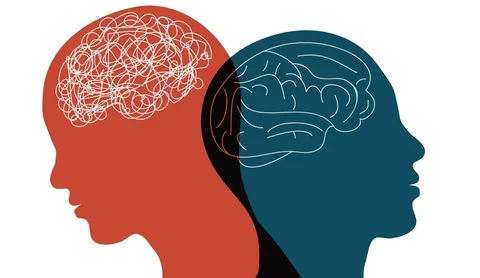
Self-awareness is one of the fundamental aspects of psychological development. It refers to the ability to recognize and understand one’s own thoughts, emotions, motivations, values, and behavioral patterns. Although people spend most of their lives experiencing their own thoughts and feelings, this does not necessarily mean that they understand themselves deeply. An individual may recognize that they are unhappy without knowing why, repeat certain behaviors without understanding their origins, or make decisions without being fully aware of the psychological factors influencing them. Self-awareness involves looking beyond immediate experiences and developing a clearer understanding of the person one is.
In everyday life, people often explain their behavior through external circumstances. Someone may say that they became angry because another person was disrespectful, that they avoided a conversation because they were busy, or that they rejected an opportunity because it was not suitable. These explanations may be accurate, but sometimes they represent only part of a more complicated psychological process. A person may react strongly to criticism because it reminds them of earlier experiences, avoid certain conversations because they fear rejection, or refuse opportunities because they doubt their abilities. Self-awareness makes it possible to examine these underlying processes rather than accepting the first explanation that comes to mind.
One important dimension of self-awareness is emotional awareness. Emotions influence attention, memory, judgment, and decision-making. However, individuals do not always recognize what they are feeling. A person may interpret disappointment as anger, loneliness as boredom, or anxiety as a lack of motivation. When emotions remain unclear, it becomes more difficult to respond to them appropriately. Recognizing the difference between emotional states allows individuals to understand their needs and communicate them more effectively.
For example, imagine someone who becomes irritated whenever a close friend makes plans without including them. At first, the person may believe that the problem is simply the friend’s behavior. However, deeper reflection may reveal that the situation creates feelings of rejection or insecurity. This realization does not mean that the friend’s behavior is necessarily acceptable. Instead, it helps the individual distinguish between the external event and the personal meaning attached to it.
Self-awareness is closely connected to emotional regulation. People who can recognize their emotional reactions may find it easier to pause before responding impulsively. When someone understands that a particular situation produces anxiety or anger, they can consider different ways of dealing with it. They do not have to ignore the emotion or act immediately according to it. This ability creates a psychological distance between feeling and action, allowing more thoughtful responses.
Another important aspect is awareness of personal thoughts. Human beings continuously interpret their experiences, often without consciously examining the assumptions behind those interpretations. Two individuals can experience the same event and understand it in completely different ways. One person may interpret criticism as an opportunity to improve, while another may see it as evidence of personal failure. These interpretations influence emotional reactions and subsequent behavior.
Cognitive distortions can make this process particularly complicated. For example, individuals who engage in all-or-nothing thinking may evaluate themselves as either completely successful or entirely unsuccessful. Those who frequently engage in mind reading may assume that other people have negative opinions about them without sufficient evidence. Recognizing these thinking patterns is an important part of self-understanding because it allows individuals to question automatic interpretations rather than treating them as unquestionable facts.
Self-awareness also involves understanding personal values. Values represent the principles and priorities that influence how individuals want to live. Some people place particular importance on independence, while others prioritize family, achievement, creativity, security, or meaningful relationships. Difficulties may arise when daily decisions repeatedly conflict with personal values. An individual who values honesty but constantly hides personal opinions to gain approval may gradually experience dissatisfaction. Similarly, someone who values independence but allows others to make every important decision may feel disconnected from their own identity.
Understanding values does not mean that people must always follow their preferences without considering responsibilities or other people’s needs. Human life involves compromise. However, recognizing what matters personally can help individuals make decisions more consciously and understand why certain situations produce dissatisfaction.
Childhood experiences can also influence the development of self-awareness. Early relationships with parents and caregivers contribute to how children understand themselves, their emotions, and their place in the social world. Children who are encouraged to express feelings and ask questions may have more opportunities to develop emotional vocabulary and confidence in describing their experiences. In contrast, children whose feelings are repeatedly dismissed may find it difficult to recognize or communicate emotional needs later in life.
Nevertheless, childhood experiences do not determine a person’s entire future. Individuals can develop new ways of understanding themselves through later relationships, education, reflection, and psychological support. Self-awareness is not simply the discovery of a fixed identity formed during childhood. It is an ongoing process through which people interpret their experiences and revise their understanding of themselves.
Social relationships provide another important source of self-knowledge. Other people may notice behavioral patterns that individuals themselves overlook. A friend might observe that someone repeatedly apologizes even when they have done nothing wrong, while a colleague may notice that a person avoids expressing disagreement. Feedback can help individuals identify these patterns, although it should not automatically be accepted as objective truth. Other people’s perceptions are influenced by their own experiences, expectations, and interpretations.
This distinction is important because self-awareness should not become excessive dependence on external judgment. Individuals who constantly ask others whether they are behaving correctly may gradually lose confidence in their own observations. Healthy self-understanding involves considering feedback while maintaining the ability to evaluate it independently.
The relationship between self-awareness and self-esteem is equally significant. People who understand their strengths and limitations may develop a more realistic view of themselves. They can recognize their achievements without exaggerating their abilities and acknowledge mistakes without defining their entire identity through failure. This balanced evaluation can contribute to healthier **Self-Esteem**.
However, self-awareness does not automatically produce high self-esteem. Sometimes becoming more aware of personal weaknesses, unresolved conflicts, or repeated mistakes can initially feel uncomfortable. An individual may discover that certain behaviors have negatively affected relationships or that important decisions were influenced by fear. These discoveries can create disappointment or guilt. The purpose of self-awareness is not to produce a permanently positive opinion of oneself, but to develop a more accurate and compassionate understanding.
There is also a difference between self-awareness and excessive self-analysis. Reflection can be useful when it helps people understand experiences and make meaningful changes. However, repeatedly examining the same thoughts without reaching new conclusions may contribute to rumination. A person may spend hours wondering why someone behaved in a particular way, what others think about them, or whether they made the wrong decision. Although this process may appear reflective, it can become an unproductive cycle.
The distinction between reflection and rumination is important. Reflection generally involves curiosity, openness, and a willingness to consider different explanations. Rumination often involves repetitive thinking, negative assumptions, and difficulty moving toward a solution. Individuals who want to develop self-awareness should therefore pay attention not only to how much they think about themselves but also to the quality and purpose of that thinking.
One practical way to improve self-awareness is through regular emotional observation. Individuals can take a few minutes each day to identify their dominant emotions and consider the situations associated with them. Instead of writing only that they felt bad, they can try to identify whether they experienced disappointment, embarrassment, frustration, anxiety, or loneliness. More precise descriptions can gradually improve emotional understanding.
Journaling can also support this process. Writing about important experiences allows individuals to examine events from a different perspective. They might ask themselves what happened, what they felt, what they thought, how they responded, and what they would do differently in a similar situation. The purpose is not to criticize every action but to recognize patterns that may otherwise remain unnoticed.
Another useful approach is examining repeated reactions. If a person frequently becomes defensive during discussions, avoids responsibility, or feels uncomfortable receiving praise, it may be helpful to explore the thoughts and beliefs associated with these behaviors. Repeated reactions can provide information about personal expectations and emotional sensitivities. Nevertheless, a single behavior should not be treated as proof of a psychological problem or a particular personality type.
Mindfulness can also help individuals become more aware of their internal experiences. By paying attention to present thoughts, emotions, and physical sensations, people may learn to observe what is happening without immediately judging themselves. For example, someone who experiences anxiety before speaking in public can notice the physical sensations and thoughts involved rather than automatically concluding that they are incapable of speaking confidently. This observation may create opportunities for a more balanced response.
Self-awareness is particularly relevant to decision-making. People often make choices under the influence of habits, social expectations, fear, or the desire for approval. A person may choose a career because their family expects it, maintain a relationship because they fear being alone, or avoid a new experience because failure seems embarrassing. Understanding these influences does not mean that every decision must be completely independent of other people. It means recognizing the motivations behind important choices.
In professional and educational environments, self-awareness can support personal development. Students who understand their learning habits may identify which methods help them concentrate and which situations interfere with their progress. Teachers who recognize their emotional reactions may respond more thoughtfully to difficult classroom situations. Similarly, employees who understand their strengths and limitations may communicate more effectively, accept constructive feedback, and identify realistic professional goals.
In relationships, self-awareness can help individuals recognize their expectations and boundaries. People sometimes expect others to understand needs that have never been clearly expressed. When these expectations remain unspoken, disappointment and conflict may develop. Understanding one’s own needs makes it easier to communicate them directly and recognize when personal boundaries are being crossed.
It is also important to understand that self-awareness is not a final destination. Human beings change as they experience new relationships, responsibilities, challenges, and opportunities. A person who once considered independence their highest priority may later discover that connection and cooperation have become equally important. Someone who previously avoided responsibility may gradually develop greater confidence. These changes do not necessarily indicate inconsistency. They may reflect psychological development.
Ultimately, self-awareness is the ability to approach oneself with curiosity, honesty, and a willingness to learn. It requires recognizing strengths without arrogance, acknowledging limitations without excessive self-criticism, and understanding emotions without allowing them to determine every action. The process can sometimes reveal uncomfortable truths, but it can also create opportunities for meaningful change.
Understanding oneself does not mean finding a single explanation for every thought or behavior. It means becoming more attentive to the complex relationship between experiences, interpretations, emotions, and actions. As individuals develop this awareness, they may become better equipped to make conscious decisions, communicate their needs, establish healthy boundaries, and respond to life’s challenges with greater psychological flexibility.