Fear is one of the oldest and most evolutionarily conserved functions of the human nervous system. Long before the development of language, abstract reasoning, or self-awareness, survival depended upon the ability to detect danger rapidly and organize defensive behavior within fractions of a second. Every mammalian brain possesses sophisticated systems dedicated to recognizing potential threats, mobilizing physiological resources, and increasing the probability of survival. Under ordinary circumstances, these systems activate briefly, respond to immediate danger, and then gradually return to baseline once safety has been restored. Yet psychopathology reveals that this process does not always end when the threat disappears. In some individuals, the brain appears to remain organized around fear long after objective danger has passed. This raises one of the deepest questions in affective neuroscience and psychiatry: can the brain become permanently trapped inside its own survival state?
At first glance, chronic fear appears to be simply an intensified version of normal anxiety. Contemporary neuroscience suggests something far more complex. Fear is not merely an emotion. It is an organizing principle capable of restructuring perception, memory, attention, decision-making, bodily awareness, and even personal identity. When fear becomes persistent, it does not simply coexist with other psychological processes. It gradually reorganizes them.
To understand this transformation, it is necessary to abandon the popular misconception that fear originates from a single brain structure. Although the amygdala has become widely known as the “fear center,” modern neuroscience has demonstrated that no isolated region produces emotional experience independently. Fear emerges from interactions among distributed neural systems involving sensory processing, autonomic regulation, memory consolidation, executive control, interoception, hormonal signaling, and predictive computation.
The amygdala contributes primarily to detecting biologically significant stimuli.
It evaluates uncertainty rapidly.
Its function is not to determine whether something is objectively dangerous but whether further attention should be allocated.
This distinction is crucial.
The amygdala responds to possibility rather than certainty.
Evolution favored organisms that occasionally produced false alarms over those that failed to recognize genuine threats.
Consequently, survival systems are intentionally biased toward caution.
This adaptive bias becomes problematic when regulatory mechanisms begin interpreting ordinary uncertainty as continuous danger.
Under normal circumstances, cortical regions gradually inhibit excessive alarm responses after evaluating additional evidence.
The prefrontal cortex contributes substantially to this process by integrating contextual information, autobiographical knowledge, and long-term goals.
Fear therefore reflects ongoing negotiation between rapid defensive systems and slower evaluative systems.
Psychopathology emerges partly when this negotiation becomes chronically imbalanced.
One of the most influential developments in contemporary neuroscience involves predictive coding models.
According to these frameworks, perception is fundamentally anticipatory rather than reactive.
The brain continuously generates predictions regarding incoming sensory information before external signals arrive.
Incoming evidence is evaluated relative to these predictions.
Fear profoundly influences this predictive architecture.
An organism expecting danger allocates attention differently, interprets ambiguity differently, and encodes memory differently than an organism expecting safety.
Over time, persistent fear gradually transforms prediction itself.
Instead of predicting isolated threats, the nervous system begins predicting threat as the default condition.
This transition represents one of the defining characteristics of chronic anxiety disorders.
The external environment may remain objectively unchanged.
The internal model organizing perception changes dramatically.
Consequently, ordinary experiences acquire defensive significance.
A crowded room becomes potential danger.
Silence becomes suspicious.
Physical sensations become possible illness.
Neutral facial expressions become evidence of rejection.
Importantly, these interpretations are not consciously fabricated.
They emerge automatically because predictive systems continuously shape perception before conscious awareness fully develops.
Memory undergoes equally profound transformation.
The hippocampus ordinarily integrates experiences into coherent autobiographical narratives while simultaneously encoding contextual information distinguishing past from present.
Fear alters these processes significantly.
Stress hormones influence memory consolidation, increasing retention of threat-related information while reducing processing of contextual detail.
From an evolutionary perspective, remembering danger possessed obvious survival value.
However, excessive prioritization of threatening experiences gradually biases autobiographical memory itself.
Individuals begin recalling danger more readily than safety.
Negative experiences become cognitively accessible.
Positive experiences require increasing effort to retrieve.
Eventually, personal history appears organized primarily around threat.
This transformation influences identity.
Human beings understand themselves largely through remembered experience.
If memory becomes selectively organized around fear, self-concept inevitably changes.
Individuals begin viewing themselves as vulnerable, fragile, permanently endangered, or fundamentally incapable of safety.
Identity shifts from describing who one is toward describing what one must avoid.
Psychopathology therefore extends beyond emotional suffering into existential organization.
The self gradually becomes structured around survival rather than development.
Attention demonstrates similar reorganization.
Ordinarily, attentional systems distribute cognitive resources flexibly according to changing environmental demands.
Persistent fear dramatically narrows attentional priorities.
Threat-related stimuli receive disproportionate processing.
Neutral information becomes increasingly ignored.
This phenomenon, known as attentional bias, has been repeatedly demonstrated across anxiety disorders.
The implications extend beyond perception.
Attention determines learning.
Learning determines expectation.
Expectation determines future attention.
Fear therefore establishes recursive feedback loops.
Each cycle strengthens subsequent cycles.
Eventually, defensive attention begins maintaining itself independently of external circumstances.
This self-perpetuating architecture explains why chronic anxiety frequently persists after objective danger has disappeared.
Interoception introduces another essential dimension.
The brain continuously monitors internal bodily states including heart rate, breathing, muscular tension, gastrointestinal activity, and hormonal fluctuations.
These signals contribute substantially to emotional experience.
Individuals rarely perceive bodily information directly.
Instead, the brain interprets physiological patterns according to predictive models.
Fear alters this interpretive process.
Minor bodily sensations acquire catastrophic significance.
Normal cardiac variations become evidence of impending death.
Transient dizziness suggests neurological catastrophe.
Ordinary respiratory changes indicate suffocation.
The body itself becomes interpreted as a source of threat.
Panic disorder illustrates this mechanism particularly clearly.
Many patients begin fearing not external events but internal physiological sensations.
The survival system turns inward.
Ironically, attempts to monitor bodily danger often intensify precisely the physiological changes being feared.
Hyperventilation increases dizziness.
Muscular tension increases pain.
Autonomic activation accelerates heart rate.
The resulting sensations reinforce catastrophic predictions.
Fear begins generating evidence supporting itself.
Neuroendocrine systems contribute significantly to this persistence.
Activation of the hypothalamic-pituitary-adrenal axis releases glucocorticoids facilitating adaptation during acute stress.
Temporary activation enhances survival.
Chronic activation produces different consequences.
Prolonged exposure to stress hormones influences neural plasticity, immune function, metabolic regulation, and emotional processing.
The organism gradually shifts toward maintaining physiological readiness rather than restoring baseline equilibrium.
The nervous system becomes optimized for emergency.
Unfortunately, optimization for emergency often reduces flexibility required for ordinary life.
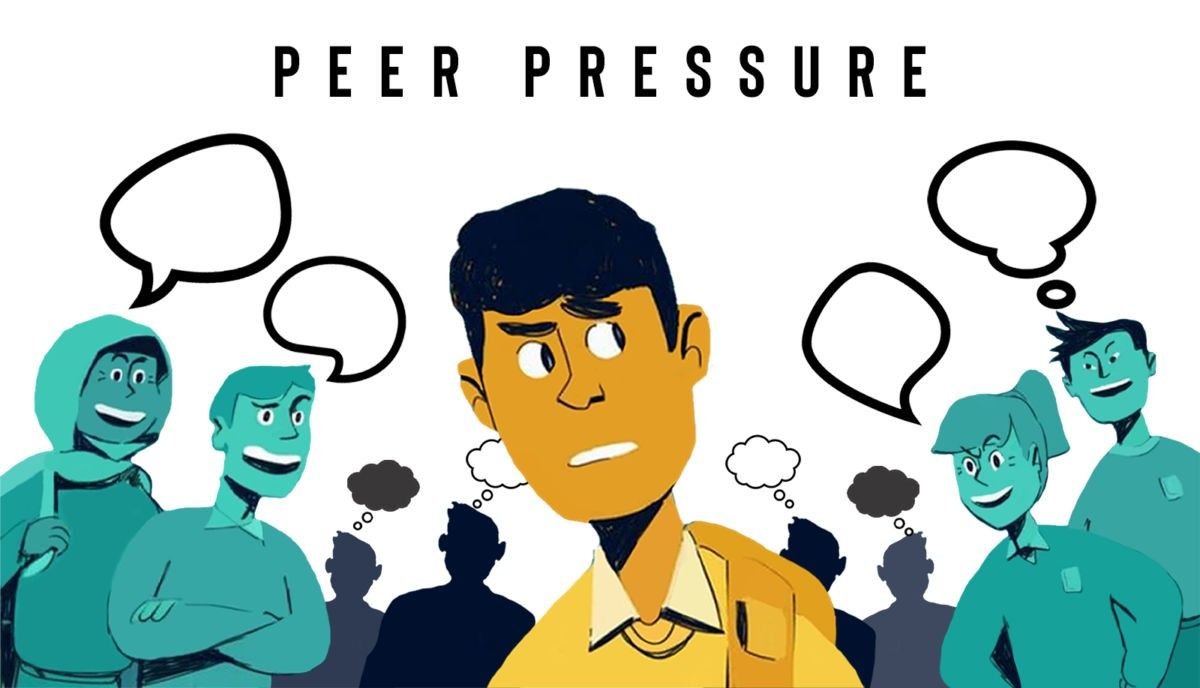
Social cognition undergoes comparable alteration.
Human beings continuously infer intentions, emotions, and motivations in others.
Fear biases these inferences toward potential threat.
Ambiguous expressions appear hostile.
Uncertainty suggests rejection.
Silence implies criticism.
Interpersonal relationships gradually become organized around defensive anticipation.
Trust becomes increasingly difficult because prediction systems assign greater probability to betrayal than safety.
Loneliness frequently follows.
Ironically, social isolation removes corrective experiences capable of challenging defensive expectations.
Fear therefore generates environmental conditions reinforcing itself.
Developmental neuroscience suggests these mechanisms become especially powerful during childhood.
The immature brain demonstrates extraordinary plasticity.
Repeated exposure to unpredictable environments calibrates predictive systems accordingly.
Children raised within chronically threatening contexts often develop nervous systems exceptionally skilled at detecting subtle danger.
These adaptations maximize survival under adverse conditions.
However, they frequently persist after environmental circumstances improve.
The adult continues anticipating threats appropriate to childhood but disproportionate to present reality.
This phenomenon illustrates one of psychopathology’s central principles.
Symptoms often represent adaptive strategies operating beyond their original ecological context.
The nervous system remembers environments long after conscious awareness has moved beyond them.
Modern neuroimaging demonstrates that chronic fear influences communication among large-scale neural networks rather than isolated structures.
Connectivity between emotional, cognitive, sensory, and autonomic systems gradually reorganizes.
Fear ceases functioning merely as an emotional state.
It becomes an organizing architecture governing information processing itself.
Reality becomes filtered through defensive computation.
The individual does not simply feel afraid.
The individual perceives an increasingly dangerous world because perceptual systems themselves have changed.
One particularly fascinating concept emerging from computational psychiatry involves precision estimation.
The brain continuously determines how much confidence should be assigned to competing sources of information.
Healthy cognition flexibly adjusts confidence according to context.
Fear alters these estimations.
Threat predictions receive excessive confidence.
Contradictory evidence receives insufficient weighting.
Even repeated experiences of safety fail to modify defensive expectations adequately.
Learning becomes asymmetric.
Danger updates prediction rapidly.
Safety updates prediction slowly.
Consequently, fear demonstrates remarkable persistence.
Recovery therefore requires more than eliminating symptoms.
The nervous system must gradually relearn probability itself.
It must rediscover that safety deserves predictive confidence equal to danger.
This process explains why therapeutic improvement frequently requires repeated corrective experiences rather than intellectual reassurance alone.
Knowledge and prediction operate through partially independent mechanisms.
A patient may logically understand safety while biologically anticipating catastrophe.
The discrepancy often frustrates both clinicians and patients.
Yet it reflects fundamental characteristics of neural learning rather than insufficient motivation.
Philosophically, chronic fear raises profound questions concerning reality.
Individuals experiencing persistent anxiety frequently ask whether their fears are irrational.
Psychopathology suggests a subtler interpretation.
Fear rarely invents entirely impossible futures.
Instead, it dramatically overestimates probabilities while underestimating resilience.
The feared events remain theoretically possible.
What changes is the predictive architecture assigning likelihood.
Reality becomes statistically distorted rather than completely abandoned.
The organism behaves as though low-probability threats possess near certainty.
This computational shift gradually reshapes every aspect of conscious experience.
Ultimately, the question of whether the brain can become trapped in fear receives a qualified but compelling answer from modern neuroscience. The brain does not become imprisoned by fear because fear itself refuses to disappear. Rather, persistent fear gradually modifies predictive models, attentional priorities, autobiographical memory, bodily interpretation, social cognition, and physiological regulation until survival becomes the primary organizing principle of consciousness. The nervous system ceases merely responding to danger and begins expecting it as the fundamental structure of reality.
Yet contemporary neuroscience also offers hope. The same neuroplasticity allowing fear to reorganize the brain also permits recovery. Predictive systems remain capable of revision. Memory remains capable of reconsolidation. Neural networks remain capable of forming new patterns throughout life. Escape from chronic fear therefore does not require erasing the past. It requires patiently teaching the brain that survival no longer depends upon treating every moment as the beginning of another catastrophe.