Affective experience is often assumed to be synonymous with conscious feeling. When individuals report sadness, anxiety, or anger, these states are typically understood as subjective, accessible, and identifiable. Yet a substantial body of psychological and psychosomatic research suggests that not all affective processes reach conscious awareness. Emotional activation can occur, influence cognition and physiology, and shape behavior without being fully experienced as “felt emotion.” This phenomenon—unfelt or unprocessed affect—raises a complex question: why does affect that is not consciously experienced persist, and through what mechanisms does it continue to exert influence?
To address this question, it is necessary to differentiate between affective activation and emotional awareness. Affective activation refers to the underlying neurophysiological processes that prepare the organism to respond to stimuli of significance. These processes include changes in autonomic regulation, endocrine signaling, and neural activity patterns. Emotional awareness, in contrast, involves the conscious recognition, labeling, and interpretation of these internal states.
The dissociation between activation and awareness suggests that affect can exist in a pre-reflective form. In this form, it operates as a background condition shaping perception, attention, and action without entering explicit consciousness. This pre-reflective affect is not absent; rather, it is unformulated. It lacks symbolic representation and therefore cannot be directly articulated or integrated into narrative experience.
One of the central mechanisms contributing to the persistence of unfelt affect is regulatory avoidance. When affective activation exceeds an individual’s capacity for processing, regulatory systems may inhibit conscious awareness as a protective measure. This inhibition can occur through attentional shifts, cognitive suppression, or dissociative processes. While such mechanisms may reduce immediate distress, they do not eliminate the underlying activation. Instead, the affect remains active in a latent form.
This latent activation continues to influence physiological systems. Autonomic patterns associated with the original affective state may persist, producing subtle but ongoing changes in arousal, muscle tone, and internal signaling. Over time, these patterns can stabilize into chronic states of dysregulation, even in the absence of conscious emotional experience.
Interoception plays a critical role in determining whether affective activation becomes consciously felt. Interoceptive processes involve the detection and interpretation of internal signals. When these processes are attenuated or disrupted, the translation of physiological activation into subjective feeling may be incomplete. Individuals may experience physical sensations without recognizing them as components of an emotional state.
This disconnect can lead to a form of experiential ambiguity. Sensations are present, but their meaning is unclear. Without a framework for interpretation, these sensations may be perceived as purely physical or may remain unrecognized altogether. In either case, the underlying affect persists without being integrated into conscious awareness.
Cognitive factors further contribute to this persistence. Beliefs about emotion, self-regulation, and vulnerability can shape how affect is processed. Individuals who view emotional expression as unacceptable or dangerous may be more likely to inhibit awareness. This inhibition becomes habitual over time, creating a pattern in which affective activation is consistently prevented from reaching consciousness.
Memory systems also play a role in maintaining unfelt affect. Experiences that are not fully processed may be encoded in fragmented or implicit forms. These memory traces can be reactivated by contextual cues, producing physiological and behavioral responses without accompanying conscious recollection or feeling. This reactivation contributes to the persistence of affect across time, even when it is not consciously recognized.
Trauma represents a particularly salient context in which unfelt affect emerges. Traumatic experiences often involve overwhelming activation that cannot be fully integrated at the time of occurrence. As a result, elements of the experience may be dissociated from conscious awareness. The affective components remain active but are disconnected from narrative memory and symbolic representation.
In such cases, the organism continues to respond as though the original conditions persist. Physiological patterns associated with the trauma may be triggered by cues that resemble aspects of the original context. These responses occur without conscious awareness of their origin, illustrating how unfelt affect can remain operative long after the initial event.
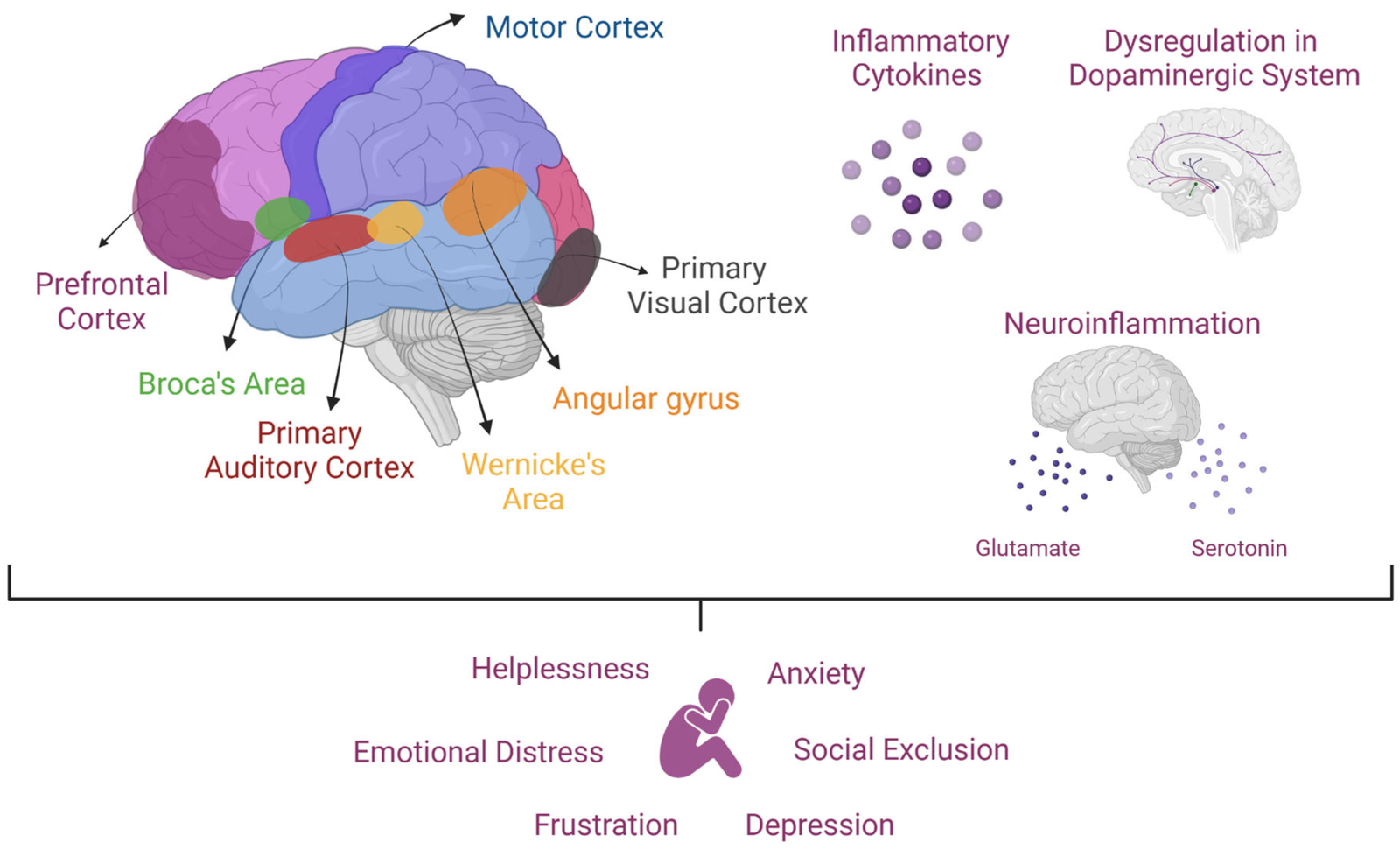
The persistence of unfelt affect is also supported by neural network dynamics. Affective processing involves distributed systems that interact with regulatory and cognitive networks. When integration among these systems is incomplete, affective activation may remain isolated from higher-order processes responsible for awareness and interpretation. This isolation allows affect to persist in a form that is functionally active but experientially inaccessible.
Over time, the accumulation of unfelt affect can contribute to the emergence of psychosomatic symptoms. When affective activation is not processed through symbolic or relational channels, it may be expressed through physiological pathways. These expressions can take the form of chronic tension, functional disturbances, or diffuse discomfort. While these symptoms may appear unrelated to emotion, they often reflect underlying patterns of unprocessed affect.
The concept of somatic markers provides a useful framework for understanding this process. Somatic markers are physiological signals associated with emotional states that influence decision-making and behavior. When affect is not consciously felt, these markers may still guide responses, shaping choices and reactions in subtle ways. This influence underscores the functional significance of unfelt affect, even in the absence of awareness.
Social and relational factors also contribute to the persistence of unfelt affect. Early relational environments play a crucial role in shaping how affect is recognized and regulated. When caregivers respond consistently and attune to emotional states, individuals develop the capacity to identify and process affect. In contrast, environments characterized by inconsistency, neglect, or invalidation may hinder the development of this capacity.
In such contexts, affective experiences may be minimized, dismissed, or ignored. Individuals learn to inhibit awareness as a means of maintaining relational stability. This learned pattern can persist into later life, contributing to the ongoing presence of unfelt affect.
Language and symbolic capacity are central to the transformation of affect into conscious experience. The ability to label and describe emotions allows for their integration into cognitive and social frameworks. When this capacity is limited, affect may remain in a pre-symbolic state, lacking the structure necessary for conscious awareness.
The persistence of unfelt affect can therefore be understood as a failure of integration rather than a failure of activation. The affect is present and active, but it is not connected to the systems that would allow it to be recognized, articulated, and regulated. This disconnection allows it to persist over time, influencing behavior and physiology without entering awareness.
Therapeutic approaches to this phenomenon often focus on restoring integration. This involves enhancing interoceptive awareness, expanding emotional vocabulary, and facilitating the connection between affective activation and symbolic representation. By bringing previously unfelt affect into awareness, individuals can begin to process and regulate these states more effectively.
Mindfulness-based interventions, for example, aim to increase awareness of internal states without immediate judgment or interpretation. This increased awareness can help individuals recognize subtle forms of affective activation that might otherwise remain unnoticed. Over time, this recognition can reduce the need for indirect expression through physiological channels.
Psychodynamic approaches emphasize the exploration of underlying conflicts and relational patterns that contribute to the inhibition of affect. By examining these patterns, individuals can gain insight into the mechanisms that sustain unfelt affect and begin to modify them.
Importantly, the process of bringing affect into awareness must be gradual and regulated. Sudden exposure to previously inhibited affect can be overwhelming, particularly when it is associated with past trauma. Effective intervention therefore involves pacing and support, allowing integration to occur without exceeding the individual’s capacity for regulation.
The question of why unfelt affect persists ultimately highlights the complexity of emotional processing. Affect is not simply a conscious experience but a multi-layered phenomenon that can exist in various forms and levels of awareness. Its persistence reflects the interplay between activation, regulation, memory, and integration.
Unfelt affect remains active because it has not been fully processed or incorporated into the systems that allow for conscious experience. It continues to shape physiological and behavioral patterns, often manifesting in indirect ways. Recognizing this persistence provides a framework for understanding a wide range of psychosomatic and psychological phenomena.
In this sense, affect does not disappear when it is not felt. It is transformed, redirected, and maintained within the organism’s regulatory systems. Only through processes that restore connection and integration can this affect become accessible, allowing it to be experienced, understood, and ultimately resolved.