Chronic somatic distress refers to the persistent experience of physical discomfort, dysfunction, or pain that cannot be fully explained by identifiable structural pathology. While such conditions are often approached from a biomedical perspective, psychosomatic frameworks emphasize that these experiences emerge from complex interactions among affective processes, cognitive patterns, physiological regulation, and environmental context. The persistence of such distress raises a central question: what sustains it over time, even when acute triggers are no longer present?
At the outset, it is important to clarify that chronic somatic distress is not reducible to either “purely physical” or “purely psychological” causes. Rather, it reflects a dynamic system in which multiple levels of organization interact. The persistence of symptoms depends less on a single initiating factor and more on the stabilization of maladaptive patterns across these levels.
One of the key mechanisms involved is dysregulation within autonomic control systems. These systems coordinate physiological responses to internal and external demands. Under normal conditions, activation is followed by recovery, allowing the organism to return to a baseline state. In chronic distress, this oscillation becomes impaired. Activation may remain elevated, recovery may be incomplete, or the system may fluctuate unpredictably between states.
This instability produces a background condition of heightened sensitivity. Minor fluctuations that would otherwise go unnoticed become salient and uncomfortable. Over time, the system begins to treat ordinary variations as significant, reinforcing a state of persistent alertness. This heightened sensitivity contributes to the ongoing experience of discomfort, even in the absence of clear external stressors.
Interoceptive processing plays a central role in this dynamic. The perception of internal signals is not a passive reflection of physiological activity but an interpretive process shaped by attention, expectation, and prior experience. In chronic somatic distress, interoceptive signals are often amplified and interpreted in ways that increase their perceived intensity.
This amplification is closely linked to attentional biases. Individuals may develop a tendency to monitor internal states closely, scanning for signs of discomfort or dysfunction. While such monitoring may initially arise from a desire to understand or control symptoms, it can inadvertently sustain them. Increased attention enhances signal salience, making sensations more prominent and more difficult to ignore.
Cognitive appraisal further influences how these sensations are experienced. When internal signals are interpreted as threatening, uncontrollable, or indicative of serious dysfunction, emotional responses such as anxiety or frustration are activated. These emotional states, in turn, increase physiological arousal, intensifying the original sensations. A feedback loop emerges in which perception, interpretation, and activation reinforce one another.
Memory processes contribute to the consolidation of these patterns. Repeated experiences of discomfort, combined with consistent interpretations, create associative networks that link specific contexts, thoughts, and physiological responses. Over time, these associations become automatic. Situations that resemble previous experiences may trigger the entire pattern, even if the original conditions are no longer present.
This associative learning is particularly relevant in the context of pain. Pain perception is not determined solely by nociceptive input but is modulated by cognitive and emotional factors. Expectations, beliefs, and past experiences influence both the intensity and the meaning of pain. Chronic pain conditions often involve a decoupling of nociception from perception, where pain persists despite the absence of ongoing tissue damage.
The persistence of such pain can be understood in terms of central sensitization—a process in which neural systems involved in pain processing become more responsive over time. This increased responsiveness lowers the threshold for activation, allowing minor stimuli to produce significant discomfort. Central sensitization reflects a form of learning at the neural level, where repeated activation strengthens certain pathways.
Emotional processes are deeply intertwined with these mechanisms. Chronic distress is often associated with underlying affective states such as anxiety, frustration, or unresolved conflict. When these states are not adequately processed, they may contribute to sustained physiological activation. The resulting patterns become embedded in the organism’s regulatory systems, maintaining the cycle of distress.
Importantly, emotional influence does not require conscious awareness. Affect can operate at implicit levels, shaping physiological responses without being explicitly recognized. This implicit activation may contribute to the persistence of symptoms, as the underlying drivers remain unaddressed.
Behavioral patterns also play a sustaining role. In response to discomfort, individuals may adopt strategies aimed at avoiding or minimizing symptoms. While these strategies may provide short-term relief, they can have unintended long-term effects. Avoidance of activity, for example, may lead to reduced flexibility, decreased tolerance, and increased sensitivity.
Similarly, repeated attempts to control or eliminate sensations can reinforce their significance. When individuals treat sensations as problems that must be solved immediately, they may increase their focus on them, thereby amplifying their impact. Over time, these behavioral patterns become part of the system that sustains distress.
Social and contextual factors further shape the persistence of symptoms. Interpersonal responses to distress can influence how symptoms are experienced and maintained. Validation, misunderstanding, support, or conflict all contribute to the broader context in which symptoms occur. These factors can either facilitate adaptation or reinforce maladaptive patterns.
Cultural frameworks also play a role in shaping symptom expression. Beliefs about health, illness, and the legitimacy of certain experiences influence how individuals interpret and communicate their symptoms. In some contexts, somatic expression may be a primary means of conveying distress, reinforcing its persistence as a mode of communication.
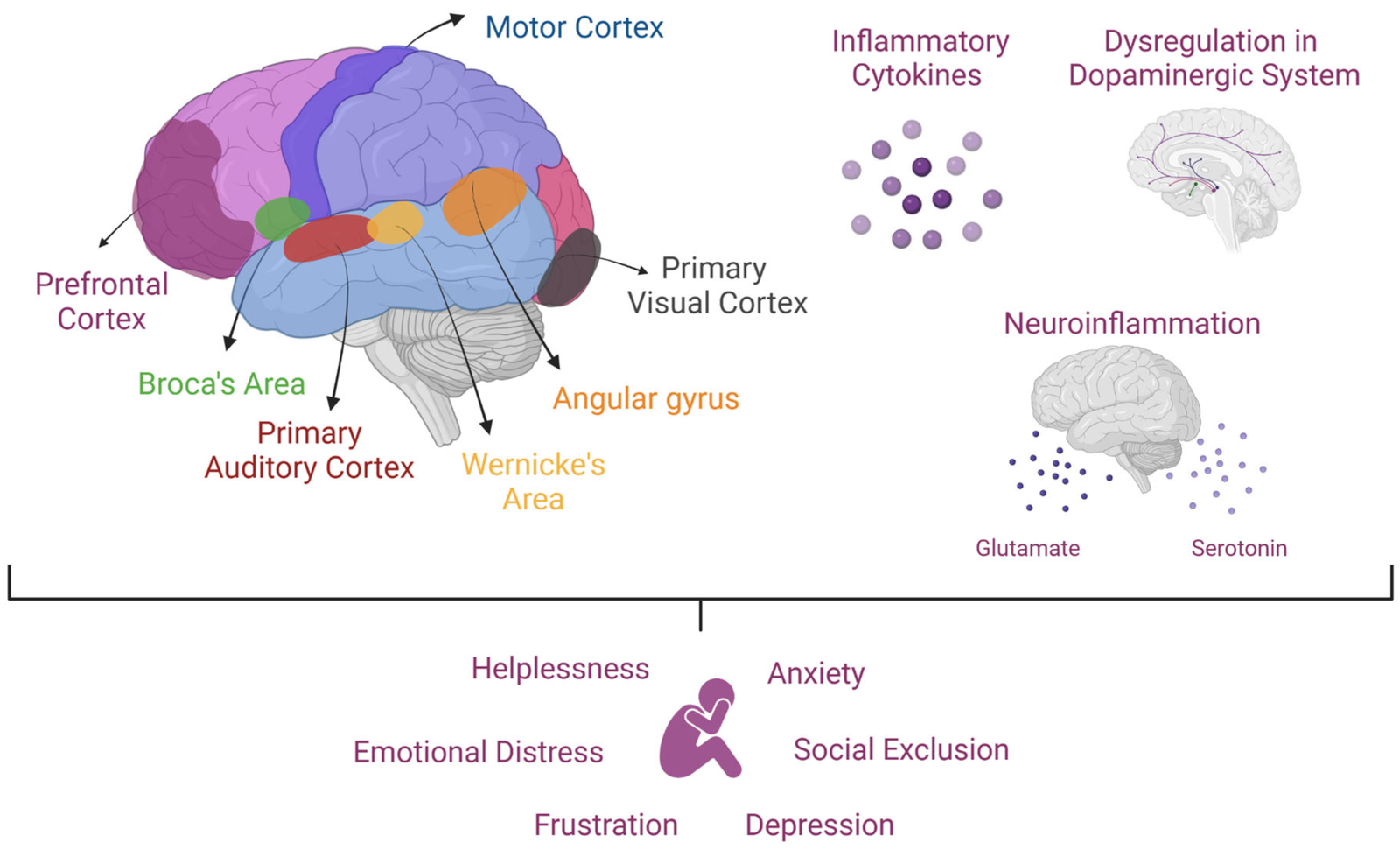
Neurobiologically, the persistence of chronic somatic distress reflects the interaction of multiple systems rather than the dysfunction of a single component. Neural circuits involved in perception, regulation, and valuation interact continuously, shaping the experience of discomfort. Hormonal and immune processes contribute additional layers of complexity, influencing sensitivity and recovery.
The concept of allostatic load provides a useful framework for understanding these interactions. Allostatic load refers to the cumulative impact of repeated adaptation to stress. Over time, the systems involved in maintaining stability may become overburdened, leading to inefficiencies and dysregulation. Chronic somatic distress can be seen as a manifestation of this cumulative strain.
Despite the complexity of these mechanisms, it is important to recognize that they are not fixed. The same processes that sustain distress are capable of change. Neural plasticity allows for the modification of established patterns, provided that new experiences and responses are introduced.
Interventions aimed at reducing chronic somatic distress often focus on disrupting reinforcing loops. This may involve shifting attention away from constant monitoring, modifying interpretations of internal signals, and gradually increasing tolerance for sensations. By altering these components, it becomes possible to reduce amplification and restore more adaptive patterns.
Emotional processing is also central to intervention. Facilitating the recognition and integration of underlying affective states can reduce the need for indirect expression through physiological channels. When affect is acknowledged and regulated, its influence on somatic processes may diminish.
Behavioral strategies often emphasize gradual exposure rather than avoidance. By re-engaging with activities that have been limited due to discomfort, individuals can recalibrate their systems and reduce sensitivity over time. This process requires careful pacing to avoid overwhelming the system while promoting adaptation.
The therapeutic relationship itself can play a significant role. A context of understanding and validation can counteract patterns of threat and defensiveness, supporting the reorganization of responses. Through this relational framework, individuals may develop new ways of interpreting and responding to their experiences.
The persistence of chronic somatic distress, therefore, is not the result of a single cause but the outcome of interacting processes that stabilize over time. These processes include physiological dysregulation, attentional and cognitive biases, associative learning, emotional activation, and behavioral adaptation.
Understanding these mechanisms shifts the focus from symptom elimination to system regulation. Rather than attempting to remove individual symptoms in isolation, effective approaches aim to modify the patterns that sustain them. This systemic perspective acknowledges the complexity of the phenomenon while offering pathways for change.
Ultimately, chronic somatic distress persists because it is maintained by interconnected processes that reinforce one another. By identifying and altering these processes, it becomes possible to reduce their impact and restore a more flexible and adaptive mode of functioning.