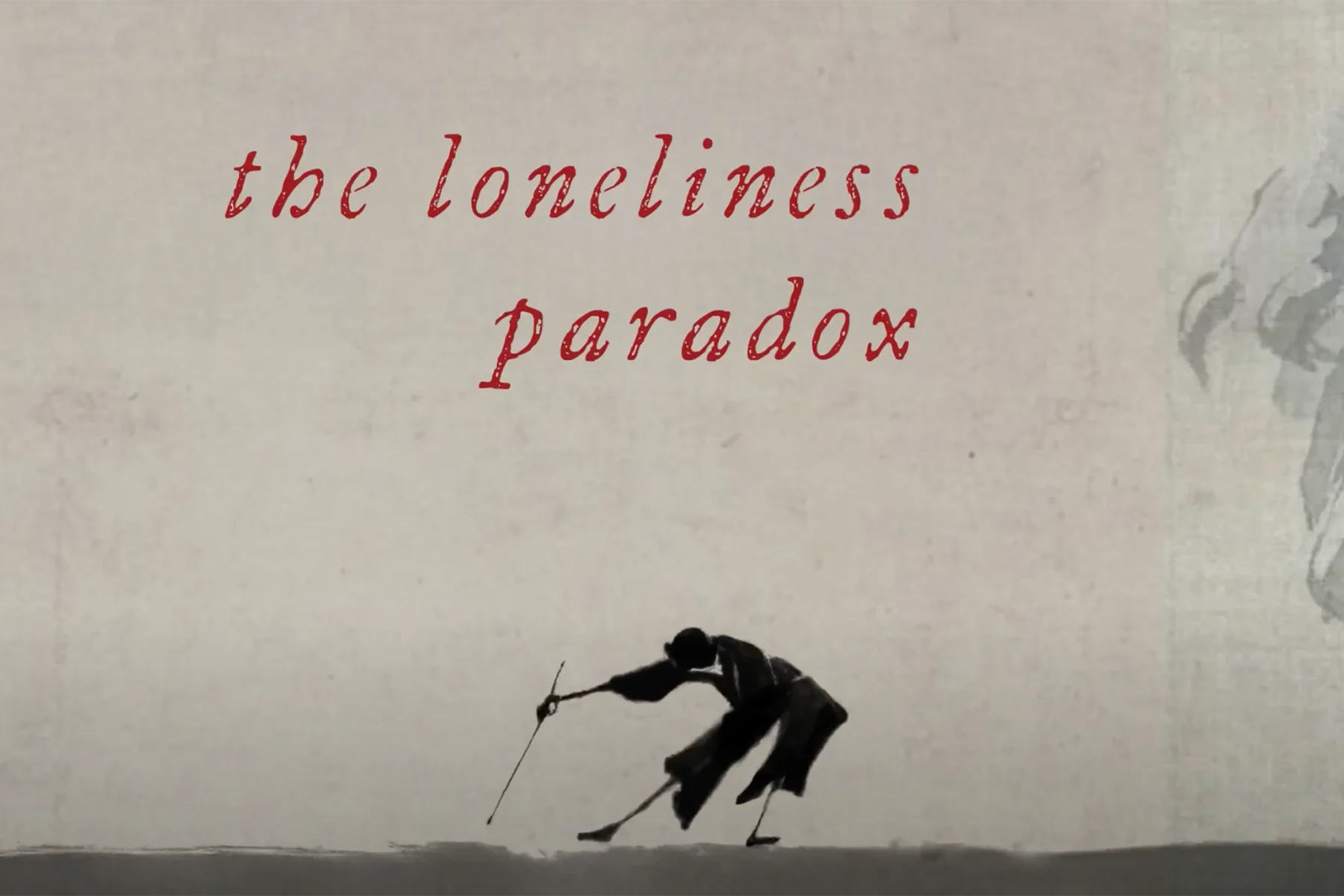
Loneliness is one of the most widespread psychological experiences of modern life. A person can be surrounded by people and still feel deeply alone. Loneliness is not simply the absence of other human beings; it is often the perception that meaningful emotional connection is missing. Someone may have a family, colleagues, friends, or thousands of online followers and nevertheless experience the feeling that nobody truly understands them.
Human beings are naturally social. From the earliest stages of life, people depend on relationships for emotional security, learning, cooperation, and protection. The desire for connection is therefore not a weakness. It is a fundamental psychological need.
When meaningful connection becomes unavailable, the mind can respond with distress.
Loneliness often begins quietly. A person may notice that conversations have become superficial, that they no longer feel comfortable sharing personal thoughts, or that they have nobody they genuinely want to call when something important happens. At first, the individual may simply describe themselves as tired or busy. Over time, however, the absence of meaningful connection can become increasingly noticeable.
Modern life can make this experience particularly complicated. Digital communication allows people to remain connected almost constantly, but frequent contact does not necessarily create emotional intimacy. A person can receive messages throughout the day and still feel emotionally disconnected.
Online interaction can provide companionship, entertainment, and useful communication, but it does not always replace the psychological experience of being understood and emotionally supported.
One of the most painful aspects of loneliness is the belief that other people are connected while one is excluded. Social media can intensify this perception because individuals usually see selected moments from other people’s lives. Photographs of gatherings, celebrations, friendships, relationships, and vacations may create the impression that everyone else has a rich social life.
The viewer sees their own private loneliness in contrast with other people’s public moments.
This comparison can produce shame.
Instead of thinking, “I am lonely right now,” a person may begin thinking, “There must be something wrong with me because I am lonely.”
That interpretation can make the experience more painful.
Loneliness does not necessarily mean that a person lacks social skills. It can occur during major life transitions, after moving to a new place, after ending a relationship, following a change in employment, or when existing relationships become emotionally distant.
Even people who are naturally sociable can experience loneliness.
The quality of relationships is often more important than the number of relationships.
A person may have many acquaintances but lack one relationship in which they feel safe enough to express vulnerability. Another individual may have only a few close relationships but feel deeply connected.
Meaningful connection involves more than physical presence.
It includes emotional understanding, trust, reciprocity, and the ability to communicate authentically.
Loneliness can also influence how people interpret social information. When an individual strongly expects rejection, neutral behavior may appear negative. A short message may be interpreted as disinterest. A canceled plan may feel like evidence of rejection. A quiet conversation may be interpreted as proof that the other person is bored.
The lonely mind can become highly sensitive to signs of exclusion.
This sensitivity may create a difficult cycle. The person wants connection but fears rejection. Because of that fear, they become more cautious and less open. Other people may then find it harder to approach them. The individual interprets the resulting distance as confirmation that nobody wants them.
The cycle continues.
Breaking it often requires small acts of social risk.
Starting a conversation, asking someone to meet, expressing appreciation, joining an activity, or sharing a personal thought can feel uncomfortable. There is always a possibility that the response will not be exactly what the person hopes for.
However, meaningful relationships cannot develop without some vulnerability.
Vulnerability does not mean telling strangers everything about one’s life. It means gradually allowing appropriate people to see more of the authentic self.
Trust develops through repeated experiences.
Loneliness can also be connected to self-esteem. Someone who believes they are uninteresting, unattractive, unsuccessful, or unworthy may assume that others will eventually reject them. This belief can reduce attempts to form relationships.
The person may think, “Why would anyone want to be close to me?”
Such thoughts can become self-fulfilling if they prevent social engagement.
Psychological work may therefore involve not only increasing social contact but also examining negative beliefs about the self.
Another important factor is emotional communication. Some people have relationships but rarely express what they actually need. They may appear independent because they never ask for support.
Independence can be valuable, but extreme emotional self-sufficiency can create distance.
People sometimes believe that asking for help makes them a burden. As a result, they keep their problems private until the emotional pressure becomes overwhelming.
Healthy relationships require both giving and receiving.
A friendship in which one person always provides support while never accepting support may become unbalanced. Allowing others to help can actually strengthen connection because it creates mutual involvement.
Loneliness is also common among people who have experienced rejection or betrayal. After being hurt, individuals may protect themselves by becoming emotionally distant.
Avoiding closeness reduces the immediate possibility of being hurt again.
However, it also reduces the possibility of experiencing intimacy.
This creates a psychological trade-off: emotional distance can provide safety, but excessive distance can create loneliness.
The solution is not to trust everyone. Healthy relationships require boundaries and gradual trust. The goal is to become selective rather than completely closed.
Loneliness can also affect romantic relationships. Some people enter relationships primarily to escape being alone. While companionship can be meaningful, using a relationship as the only source of emotional stability can create dependency.
A healthy relationship adds connection to an individual’s life rather than becoming the entire foundation of their identity.
Developing multiple sources of meaning can therefore be protective.
Friendships, family relationships, hobbies, education, work, creativity, community participation, and personal goals can all contribute to psychological connection.
Another misconception is that loneliness disappears automatically when a person enters a romantic relationship. In reality, emotional loneliness can exist within relationships. Someone may live with a partner but feel unable to discuss important feelings.
This form of loneliness can be particularly painful because the person is physically close to someone while emotionally distant.
Communication is therefore essential.
People sometimes assume that loved ones should automatically understand their needs. However, emotional needs are not always obvious.
Saying, “I need you to listen rather than give advice,” or “I have been feeling disconnected lately,” can create an opportunity for genuine connection.
Loneliness can also influence physical health indirectly through stress and changes in behavior. A lonely person may sleep poorly, become less physically active, eat irregularly, or spend excessive time online. These behaviors can reinforce emotional difficulties.
Creating daily structure can therefore be helpful.
Regular physical activity, exposure to daylight, meaningful routines, and opportunities for social interaction can support general psychological well-being.
However, loneliness should not be treated as a problem that can always be solved by simply “going outside” or “meeting more people.” Some individuals may have social anxiety, depression, grief, trauma-related difficulties, or other psychological barriers that make connection difficult.
In such cases, professional support can be valuable.
Therapy can provide a relationship in which the individual experiences being listened to and understood. It can also help identify beliefs and behaviors that maintain social isolation.
For someone who fears rejection, therapy may involve gradually developing tolerance for social uncertainty. For someone with low self-esteem, it may involve examining deeply established beliefs about personal worth.
The goal is not to become extremely social.
The goal is to develop enough meaningful connection to support psychological well-being.
Loneliness also has a positive side that is sometimes overlooked. Being alone and feeling lonely are not identical. Solitude can be restorative when it is chosen. People may need time alone to think, read, create, rest, or simply experience quiet.
The psychological problem is not being alone itself.
The problem is experiencing unwanted disconnection.
A person can enjoy solitude while maintaining meaningful relationships. In fact, healthy solitude can strengthen relationships because individuals have opportunities to reconnect with themselves rather than depending continuously on external stimulation.
The distinction between solitude and loneliness therefore matters.
Another useful concept is belonging. People need to feel that they have a place where they are accepted and where their presence matters. This can come from family, friendship groups, professional communities, educational environments, religious or cultural communities, volunteer organizations, or shared-interest groups.
Belonging does not require popularity.
A small community in which someone feels genuinely accepted can be more psychologically valuable than a large network of superficial contacts.
Creating belonging often begins with shared activity. People may find connection more naturally when they participate in something together rather than entering a situation with the sole goal of making friends.
Learning a skill, joining a sports group, volunteering, attending educational activities, or participating in a creative community can create repeated opportunities for interaction.
Repeated contact is important because familiarity gradually reduces social uncertainty.
Loneliness may also become less intense when individuals stop judging themselves for experiencing it. Saying, “I am lonely, therefore something is wrong with me,” adds shame to an already painful emotion.
A more compassionate interpretation is, “I am lonely because connection matters to me.”
This reframes loneliness as information about an unmet psychological need.
The emotion can then become a signal for action rather than a judgment of identity.
If the need is connection, the individual can ask what kind of connection is missing. Perhaps they need emotional intimacy. Perhaps they need more social activity. Perhaps they need intellectual stimulation. Perhaps they need someone who shares their interests.
Understanding the specific need makes it easier to address.
Ultimately, loneliness reminds us that human beings are not designed to exist entirely in isolation. Connection supports emotional security, identity, belonging, and psychological resilience. Yet meaningful connection cannot be measured simply by the number of people around us.
A crowded room can contain loneliness.
A quiet conversation can contain profound connection.
What matters is whether a person feels seen, heard, respected, and able to participate authentically in relationships.
In conclusion, loneliness is a complex psychological experience that can occur regardless of how many people surround an individual. It is influenced by social connection, self-esteem, previous experiences, fear of rejection, emotional communication, and the quality of relationships. Modern technology can provide communication while still leaving deeper emotional needs unmet. Developing meaningful relationships requires vulnerability, trust, communication, and willingness to tolerate some social uncertainty. At the same time, healthy solitude should not be confused with loneliness. People need both connection with others and connection with themselves. Loneliness should not be interpreted as proof that a person is unworthy or defective. It is often a signal that an important human need for meaningful connection deserves attention.