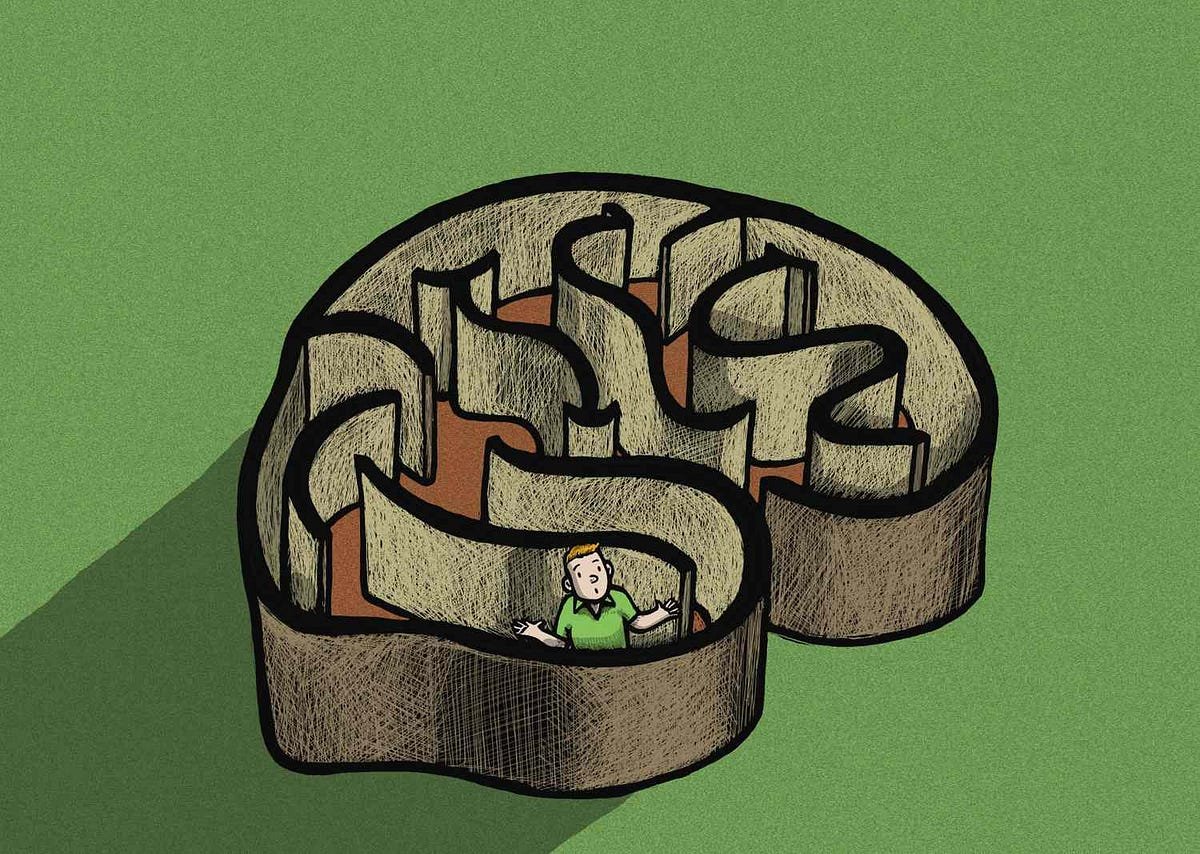
Human life is filled with decisions. Some are simple and almost automatic, while others can influence relationships, careers, finances, health, and personal development for many years. People often assume that good decisions are the result of intelligence and bad decisions are caused by carelessness. Psychological research, however, suggests that decision-making is much more complicated. Even intelligent and experienced people can make poor decisions ğcognitive biases, social pressure, or incomplete information influence their judgment.
One of the most important factors affecting decisions is emotion. People do not make decisions using logic alone. Fear, anger, excitement, sadness, love, jealousy, and anxiety can all influence how a situation is interpreted. An emotionally intense state can make an immediate outcome appear more important than a long-term consequence.
For example, a person who is extremely angry may send a message that they later regret. At the moment of sending it, expressing anger may feel necessary and satisfying. Later, when the emotional intensity decreases, the person may recognize that the message damaged an important relationship.
This does not mean that emotions are always harmful to decision-making. Emotions contain information. Fear can warn people about potential danger, sadness can indicate loss, and enthusiasm can encourage exploration. The difficulty occurs when an intense emotional state becomes the only source of information used to make a decision.
Stress can also change judgment. When people are under significant pressure, their attention often becomes narrower. They focus on the most immediate problem and may have difficulty considering distant consequences.
Someone who is worried about an urgent financial problem may accept an option that provides immediate relief without carefully examining what it will cost later. The decision may appear irrational from the outside, but from the person’s psychological perspective, immediate relief has become extremely important.
This illustrates a central feature of human decision-making: people often prioritize immediate emotional outcomes over distant benefits.
Another factor is cognitive bias. The human brain uses mental shortcuts to process information efficiently. These shortcuts are useful because analyzing every piece of information in complete detail would be impossible. However, shortcuts can sometimes produce systematic errors.
One example is confirmation bias. People tend to notice information that supports what they already believe while paying less attention to information that challenges their assumptions. If someone strongly believes that a particular person is trustworthy, they may interpret positive behavior as evidence of good character while dismissing warning signs.
Once a belief becomes established, contradictory evidence may become psychologically uncomfortable.
This is why changing one’s mind can be difficult.
People may also become attached to previous decisions. After investing time, money, or emotional energy into something, they may continue even when evidence suggests that changing direction would be wiser.
This is sometimes associated with the sunk-cost effect.
A person may remain in an unsuccessful project because they have already invested years in it. They may think, “I have come this far, so I cannot stop now.”
However, previous investment cannot be recovered simply by continuing. The more useful question is what the future costs and benefits look like from the present moment.
Another powerful influence is social pressure. Humans naturally care about belonging and acceptance. People may therefore make decisions based on what they believe others expect from them.
A young person may choose a career because their family considers it respectable. An adult may remain in a social environment because leaving could disappoint others. Someone may purchase something expensive because everyone around them appears to own it.
Social approval can become more influential than personal values.
This does not mean that other people’s opinions are irrelevant. Advice from experienced people can be extremely valuable. The difficulty arises when individuals stop examining whether a decision actually reflects their own goals.
Fear of judgment can also prevent people from making necessary changes.
Some individuals prefer an unsatisfying situation that is socially accepted over an uncertain option that better fits their personal needs.
Decision-making is also influenced by how choices are presented. The same information can produce different reactions depending on how it is framed.
A person may respond differently to a treatment described as having a high survival rate than to one described as having a certain mortality rate, even when the numerical information is equivalent.
This demonstrates that people do not always evaluate information purely mathematically.
Language, context, expectations, and emotional associations influence perception.
Another important factor is overconfidence. People sometimes believe they understand a situation better than they actually do. Confidence can be useful because it encourages action, but excessive confidence can reduce careful evaluation.
An individual may assume that a business opportunity cannot fail, that a relationship problem will resolve itself, or that they can manage a difficult situation without preparation.
When reality contradicts these assumptions, the consequences can be significant.
At the same time, excessive self-doubt can also produce poor decisions. A person may have enough knowledge to make a reasonable choice but remain unable to act because they believe they must be completely certain.
Complete certainty is rarely available.
Most important decisions involve some degree of uncertainty.
The ability to make reasonable decisions without absolute certainty is therefore an important psychological skill.
People also tend to avoid losses. The possibility of losing something can feel psychologically stronger than the possibility of gaining something of equal value.
This can influence financial decisions, relationships, career choices, and everyday behavior.
A person may refuse a potentially beneficial opportunity because they are excessively focused on what could go wrong.
Loss aversion can therefore encourage safety, but it can also prevent healthy risk-taking.
Another factor is familiarity. People often prefer familiar options because they require less mental effort and feel more predictable. Familiarity can create a sense of safety even when the familiar situation is objectively unsatisfying.
This explains why individuals sometimes remain in routines they themselves recognize as unhelpful.
Changing the routine introduces uncertainty.
The mind may prefer known discomfort over unknown possibilities.
Decision fatigue can further reduce judgment quality. Modern life requires people to make countless decisions every day. What to eat, what to buy, what to work on, how to respond to messages, when to rest, and how to organize responsibilities all require mental resources.
As mental energy decreases, people may rely more heavily on automatic choices.
This is one reason routines can be psychologically useful. Automating simple decisions can preserve attention for more important choices.
Sleep is also relevant. Lack of adequate sleep can affect attention, emotional regulation, and cognitive performance. A person making an important decision while exhausted may react more emotionally and have greater difficulty evaluating long-term consequences.
Therefore, sometimes the best decision is not to decide immediately.
Delaying a decision briefly can be useful when emotional intensity is high. However, postponement can also become avoidance. The distinction depends on whether the delay provides time for clearer thinking or simply postpones an uncomfortable responsibility.
Writing down the options can improve decision quality. Instead of keeping every possibility in the mind, the individual can list the alternatives and evaluate their advantages, disadvantages, risks, and likely consequences.
This reduces cognitive overload.
It can also be useful to distinguish facts from predictions.
For example, “I have received an offer” is a fact. “This job will definitely make me unhappy” is a prediction.
Predictions may be reasonable, but they are not the same as facts.
Recognizing this difference can make decisions more balanced.
Another helpful strategy is imagining what advice one would give to another person in the same situation. People often evaluate their own decisions more emotionally than they evaluate someone else’s.
Creating psychological distance can therefore improve judgment.
A person may ask, “If my friend were facing exactly this situation, what would I tell them?”
This question can reveal considerations that were overlooked when thinking only about oneself.
Time perspective can also be useful. Instead of focusing entirely on how a decision feels today, the individual can consider how it might appear in six months or several years.
This does not guarantee a correct answer, but it encourages consideration of long-term consequences.
Another approach is identifying the decision that is actually being made. Sometimes people become overwhelmed because several different decisions are mixed together.
For example, “Should I change my life?” is too broad.
More specific questions might be: “Do I want to change jobs?” “Can I afford the transition?” “What alternatives are available?” “What would I need to prepare?”
Breaking a large decision into smaller questions can make the process more manageable.
It is also important to recognize that not every decision deserves the same amount of analysis. Spending an hour deciding what to eat may not be useful. Spending an hour researching an important financial or professional decision may be entirely reasonable.
Good decision-making involves matching the amount of analysis to the importance of the choice.
People also learn through mistakes. A poor decision does not automatically mean that the individual is incapable of making good decisions.
Mistakes can reveal patterns.
Perhaps the person ignored warning signs because they were afraid of conflict. Perhaps they acted impulsively because they were emotionally overwhelmed. Perhaps they trusted an unrealistic assumption.
Understanding the mechanism behind a mistake is more useful than simply labeling oneself as “bad at decisions.”
Self-criticism can interfere with learning. Someone who repeatedly tells themselves, “I always make terrible choices,” may become less confident and more anxious about future decisions.
A more constructive approach is to ask, “What information did I miss?” or “What influenced my judgment?”
This turns regret into psychological information.
Regret itself can be useful when it encourages future learning. However, repeatedly replaying an old decision without any possibility of changing it can become unproductive rumination.
The past can teach, but it cannot be edited.
Healthy decision-making therefore requires both reflection and acceptance.
There are also situations in which professional guidance is appropriate. Medical decisions, significant financial choices, legal matters, and severe relationship problems can involve consequences beyond what one person can reasonably evaluate alone.
Seeking expert advice does not mean giving up personal responsibility. It means recognizing the limits of individual knowledge.
Ultimately, good decisions do not require perfect intelligence, complete information, or absolute certainty. They require awareness of emotions, recognition of biases, realistic evaluation of evidence, and willingness to accept uncertainty.
The goal is not to eliminate mistakes.
No human being can achieve that.
The goal is to create a decision-making process that makes avoidable mistakes less likely.
People can pause before reacting, question their assumptions, distinguish facts from predictions, consider long-term consequences, seek appropriate advice, and remain willing to change direction when new information appears.
In conclusion, human decisions are influenced by far more than logic. Emotions, stress, social pressure, cognitive biases, previous investments, familiarity, fear of loss, overconfidence, and uncertainty can all affect judgment. Recognizing these influences allows individuals to make decisions more consciously. A good decision is not necessarily one that produces a perfect outcome. It is often a decision made through a thoughtful process using the information available at the time. Psychological maturity does not mean always knowing what the right choice is. It means becoming increasingly capable of evaluating choices, learning from mistakes, accepting uncertainty, and taking responsibility for the direction of one’s life.