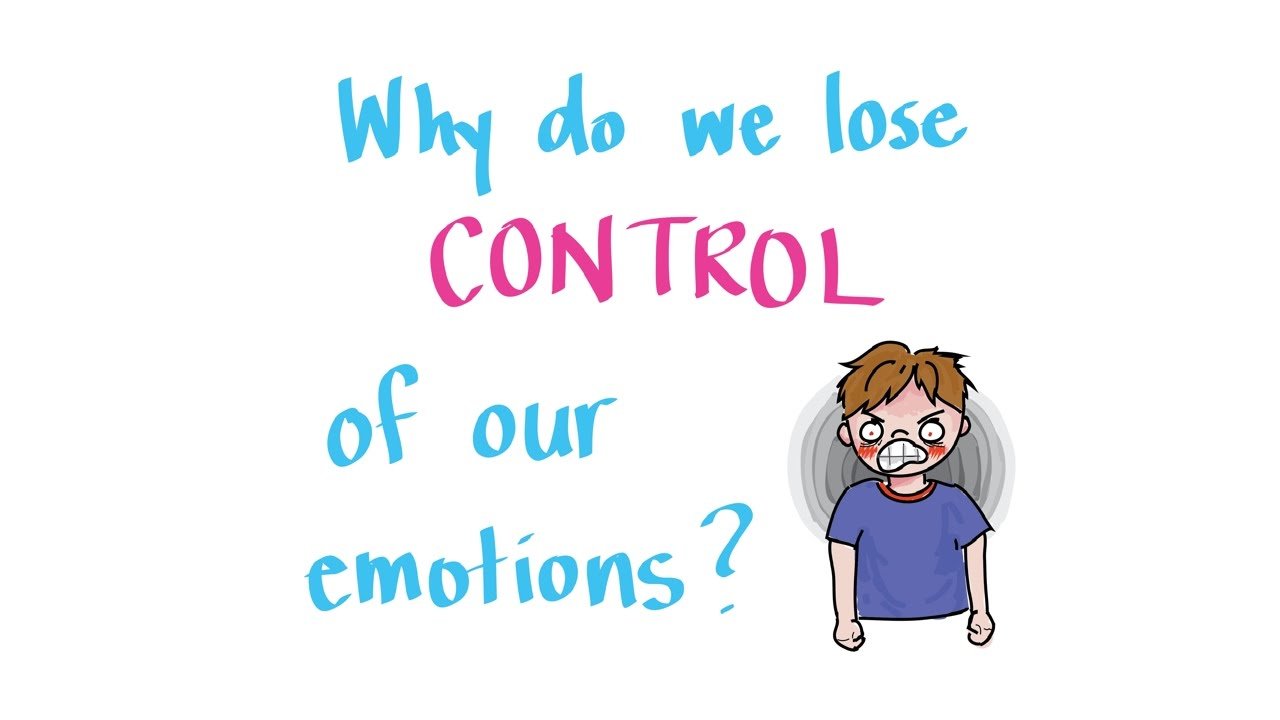
Human beings experience a remarkable range of emotions. Happiness, sadness, anger, fear, shame, jealousy, disappointment, affection, loneliness, and excitement are all natural parts of psychological life. Yet people do not always express what they feel. Sometimes a person laughs while feeling deeply hurt, says “I’m fine” while struggling internally, or remains silent when something has caused significant emotional pain. The ability to regulate emotions can be healthy, but constantly hiding them can become psychologically exhausting.
The tendency to conceal emotions usually develops for understandable reasons. People learn from childhood that some emotions are acceptable while others may be criticized, ignored, or punished. A child who is repeatedly told not to cry may gradually learn that sadness should be hidden. Someone whose anger is always described as unacceptable may become afraid of expressing frustration. Another person may discover that showing vulnerability makes them feel exposed, especially after experiencing rejection or betrayal. Over time, these experiences can shape a person’s emotional habits.
Hiding feelings does not necessarily mean that a person is emotionally weak. In many situations, emotional restraint is useful. People cannot express every emotion immediately or in every environment. A teacher may need to remain calm during a difficult classroom situation. A parent may postpone expressing frustration until a child is no longer present. A professional may choose carefully when and how to discuss personal problems. Emotional regulation allows people to respond thoughtfully instead of reacting impulsively.
The difficulty begins when emotional suppression becomes the dominant way of dealing with internal experiences. When a person repeatedly refuses to acknowledge what they feel, the emotion does not necessarily disappear. Instead, it may remain psychologically active and influence thoughts, behavior, relationships, and physical well-being.
One reason people hide emotions is fear of judgment. Humans are deeply social creatures, and acceptance by others matters to psychological security. People often worry about being perceived as weak, dramatic, difficult, overly sensitive, or unstable. Someone may therefore hide sadness because they do not want others to think they cannot cope. Another person may suppress anger because they fear being labeled aggressive. Someone experiencing jealousy may hide it because they feel ashamed of having the emotion in the first place.
This creates an interesting psychological contradiction. A person may believe that hiding an emotion protects their social image, while the effort required to maintain that image creates internal tension. The person must constantly monitor facial expressions, tone of voice, words, and behavior. Instead of simply experiencing the emotion, they must also control how the emotion appears to others.
Emotional suppression can therefore require considerable mental effort. The brain is not only processing the original emotional experience but also monitoring whether that experience is becoming visible. This can make ordinary interactions more exhausting. A person may leave a conversation feeling tired without immediately understanding why. Sometimes the exhaustion comes not from what happened externally, but from the amount of internal control required to conceal the emotional response.
People also hide feelings because they believe their emotions are inconvenient. Modern life often rewards productivity, efficiency, and constant functioning. There is frequently little space for emotional vulnerability. Someone may think, “I have too much work to do,” “Other people have bigger problems,” or “I should be stronger than this.” Such thoughts can lead a person to postpone emotional processing indefinitely.
The problem with postponing emotions is that psychological experiences often require attention before they can be integrated. When a painful event is ignored completely, the mind may continue returning to it. A person might repeatedly think about what happened, replay conversations, imagine alternative outcomes, or become unusually sensitive to similar situations. The original emotion can therefore continue influencing the present even when the person consciously believes they have moved on.
Another reason people hide emotions is the fear of vulnerability. Vulnerability means allowing another person to see something emotionally important. This can feel dangerous because emotional openness creates the possibility of rejection. If someone has previously trusted another person and been betrayed, mocked, abandoned, or misunderstood, they may develop the belief that emotional openness is unsafe.
As a result, some people construct emotional defenses. They become extremely independent, avoid asking for help, make jokes whenever conversations become serious, or change the subject when someone asks about their feelings. From the outside, such a person may appear confident and emotionally strong. Internally, however, the behavior may function as protection against emotional exposure.
This does not mean that independence is unhealthy. Independence can be an important psychological strength. The problem arises when independence becomes an inability to depend on anyone. Healthy relationships require both autonomy and connection. A person should be capable of standing alone while also being capable of saying, “I need support.”
People sometimes hide positive emotions as well. Someone may avoid showing excitement because they fear disappointment. Another person may hide affection because they are afraid of rejection. Some people minimize achievements because they do not want to appear arrogant. Others become uncomfortable when receiving compliments because positive attention feels unfamiliar.
This demonstrates that emotional suppression is not limited to painful emotions. Any emotion that feels socially risky can be hidden.
Cultural expectations can also influence emotional expression. Different societies teach different rules about when, where, and with whom emotions should be displayed. Some environments encourage emotional openness, while others strongly emphasize self-control. Gender expectations may also influence emotional behavior. Boys and men in some cultures may receive messages suggesting that sadness or fear should not be openly expressed, while girls and women may sometimes be discouraged from displaying anger or assertiveness.
These expectations can become internalized. Eventually, a person may no longer need someone else to tell them which emotions are acceptable. Their own mind automatically labels certain feelings as inappropriate. The person might experience sadness and immediately criticize themselves for being sad. They might feel anger and immediately feel guilty. They might need help and immediately tell themselves that they should manage everything alone.
At that point, the struggle is no longer simply between the person and the outside world. It has become an internal conflict.
One of the most important psychological distinctions is the difference between experiencing an emotion and acting on an emotion. Feeling angry does not mean that someone must behave aggressively. Feeling jealous does not mean that someone must control another person. Feeling afraid does not mean that someone must avoid every difficult situation. Emotional awareness allows a person to recognize an emotion without automatically obeying it.
This is why emotional expression should not be confused with emotional impulsivity. Healthy emotional communication is not about saying everything immediately or behaving according to every feeling. It is about recognizing internal experiences and finding appropriate ways to communicate or process them.
For example, instead of shouting during an argument, a person might say, “I am very angry right now, and I need some time before we continue.” Instead of pretending that disappointment does not exist, they might explain what hurt them. Instead of saying “nothing is wrong,” they might say, “I am having a difficult day, but I am not ready to talk about everything yet.”
These forms of communication create emotional honesty without sacrificing self-control.
Another important issue is that people sometimes become disconnected from their own emotions. If someone has spent years suppressing feelings, they may eventually struggle to identify what they actually feel. They may know that something is wrong but be unable to name the emotion. They may describe themselves as “tired,” “stressed,” or “uncomfortable” without recognizing underlying sadness, anger, fear, disappointment, or grief.
Emotional vocabulary can therefore play an important role in psychological awareness. Being able to distinguish between frustration and anger, sadness and loneliness, fear and uncertainty, embarrassment and shame, or disappointment and grief can help a person understand their experiences more accurately.
Naming an emotion does not automatically solve the underlying problem, but it can make the experience less confusing. Instead of facing an undefined sense of psychological discomfort, the person begins to understand what is happening internally.
Relationships are strongly affected by hidden emotions as well. When people consistently conceal what they need, others may have difficulty understanding them. A partner may not know that something is wrong. A friend may assume everything is fine. A family member may interpret silence as indifference rather than emotional pain.
Over time, unspoken feelings can create distance.
Sometimes the person eventually expresses everything at once. Years of small disappointments may suddenly emerge during one argument. The other person may be confused because they believed the relationship was functioning normally. The emotional explosion may appear disproportionate to the immediate event, but it often reflects accumulated experiences rather than a single moment.
This is why regular emotional communication can be healthier than prolonged silence followed by emotional eruption.
There is also a connection between hidden emotions and resentment. Resentment can develop when people repeatedly experience something they dislike but feel unable or unwilling to communicate about it. They may continue saying yes when they want to say no, accept behavior that hurts them, or remain silent because they fear conflict. Eventually, the emotional cost becomes significant.
The person may then begin feeling that others take advantage of them, even though they have never clearly communicated their limits. This does not mean that responsibility for harmful behavior belongs to the person who remained silent. Rather, it demonstrates how difficulty expressing emotions and needs can create complicated relational patterns.
Learning to communicate emotions does not require dramatic conversations. Small statements can be powerful. “That hurt me.” “I felt ignored.” “I am worried.” “I need some time.” “I appreciate what you did.” “I am disappointed.” “I don’t agree with this.” Such statements allow emotional information to enter a relationship before it becomes overwhelming.
Emotional honesty can also strengthen self-respect. When people constantly deny their own feelings, they may gradually learn to distrust themselves. They may think that their reactions are always excessive or invalid. They begin asking everyone else what they should feel instead of listening to their own internal experience.
Self-awareness involves taking emotions seriously without assuming that every emotion is automatically correct. A feeling is real as an experience, but it does not necessarily provide a complete interpretation of reality. For example, feeling rejected does not always mean that another person intended to reject us. Feeling inadequate does not prove that we are inadequate. Feeling afraid does not necessarily mean that something dangerous will happen.
The healthiest approach is therefore neither emotional suppression nor emotional obedience. It is emotional observation.
A person can say, “I feel afraid. Why? What triggered this? Is the fear connected to the present situation or to an earlier experience? What do I need right now? What action would be helpful?”
This creates psychological distance between emotion and behavior.
Emotional expression can also be developed gradually. Someone who has rarely talked about feelings may find direct emotional conversations uncomfortable. Beginning with a trusted person can make the process easier. Writing can also help. A person can describe what happened, what they felt, what they wanted to say, what they actually said, and what they needed at the time.
The purpose is not to produce perfect emotional explanations. The purpose is to become more familiar with one’s internal world.
Professional psychological support can be particularly useful when emotional suppression is connected to long-standing trauma, severe anxiety, depression, relationship difficulties, or persistent emotional numbness. Therapy can provide a structured environment in which feelings can be explored without requiring immediate action.
Perhaps the most important lesson is that emotions are not enemies that must always be defeated. They are forms of psychological information. Fear may indicate perceived danger. Anger may signal that a boundary has been crossed. Sadness may reflect loss. Guilt may indicate a conflict with personal values. Joy may reveal what matters deeply. Even uncomfortable emotions can contain information worth understanding.
Of course, emotions can sometimes be inaccurate, exaggerated, or influenced by past experiences. That is why emotional awareness should be combined with reflection. The goal is not to believe every feeling literally. The goal is to listen carefully enough to understand why it appeared.
People do not need to reveal every emotion to everyone. Privacy is healthy. Boundaries are healthy. Silence can sometimes be wise. Emotional maturity is not complete openness; it is the ability to decide consciously what to express, when to express it, and with whom.
The difference is intention.
When a person remains silent because they have consciously chosen privacy, silence can be empowering. When they remain silent because they are terrified that their feelings will be rejected, silence may become a prison.
Learning to recognize that difference can change a person’s relationship with themselves.
Ultimately, hiding feelings is often an attempt to achieve safety. People suppress emotions because they want to avoid rejection, conflict, embarrassment, disappointment, or vulnerability. The strategy may work temporarily. But when used constantly, it can separate a person from their own emotional experience and from the people who might otherwise understand them.
Psychological strength does not require the absence of vulnerability. A strong person can experience fear and still act thoughtfully. They can feel sadness without considering themselves weak. They can express anger without becoming aggressive. They can ask for support without believing that they have failed.
Sometimes the healthiest sentence is also the simplest one: “This affected me.”
Acknowledging that something matters is not weakness. It is the beginning of understanding.