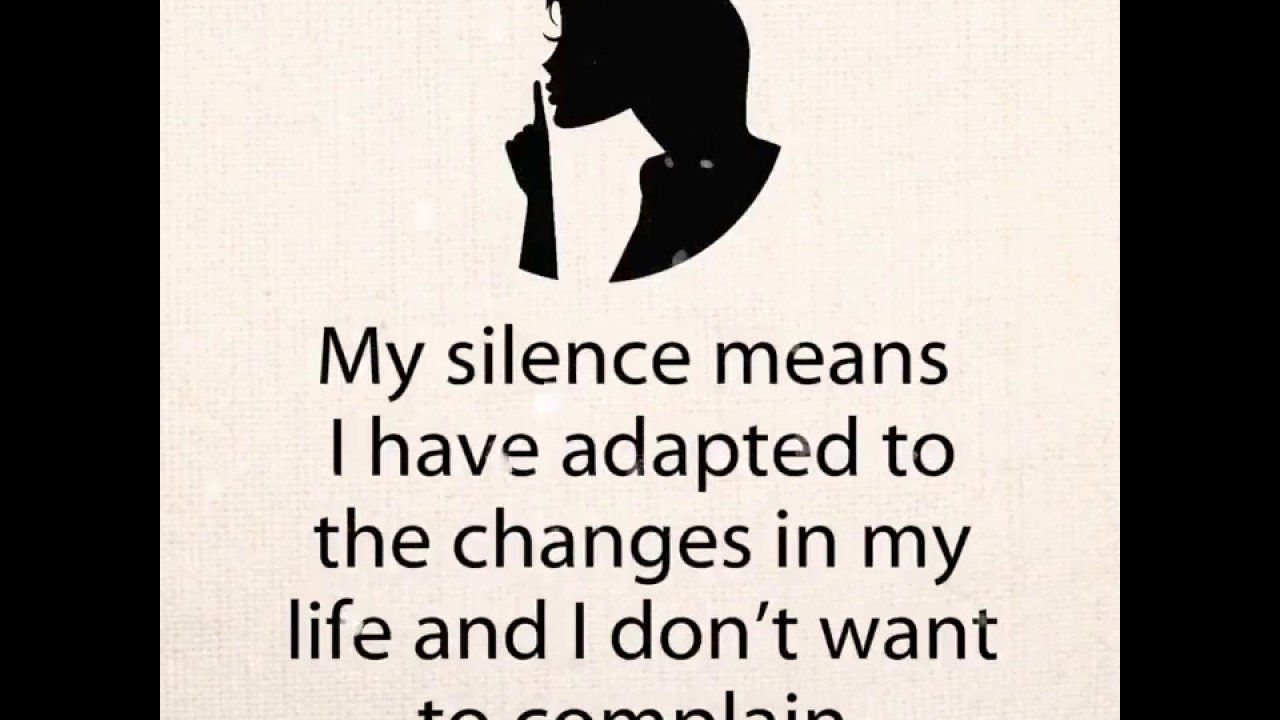
Silence is a natural part of human communication. People become quiet when they are thinking, resting, observing, feeling uncomfortable, or simply choosing not to speak. Silence can sometimes communicate more than words, particularly when emotions are intense. However, when silence becomes a person’s primary way of dealing with conflict, fear, disappointment, or emotional pain, it may begin to affect psychological well-being and relationships.
Not every silence is unhealthy. A person may need time before discussing a difficult subject. Taking a short break during an argument can prevent impulsive words and allow emotions to settle. In such situations, silence can function as emotional regulation. The individual is not avoiding the problem permanently; they are creating enough psychological space to respond more thoughtfully.
The difficulty begins when silence replaces communication altogether.
Some people become silent because they are afraid of conflict. They may believe that expressing disagreement will make others angry or cause the relationship to deteriorate. Instead of explaining what they feel, they say nothing. They may agree outwardly while experiencing strong disagreement internally.
Over time, this pattern can create emotional distance.
The person may appear calm, but unresolved feelings continue accumulating. Small disappointments can become resentment, and resentment can eventually affect the entire relationship.
Silence can also develop as a learned response during childhood. A child who grows up in an environment where emotional expression is criticized may learn that speaking honestly is dangerous. If expressing sadness results in dismissal, or expressing anger leads to punishment, the child may gradually discover that remaining quiet feels safer.
These experiences can continue into adulthood.
An adult may therefore struggle to communicate needs even when they intellectually understand the importance of communication. They may know what they want to say but feel physically uncomfortable saying it.
This is not simply a communication problem. It may reflect a deeper association between self-expression and danger.
Another reason for silence is fear of rejection. People often hide opinions, needs, and emotions because they worry that honesty will change how others perceive them. They may think that if they reveal their real feelings, they will become less lovable or less accepted.
This can create relationships in which people know each other socially but not emotionally.
A person may spend years with someone without ever clearly explaining what makes them feel hurt, appreciated, frightened, or hopeful.
Silence can also be used as a form of protection after emotional injury. Someone who has experienced betrayal may decide that revealing personal information is too risky. They may become emotionally distant and avoid meaningful conversations.
This strategy can reduce vulnerability, but it can also reduce intimacy.
Protection and isolation can sometimes look similar from the outside.
Another important form of silence appears during conflict. Some individuals stop communicating because they believe that continuing the conversation will make the situation worse. A temporary pause can be healthy, especially when emotions are intense.
However, there is an important difference between taking a break and refusing communication indefinitely.
A healthy pause usually contains an intention to return to the conversation. The person may say that they need time and will discuss the issue later. Complete withdrawal without explanation can leave the other person confused and anxious.
Uncertainty can intensify conflict.
People naturally try to interpret silence. When someone does not respond, the mind begins generating explanations. “Are they angry?” “Did I do something wrong?” “Do they still care?” “Is the relationship ending?”
Without information, people often fill the gap with assumptions.
This can create unnecessary emotional distress.
Silence is particularly powerful in close relationships because communication provides emotional security. When communication suddenly disappears, the individual may experience uncertainty about the relationship itself.
However, silence does not always mean rejection. Someone may be overwhelmed, tired, afraid, or unsure how to communicate.
This is why interpretation should not automatically be treated as fact.
Another psychological pattern is passive communication. Instead of directly expressing dissatisfaction, a person may become cold, distant, sarcastic, or unusually quiet. They may hope that the other person will notice their feelings without being told.
This approach can feel safer than direct communication, but it often produces misunderstanding.
Other people cannot reliably guess what is happening inside someone’s mind.
Direct communication is usually clearer.
Saying “I felt hurt when that happened” provides information. Remaining silent and expecting the other person to discover the reason may produce frustration on both sides.
Emotional communication does not require aggression. A person can express dissatisfaction respectfully while still maintaining boundaries.
The fear of hurting others can also lead to excessive silence. Some individuals prioritize other people’s emotional comfort so strongly that they suppress their own needs.
They may avoid saying no, refuse to express disagreement, and accept situations they find uncomfortable.
Eventually, however, the emotional cost can become significant.
A person cannot continually erase their own needs without consequences.
This is why healthy communication requires both empathy and self-expression. Caring about another person’s feelings does not mean that one’s own feelings must disappear.
Silence can also affect self-esteem. When people repeatedly prevent themselves from speaking, they may gradually begin believing that their opinions are unimportant.
The internal message becomes, “It is better if I do not say anything.”
Over time, this can weaken a person’s sense of agency.
Agency involves the feeling that one’s choices and actions matter. Being able to communicate preferences is an important part of this experience.
Someone who says, “I would rather do this,” “I do not agree,” or “I need something different” is actively participating in their own life.
Another form of silence appears when individuals cannot identify what they feel. They may not be intentionally hiding emotions. They may simply lack awareness of their internal state.
They know they are uncomfortable but cannot explain why.
This can happen when a person has spent many years prioritizing external responsibilities over internal experiences.
Developing emotional vocabulary can help. A person may begin by identifying simple categories such as anger, sadness, fear, disappointment, shame, loneliness, or affection. With greater awareness, they can begin identifying more complex emotional combinations.
Understanding an emotion makes communication easier.
Silence can also occur in professional environments. Employees may remain quiet about excessive workloads, unfair treatment, unclear expectations, or inappropriate behavior because they fear consequences.
Sometimes speaking up may genuinely carry risks, and caution can be appropriate. However, persistent silence can allow unhealthy conditions to continue.
Healthy organizations require channels through which concerns can be communicated safely.
Family environments can create similar patterns. In some families, certain topics become “forbidden.” Everyone knows that a particular issue exists, but nobody discusses it.
This creates a form of collective silence.
The subject may influence family behavior even though it is never openly acknowledged.
Children are especially sensitive to these patterns. They may understand that something is wrong without having the vocabulary or authority to discuss it. This can create confusion and anxiety.
Open, age-appropriate communication can provide children with a stronger sense of safety.
Another important issue is emotional withdrawal. When someone repeatedly experiences disappointment, they may stop expecting understanding from others. They no longer argue because they no longer believe communication will change anything.
This kind of silence can be more serious than temporary quietness.
It may indicate that the person has emotionally disengaged from the relationship.
At this point, simply telling them to “talk more” may not be enough. The deeper question is why they stopped believing that communication was useful.
Rebuilding trust may require repeated experiences of being heard.
Therapy can sometimes help individuals understand their relationship with silence. A therapist may explore childhood experiences, fear of conflict, attachment patterns, self-esteem, emotional regulation, or previous experiences of rejection.
The goal is not to make someone constantly expressive.
The goal is to give them greater choice.
A psychologically healthy person should be able to speak when speaking is useful and remain silent when silence is appropriate.
Communication is therefore not measured by the number of words someone says.
It is measured partly by whether the person can communicate important needs and emotions when necessary.
Learning to break unhealthy silence can begin with small statements. A person does not have to explain their entire emotional history immediately.
They can start with:
“I need to tell you something.”
“That situation made me uncomfortable.”
“I am not ready to discuss this yet, but I want to talk about it later.”
“I disagree with this.”
“I need some time to think.”
“I felt hurt.”
These statements create openings for deeper communication.
The first attempts may feel uncomfortable, particularly for someone who has spent years remaining silent. Anxiety does not necessarily mean that the conversation is wrong. It may simply indicate that the person is doing something unfamiliar.
With practice, direct communication can become easier.
It is also important to understand that not every conversation will produce the desired response. Being honest does not guarantee that another person will agree, apologize, or change.
This can be difficult.
However, communication is partly about expressing one’s reality, not controlling another person’s reaction.
The ability to tolerate disagreement is an important component of emotional maturity.
People can care about each other and still disagree.
They can remain connected while having different preferences.
They can experience conflict without automatically ending the relationship.
When people understand this, silence becomes less necessary as a method of self-protection.
Ultimately, silence is neither inherently healthy nor unhealthy. Its psychological meaning depends on why it occurs, how long it lasts, and what function it serves.
Silence chosen consciously can provide peace.
Silence caused by fear can become isolation.
Silence used to regulate emotions can prevent impulsive behavior.
Silence used to punish another person can damage trust.
Silence caused by emotional exhaustion may signal a deeper problem.
Understanding the difference requires self-awareness.
A person can ask, “Am I quiet because I need time, or because I am afraid to speak?”
That simple question can reveal a great deal.
In conclusion, silence is a complex psychological behavior with many possible meanings. It can protect people from impulsive reactions, provide time for reflection, and create necessary emotional space. However, when silence is driven by fear, rejection, low self-worth, unresolved pain, or avoidance of conflict, it can gradually damage relationships and increase emotional isolation. Healthy communication does not require expressing every thought or emotion immediately. Instead, it involves having the freedom and confidence to communicate important needs while respecting both oneself and others. Sometimes silence is exactly what a person needs. But when silence becomes the only way a person knows how to protect themselves, learning to speak can become an important step toward psychological freedom.