There are moments in life when a person suddenly realizes that something has changed. Nothing dramatic may have happened, and yet an uncomfortable question begins to appear in the mind: “When did I become this person?” A person may look at their life, their relationships, their decisions, and even their daily habits and feel that they are somehow distant from the person they once were. They may continue doing everything they are expected to do, fulfilling responsibilities and maintaining relationships, while quietly feeling disconnected from themselves. This experience raises an important psychological question: why do people sometimes lose themselves?
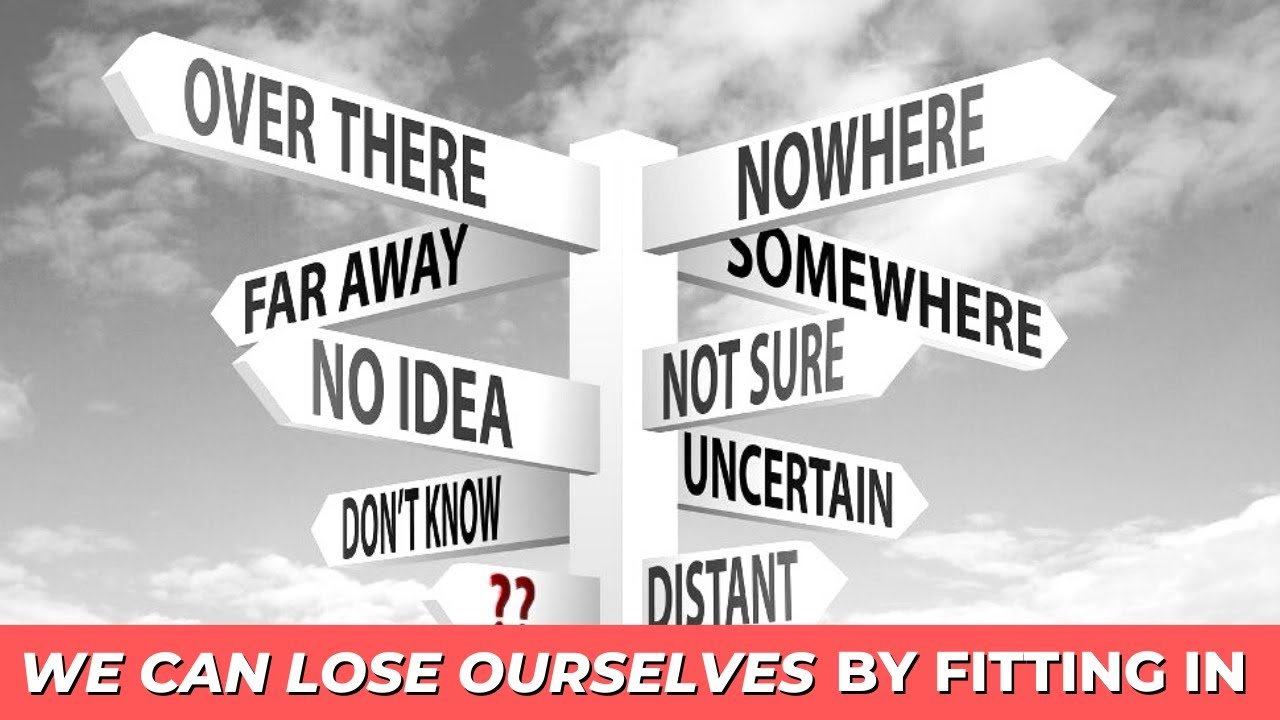
Losing oneself does not necessarily mean forgetting one’s identity completely. More often, it refers to a gradual disconnection from one’s own needs, values, emotions, preferences, and desires. A person may become so focused on fulfilling external expectations that they stop asking themselves what they actually want. Over time, this can create a gap between the life a person is living and the life that feels personally meaningful.
One of the main reasons people lose themselves is the desire to be accepted. Human beings are social creatures, and belonging is an important psychological need. From childhood, people learn that certain behaviors receive approval while others may lead to criticism, rejection, or punishment. A child gradually learns what makes parents happy, what teachers consider appropriate, and what behavior is accepted by peers. These experiences help children understand social rules, but they can also teach them to suppress parts of themselves.
For example, a child who is repeatedly told that being quiet is better than expressing anger may learn to hide frustration. A child who receives praise only when achieving high results may begin to believe that their value depends on success. Someone who grows up in an environment where disagreement is treated negatively may become afraid of expressing independent opinions.
These adaptations can be useful in childhood because children depend heavily on adults. However, patterns developed during childhood can continue into adulthood even when they are no longer necessary. An adult may still behave according to old expectations without consciously understanding why.
This is one way people gradually become disconnected from themselves. They do not necessarily make one major decision to abandon their identity. Instead, they make many small decisions based on what other people want.
They say yes when they want to say no. They remain silent when they want to speak. They choose what is acceptable rather than what is meaningful. They change their behavior depending on who is around them. Eventually, they may become very good at understanding other people’s expectations while becoming less familiar with their own.
Another important factor is fear of rejection. People often modify themselves to protect relationships. They may hide opinions, interests, emotions, or needs because they are afraid that showing their authentic selves could cause conflict or abandonment.
This fear can be particularly strong in close relationships. When someone cares deeply about another person, they may unconsciously begin to prioritize the relationship above their individual identity. Compromise is a normal part of healthy relationships, but excessive adaptation can become psychologically harmful.
There is a difference between adapting to another person and abandoning oneself for another person. Healthy adaptation allows both individuals to remain themselves while making room for each other. Losing oneself occurs when one person’s identity becomes increasingly dependent on maintaining the relationship.
A person may stop seeing friends, abandon personal interests, change important goals, or constantly monitor their behavior to avoid upsetting the other person. At first, these changes may appear insignificant. Over time, however, they can create a profound sense of emptiness.
Perfectionism can also contribute to losing oneself. Perfectionistic individuals often develop strict internal standards about how they should behave, perform, look, or succeed. Their attention becomes focused on correcting weaknesses and meeting expectations.
The problem is that a person who constantly asks, “What should I be?” may eventually stop asking, “Who am I?”
The difference between these two questions is psychologically important. The first is based on an ideal or external standard. The second is based on self-awareness.
When people spend most of their energy trying to become an ideal version of themselves, they may become disconnected from their actual emotional experience. They may feel tired but believe they should continue. They may feel unhappy but believe they should be grateful. They may want something different but believe they should remain on the path they have already chosen.
This constant pressure can create internal conflict.
Another reason people lose themselves is that life requires them to perform different roles. One person can simultaneously be a child, parent, partner, friend, professional, student, or caregiver. Each role has different expectations.
Roles are not inherently harmful. In fact, they are an important part of social life. The problem appears when a person becomes so identified with their roles that they no longer experience themselves outside them.
A person may become so focused on being a good parent that they forget they also have personal interests. Someone may become so focused on professional achievement that their identity becomes completely dependent on work. Another person may spend so much time caring for others that they no longer know what they need themselves.
When a role becomes the entire identity, losing that role can produce a painful identity crisis.
This is why major life transitions can be psychologically difficult. Retirement, divorce, becoming a parent, moving to another country, changing careers, or finishing education can force people to reconsider who they are. The structure that previously defined their daily lives changes, and they may suddenly have to answer questions they had avoided.
Without the familiar role, they may ask themselves, “Who am I now?”
Such questions can be uncomfortable, but they can also become opportunities for psychological development. Sometimes a person does not discover a completely new identity. Instead, they rediscover parts of themselves that had been neglected.
Emotional suppression is another major factor. People sometimes lose themselves because they become disconnected from their own emotions.
From an early age, many individuals learn that certain emotions are more acceptable than others. Happiness may be encouraged, while anger, sadness, fear, or vulnerability may be discouraged. A person may therefore learn to hide difficult emotions instead of understanding them.
However, emotions contain information. They can indicate unmet needs, violated boundaries, unresolved conflicts, or important desires. When people consistently ignore their emotional experiences, they also lose access to valuable information about themselves.
For example, persistent irritation may indicate that someone is repeatedly crossing a person’s boundaries. Continuous exhaustion may suggest that the individual is carrying more responsibility than they can manage. Jealousy may reveal an unmet desire or insecurity. Sadness may indicate loss. Anxiety may signal uncertainty or perceived threat.
Ignoring these emotions does not make them disappear. Instead, they may become harder to interpret.
Over time, a person can become disconnected not only from what they feel but also from what they want.
This is why self-awareness is central to maintaining a stable sense of identity. Self-awareness involves paying attention to one’s thoughts, emotions, motivations, values, and behavioral patterns. It does not mean constantly analyzing oneself. Rather, it means developing enough psychological attention to notice what is happening internally.
Without self-awareness, people can live according to automatic patterns. They repeat routines because those routines are familiar. They make decisions based on expectations because those expectations have always existed. They continue relationships because ending them seems frightening. They pursue goals because they once decided those goals were important.
Eventually, they may discover that the life they built no longer reflects who they are.
This does not mean that every feeling of dissatisfaction indicates that a person has chosen the wrong life. Human beings naturally experience periods of uncertainty and dissatisfaction. Sometimes responsibilities are difficult but meaningful. Sometimes temporary discomfort is part of personal growth.
The important question is not whether life feels difficult. It is whether the person still recognizes themselves within the life they are living.
Another powerful influence is social comparison. Modern technology has made comparison almost unavoidable. People constantly encounter images of other people’s achievements, relationships, appearances, lifestyles, and experiences. Even when individuals understand intellectually that social media presents selective versions of reality, comparison can still influence how they evaluate themselves.
A person may begin to believe that they should look different, live differently, earn more, travel more, achieve more, or feel happier. Gradually, personal goals can be replaced by socially constructed definitions of success.
This can create a subtle form of identity loss. Instead of asking what constitutes a meaningful life for them personally, individuals begin to measure themselves against other people’s lives.
The result may be a life that looks successful externally but feels emotionally empty internally.
External success and internal satisfaction are not always the same thing. A person can achieve goals that society considers impressive and still feel disconnected from themselves. Conversely, someone may choose a quieter and less socially celebrated life and experience a stronger sense of authenticity.
Authenticity does not mean doing whatever one wants without considering other people. It means that one’s behavior is reasonably consistent with one’s internal values and genuine experience.
Living authentically requires difficult decisions because authenticity sometimes involves disappointing others. A person may need to establish boundaries, change relationships, reconsider goals, or admit that something they once wanted is no longer meaningful.
This is one reason people resist rediscovering themselves. Knowing what we truly want can create responsibility. Once we recognize our needs, we may have to make changes.
It is often easier to remain confused than to accept the consequences of clarity.
For some people, losing themselves is connected with chronic people-pleasing. People-pleasing involves an excessive concern with keeping others satisfied, often at the expense of one’s own needs. The person may become highly sensitive to other people’s moods and reactions.
They may constantly ask themselves whether someone is angry, disappointed, uncomfortable, or dissatisfied. Their emotional state becomes dependent on the emotional state of people around them.
Over time, this can create an external orientation in which the person knows what everyone else needs but has difficulty identifying their own needs.
The psychological cost can be significant. Suppressed anger may accumulate. Resentment may develop. Emotional exhaustion may increase. The person may feel unappreciated even though they rarely communicate what they need.
This creates a paradox: the more a person hides their needs to maintain relationships, the less other people have the opportunity to understand them.
Boundaries are therefore an important part of maintaining identity. A boundary is not necessarily a wall between people. It is a psychological recognition that individuals have different needs, responsibilities, emotions, and limits.
Saying no does not automatically mean being selfish. Spending time alone does not necessarily mean rejecting others. Expressing disagreement does not necessarily mean creating conflict.
Healthy boundaries allow relationships to exist without requiring one person to disappear inside them.
Another reason people lose themselves is unresolved trauma or prolonged emotional stress. When individuals experience situations that feel overwhelming or uncontrollable, they may develop survival strategies. They may become highly alert to other people’s reactions, suppress their emotions, avoid conflict, or prioritize safety above personal expression.
These strategies can be adaptive during difficult circumstances. However, once the original threat has passed, the same patterns may continue.
A person may still behave as though they must constantly protect themselves, even when their environment has become safer. They may find it difficult to trust their own feelings or express their needs.
In such situations, rebuilding a sense of self may require patience and professional psychological support. Identity is not always something that can be recovered through simple positive thinking. Sometimes people need to understand why they learned to disconnect from themselves in the first place.
An important part of this process is recognizing that adaptation does not necessarily mean weakness. Many behaviors that later cause difficulties may have developed because they once served an important purpose.
Understanding this can reduce self-blame. Instead of asking, “Why am I like this?” a person can begin asking, “What did I learn to do in order to cope?”
This change in perspective can be psychologically meaningful.
Losing oneself can also happen through excessive routine. Routines provide stability, but when life becomes completely automatic, individuals may stop noticing whether their activities still have personal meaning.
They wake up, work, complete responsibilities, return home, use their phones, sleep, and repeat the same cycle. There may be nothing obviously wrong with their lives, yet they experience a growing sense of emptiness.
This does not necessarily mean they need a dramatic life change. Sometimes small acts of intentionality can restore a sense of self.
Reading something personally meaningful, returning to an old interest, spending time alone, learning a new skill, having an honest conversation, or simply allowing oneself to notice one’s emotions can become a beginning.
Rediscovering oneself is rarely a single dramatic event. It is usually a gradual process.
The first step may be noticing what feels wrong. The second may be identifying what has been neglected. The third may involve experimenting with different choices and observing how they feel.
This process requires curiosity rather than judgment.
People often believe they should already know exactly who they are. In reality, identity is not completely fixed. Human beings continue to develop throughout life. Experiences change priorities, relationships influence values, and new knowledge can transform beliefs.
Therefore, rediscovering oneself does not mean returning to an old version of oneself.
Sometimes the goal is not to become the person one used to be but to understand who one is becoming.
This distinction is particularly important because nostalgia can create an unrealistic image of the past. A person may remember a younger version of themselves as more spontaneous, confident, creative, or free. They may believe that they have lost something essential.
But the past self also had limitations, fears, and uncertainties. Returning psychologically to the past is impossible. What is possible is understanding what qualities of that earlier self still matter.
Perhaps the person misses creativity rather than childhood. Perhaps they miss freedom rather than a specific period. Perhaps they miss curiosity, courage, or connection.
Once the underlying need is identified, it can be integrated into the present rather than simply mourned as something that disappeared.
This is one of the most constructive ways to understand identity.
We do not need to remain exactly who we were. We need to remain connected to the parts of ourselves that make our lives feel meaningful.
Ultimately, losing oneself is often less about becoming someone completely different and more about becoming distant from one’s own inner experience. The process can happen slowly through expectations, fear, responsibility, relationships, perfectionism, emotional suppression, and social pressure.
The good news is that disconnection does not always have to be permanent.
People can learn to listen to themselves again. They can examine old beliefs, recognize unhealthy patterns, establish boundaries, reconnect with neglected interests, and make choices that reflect their values more closely.
This does not mean that they will suddenly know exactly what they want. Self-discovery is not a final destination. It is an ongoing relationship with oneself.
Perhaps the most important question is therefore not “Who have I become?” but “Am I still listening to myself?”
A person may change many times throughout life. Their goals may change, relationships may change, responsibilities may change, and even their understanding of happiness may change. Change itself is not the problem.
The deeper problem appears when change happens without awareness and when a person continually moves away from themselves in order to satisfy everything around them.
Finding oneself again may begin with something very simple: noticing the quiet voice inside that has been ignored for a long time.
Sometimes it appears as a feeling of discomfort. Sometimes as curiosity. Sometimes as sadness for a forgotten dream. Sometimes as the realization that a familiar life no longer feels familiar.
That realization does not necessarily mean that everything must be abandoned.
It may simply mean that something inside the person is asking to be heard.
And perhaps that is where the process of finding oneself begins.