Human thinking is an essential part of everyday life. It allows individuals to understand experiences, evaluate decisions, anticipate possible consequences, and learn from the past. However, thinking does not always lead to solutions or greater understanding. Sometimes, the mind repeatedly returns to the same questions, memories, conversations, and uncertainties without reaching a meaningful conclusion. This experience is commonly described as repetitive thinking, a psychological process in which thoughts continue to revolve around similar subjects over time.
Repetitive thinking is not necessarily a sign of psychological difficulty. Reflecting on past experiences can support learning, while considering future possibilities can help individuals prepare for important decisions. The difficulty arises when thinking becomes repetitive, difficult to control, and emotionally exhausting. Instead of helping a person understand a situation, it may intensify uncertainty, increase distress, and interfere with everyday functioning.
One of the most interesting aspects of repetitive thinking is that individuals often experience it as an attempt to solve a problem. They may believe that if they examine an event more carefully, reconsider every detail, or imagine different possible outcomes, they will eventually discover an explanation that brings emotional relief. Yet the expected clarity does not always appear. In some cases, continued mental analysis creates additional questions rather than resolving the original concern.
The human brain naturally attempts to identify patterns and establish connections between experiences. This ability is important for learning and adaptation. When something unexpected happens, individuals often review the situation to understand why it occurred and what they could do differently in the future. Such reflection can be constructive when it produces new information, realistic conclusions, or practical decisions.
However, repetitive thinking may continue even after the available information has been considered. A person may repeatedly analyze a conversation that took place several days earlier, wondering whether a particular sentence was inappropriate or whether another person misunderstood their intention. Although the event cannot be changed, the mind continues to revisit it as if a different interpretation might finally eliminate the discomfort.
Psychological research commonly distinguishes between different forms of repetitive thought. Two particularly important concepts are rumination and worry. Rumination generally involves repeated attention to past experiences, current distress, or questions about personal difficulties. Worry is more strongly associated with anticipated future events and possible negative outcomes. Although these processes have different characteristics, they can overlap and contribute to psychological distress.
Rumination may involve questions such as why something happened, why a person behaved in a particular way, or why an individual could not respond differently. These questions can appear reasonable, but they may become unproductive when they are repeated without generating new understanding. Instead of identifying what can be learned from an experience, the individual may remain focused on explanations that are unavailable or impossible to verify.
Worry, on the other hand, often involves imagining possible future difficulties. An individual may repeatedly consider what could go wrong during an important meeting, whether a relationship will deteriorate, or whether a particular decision will produce negative consequences. The mind attempts to prepare for uncertainty, but excessive anticipation can make hypothetical situations feel increasingly real.
One possible explanation for repetitive thinking is the human need for certainty. People generally prefer situations in which outcomes are understandable and predictable. Uncertainty can create psychological discomfort, especially when the situation involves relationships, personal identity, health, or important life decisions. Repeated analysis may therefore become an attempt to regain a sense of control.
For example, when someone receives an unclear response from another person, they may begin examining the interaction in detail. They might consider the tone of the message, the time it was sent, the words that were selected, and the possible meaning behind each expression. Because the other person’s intentions are not directly accessible, the individual may continue generating interpretations without finding a definitive answer.
This process illustrates an important limitation of human thinking: not every question has an answer that can be discovered through additional analysis. Some situations remain uncertain because the necessary information is unavailable. Learning to recognize this limitation may be an important step toward reducing unproductive mental activity.
Repetitive thinking can also be influenced by emotional experiences. Strong emotions often make certain memories more accessible and psychologically significant. Experiences involving embarrassment, rejection, anger, disappointment, or fear may remain mentally active long after the original event has ended. The individual may repeatedly return to these memories because they are associated with unresolved emotional reactions.
Anger provides a particularly relevant example. After an unpleasant interaction, a person may mentally reconstruct the conversation and imagine what they should have said. They may develop alternative responses, criticize the other person’s behavior, or revisit the reasons why the interaction felt unfair. Although this process may initially create a sense of emotional expression, repeated mental rehearsal can maintain the original anger.
Similarly, experiences of rejection may lead individuals to repeatedly question their personal value. A person who experiences disappointment in a relationship may begin wondering whether they were insufficient, whether they made a mistake, or whether they could have prevented the situation. These questions can become especially difficult when the individual interprets one negative experience as evidence of a general personal deficiency.
The relationship between repetitive thinking and self-esteem is therefore important. Individuals who evaluate themselves primarily through external approval may be particularly vulnerable to prolonged analysis of social interactions. They may repeatedly examine how others perceive them and attempt to identify possible mistakes in their behavior. Over time, this process can increase self-criticism and make ordinary social situations feel more demanding.
Another relevant factor is perfectionism. People with perfectionistic tendencies may feel that they must make the correct decision, express themselves appropriately, and avoid mistakes. After completing a task, they may continue reviewing their performance in search of imperfections. Even when the outcome is satisfactory, they may focus on what could have been done better.
This tendency can prevent individuals from experiencing a sense of completion. Instead of recognizing that a task has been completed adequately, they may continue evaluating it mentally. The desire to achieve certainty or perfection can therefore contribute to a cycle in which thinking continues long after practical reflection is necessary.
Repetitive thinking may also be associated with difficulties in emotional regulation. Emotional regulation refers to the processes through which individuals recognize, understand, and respond to their emotional experiences. When emotions are difficult to identify or tolerate, some individuals may rely heavily on intellectual analysis. They may attempt to explain their feelings rather than directly acknowledge them.
For instance, a person experiencing sadness may repeatedly ask why they feel this way, what caused the emotion, and what it reveals about their personality. Understanding the causes of sadness can be useful, but emotional experiences do not always disappear after they have been intellectually explained. Sometimes, individuals need to recognize and tolerate an emotion without immediately trying to eliminate it.
This distinction is important because thinking and feeling are related but not identical processes. A person can understand the reason for an emotional reaction and still experience that emotion. Psychological well-being does not require the complete absence of uncomfortable feelings. It may instead involve developing a more flexible relationship with them.
The relationship between repetitive thinking and sleep is another significant area. Individuals who experience persistent mental activity may find it difficult to relax at night. When external distractions become less noticeable, unresolved concerns and memories may become more prominent. A person may lie in bed reviewing the events of the day or anticipating difficulties that have not yet occurred.
Sleep difficulties can then influence emotional regulation and concentration during the following day. Insufficient sleep may increase sensitivity to stress and make it more difficult to disengage from negative thoughts. This can contribute to a cycle in which mental activity interferes with sleep, while poor sleep makes repetitive thinking more difficult to manage.
It is also important to distinguish repetitive thinking from obsessive thoughts. Repetitive thinking is a broad description of recurring mental activity and does not automatically indicate obsessive-compulsive disorder or another clinical condition. Obsessions are typically characterized by recurrent, intrusive, and unwanted thoughts, urges, or images that can cause significant distress. Their clinical significance depends on several factors, including their nature, intensity, and relationship to compulsive behaviors.
Similarly, repetitive thinking may occur in the context of depression, anxiety disorders, trauma-related difficulties, and other psychological conditions. However, the presence of recurring thoughts alone is insufficient to establish a diagnosis. A qualified mental health professional considers the broader pattern of symptoms, their duration, and their impact on daily life.
The influence of past experiences should also be considered. Individuals who have experienced unpredictable relationships, persistent criticism, or emotionally difficult environments may become especially attentive to possible signs of danger or rejection. Repeatedly reviewing interactions may function as an attempt to anticipate future problems and avoid similar experiences.
Nevertheless, it would be inaccurate to assume that every person who thinks excessively has experienced trauma or that repetitive thinking always originates in childhood. Psychological patterns develop through multiple influences, including temperament, current stressors, learning experiences, social circumstances, and individual coping strategies.
One of the difficulties associated with repetitive thinking is that it can create the impression of productivity. Individuals may spend considerable time analyzing a problem and feel that they are actively working toward a solution. However, the amount of time spent thinking does not necessarily correspond to the amount of useful progress achieved.
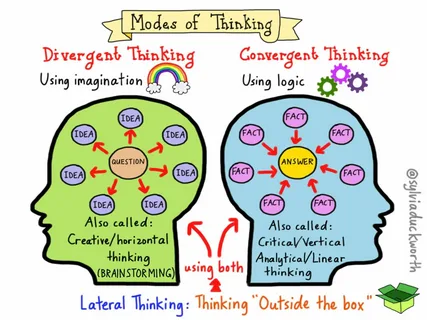
A helpful distinction can be made between problem-solving and repetitive analysis. Problem-solving generally involves identifying a specific difficulty, considering realistic alternatives, evaluating available information, and selecting an action. Repetitive analysis often involves returning to the same questions without developing a new perspective or reaching a decision.
For example, considering how to address a disagreement with a colleague may be constructive if it leads to a realistic communication strategy. Repeatedly imagining the disagreement, predicting every possible response, and criticizing oneself for previous statements may not produce additional benefits. The difference lies not simply in the subject of thought but in its function and outcome.
Cognitive behavioral approaches often examine the relationship between thoughts, emotions, and behavior. Individuals can learn to identify recurring thought patterns and evaluate whether their interpretations are supported by available evidence. This does not mean that every negative thought should be replaced with a positive one. Rather, the aim is to develop more balanced and realistic interpretations.
For instance, someone who repeatedly thinks, “I always make mistakes when I speak,” may benefit from examining the accuracy of this generalization. They might recognize that although one conversation was uncomfortable, they have also communicated successfully in many other situations. Such reflection can help prevent a single experience from becoming a broad judgment about personal ability.
Another useful approach involves shifting attention from abstract questions to concrete information. Questions such as “Why does everything always happen to me?” may be emotionally understandable but difficult to answer. More specific questions, such as “What happened in this situation, and what can I do differently next time?” may support more constructive reflection.
Mindfulness-based approaches offer another perspective. Mindfulness involves paying attention to present experiences with greater awareness and without immediately reacting to every thought. When repetitive thinking occurs, individuals can practice noticing the thought without automatically following its entire narrative.
For example, a person may recognize that they are once again reviewing an unpleasant conversation. Instead of criticizing themselves for having the thought, they can simply acknowledge that their attention has returned to the memory. They may then gently redirect their attention toward an activity taking place in the present.
This process does not require suppressing thoughts. Attempts to force unwanted thoughts out of awareness may sometimes make them more noticeable. The objective is not to prevent the mind from producing thoughts but to reduce the extent to which recurring thoughts control attention and behavior.
Behavioral engagement can also be helpful. When individuals remain inactive for extended periods, they may have more opportunities to become absorbed in repetitive mental activity. Meaningful activities, physical movement, social interaction, and structured daily routines can provide alternative sources of attention and reinforcement.
However, keeping constantly busy should not become another method of avoiding emotional experiences. Distraction may provide temporary relief, but individuals may still need opportunities to understand difficult feelings and address unresolved problems. A balanced approach combines reflection with engagement in everyday life.
Writing can sometimes help organize repetitive thoughts. Putting concerns into words may allow individuals to distinguish between facts, interpretations, emotions, and possible actions. For example, writing down a troubling situation in a structured way can reveal which aspects are under personal control and which depend on other people or external circumstances.
It may also be useful to establish a reasonable limit for problem-focused reflection. An individual can spend a specific period considering a concern and then decide whether further analysis is likely to produce new information. If no meaningful progress is possible, returning attention to another activity may be more beneficial than continuing the same mental process.
Social support is another important resource. Discussing a difficult experience with a trusted person may provide a different perspective and reduce feelings of isolation. However, repeatedly seeking reassurance without developing personal strategies can sometimes maintain uncertainty. Supportive communication is most helpful when it encourages understanding, realistic thinking, and independent decision-making.
Professional psychological support may be appropriate when repetitive thinking becomes persistent, distressing, or disruptive to everyday life. If it significantly affects sleep, concentration, relationships, work, or the ability to make decisions, assessment by a mental health professional can help identify the underlying difficulties and determine appropriate support. Evidence-based psychological interventions may be useful depending on the individual’s circumstances.
Ultimately, repetitive thinking reflects an important tension within human cognition. The mind attempts to understand experience, anticipate danger, and maintain a sense of control. These abilities are valuable, but they can become exhausting when the same questions are repeatedly examined without producing new understanding.
The solution is not to stop thinking or become indifferent to personal experiences. Reflection remains essential for learning, emotional development, and responsible decision-making. The more important task is to recognize when thinking has stopped being constructive and has become a repetitive cycle.
Psychological flexibility involves accepting that some questions cannot be answered immediately, some experiences cannot be changed, and some uncertainties must remain unresolved. It also involves recognizing that an individual does not need to analyze every conversation, predict every outcome, or understand every person’s behavior in order to move forward.
A healthier relationship with thinking develops when people can reflect without becoming trapped in reflection. They can learn from the past without repeatedly reliving it, prepare for the future without constantly anticipating danger, and acknowledge difficult emotions without allowing them to define every aspect of their lives.
The mind is an important instrument for understanding the world, but it does not need to remain occupied with the same problem indefinitely. Sometimes, progress begins not with finding another explanation, but with recognizing that enough thinking has already taken place.