Decision-making is an essential part of everyday life. People make countless decisions, from simple choices about daily routines to complex decisions involving relationships, education, professional development, and personal values. Although some decisions appear straightforward, others can create considerable psychological tension. Individuals may spend hours comparing alternatives, anticipating consequences, and questioning whether they are making the right choice. Understanding the psychology of decision-making requires examining how emotions, uncertainty, past experiences, and self-confidence influence the way people choose.
One of the main difficulties in decision-making is uncertainty. Every meaningful decision involves some degree of unpredictability. People rarely possess complete information about future outcomes, and even carefully considered choices may produce unexpected consequences. This uncertainty can create anxiety, particularly when individuals believe that making the wrong decision will have serious or permanent effects.
The desire to make the perfect choice can make decision-making especially difficult. Some individuals believe that there must be one objectively correct option and that sufficient analysis will eventually reveal it. Consequently, they continue comparing possibilities, searching for additional information, and reconsidering alternatives even when the available evidence is already sufficient. Instead of increasing clarity, this process may produce confusion and emotional exhaustion.
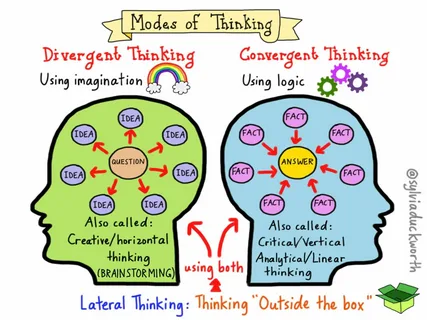
Psychological research distinguishes between different approaches to decision-making. Some individuals rely primarily on analytical reasoning, carefully examining information and evaluating possible consequences. Others make decisions more intuitively, drawing on previous experiences, emotional impressions, and patterns they have learned over time. Neither approach is universally superior. Analytical reasoning can be useful when decisions involve complex information, while intuition may be efficient in familiar situations where individuals have relevant experience.
However, intuition is not always accurate. Emotional reactions, previous disappointments, stereotypes, and cognitive biases can influence intuitive judgments. Similarly, analytical thinking does not guarantee an objectively correct decision. The quality of a decision depends partly on the accuracy of available information, the individual’s ability to evaluate it, and the circumstances in which the choice must be made.
Self-confidence is another important psychological factor in decision-making. Individuals who have greater confidence in their judgment may find it easier to select an option and accept responsibility for the outcome. In contrast, people who frequently doubt their abilities may repeatedly seek reassurance, postpone decisions, or allow others to determine what they should do. Nevertheless, self-confidence should not be confused with certainty or an assumption that one’s judgment is always correct. Healthy confidence includes the ability to recognize limitations, consider alternative perspectives, and revise decisions when new evidence becomes available.
Fear of failure can also influence the decision-making process. When individuals associate mistakes with personal inadequacy, even relatively ordinary choices may become emotionally demanding. They may avoid taking opportunities because they cannot guarantee success. In this context, indecision can function as a form of self-protection: as long as no decision is made, the possibility of making a mistake appears to be postponed.
Unfortunately, avoiding decisions also has consequences. Opportunities may disappear, problems may become more complicated, and dependence on other people’s opinions may increase. Avoidance can provide temporary emotional relief while maintaining the underlying fear. Learning to tolerate the possibility of imperfect outcomes is therefore an important aspect of psychological development.
Another relevant concept is analysis paralysis. This term describes a situation in which excessive consideration prevents an individual from taking action. A person may compare numerous alternatives, search for increasingly detailed information, and repeatedly question previous conclusions. The more possibilities they examine, the more difficult it becomes to choose. This can occur in professional decisions, relationships, education, and even ordinary daily activities.
One reason analysis paralysis develops is that additional information does not always improve decision quality. Information becomes useful when it addresses a relevant uncertainty. However, continuously searching for information may create the impression that a decision cannot be made until every possible detail is known. In reality, many decisions must be made with incomplete information.
Emotions also play a central role. Traditional views sometimes present rational thinking and emotional responses as opposing forces, but psychological and neuroscientific research suggests that emotions contribute significantly to evaluating options. They help individuals recognize what matters to them, anticipate satisfaction or disappointment, and assign personal significance to possible outcomes.
For example, a person choosing between two professional opportunities may consider salary, working conditions, and career prospects. However, they may also consider personal meaning, family responsibilities, intellectual interest, and emotional well-being. These factors cannot always be reduced to numerical comparisons. A decision that appears objectively advantageous may not be the most appropriate choice for a particular individual.
Cognitive biases can further complicate decisions. Confirmation bias occurs when individuals tend to search for or interpret information in ways that support their existing beliefs. Someone who already prefers a particular option may pay greater attention to information that confirms its advantages while overlooking evidence that challenges it. This can create an inaccurate sense of certainty.
Loss aversion is another well-known concept in behavioral economics. It describes the tendency for potential losses to have a stronger psychological impact than equivalent gains. As a result, individuals may avoid opportunities because they focus more intensely on what they could lose than on what they might gain. This tendency can influence financial decisions, career changes, and personal relationships.
The influence of other people should also be considered. Family expectations, cultural norms, social comparison, and fear of criticism can shape personal choices. Some individuals find it difficult to distinguish their own preferences from expectations they have internalized over time. They may pursue a particular career, relationship, or lifestyle because it is socially approved rather than because it reflects their personal values.
Social influence is not necessarily negative. Advice from experienced and trustworthy people can improve decision-making by providing information that an individual may not possess. The difficulty arises when external approval becomes more important than personal judgment. In such cases, individuals may repeatedly change their decisions according to other people’s reactions, even when those decisions conflict with their own priorities.
Past experiences can influence current choices as well. Someone who previously experienced a painful failure may become more cautious when facing a similar opportunity. Another individual who has experienced success after taking risks may become more willing to act under uncertainty. These experiences contribute to learning, but they can also produce overly general conclusions. One unsuccessful decision does not prove that all similar decisions will fail.
Personal values provide another important foundation for effective decision-making. When individuals understand what matters most to them, they can evaluate alternatives according to meaningful criteria. A person who values independence may prefer an opportunity that offers greater autonomy, while someone who prioritizes stability may choose a more predictable environment. Neither preference is inherently superior. The appropriate decision depends on individual circumstances and priorities.
A useful approach is to distinguish between decisions that are reversible and those that are difficult to reverse. Reversible decisions generally allow individuals to experiment, learn, and make adjustments. They may not require extensive analysis. Decisions with substantial long-term consequences deserve more careful consideration. This distinction can prevent people from treating every small choice as though it were irreversible.
Setting reasonable limits on information gathering can also be helpful. Before making a decision, individuals can identify what information is genuinely necessary, determine which alternatives are realistic, and establish a reasonable point at which they will choose. This approach reduces the tendency to continue searching indefinitely for certainty.
Another useful strategy involves considering the worst realistic outcome rather than imagining every possible catastrophe. People who experience decision-related anxiety may focus on extreme scenarios without evaluating how likely they are or how manageable their consequences might be. Examining realistic risks can help create a more balanced perspective.
It is equally important to recognize that a decision should be evaluated according to the information available at the time it was made, rather than solely by its eventual outcome. This principle is sometimes called outcome bias. A reasonable decision can produce an unfortunate result, while an irresponsible decision can occasionally lead to success. Judging the quality of a decision only by what happened afterward can distort learning and encourage unnecessary self-criticism.
After making a choice, individuals may also experience regret. Regret involves comparing the actual outcome with an alternative that might have produced a better result. Some regret can be useful because it encourages learning and future improvement. However, repeatedly imagining alternative lives can become emotionally exhausting, especially when the person focuses on possibilities that can no longer be changed.
Developing psychological flexibility can help individuals respond more constructively to uncertainty. This involves accepting that some outcomes cannot be predicted, recognizing that personal preferences may change, and remaining willing to adjust when circumstances require it. A decision does not need to be perfect to be meaningful or reasonable.
Professional support may be useful when indecision is persistent and significantly interferes with everyday functioning. Severe anxiety, depressive symptoms, obsessive-compulsive patterns, or other psychological difficulties may contribute to excessive doubt and repeated reassurance-seeking. A qualified mental health professional can help identify the underlying factors and determine whether a specific therapeutic approach is appropriate.
Ultimately, decision-making is not simply a technical process of selecting the best available option. It reflects the interaction between cognition, emotion, personal history, social expectations, and individual values. The ability to make decisions develops through experience, reflection, and a willingness to accept that uncertainty is an unavoidable part of life.
Confidence in decision-making does not mean knowing that every choice will lead to success. It means being able to consider available information, recognize personal priorities, make a reasonable choice, and respond constructively to its consequences. Sometimes the most important psychological development is not learning how to make perfect decisions, but learning how to move forward without requiring perfect certainty.