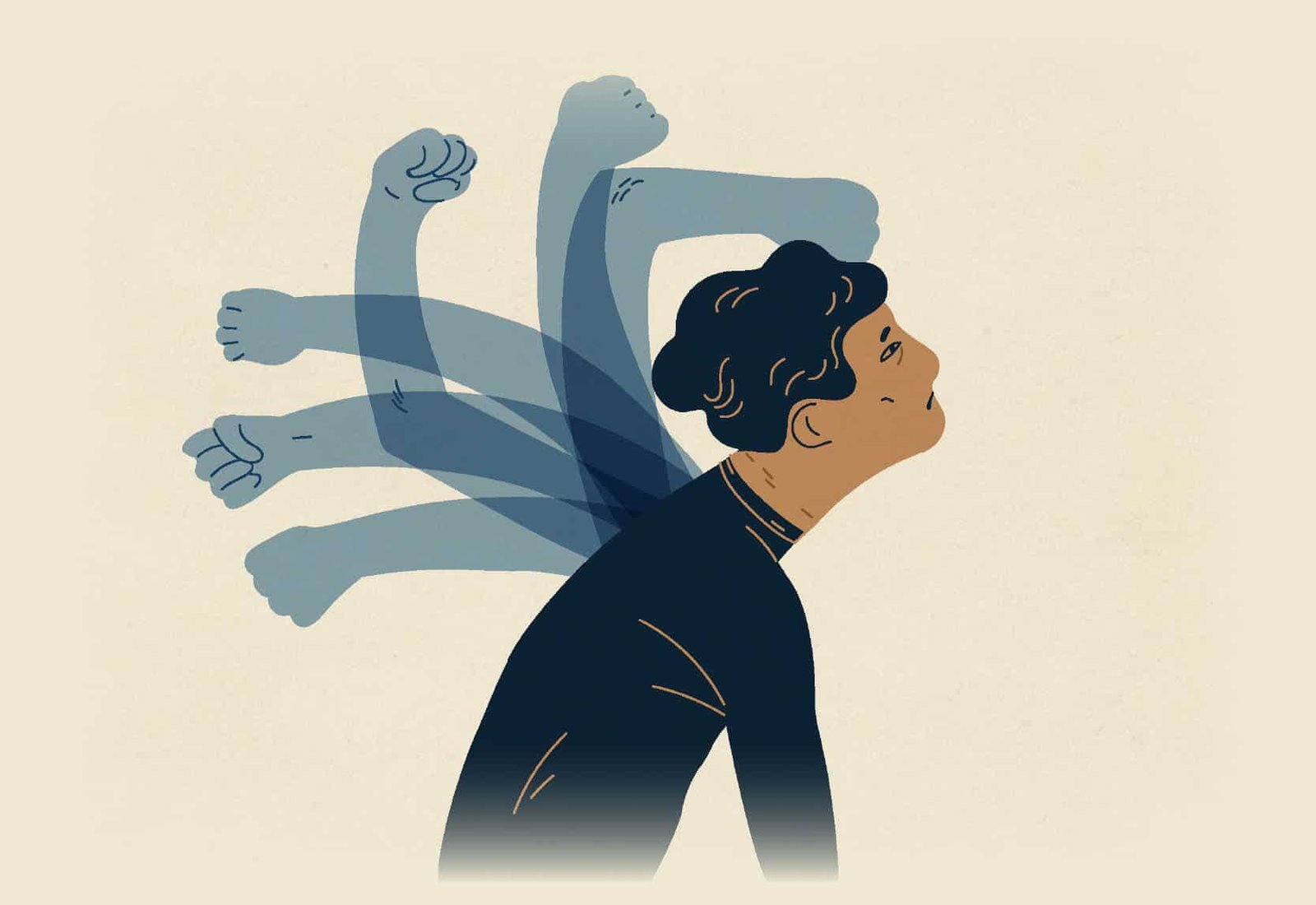
Self-sabotage refers to patterns of thought and behavior through which individuals unintentionally interfere with their own goals, progress, relationships, or well-being. A person may genuinely want to succeed and yet repeatedly behave in ways that make success more difficult. Someone may postpone an important task until the last moment, reject a valuable opportunity, abandon a promising relationship, create unnecessary conflicts, or become excessively critical of their own performance. From the outside, such behaviors can appear irrational. From a psychological perspective, however, self-sabotage often develops as an understandable response to fear, insecurity, emotional conflict, learned beliefs, or attempts to protect oneself from uncomfortable experiences.
The concept of self-sabotage should be used carefully because not every failure, mistake, or unproductive behavior represents deliberate self-sabotage. Human behavior is influenced by many factors, including fatigue, limited resources, lack of knowledge, environmental circumstances, stress, and competing responsibilities. A person who fails to complete a goal is not necessarily preventing their own success. Self-sabotage becomes a useful psychological concept when a repeated pattern appears in which a person’s behavior consistently conflicts with their stated goals, particularly when the individual recognizes the pattern but finds it difficult to change.
One of the central features of self-sabotage is the conflict between conscious goals and emotional needs. A person may consciously want professional advancement but emotionally fear the increased responsibility that comes with success. Another person may want a close relationship but fear vulnerability and therefore create distance whenever intimacy develops. Someone may want to improve their health but repeatedly avoid behaviors that support this goal because changing familiar routines creates discomfort. In each case, the behavior can be understood as a conflict between what the individual says they want and what another part of their psychological system is trying to avoid.
Fear is one of the most important mechanisms associated with self-sabotaging behavior. People often think about fear in relation to failure, but success can also generate anxiety. Success changes expectations. When a person succeeds, others may expect more from them, and the individual may expect more from themselves. A person who fears not being able to maintain a new level of performance may unconsciously prefer the psychological safety of familiar limitations. Failure can then provide an explanation that feels less threatening than discovering what might happen after success.
Fear of failure is another common pathway. If failure is interpreted as evidence of personal inadequacy, beginning a challenging task can become emotionally threatening. Avoiding the task protects the individual from immediate exposure to possible failure. Unfortunately, the short-term emotional relief produced by avoidance can strengthen the behavior. The person feels less anxious because they have postponed the challenge, and this relief teaches the brain that avoidance is useful. Over time, however, the unfinished task produces additional stress and may reinforce negative beliefs about competence.
Procrastination can therefore become a form of self-sabotaging behavior when it repeatedly prevents a person from pursuing important goals. The psychological process is often more complicated than laziness. A difficult task may activate fear, perfectionism, uncertainty, or self-doubt. The individual turns toward something easier or more pleasurable, experiences temporary relief, and later feels guilt or disappointment. This cycle can become habitual.
Perfectionism is another important factor. A perfectionistic person may establish standards that are extremely difficult to satisfy. Because the expected result must be excellent, starting the task becomes psychologically risky. The person may delay beginning until they feel completely prepared, but complete preparation rarely arrives. Alternatively, they may repeatedly revise their work, avoid submitting it, or abandon it because it does not meet an imagined ideal. In this way, the desire to produce an excellent result can paradoxically interfere with producing any result at all.
Self-sabotage can also develop from negative self-beliefs. Individuals who repeatedly think “I am not capable,” “I always fail,” or “I do not deserve good things” may behave consistently with these beliefs. Psychological beliefs influence attention, interpretation, motivation, and behavior. If a person expects failure, they may notice evidence supporting failure more readily than evidence of competence. Their behavior may also become more cautious or avoidant, reducing opportunities for positive experiences.
These beliefs can develop through many experiences. Repeated criticism, humiliation, bullying, unrealistic expectations, repeated failure, unstable relationships, or conditional approval may influence how individuals interpret themselves. However, there is no single childhood experience that inevitably produces self-sabotage. People with similar experiences can develop very different psychological patterns because temperament, social support, coping skills, later relationships, and environmental circumstances also matter.
Early learning can nevertheless be significant because children gradually develop beliefs about what is safe, acceptable, and possible. If a child learns that mistakes consistently lead to severe criticism, they may become highly sensitive to failure. If they learn that expressing needs causes rejection, they may later suppress their needs in relationships. If achievement is consistently treated as the primary source of approval, the person may develop the belief that their value depends on performance.
Self-sabotage can therefore function as a form of psychological protection. This may seem contradictory because the behavior produces negative consequences, but the immediate purpose may be emotional safety. Avoiding a difficult opportunity protects a person from the possibility of rejection. Refusing to become emotionally close protects them from possible abandonment. Not trying seriously protects them from discovering that they might fail. The behavior is harmful in the long term but can provide short-term relief.
This distinction between short-term and long-term consequences is essential. Many self-sabotaging behaviors are maintained because they produce immediate emotional benefits. Avoidance reduces anxiety now. Procrastination reduces discomfort now. Reassurance seeking reduces uncertainty now. Withdrawal reduces exposure to possible rejection now. The future consequences may be negative, but the brain tends to respond strongly to immediate relief. This can make the behavior surprisingly persistent.
Self-sabotage can also involve emotional reasoning. A person may think, “I feel incapable, therefore I must be incapable.” However, feelings are not always accurate measures of ability. Anxiety can create a subjective sense of incompetence even when objective performance is adequate. Similarly, feeling undeserving of success does not establish that success is inappropriate or impossible.
Another mechanism is confirmation bias. Once a person develops a negative belief about themselves, they may unconsciously search for information that confirms it. Consider an individual who believes that they are socially inadequate. If one conversation goes badly, they may remember it intensely and ignore several positive interactions. The negative event becomes evidence for the existing belief. This can strengthen avoidance of future social situations.
Self-sabotage can also appear in relationships. Some people desire intimacy but become uncomfortable when a relationship becomes emotionally close. They may suddenly criticize the other person, become distant, create unnecessary arguments, or search for evidence that the relationship will fail. These behaviors may be related to fear of vulnerability or rejection. The individual may consciously believe that they want closeness while simultaneously protecting themselves from the risks associated with emotional dependence.
In other situations, self-sabotage may take the form of people-pleasing. A person may repeatedly ignore their own needs in order to maintain harmony. They may say yes when they want to say no, avoid expressing disagreement, or accept unfair treatment. Although this behavior may preserve relationships temporarily, it can create resentment and emotional exhaustion. Eventually, the person may withdraw or experience conflict that could have been reduced through healthier communication.
Another form of self-sabotage is rejecting positive feedback. Someone who believes that they are inadequate may find compliments uncomfortable. Instead of accepting praise, they may immediately explain why their achievement was not important or why they were simply lucky. Repeated rejection of positive information prevents the individual from incorporating evidence of competence into their self-concept.
Comparison can reinforce this pattern. When people compare themselves with others, they often compare their internal experience with external information about someone else. They know their own doubts, mistakes, and failures in detail, while they may see only another person’s achievements. This creates an unequal comparison. If repeated, it can produce the impression that others are progressing effortlessly while the individual is constantly struggling.
Digital environments can intensify social comparison. Social media often presents selected moments rather than complete lives. Seeing other people’s professional achievements, relationships, travel, appearance, or possessions may create unrealistic standards. A person who already struggles with self-doubt may interpret these images as evidence that they are falling behind. This emotional reaction can reduce motivation and contribute to avoidance.
Self-sabotage may also occur in academic and professional settings. A student may avoid asking for help because they believe that doing so will reveal incompetence. An employee may avoid applying for a position because they assume that they will be rejected. A researcher may delay submitting work because they believe that criticism would prove they are not qualified. These behaviors can prevent opportunities for learning and development.
Interestingly, self-sabotage does not always involve doing something obviously negative. Sometimes it involves failing to do something necessary. Not communicating clearly, not preparing adequately, not setting boundaries, not asking for support, or not taking reasonable opportunities can all contribute to negative outcomes. Passive avoidance can therefore be as important as active harmful behavior.
Recognizing self-sabotage requires attention to patterns rather than isolated incidents. A useful question is whether the same type of difficulty repeatedly appears when a particular goal becomes possible. For example, if someone repeatedly becomes highly motivated to start a project but abandons it when progress becomes visible, the pattern may deserve examination. If someone repeatedly wants intimacy but withdraws whenever a relationship becomes serious, the repeated sequence may reveal an underlying fear.
The first step in changing such patterns is often identifying the trigger. What happens immediately before the behavior? What thought appears? What emotion is experienced? What action follows? What short-term consequence occurs? What happens later? This sequence can reveal the function of the behavior.
For example, a person may receive an important opportunity, think “I probably cannot handle this,” experience anxiety, postpone responding, feel temporary relief, and later experience regret. Understanding the sequence makes the behavior less mysterious. The problem is not simply “I am lazy.” The pattern may involve an opportunity, a negative prediction, anxiety, avoidance, temporary relief, and later self-criticism.
Cognitive behavioral approaches often examine such patterns by testing whether thoughts are accurate and useful. Instead of accepting “I will definitely fail,” an individual can examine previous experiences, available evidence, alternative explanations, and the actual probability of different outcomes. The goal is not unrealistic optimism. It is a more balanced interpretation.
Behavioral experiments can also be useful. If a person believes that expressing an opinion will inevitably lead to rejection, they might begin by expressing a small, respectful disagreement in a relatively safe context. The purpose is to gather evidence. Psychological change often becomes stronger when new beliefs are supported by actual experience rather than by repeated positive statements alone.
Another important principle is gradual exposure to discomfort. If avoidance is the central mechanism maintaining self-sabotage, completely eliminating discomfort before taking action may be impossible. Instead, individuals can learn to act while experiencing manageable levels of uncertainty, anxiety, or imperfection. The experience teaches the person that discomfort does not necessarily mean danger.
Self-compassion is also relevant. Harsh self-criticism can unintentionally strengthen self-sabotaging cycles. After a mistake, a person may think, “I always ruin everything.” Such statements increase shame and can lead to further avoidance. A more constructive response recognizes the mistake while maintaining psychological flexibility: “This did not go as I wanted, but I can understand what happened and decide what to do differently next time.”
Goal setting should also be realistic. Extremely large goals can activate avoidance because the gap between the current situation and the desired result feels overwhelming. Breaking a goal into smaller actions can reduce psychological resistance. Instead of “I must completely change my life,” an individual can identify one specific action that can be completed today.
Developing evidence-based confidence is another important component. Confidence should not depend exclusively on positive feelings. A person can build confidence by collecting evidence of effort, learning, persistence, and improvement. Keeping a record of completed tasks, successful decisions, or situations in which a feared outcome did not occur can help challenge overly negative self-perceptions.
It is also important to distinguish responsibility from blame. Understanding why someone self-sabotages does not mean removing responsibility for behavior. Psychological understanding explains patterns; it does not excuse harmful actions. The purpose of understanding is to create greater choice. When a person recognizes the emotional function of a behavior, they may become better able to choose a different response.
Self-sabotage can sometimes be associated with broader psychological difficulties, including anxiety, depressive symptoms, low self-esteem, perfectionistic patterns, or difficulties with emotional regulation. However, self-sabotaging behavior itself is not a formal psychiatric diagnosis. A person should therefore avoid assuming that a particular behavior automatically indicates a specific disorder.
Professional psychological support may be valuable when self-sabotaging patterns are persistent, severe, or significantly interfere with relationships, education, work, or general well-being. A psychologist or other qualified mental health professional can help identify patterns, explore underlying beliefs, and develop strategies suited to the individual’s circumstances. Therapy can be especially useful when the behavior is connected to longstanding emotional experiences that are difficult to understand independently.
A simple self-reflection questionnaire can help individuals examine whether certain self-sabotaging patterns occur in their lives. The following ten-item questionnaire is an informal exercise rather than a clinically validated psychological test. It is not designed to diagnose a disorder. For each statement, choose 0 = Never, 1 = Rarely, 2 = Sometimes, 3 = Often, or 4 = Very often.
- I postpone important tasks even when I know that delaying them will create problems later.
- When I receive a good opportunity, I sometimes find reasons not to pursue it.
- I give up on goals when I begin to worry that I may not succeed.
- I become extremely critical of myself after making a small mistake.
- I avoid situations in which other people might evaluate or criticize me.
- When something in my life begins to go well, I sometimes become anxious or find reasons to withdraw.
- I reject compliments because I feel that my achievements are not as important as other people think.
- I compare myself with others and use those comparisons as evidence that I am not good enough.
- I avoid expressing my needs or opinions because I am afraid of creating conflict or being rejected.
- I sometimes behave in ways that conflict with goals that I genuinely want to achieve.
After completing the questionnaire, add the scores. The total can range from 0 to 40. A score between 0 and 10 suggests that the self-sabotaging patterns described are relatively uncommon at the present time. A score between 11 and 20 suggests that some of these patterns may occur occasionally. A score between 21 and 30 suggests that several self-sabotaging tendencies may occur frequently. A score between 31 and 40 suggests that these patterns may be present very frequently across different areas of life. These ranges are only descriptive and are not diagnostic cutoffs.
The individual statements may be more informative than the total score. For example, a high score on procrastination may indicate that avoidance is an important pattern, whereas a high score on relationship-related items may suggest fear of rejection or conflict. A high score on perfectionism-related items may indicate that unrealistic standards are interfering with action. The questionnaire can therefore be used as a starting point for reflection rather than as a final psychological judgment.
An important question after completing such an exercise is not “What is wrong with me?” but “What am I trying to protect myself from?” A person who avoids opportunities may be protecting themselves from failure. Someone who rejects intimacy may be protecting themselves from rejection. Someone who procrastinates may be protecting themselves from the anxiety associated with evaluation. Understanding the protective function can make it easier to replace the behavior with a healthier strategy.
The process of overcoming self-sabotage is therefore not simply about forcing oneself to behave differently. Sustainable change requires understanding the relationship between thoughts, emotions, behaviors, and consequences. A person needs to learn that discomfort can be tolerated, mistakes can be corrected, uncertainty can be accepted, and success does not necessarily create danger.
Self-sabotage is often strongest when individuals believe they have only two choices: remain safe or take an enormous psychological risk. In reality, change can occur gradually. A person can take a small opportunity, tolerate a small amount of uncertainty, express one honest opinion, complete one imperfect task, or accept one compliment without immediately questioning it. Each experience can provide new evidence about what is actually possible.
Ultimately, self-sabotage is not evidence that a person secretly wants to fail. In many cases, it reflects a conflict between long-term goals and short-term emotional protection. The behavior may once have helped the individual avoid fear, rejection, criticism, or uncertainty, but later becomes an obstacle to development. Recognizing this distinction can replace self-blame with curiosity and responsibility.
The goal is not to eliminate every fear or uncertainty. Fear is a normal psychological response, and uncertainty is an unavoidable part of life. The goal is to prevent these experiences from automatically determining behavior. A person can feel afraid and still act. They can make a mistake and continue. They can experience criticism without concluding that they are worthless. They can pursue success while accepting that success brings new responsibilities.
In this sense, overcoming self-sabotage involves developing greater psychological flexibility. Instead of automatically following old protective patterns, individuals learn to pause, recognize what they are feeling, examine the beliefs behind the behavior, and choose an action that is more consistent with their long-term values. With repeated practice, the gap between what a person wants and what they actually do can gradually become smaller.
Self-sabotage is therefore best understood not as a mysterious tendency to destroy one’s own life, but as a pattern of behavior that can emerge when psychological protection conflicts with personal goals. Once the pattern becomes visible, it becomes possible to examine it, understand its function, and develop alternative responses. The process may require patience, but recognizing the pattern is itself an important step toward greater self-awareness and more intentional behavior.