Within psychosomatic theory, one of the most intricate and least intuitively understood processes concerns the role of meaning in shaping physiological states. Meaning, in this context, does not refer merely to linguistic definition or abstract cognition; it encompasses the interpretive frameworks through which individuals organize experience, evaluate significance, and assign relevance to internal and external events. The question of how meaning alters physiology invites a reconsideration of the relationship between symbolic processes and biological regulation. It suggests that interpretation is not a passive overlay upon physical reality but an active force capable of modulating regulatory systems at multiple levels.
To examine this process, it is necessary to distinguish between stimulus and interpretation. Two individuals may encounter the same external condition, yet exhibit markedly different physiological responses. This divergence reflects differences not in the stimulus itself, but in the meaning assigned to it. Meaning functions as a filter through which stimuli are evaluated, determining whether they are perceived as threatening, neutral, or beneficial. This evaluation initiates cascades of physiological activity that prepare the organism for corresponding forms of action.
At the neural level, meaning is constructed through the integration of sensory input, memory, and predictive models. The brain continuously generates hypotheses about the significance of incoming information, drawing upon prior experience and contextual cues. These hypotheses are not merely cognitive; they are embodied in patterns of activation that influence autonomic and endocrine processes. Thus, meaning is instantiated within the organism as a set of coordinated responses rather than as an abstract representation detached from physiological function.
One of the primary pathways through which meaning influences physiology involves appraisal processes. Appraisal refers to the evaluation of events in terms of their relevance to goals, well-being, and survival. This evaluation occurs rapidly and often outside conscious awareness. Once a situation is appraised, corresponding regulatory systems are engaged. A perceived threat may trigger mobilization, while a perceived opportunity may facilitate approach-oriented states.
Importantly, appraisal is not fixed but shaped by experience and belief systems. Individuals develop habitual ways of interpreting events, which become embedded in their cognitive and affective architecture. These habitual interpretations create consistent patterns of physiological response. Over time, the organism becomes tuned to respond in particular ways based on learned meanings rather than immediate conditions.
This tuning is evident in the phenomenon of anticipatory regulation. The organism does not wait for events to occur before responding; it prepares based on expectations. When a situation is anticipated to be challenging or threatening, physiological activation may occur in advance. This anticipatory activation reflects the predictive nature of regulatory systems, which rely on meaning to guide preparation.
Memory plays a crucial role in shaping meaning. Past experiences provide templates that inform current interpretations. When a new situation resembles a previously significant event, the associated meaning may be activated, along with corresponding physiological patterns. This process allows for rapid adaptation but also introduces the possibility of misalignment between current conditions and responses.
In psychosomatic contexts, this misalignment can contribute to symptom formation. When meanings associated with past experiences are applied to present situations inappropriately, physiological responses may be disproportionate or maladaptive. The organism responds not to the current reality but to the meaning constructed from prior experience.
Language and symbolic representation further influence how meaning is constructed and maintained. The ability to articulate experiences allows for their organization into coherent frameworks. These frameworks guide future interpretations, creating continuity in how events are understood. However, when symbolic processing is limited or disrupted, meaning may remain implicit, exerting influence without being explicitly recognized.
Implicit meanings are particularly relevant in the persistence of psychosomatic symptoms. These meanings may be encoded in patterns of response that do not reach conscious awareness. For example, a situation may evoke a sense of unease without a clear explanation. This unease reflects an implicit evaluation that has physiological consequences, even if the individual cannot articulate its basis.
The role of belief systems in shaping meaning cannot be overstated. Beliefs about health, vulnerability, control, and the nature of the self influence how internal and external events are interpreted. These beliefs function as organizing principles, guiding appraisal and response. When beliefs emphasize threat or fragility, physiological systems may be more readily activated.
Conversely, beliefs that emphasize resilience or manageability can modulate responses, reducing the intensity of activation. This modulation does not eliminate physiological reactions but alters their magnitude and duration. The organism remains responsive but avoids excessive or prolonged activation.
Social context contributes to the formation and reinforcement of meaning. Interpersonal interactions provide feedback about how experiences should be interpreted. Validation, interpretation, and shared narratives all shape individual meaning-making processes. Through these interactions, meanings become stabilized and integrated into broader frameworks.
Cultural factors extend this process by providing collective systems of meaning. Cultural narratives about illness, stress, and emotion influence how individuals understand their experiences. These narratives shape not only interpretation but also expression, determining which forms of distress are recognized and how they are communicated.
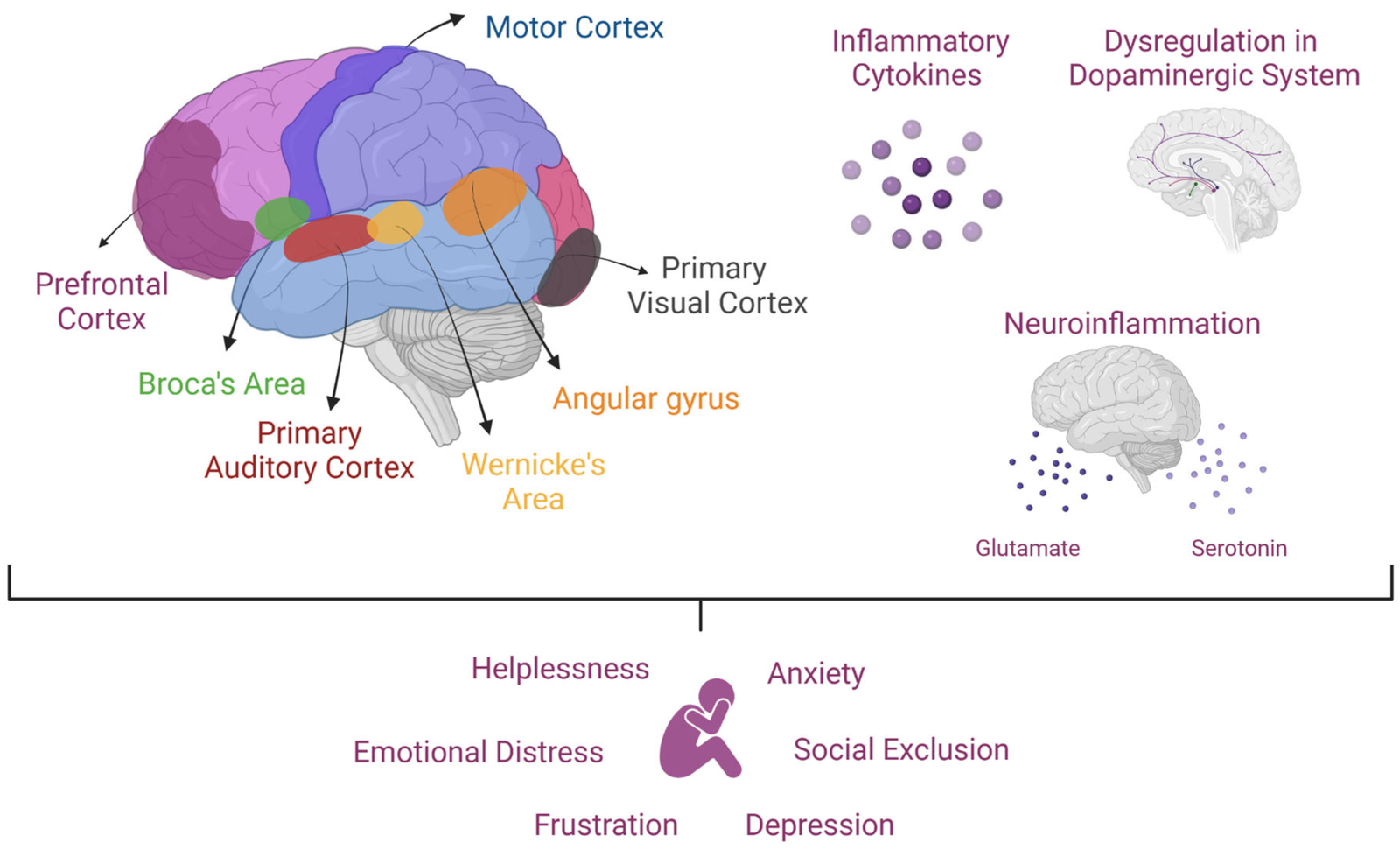
Neurobiologically, the influence of meaning on physiology is mediated through interconnected networks that link cognitive, emotional, and regulatory processes. These networks allow symbolic interpretations to influence autonomic activity, hormonal signaling, and immune responses. The integration of these systems ensures that meaning is translated into coordinated physiological states.
Hormonal pathways are particularly sensitive to interpretive processes. The perception of threat or challenge can initiate hormonal cascades that affect multiple systems. When such perceptions are chronic, these cascades may contribute to sustained physiological changes. The persistence of these changes reflects the ongoing influence of meaning rather than the presence of continuous external stressors.
The immune system also responds to meaning-laden interpretations. Psychological stress, shaped by appraisal and belief, can influence immune activity, altering susceptibility to illness and recovery processes. This interaction illustrates how meaning extends beyond immediate physiological responses to influence longer-term health outcomes.
In the context of psychosomatic symptoms, meaning often operates as a central organizing factor. Symptoms may be interpreted as signs of dysfunction, danger, or vulnerability, reinforcing their significance and sustaining attention. Alternatively, they may be understood as signals of imbalance, prompting adaptive responses. The meaning assigned to symptoms influences how they are experienced and managed.
Therapeutic interventions frequently target the reconstruction of meaning. By altering interpretive frameworks, it becomes possible to modify physiological responses. This process does not involve denying the reality of symptoms but reframing their significance. Through this reframing, the organism’s response patterns can shift toward greater flexibility and regulation.
Cognitive approaches emphasize the identification and modification of maladaptive beliefs. By challenging interpretations that amplify threat or helplessness, individuals can reduce the intensity of physiological activation. This reduction occurs not because the stimulus changes, but because its meaning is altered.
Experiential approaches focus on the direct processing of affective states, allowing implicit meanings to become explicit. As these meanings are articulated and integrated, their influence on physiological systems may diminish. This integration reduces the need for indirect expression through somatic pathways.
Importantly, the relationship between meaning and physiology is bidirectional. While meaning shapes physiological responses, physiological states also influence meaning-making. For example, heightened arousal may bias interpretation toward threat, while states of calm may facilitate more balanced appraisals. This reciprocity creates dynamic loops in which meaning and physiology continuously interact.
The question of how meaning alters physiology ultimately challenges the assumption that biological processes are independent of psychological interpretation. It reveals that interpretation is embedded within the organism’s regulatory systems, influencing how they operate and adapt. Meaning is not an abstract overlay but a functional component of physiological regulation.
In this sense, the organism does not simply respond to the world as it is, but to the world as it is understood. This understanding is shaped by memory, belief, context, and symbolic processing, all of which contribute to the construction of meaning. Through these processes, meaning becomes a determinant of physiological state.
Thus, meaning alters physiology by guiding appraisal, shaping prediction, modulating regulation, and influencing the integration of experience. It operates through networks that connect cognitive and biological processes, ensuring that interpretation is translated into action. In psychosomatic phenomena, this translation becomes particularly visible, revealing the profound ways in which the symbolic and the biological are intertwined.