


Cognitive Perceptual Instability Disorder (CPID) is a proposed psychiatric condition defined by a progressive weakening of the brain’s ability to maintain a stable internal model of reality. Unlike psychotic disorders, CPID does not involve fixed delusions or hallucinations. Instead, the disturbance lies in the individual’s constant uncertainty about the coherence of what they perceive, remember, and interpret. The person knows that their experiences are likely real, yet feels that the internal framework that usually organizes meaning has become fragile and unreliable. People with CPID often describe their mind as a structure whose walls have become thin. Thoughts, memories, sensory impressions, and interpretations feel loosely connected, as though they might drift apart at any moment. This does not mean confusion in the conventional sense. Language, logic, and memory remain intact. What is altered is the feeling of continuity—the internal sense that experiences naturally belong together and form a stable narrative. This instability is most visible in situations that require rapid integration of information. Crowded environments, emotionally complex conversations, or tasks involving multiple sensory cues can trigger a subtle but persistent sense of mental disorganization. The individual is not overwhelmed by noise or stimuli, but by the effort of constantly reassembling meaning. Each moment feels as though it must be actively reconstructed instead of effortlessly understood. Emotionally, CPID does not begin with distress. At early stages, individuals may simply notice that the world feels “less solid” or “slightly out of place.” Over time, however, this ongoing instability often leads to anxiety and existential unease. People start to question whether their interpretations are trustworthy, even when they rationally know that they are. This creates a paradoxical state: intellectual confidence coexists with emotional doubt. Memory in CPID remains detailed and accessible, yet it lacks the usual sense of narrative flow. Past events feel accurate but oddly detached from one another, as if they belong to separate chapters that never fully merge into a single story. The future, likewise, is perceived as conceptually clear but emotionally distant. This fragmented temporal experience reinforces the sense that reality itself is loosely stitched together. Neurocognitive theories suggest that CPID may involve disruptions in predictive processing networks. The human brain constantly generates expectations about the world and updates them based on incoming sensory data. In CPID, this system appears to lose efficiency. Predictions are formed, but their emotional and perceptual reinforcement is weak. As a result, the world feels perpetually provisional, as if it might shift without warning. This does not produce delusions or hallucinations, because reality testing remains intact. Individuals with CPID know that their perceptions are not false. What is missing is the feeling of certainty that usually accompanies normal perception. Every experience carries a faint sense of instability, like standing on a surface that never fully stops moving. Behaviorally, people with CPID often become hyper-reflective. They analyze their own reactions, double-check interpretations, and mentally revisit events to ensure coherence. While this strategy temporarily restores a sense of control, it also increases cognitive fatigue. The mind becomes trapped in a loop of constant verification, turning ordinary experiences into mentally demanding tasks. Social interactions are particularly affected. Subtle changes in tone, facial expression, or context can feel ambiguous and difficult to integrate. The person may understand each element individually but struggle to experience them as a unified emotional message. This can lead to feelings of social distance, not because of withdrawal, but because the internal process of making sense of others becomes effortful and uncertain. CPID is often mistaken for anxiety disorders, mild psychosis, or dissociation. However, the core feature is neither fear nor detachment from the self, but instability in the internal organization of meaning. The person is not disconnected from reality; rather, reality feels structurally fragile. This distinction is critical for treatment, as traditional approaches for anxiety or psychosis may not address the underlying perceptual instability. Therapeutic strategies focus on strengthening experiential coherence rather than correcting beliefs. Grounding techniques, sensory integration exercises, and narrative-based therapies help individuals rebuild a sense of continuity. Instead of trying to eliminate uncertainty, patients learn to tolerate it while gradually restoring trust in their perceptual and cognitive systems. Mindfulness-based approaches are particularly effective, not because they suppress doubt, but because they shift attention away from constant analysis and toward direct experience. By repeatedly anchoring awareness in the present moment, individuals begin to feel the world as stable again, even when uncertainty remains conceptually present. Over time, many people with CPID develop a new relationship with reality—one that accepts imperfection in perception while regaining emotional coherence. The world no longer feels like it might collapse, even if it never returns to its previous sense of solidity. Cognitive Perceptual Instability Disorder reveals how fragile the human sense of reality truly is. It shows that stability is not simply a matter of accurate perception, but of emotional and narrative integration. When this internal structure weakens, the world does not disappear—but it begins to feel as though it might.
Can the Mind Betray Its Own Sense of Self?
Self-Agency Dissociation Syndrome (SADS) is a psychiatric condition characterized by a persistent disruption in the subjective experience of agency, in which individuals retain intact cognition, perception, and reality testing but feel alienated from their own actions and decisions. Unlike classical dissociative disorders, SADS does not involve amnesia, identity fragmentation, or depersonalization in the traditional sense. The primary disturbance lies in the phenomenology of selfhood: the individual performs, plans, and reasons as usual but experiences these processes as subtly, yet persistently, externalized. Individuals with SADS maintain full awareness of their thoughts, choices, and bodily movements, yet these mental and physical acts are accompanied by a diminished sense of ownership. Actions feel like they are happening “through” the self rather than “by” the self. This can create a persistent internal tension, in which cognition and behavior are logically coherent but experientially disconnected. Unlike psychotic conditions, insight is preserved: the affected person recognizes the incongruity between their mental processes and their felt agency, and reality testing remains intact. The disorder primarily affects spontaneous cognition and automatic behaviors. Purposeful, effortful thinking—such as problem-solving, planning, or analytical reasoning—remains possible, yet unprompted thoughts and habitual actions are experienced with a subtle estrangement. Individuals often describe the sensation as watching their own mind from behind a veil, or as though their mental processes are being executed by an external observer. This perceptual split does not impair objective performance but introduces a continuous, underlying sense of cognitive distance. Emotionally, SADS produces secondary effects rather than primary affective pathology. Individuals may experience mild anxiety, frustration, or unease as a consequence of the perceived disconnection from their own thoughts and actions. Emotions themselves remain intact: happiness, sadness, curiosity, and concern are all accessible, yet they often feel detached from the immediacy of the cognitive or behavioral events that elicit them. This temporal dissociation between cognition and affect contributes to the chronic sense of internal estrangement. Memory and autobiographical identity remain coherent and accurate. Individuals retain detailed personal histories, coherent life narratives, and the ability to articulate values and goals. However, because agency is felt as attenuated, these memories may seem like descriptions of a “past self” rather than lived experiences. The present self observes actions and recollections rather than inhabiting them fully, producing a subtle but pervasive feeling of self-discontinuity. Neurocognitive hypotheses suggest that SADS involves dysregulation in neural circuits responsible for self-referential processing and motor-intentional integration. Prefrontal, parietal, and supplementary motor areas typically collaborate to ensure that voluntary actions are accompanied by a coherent sense of authorship. In SADS, this coupling appears weakened: executive and motor functions operate correctly, but the experiential signal marking actions as self-generated is attenuated. Functional imaging studies have shown altered connectivity in networks associated with the sense of agency, supporting this theoretical model. Behavioral adaptations are common among affected individuals. Many rely on externalizing strategies to recapture a sense of ownership: writing thoughts down, speaking aloud, or creating structured task sequences. These methods temporarily restore cognitive agency by transforming abstract mental content into tangible, observable action. Attempts to forcibly suppress the estrangement or hyper-focus on controlling every thought often backfire, intensifying the perceived separation between self and cognition. SADS is frequently misdiagnosed as depersonalization disorder, obsessive-compulsive disorder, or subclinical dissociation. The distinctions are subtle but clinically meaningful. Unlike depersonalization, the self is not experienced as unreal or absent; the world is not perceived as distorted or artificial. Unlike OCD, repetitive behaviors and thoughts are not inherently anxiety-driven or ritualized. The defining feature is the persistent, selective disruption of the felt sense of agency across both cognition and behavior. Pharmacological interventions have been explored, including serotonergic agents and compounds affecting prefrontal executive networks, but results remain inconsistent. The phenomenological nature of the disorder suggests that cognitive and behavioral therapies are more promising. Approaches emphasizing mindfulness, embodiment, and adaptive externalization—practices that focus attention on immediate bodily and environmental cues—have demonstrated subjective benefits. Patients learn to accept the partial loss of agency without attempting futile suppression and to use external scaffolding to restore a coherent sense of authorship. The disorder also affects social and occupational functioning in subtle ways. Interruptions in spontaneous thought, habitual action, and the feeling of decision-making can interfere with interpersonal interactions, professional tasks, and multitasking. Although externally the individual may appear fully competent and engaged, the internal experience is one of constant negotiation between intentional control and involuntary estrangement. Over time, this internal tension can contribute to fatigue, reduced motivation, and subtle anxiety about perceived reliability in social and professional contexts. Emotion regulation, while intact, may be temporally misaligned with action. For instance, an individual may recognize an emotionally salient event cognitively before the affective response fully aligns with the context. While not pathological in itself, this disjunction reinforces the sense of being partially detached from one’s own mental life. SADS challenges foundational assumptions about cognition and selfhood in psychiatry. It demonstrates that intact reasoning, memory, and perception do not guarantee the experience of being the agent of one’s own mind. Even highly intelligent, fully functional individuals may experience profound disruptions in subjective agency. The disorder illustrates that the phenomenology of selfhood—the felt sense of being the initiator of thought and action—is a fragile dimension of consciousness that can deteriorate independently of other cognitive faculties. In conclusion, Self-Agency Dissociation Syndrome represents a distinct psychiatric phenomenon in which voluntary cognitive and behavioral functions remain intact, yet subjective ownership of thought and action is attenuated. The condition produces a persistent internal tension between cognitive execution and experiential agency, resulting in subtle functional strain, emotional dissonance, and existential unease. Therapeutic strategies that integrate mindfulness, external scaffolding, and embodied awareness provide the most effective means of mitigating distress and partially restoring a coherent sense of self. SADS underscores the critical importance of the experiential aspect of agency, revealing that cognition and action alone are insufficient for the lived experience of being the author of one’s own mind.

Why Do I Feel Like I Am Only Watching Life?
Observational Self Detachment Disorder is a psychological condition in which individuals experience themselves primarily as observers of their own actions rather than as active participants. Behavior remains purposeful and controlled, yet the felt sense of “I am doing this” is replaced by “this is happening.” The self is present, but positioned at a distance from lived experience. Those affected do not feel controlled by external forces, nor do they doubt the reality of their actions. They recognize that they are the ones moving, speaking, and deciding. However, the experiential quality of agency is weakened. Actions feel executed automatically, as if guided by an internal system that no longer feels fully integrated with conscious selfhood. This detachment is most apparent in routine behaviors. Everyday tasks such as walking, speaking, or eating are performed accurately, yet feel strangely impersonal. Individuals often report a sense of watching themselves from just behind their own eyes. Unlike depersonalization, the self is not felt as unreal; rather, it is felt as psychologically displaced. Emotion remains present but muted in immediacy. Feelings arise, yet seem to belong to the observed self rather than the experiencing one. This creates a layered sense of identity, in which the “doer” and the “watcher” feel subtly separated despite logical unity. Neurocognitive theories suggest a disruption in the integration between motor intention systems and self-referential awareness. When this coupling weakens, actions remain intact, but the subjective experience of authorship is reduced. The condition is often mistaken for anxiety-related dissociation or emotional numbing. However, insight, reality testing, and functional capacity remain preserved. The disturbance lies not in what is done, but in how it is felt to be done. Observational Self Detachment Disorder reveals that participation is not guaranteed by action alone. The mind can perform seamlessly, while the self quietly steps back into the role of observer.

Why Does Time No Longer Feel Like It Is Moving?
Temporal Flow Discontinuity Disorder is a psychological condition in which objective time perception remains accurate, yet the subjective sense of time passing becomes profoundly altered. Individuals can read clocks, meet deadlines, and estimate durations correctly, but no longer feel the internal flow that normally connects one moment to the next. Time is known, but it is not felt. Those affected do not experience confusion about dates or sequences. Memory, planning, and attention remain intact. The disturbance lies in the experiential continuity of time. Moments feel isolated, as if each exists on its own without smoothly transitioning into the next. Life unfolds in a series of static “nows,” creating the impression that time is standing still even while events continue. This disruption often produces a sense of detachment from personal narrative. Without the felt movement of time, past, present, and future lose their natural linkage. Individuals may describe their life as paused or suspended, despite knowing that it is objectively progressing. This creates an unsettling contrast between what is measured and what is lived. Emotionally, responses remain appropriate, but they lack temporal resonance. Feelings arise in relation to events, yet do not carry the sense of unfolding or anticipation that normally accompanies emotional experience. Joy does not feel like it is growing, and sadness does not feel like it is passing. Instead, emotions appear as fixed states that exist without temporal depth. The condition is especially noticeable during routine activities. Days may feel indistinguishable, not because they are forgotten, but because they lack a felt trajectory. Events occur, but they do not accumulate into a sense of movement or progress. This can lead to existential fatigue, as the future feels conceptually present but experientially unreachable. Neurocognitive models suggest that Temporal Flow Discontinuity Disorder may involve disruption in neural mechanisms that integrate memory, prediction, and attention into a continuous temporal experience. In typical cognition, the brain constantly anticipates what comes next, creating a sense of flow. When this predictive continuity weakens, time is processed as information but not experienced as movement. Behaviorally, individuals often attempt to restore temporal feeling through novelty, intense activity, or rigid scheduling. While these strategies may momentarily highlight change, the underlying sense of stasis quickly returns. Excessive reflection on time tends to intensify the disturbance, while embodied, present-focused activities may offer brief relief.
Why Does the World Feel Slightly Out of Reach?
Perceptual Presence Attenuation Disorder is a psychological condition in which sensory perception remains accurate and reality testing is fully intact, yet the felt sense of being immersed in the world is subtly diminished. Individuals see, hear, and touch without distortion, but experience their surroundings as experientially distant, as if a thin, invisible layer separates them from direct contact with reality. The world is recognized, but not fully inhabited. Those affected do not question the reality of their environment. There are no hallucinations, derealization delusions, or perceptual deficits. Instead, the disturbance lies in the quality of presence. Objects, people, and spaces appear visually and logically normal, yet lack immediacy. The environment feels “observed” rather than “entered,” creating a persistent sense that life is happening just beyond reach. This attenuation is most noticeable during moments that typically evoke strong sensory engagement, such as walking through a busy street, listening to music, or touching a familiar object. The sensory information is processed correctly, but it does not fully translate into a feeling of participation. Individuals often describe their experience as being “behind glass” or “one step removed,” despite knowing this is not literally true. Emotionally, responses remain appropriate, but they feel less grounded in the environment. Joy, comfort, and curiosity arise, yet are less anchored to sensory input. This produces a subtle flattening of lived experience without the emptiness associated with depression. The person is not detached from life, but feels partially unembedded within it. Identity and memory remain stable, but daily experience feels staged rather than lived. Routine actions are performed efficiently, yet lack the tacit familiarity that normally binds the self to the world. Over time, this leads to existential unease, not because reality is doubted, but because it feels slightly inaccessible. Neurocognitive theories suggest a disruption in multisensory integration systems that normally bind perception, bodily awareness, and affect into a unified sense of presence. When this integration weakens, sensory data remains accurate, but the feeling of “being there” diminishes. The mind processes the world, but the body-mind connection that anchors experience feels loosened. Individuals often attempt to compensate by seeking intense sensory stimulation or novel environments. Loud music, strong flavors, physical activity, or travel may temporarily increase presence. However, the effect is short-lived, and the baseline sense of distance returns. Excessive introspection tends to worsen symptoms, while embodied, movement-based activities can reduce them. The condition is frequently confused with depersonalization or derealization. However, unlike derealization, the world is not experienced as unreal or artificial. Unlike depersonalization, the self remains intact and recognizable. The disturbance is selective, targeting experiential presence rather than identity or perception itself. There is no standardized treatment. Therapeutic approaches emphasizing embodiment, sensory grounding, and present-moment engagement appear more beneficial than analytical methods. Techniques that reduce cognitive overprocessing and enhance bodily awareness may help restore the felt sense of connection. Perceptual Presence Attenuation Disorder reveals that perception alone is not enough to feel part of the world. Presence depends on a fragile integration between sensing, feeling, and being. When this integration weakens, reality remains clear, yet subtly out of reach, leaving the individual awake within a world that never fully arrives.
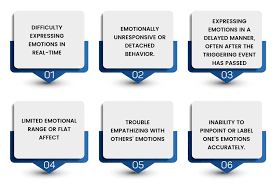
Why Does Emotion Arrive Too Late?
Affective Latency Integration Disorder is a psychological condition in which emotional responses remain appropriate and intelligible, yet consistently arrive after cognitive appraisal rather than alongside it. Individuals with this condition understand situations accurately, interpret meaning correctly, and can verbally identify what they should be feeling, but the emotional experience itself emerges with a noticeable internal delay. The result is not emotional absence, but emotional desynchronization. Those affected do not lack empathy, emotional intelligence, or moral sensitivity. They recognize joy, threat, loss, and significance in real time, often with high analytical clarity. However, the felt emotional response trails behind cognition, sometimes by seconds, sometimes by minutes, and occasionally by much longer subjective intervals. By the time the emotion fully manifests, the moment that elicited it may already feel past, producing a sense that emotional life is perpetually out of phase with lived experience. This latency alters the texture of everyday life. Conversations feel intellectually engaging but emotionally incomplete. Events are processed first as information, only later as experience. Individuals often report that they understand how something affects them before they actually feel affected. This sequence inversion creates a quiet sense of artificiality, as if emotions are added retrospectively rather than arising organically. Unlike emotional blunting, affective intensity is preserved. When emotions do arrive, they can be vivid and proportionate. The disturbance lies in timing, not depth. Happiness, sadness, fear, and tenderness are all accessible, yet they fail to co-occur with the moments that call for them. This temporal misalignment often leads individuals to appear calm or detached in situations where others react immediately, followed later by emotional reactions that feel belated and socially out of context. The condition becomes especially apparent in interpersonal settings. Emotional reciprocity depends heavily on timing, and delayed affect can disrupt this rhythm. Individuals may respond thoughtfully but without visible feeling, leading others to perceive them as distant or unaffected. Internally, however, the emotional response may surface later in solitude, creating confusion and frustration. The person is left managing emotions without the relational context that originally gave them meaning. Autobiographical memory remains intact, but emotional tagging of memories is inconsistent. Past events are recalled accurately, yet the emotional tone associated with them often feels reconstructed rather than remembered. Individuals may know that an event was painful or joyful without re-experiencing the corresponding feeling. This contributes to a narrative sense of life that feels emotionally thinned, even though present-moment affect is eventually accessible. From a neurocognitive standpoint, Affective Latency Integration Disorder is hypothesized to involve disrupted coordination between cognitive appraisal systems and affective signaling pathways. In typical emotional processing, interpretation and feeling emerge in close temporal coupling. In this condition, appraisal proceeds normally, but affective activation is delayed, suggesting weakened or slowed integration rather than diminished capacity. Emotion is not suppressed; it is postponed. Behaviorally, individuals often compensate by relying on cognitive empathy rather than affective immediacy. They learn to respond based on understanding rather than feeling, which can sustain functional relationships but at the cost of internal authenticity. Some develop habits of emotional rehearsal, revisiting events mentally to allow feelings to emerge later. While this can provide partial relief, it also reinforces the sense that emotional life occurs after the fact rather than in the flow of experience. The disorder is frequently misinterpreted as emotional avoidance, intellectualization, or mild alexithymia. However, unlike alexithymia, individuals can identify and describe emotions with precision once they arise. Unlike avoidance, there is no resistance to feeling. The primary disturbance is temporal, not defensive. Because outward functioning remains high and emotional vocabulary is intact, the condition often remains clinically invisible. There is no established pharmacological treatment, as mood and anxiety symptoms are not primary drivers. Therapeutic approaches that emphasize real-time sensory and bodily awareness appear more effective than reflective or interpretive methods. Practices that anchor attention in immediate physiological signals can help reduce the delay between appraisal and affect. Conversely, excessive cognitive processing tends to lengthen emotional latency. Affective Latency Integration Disorder challenges the assumption that emotion naturally accompanies understanding. It reveals that feeling is not guaranteed by recognition alone, but depends on precise temporal coordination within the mind. When that coordination falters, life is understood clearly but felt belatedly, leaving the individual emotionally competent yet perpetually one step behind their own experience.
When Does Memory Stop Feeling Personal?
Mnemonic Self-Discontinuity Disorder is a psychological condition in which memory functions remain structurally intact while the subjective sense of personal continuity across remembered events gradually weakens. Individuals affected by this condition can recall facts, narratives, and sequences from their past with accuracy and detail, yet experience these memories without the felt sense of having lived them. The past is known, but it no longer feels personally owned. Those experiencing this disturbance do not suffer from amnesia, confusion, or memory gaps. Recall is often vivid, temporally ordered, and linguistically precise. What is altered is not access to memory, but identification with it. Recollections arise as complete representations, yet feel curiously impersonal, as if they belong to a version of the self that is recognized but no longer inhabited. The individual understands that the memories are theirs, but does not feel psychologically continuous with the person who experienced them. This disruption produces a subtle fracture in self-experience. The present self feels intact and coherent, yet loosely tethered to its own history. Individuals often report that their past feels archived rather than lived, observed rather than remembered. Childhood, adolescence, and even recent experiences may appear emotionally flattened, stripped of immediacy. Unlike trauma-related detachment, there is no defensive avoidance or emotional overwhelm. The disconnection is neutral, quiet, and persistent. Emotionally, affect remains responsive in the present moment. Individuals feel joy, sadness, concern, and curiosity in real time. However, emotions linked to remembered events feel displaced. Recalling a joyful or painful experience does not reliably recreate the original emotional tone. Feelings arise as abstract acknowledgments rather than embodied states. This creates a temporal asymmetry in emotional life, where the present is felt vividly while the past is emotionally inert. Identity remains logically coherent but experientially thinned. Individuals can describe their personality traits, values, and life trajectory, yet these descriptions feel conceptual rather than lived. The self becomes a narrative construct rather than an ongoing presence. This often leads to an unsettling realization that personal identity depends not only on memory content, but on the felt continuity between remembering and being. The disturbance is especially evident during autobiographical reflection. When prompted to recall significant life events, individuals may produce detailed accounts while simultaneously feeling like an observer of their own history. The question is not “did this happen?” but “why does this not feel like it happened to me?” This experiential gap can provoke existential unease, though it is rarely accompanied by panic or despair. Neurocognitive models suggest that Mnemonic Self-Discontinuity Disorder may involve a disruption in integrative mechanisms linking episodic memory with self-referential processing. In typical cognition, remembered events are implicitly tagged with a sense of personal ownership, allowing the past self and present self to feel continuous. In this condition, the tagging mechanism appears weakened. Memories retain informational integrity but lose their self-binding quality. Behaviorally, individuals often compensate by repeatedly revisiting their past through photographs, journals, or conversations. These actions are not compulsive but grounding, serving as attempts to restore a sense of personal linkage. Some report that external confirmation of their history temporarily increases familiarity, while solitary reflection intensifies detachment. Excessive analysis of memory, however, tends to deepen the sense of distance rather than resolve it. The condition is frequently misinterpreted as depersonalization or emotional numbing. However, unlike depersonalization, the present self does not feel unreal or distant. Unlike depression, emotional responsiveness in the present remains intact. The disturbance is selective, affecting the relationship between memory and identity rather than global affect or perception. Because individuals can articulate their experiences clearly and function adaptively, the condition often goes unrecognized. There is no established pharmacological treatment. Interventions focused on mood regulation show limited benefit, as emotional distress is secondary. Therapeutic approaches emphasizing embodied recollection—such as sensory-based memory retrieval and action-oriented narrative reconstruction—appear more promising than purely reflective techniques. Methods that encourage lived engagement with memory, rather than analytical inspection, may partially restore continuity. Mnemonic Self-Discontinuity Disorder challenges the assumption that memory automatically sustains identity. It reveals that remembering is not sufficient for feeling continuous with oneself across time. When the experiential bridge between past and present weakens, the individual remains cognitively intact yet subtly unmoored, living fully in the present while quietly estranged from the life that led there.

Who Is the Thinker?
Autogenic Cognitive Agency Erosion Disorder is a psychological condition in which core cognitive functions remain intact while the subjective sense of initiating one’s own thoughts gradually weakens. Individuals affected by this condition demonstrate preserved reasoning, memory, language, and reality testing, yet experience a subtle but persistent disruption in how thinking is felt. Thoughts occur clearly and coherently, but without the immediate, non-verbal sense of authorship that normally accompanies mental activity. Those experiencing this disorder do not believe their thoughts are inserted, controlled, or influenced by external forces. There are no hallucinations, delusions, or distortions of reality. Instead, cognition is recognized as internal but felt as experientially distant. The individual does not question the validity of thought content, but rather the felt relationship to the act of thinking itself. This produces a form of cognitive estrangement in which the mind functions reliably while the sense of agency quietly recedes. The disturbance is most pronounced in spontaneous cognition. Deliberate, effortful thinking can still be initiated, particularly in structured tasks or problem-solving contexts. However, unprompted thoughts appear to arise without a felt starting point. Many individuals describe a subjective delay, as if awareness registers thoughts only after they have already occurred. This temporal lag is not observable in behavior or reaction time, yet it dominates internal experience and creates a persistent sense of mental after-the-factness. Emotionally, responses remain appropriate and proportional to context, but they are often experienced as secondary to cognition. Feelings follow thoughts rather than emerging alongside them. This does not result in emotional numbness or blunting; pleasure, concern, curiosity, and empathy are all present. However, they lack immediacy and embodied presence. Over time, this misalignment generates a distinctive form of fatigue rooted not in sadness or anxiety, but in the ongoing effort to remain experientially connected to one’s own mental life. Autobiographical memory and identity coherence are preserved. Individuals can accurately recount personal history, articulate values, and describe goals and preferences. Yet these aspects of the self are often experienced as conceptually known rather than lived. The self becomes something that is understood intellectually but not fully inhabited. This paradoxical state frequently leads to heightened self-observation, as individuals attempt to regain a sense of presence through reflection, only to find that excessive introspection intensifies detachment. From a neurocognitive perspective, the disorder is hypothesized to involve a disruption in predictive processing mechanisms responsible for signaling self-generated mental activity. In typical cognition, thoughts are preceded by an implicit anticipatory signal marking them as self-initiated before they reach conscious awareness. When this signal is weakened or delayed, thoughts still enter consciousness with full clarity and coherence, but without the experiential marker of authorship. The mind continues to think, yet its products feel unclaimed. Behavioral adaptations are common and often adaptive. Writing, speaking aloud, or externally structuring thought can temporarily restore a sense of authorship by anchoring cognition in observable action. These behaviors are stabilizing rather than compulsive. In contrast, practices that emphasize analytical self-monitoring or prolonged introspection tend to exacerbate symptoms, reinforcing the distance between the observer and the cognitive process. Silence and mental stillness often intensify the sense of detachment, while embodied, goal-directed activity can reduce it. The condition is frequently misclassified as depersonalization disorder, obsessive meta-cognition, or subclinical dissociation. However, it differs fundamentally from these diagnoses. The world is not experienced as unreal, consciousness remains unified, and thoughts are neither intrusive nor distressing in content. The disturbance is selective, targeting agency rather than perception, memory, or affect. Because insight remains intact and verbal articulation is often advanced, the condition is easily overlooked in clinical settings. Pharmacological interventions aimed at mood or anxiety symptoms show inconsistent effects, as emotional distress is secondary rather than primary. Therapeutic approaches that emphasize sensory engagement, motor intentionality, and non-analytical awareness appear more promising than insight-oriented methods. Activities that require immediate action and embodied intention often restore a fleeting sense of cognitive presence, supporting the view that agency disruption lies at the core of the disorder. Autogenic Cognitive Agency Erosion Disorder challenges the assumption that intact cognition guarantees the experience of being the thinker. It reveals agency as a fragile, pre-reflective dimension of consciousness that can erode independently of intelligence, logic, or self-awareness. When this dimension weakens, the mind continues to function with precision and clarity, yet the individual is left with a quiet and persistent uncertainty about where thinking truly begins.

The Mind Thinks Without Feeling Like Its Own
Autogenous Thought Detachment Disorder (ATDD) refers to a psychological condition in which thinking remains structurally intact while the subjective sense of authorship over thought is diminished or absent. Individuals affected by ATDD recognize their thoughts as internally occurring and logically coherent, yet experience them without the implicit feeling of “I am the one producing this.” Reality testing is fully preserved, and no external source is attributed to the thoughts. The core disturbance lies not in what is thought, but in how thought is experienced. Cognition unfolds fluently, often with high verbal and analytical sophistication, but lacks pre-reflective ownership. Thoughts feel automatic without being intrusive, passive without being imposed. This creates a persistent internal distance between the thinker and the act of thinking itself. Unlike depersonalization, the self is not experienced as unreal or absent. Unlike dissociation, memory, identity, and continuity of consciousness remain stable. Emotional life is present but displaced: affect follows cognition rather than arising simultaneously with it. As a result, mental life feels delayed, muted, and effortful, even in the absence of anxiety or depression. Individuals often report a subtle temporal lag in awareness, as if thoughts are registered only after they have already occurred. This delay is not observable externally, yet it dominates subjective experience. Over time, it produces cognitive fatigue rooted not in overthinking, but in the constant effort to reattach to one’s own mental activity. ATDD does not show consistent abnormalities in standard neurological assessment. Theoretical accounts point toward a disruption in forward-modeling mechanisms responsible for signaling self-generated cognition before conscious awareness. When this signal weakens, thoughts retain clarity but lose experiential immediacy. Adaptive behaviors such as writing, speaking aloud, or structured reasoning often restore a temporary sense of authorship by externalizing cognition. In contrast, excessive introspection and meta-cognitive monitoring tend to intensify detachment, suggesting that hyper-reflexivity plays a maintaining role. Because insight remains intact and articulation is often advanced, ATDD frequently goes unrecognized. It occupies a subtle clinical space in which intelligence, logic, and reality remain untouched, while the most implicit layer of mental life—the felt sense of being the thinker—quietly erodes.

Thought Ownership Quietly Breaks Down
Autogenous Thought Detachment Disorder (ATDD) describes a psychological condition in which individuals experience their thoughts as internally generated yet experientially unauthored. The mind continues to function with logical coherence, linguistic precision, and intact reality testing, but the subjective sense of being the originator of one’s own thinking is markedly diminished. Those affected do not believe that thoughts are inserted, controlled, or broadcast by external forces. Instead, cognition unfolds as a self-contained process observed from within, producing a persistent feeling that thinking happens through the individual rather than by them. This distinction separates ATDD from psychotic phenomena while placing it outside conventional dissociative frameworks. The disturbance is most evident in spontaneous thought. Deliberate reasoning, problem-solving, and structured tasks remain accessible, yet unprompted ideas feel delayed, residual, or conceptually pre-formed. Patients often describe their mental activity as echo-like: coherent, recognizable, but lacking immediacy. This results in a quiet erosion of cognitive agency rather than overt distress or confusion. Emotionally, responses remain appropriate but temporally misaligned. Feelings arise after thoughts instead of alongside them, generating a muted sense of engagement. Over time, this produces existential fatigue, not rooted in depression or anxiety, but in the sustained effort required to remain mentally present in one’s own cognition. ATDD shows no clear neurological pathology under standard imaging or electrophysiological assessment. Theoretical models suggest a disruption in autogenous monitoring systems responsible for tagging mental events as self-initiated. When this tagging weakens, thoughts retain content but lose experiential authorship. Individuals frequently develop adaptive behaviors such as externalizing thought through writing or verbalization. These acts restore a temporary sense of authorship by anchoring cognition in observable output. In contrast, excessive introspection and meta-cognitive analysis tend to intensify detachment, reinforcing the internal distance from thought generation. The condition is often overlooked due to preserved insight and high verbal articulation. Many individuals can describe their experience with exceptional clarity, which paradoxically masks the severity of the disturbance. Current diagnostic systems lack terminology for a disorder in which cognition remains intact while the subjective ownership of thinking quietly dissolves. Autogenous Thought Detachment Disorder challenges the assumption that thought and thinker are experientially inseparable. It exposes a fragile layer of mental life in which authorship is not guaranteed by cognition itself, but depends on subtle pre-reflective mechanisms that, when disrupted, leave the mind functioning without the felt presence of its own author.