

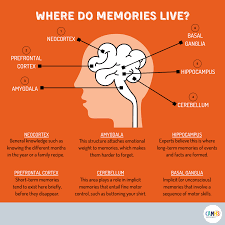
Memory is often treated as a stable archive within the nervous system, a place where experiences are stored and later retrieved when needed. This metaphor suggests a kind of neurological library in which events, knowledge, and emotions are deposited in organized form. Yet modern neuroscience challenges this simplified view. The brain does not contain a single location where memories reside as intact objects. Instead, memory emerges from complex patterns of neural activity distributed across multiple systems. The question therefore arises in a deeper sense: where is memory actually located? The difficulty of answering this question begins with the nature of neural representation. When an event occurs, sensory systems transform external stimuli into electrical signals. Visual structures process patterns of light, auditory regions decode sound frequencies, and somatosensory networks register touch and bodily position. Each modality contributes fragments of information about the same event. These fragments do not converge into a single unified storage site. Instead, they remain partially distributed across the cortical regions responsible for their original processing. The color of an object, the sound associated with it, the emotional tone of the situation, and the spatial environment in which it occurred are represented by overlapping neural circuits. Memory therefore depends on the capacity of the brain to reactivate these distributed patterns in coordinated ways. Retrieval does not involve opening a mental container where a complete record has been preserved. Rather, it requires reconstructing an approximation of the original neural configuration. This reconstruction process explains why memory is often imperfect. Each act of remembering partially rebuilds the past using fragments stored in different networks. During this process, new interpretations and present emotional states may influence how those fragments are combined. Neuroscientific research highlights the role of the hippocampal formation in coordinating this reconstruction. The hippocampus does not store the full sensory content of experiences permanently. Instead, it functions as a binding structure that temporarily links together distributed cortical representations. When an experience occurs, the hippocampus creates associations between different neural assemblies that were active at the same time. These associations form an index that allows the brain to later reactivate the corresponding cortical networks. Without such indexing, sensory fragments would remain isolated and difficult to retrieve as coherent memories. Damage to the hippocampus dramatically illustrates this function. Individuals with severe hippocampal injury often retain previously established memories while losing the ability to form new episodic memories. They can perceive events in the present moment, but those experiences fail to become integrated into long-term autobiographical memory. This condition reveals that memory formation involves a transitional phase in which hippocampal coordination gradually strengthens connections among cortical regions. Over time, these cortical networks become capable of interacting directly, reducing reliance on hippocampal indexing. The gradual redistribution of memory traces is often described as systems consolidation. During this process, patterns originally coordinated by the hippocampus become embedded more deeply within cortical networks. Sleep appears to play a crucial role in facilitating this transformation. During certain phases of sleep, neural oscillations within the hippocampus and neocortex synchronize in precise temporal patterns. These oscillations may enable the repeated reactivation of recent experiences, allowing cortical circuits to refine the connections necessary for long-term storage. Electrophysiological recordings reveal brief bursts of activity known as sharp-wave ripples in the hippocampus during sleep. These events coincide with coordinated activity in cortical areas, suggesting that the brain is replaying fragments of recent experiences. Through repeated replay, neural pathways representing elements of an experience become strengthened according to principles of synaptic plasticity. Connections between neurons that activate together increase their efficiency, making future reactivation more likely. However, memory cannot be reduced simply to strengthened synaptic connections. The structure of neural networks also influences how experiences are encoded. Each neuron participates in numerous circuits, and patterns of activity extend across populations rather than residing in single cells. This distributed coding means that a particular memory is represented by the collective activity of many neurons. No single neuron contains the memory itself. Instead, the pattern formed by their interactions constitutes the neural representation. The distributed nature of memory contributes to its resilience. Even if some neurons are damaged or lost, the overall pattern may still be reconstructed by the remaining network. This redundancy allows memories to survive partial disruptions in neural tissue. At the same time, distributed representation introduces ambiguity. Because neurons participate in multiple patterns, the activation of one memory may partially activate related memories. This overlap explains why recalling one event often triggers associations with other experiences. Emotional systems strongly influence how these patterns are formed. Structures within the limbic system evaluate the significance of experiences according to emotional relevance. Events associated with strong emotional responses often produce more robust memory traces. The amygdala plays a central role in modulating this process. When emotionally significant stimuli appear, the amygdala influences hippocampal and cortical activity through neuromodulatory signals. These signals alter synaptic plasticity, strengthening the encoding of emotionally relevant information. This mechanism explains why emotionally intense experiences are often remembered with unusual clarity. The neural systems responsible for evaluating emotional significance amplify the processes that stabilize memory traces. Yet emotional intensity does not guarantee accuracy. While strong emotion enhances the vividness of recollection, it can also bias the reconstruction process. Individuals may feel certain about details that were never actually present during the original event. Memory therefore involves a dynamic interaction between neural representation and interpretive reconstruction. Each retrieval event modifies the memory itself, subtly altering the neural pattern that will later be reactivated again. This phenomenon is known as reconsolidation. When a memory is recalled, the neural networks representing it temporarily enter a labile state. During this period they can be modified before becoming stabilized again. Reconsolidation suggests that memories remain biologically flexible even after long periods of stability. New information encountered during retrieval can become integrated into the memory trace, changing its structure. The brain’s predictive architecture further complicates the question of memory location. Neural systems continuously generate predictions about sensory input based on prior experience. These predictions shape perception

Why Emptiness?
At certain moments an unusual psychological state appears in which experience seems stripped of meaning, motivation weakens, and familiar activities lose their emotional resonance. The surrounding world remains physically unchanged, yet the individual’s internal relationship to that world shifts dramatically. This condition is often described as a feeling of emptiness. It is not identical to sadness, nor is it equivalent to boredom. Rather, it represents a deeper alteration in the structure of subjective experience. The central question arises: why does emptiness occur within the human psyche? Emptiness is difficult to define precisely because it involves the absence of psychological qualities that are normally taken for granted. Individuals usually experience a continuous flow of motivations, preferences, emotional reactions, and interpretations. These processes provide a sense of direction and significance. When they diminish or lose intensity, the mind encounters a peculiar vacuum in which thoughts continue to occur but feel detached from personal importance. One reason emptiness arises lies in the way meaning is constructed within the mind. Meaning does not exist purely in external objects or events. Instead, it emerges from the relationship between experience and interpretation. An activity becomes meaningful when it connects with values, goals, or emotional investments that the individual considers important. Without such connections, events remain perceptually present yet psychologically hollow. This relationship explains why the same environment can evoke entirely different experiences in different people. A place filled with memories for one person may feel empty to another who lacks those associations. Meaning therefore depends not only on the external world but also on the internal structures that assign significance to that world. When these structures weaken or become uncertain, the sense of meaning may fade. Psychological development often involves building narratives about who one is, what one values, and where one’s life is heading. These narratives provide coherence across time. They allow individuals to interpret present experiences as part of a broader personal story. However, narratives are not permanently stable. Life transitions, unexpected events, or prolonged reflection may disrupt previously accepted assumptions. When established narratives no longer feel convincing, the mind may enter a transitional period in which older meanings dissolve before new ones fully emerge. Emptiness can appear during this interval. Another factor contributing to emptiness involves emotional regulation. Emotions signal the significance of experiences. Joy indicates fulfillment, fear signals danger, anger marks perceived injustice, and affection reinforces bonds between individuals. When emotional responses become blunted or muted, experiences may lose their motivational force. Emotional blunting sometimes occurs as a protective response to overwhelming stress or repeated disappointment. By reducing emotional intensity, the mind limits the impact of painful experiences. Yet this protective mechanism may also diminish positive emotions, leaving the individual with a restricted emotional range. In such circumstances the world continues to present opportunities for engagement, but the emotional signals that normally guide behavior are weakened. Without these signals, activities may feel strangely neutral. Actions occur, but the internal sense of involvement remains faint. Identity formation also plays an important role in the emergence of emptiness. Personal identity provides a framework through which individuals interpret their actions and relationships. It answers questions about values, responsibilities, and aspirations. When identity becomes uncertain, the orientation that guides everyday choices may fade. Periods of identity instability frequently occur during major life transitions. Adolescence, career changes, relocation, or the end of significant relationships can all prompt reevaluation of previously accepted roles. During these transitions individuals may temporarily lose the sense of continuity that once structured their experiences. This loss of continuity can produce a perception that one’s actions lack deeper purpose. The individual continues to participate in daily routines yet feels detached from them. Activities appear mechanical rather than meaningful. Cognitive processes also contribute to the experience of emptiness. The human mind constantly evaluates experiences according to expectations. When expectations remain repeatedly unmet, the mind may gradually reduce its investment in anticipating positive outcomes. This shift resembles a recalibration of motivational systems. Rather than repeatedly generating hope that might lead to disappointment, the mind lowers its expectations. Although this adjustment can protect against emotional distress, it may also reduce enthusiasm and curiosity. The resulting state can feel like psychological flatness. The future no longer appears threatening, but it also fails to appear exciting. Without strong expectations, motivation loses intensity, and experiences begin to feel interchangeable. Social relationships influence emptiness as well. Much of human meaning arises through interaction with others. Conversations, shared goals, and mutual recognition create a sense that one’s actions matter within a broader network of relationships. When social connections weaken or become superficial, this network of recognition diminishes. The individual may continue interacting with others yet feel unseen or misunderstood. Such experiences can erode the feeling that one’s presence has significance. Importantly, emptiness does not always result from physical isolation. A person may be surrounded by people while still experiencing psychological distance. If interactions lack authenticity or emotional resonance, they may fail to generate the sense of belonging that supports meaning. Another dimension of emptiness involves the mind’s relationship with time. Meaningful experiences often connect the present moment with both past memories and future expectations. When these temporal connections weaken, the present may feel suspended without context. For example, if past achievements no longer seem relevant and future possibilities appear uncertain, the present moment may feel detached from a larger narrative. Activities occur sequentially, yet they do not appear to contribute to a meaningful trajectory. Philosophical reflection sometimes intensifies this perception. When individuals question the ultimate significance of goals, achievements, or social roles, they may discover that many assumptions about meaning rely on cultural conventions rather than inherent necessity. This realization can produce a form of existential emptiness. Previously accepted structures of value begin to appear contingent or arbitrary. The individual may struggle to determine which goals deserve commitment. However, existential reflection does not inevitably lead to despair. For some individuals it becomes an opportunity to construct meaning deliberately rather than inheriting it unquestioningly. The process may involve exploring new values, creative

Whence Arises the Feeling of Inner Conflict?
At certain moments a peculiar tension emerges within the mind. Two intentions appear simultaneously, each carrying its own reasoning and emotional force. One impulse urges action while another resists it. A decision that seems rational suddenly feels emotionally troubling, while a desire that feels deeply compelling appears logically questionable. This inner tension produces a sensation that something within the psyche is divided against itself. The question that follows is both psychological and philosophical: from where does the feeling of inner conflict actually arise? Inner conflict is one of the most recognizable features of conscious life. Rarely does experience unfold with perfect harmony between desire, belief, and action. Instead, psychological life often involves negotiation between competing motives. These motives may involve immediate impulses, long-term goals, emotional attachments, social expectations, and moral principles. Each of these forces represents a different layer of mental organization. When these layers align, behavior feels coherent. Decisions appear clear, and actions seem consistent with personal identity. Yet alignment is rarely perfect. More often, different systems within the mind evaluate situations according to different criteria. The resulting disagreement produces the experience of internal tension. One source of such tension lies in the coexistence of rapid emotional evaluation and slower reflective reasoning. Emotional systems respond quickly to perceived opportunities or threats, generating immediate impulses toward approach or avoidance. Reflective reasoning, by contrast, analyzes consequences, compares alternatives, and considers long-term outcomes. Because these systems operate at different speeds and rely on different priorities, they may reach conflicting conclusions about the same situation. A spontaneous desire may feel compelling even while reflective thought warns against its consequences. The individual experiences both signals simultaneously, creating the sensation that the mind itself is divided. Another source of conflict arises from the structure of memory. Past experiences leave emotional traces that shape present reactions. Situations that resemble earlier events may trigger responses rooted in previous circumstances rather than in current realities. When these emotional echoes interact with present goals, tension may emerge. A person might intellectually recognize that a situation is safe while still feeling a vague anxiety inherited from earlier experiences. The mind contains both interpretations at once, producing uncertainty about how to respond. Identity also plays a powerful role in generating inner conflict. Personal identity is constructed from values, roles, and narratives that define what kind of person one believes oneself to be. These elements provide direction and coherence, yet they may also impose expectations that are difficult to satisfy simultaneously. For example, the desire to be compassionate may conflict with the desire to maintain personal boundaries. The wish to pursue independence may collide with the wish to preserve close relationships. Each value carries legitimacy, yet their demands may point toward incompatible actions. Such conflicts reveal that identity is not a single unified principle but a network of commitments that must be balanced continuously. When circumstances force these commitments into direct opposition, the resulting tension becomes unavoidable. Cultural influences add further complexity to this dynamic. Social environments transmit expectations about appropriate behavior, success, responsibility, and belonging. These expectations often become internalized, forming part of the standards through which individuals evaluate their own actions. However, cultural expectations may conflict with personal inclinations or with other social norms. A society might simultaneously encourage individual ambition and collective loyalty, independence and conformity. Navigating these competing ideals can create psychological strain as individuals attempt to satisfy multiple demands at once. Language shapes how these tensions are experienced and interpreted. Words provide categories through which thoughts and emotions are organized. Concepts such as duty, freedom, loyalty, and authenticity allow individuals to frame internal experiences in meaningful ways. Yet language also simplifies complex psychological processes. A single word may represent a wide range of motivations and feelings. When individuals attempt to describe their internal conflicts using simplified categories, the underlying complexity may remain partially hidden. Another important factor in inner conflict is the brain’s predictive nature. Cognitive systems constantly generate expectations about future outcomes. These predictions guide behavior by estimating potential rewards and risks. When predictions from different systems diverge, tension arises. One system may anticipate positive outcomes from a particular action, while another predicts negative consequences. The mind must weigh these competing forecasts, often without definitive evidence about which prediction is correct. Uncertainty amplifies this process. When the consequences of a decision are unclear, internal systems continue generating alternative possibilities. Each possibility carries emotional weight, sustaining the feeling of conflict even before any action is taken. Attention influences how strongly these tensions are experienced. When attention becomes narrowly focused on the conflict itself, the psychological discomfort may intensify. Repeatedly analyzing the same dilemma can magnify the perceived stakes of the decision. In contrast, shifting attention toward concrete action sometimes reduces the sense of division. Once a decision is implemented, the mind often reorganizes its interpretations to support the chosen path. This process allows psychological energy to move forward rather than remaining trapped in analysis. Nevertheless, certain conflicts resist quick resolution because they involve deeply rooted values. Decisions concerning relationships, moral responsibilities, or life direction often touch multiple layers of identity simultaneously. In such cases, the mind cannot easily prioritize one motivation over another. These enduring conflicts sometimes lead to what psychologists describe as cognitive dissonance. When beliefs, actions, and values appear inconsistent, individuals experience a form of psychological discomfort that motivates attempts to restore coherence. One common strategy for reducing dissonance involves reinterpretation. The mind may adjust the perceived importance of certain values or reinterpret events in ways that justify previous decisions. Through this process, internal tension gradually diminishes. However, not all conflicts can be resolved through reinterpretation alone. Some situations genuinely involve incompatible values that cannot be perfectly reconciled. In these cases, psychological maturity may involve accepting the presence of unresolved tension rather than eliminating it entirely. Philosophical traditions have long recognized this aspect of human experience. Many ethical frameworks acknowledge that moral life often involves choosing between competing goods rather than between clear good and clear evil. The difficulty of such choices reflects the
Why Does Meaning Sometimes Collapse?
Human consciousness relies deeply on meaning. Every day, individuals interpret events, categorize experiences, and connect actions with purposes. Even the simplest activities are framed within networks of significance: a conversation represents communication, work represents responsibility, and relationships represent belonging. Through these frameworks, life becomes understandable and coherent. Yet there are moments when this structure begins to weaken. Situations arise in which events seem strangely hollow, explanations feel insufficient, and familiar interpretations lose their persuasive power. When this happens, a difficult psychological question emerges: why does meaning sometimes collapse? To understand this phenomenon, it is necessary to examine the role meaning plays in human cognition. Meaning is not merely an abstract philosophical concept; it is a functional system that organizes perception and action. The human brain constantly searches for patterns that connect experiences together. These patterns help individuals predict outcomes, coordinate behavior, and navigate complex environments. Without such patterns, the world would appear chaotic and overwhelming. Every stimulus would seem isolated, and every decision would require entirely new reasoning. Meaning therefore acts as a cognitive structure that simplifies complexity by linking events through relationships of cause, purpose, and significance. For much of daily life, these structures operate smoothly and almost invisibly. People rarely pause to question why certain actions feel meaningful or why particular goals appear valuable. The sense of meaning simply accompanies experience as an implicit background assumption. However, meaning is not a permanent feature of reality itself. Instead, it is produced through interpretation. Individuals assign significance to events based on personal history, cultural context, emotional states, and social expectations. Because meaning arises from interpretation, it can also change or dissolve when those interpretations shift. One of the most common triggers for a collapse of meaning is contradiction. When new experiences conflict strongly with previously held assumptions, the frameworks that once organized understanding may become unstable. For example, a belief about fairness, trust, or personal ability may suddenly appear inadequate when confronted with unexpected outcomes. When contradictions accumulate, the mind struggles to integrate them into existing structures. If the contradictions cannot be resolved through reinterpretation, the entire framework may weaken. Events that once seemed clearly meaningful begin to appear ambiguous or arbitrary. Emotion plays a powerful role in this process. Emotional investment often reinforces particular interpretations of reality. When individuals feel strongly attached to certain goals, relationships, or identities, these elements become central sources of meaning. If those sources are disrupted—through loss, failure, or disappointment—the emotional foundation supporting meaning may also collapse. Activities that once felt purposeful may suddenly appear empty because the emotional context that sustained them has changed. Another factor contributing to the collapse of meaning is overfamiliarity. Human cognition is highly sensitive to novelty. New experiences capture attention and generate curiosity, encouraging individuals to explore their significance. Over time, however, repeated experiences become predictable. When events become too predictable, the sense of discovery that originally made them meaningful may diminish. Routine activities can gradually feel mechanical rather than purposeful. Although the external structure of life remains intact, the internal experience of significance weakens. This phenomenon often appears in environments where individuals perform the same tasks repeatedly without opportunities for variation or growth. The absence of novelty does not necessarily eliminate meaning completely, but it may reduce the intensity with which meaning is experienced. Cultural influences also shape the stability of meaning. Societies provide shared narratives that help individuals interpret their experiences. These narratives may involve ideas about success, responsibility, morality, or progress. By participating in these narratives, individuals connect their personal actions to larger social purposes. However, cultural narratives are not static. They evolve across generations and may lose credibility when historical conditions change. When widely accepted explanations for social or personal events begin to weaken, individuals may find it more difficult to locate their experiences within a stable framework of meaning. The collapse of shared narratives can produce a sense of uncertainty that extends beyond individual psychology. People may question whether the goals they pursue truly reflect meaningful values or whether those goals were inherited from assumptions that no longer apply. Personal identity is closely linked to these frameworks of meaning. Individuals often define themselves through roles, achievements, and relationships that appear significant within their cultural context. A profession, a creative pursuit, or a commitment to family may serve as central components of identity. When these components are disrupted, the sense of self may also become unstable. If a person loses a role that once defined their purpose, they may struggle to reconstruct a coherent narrative about who they are and what their actions represent. The collapse of meaning does not always arise from external events. Sometimes it emerges through reflection. As individuals examine their beliefs more critically, they may begin to notice inconsistencies or assumptions that previously went unquestioned. Philosophical inquiry often encourages this type of reflection. By asking fundamental questions about purpose, morality, and existence, philosophical thinking can reveal how many everyday assumptions depend on unexamined premises. For some individuals, this realization leads to intellectual curiosity and deeper exploration. For others, it may produce discomfort or disorientation. When familiar explanations are removed, the absence of clear alternatives can create a sense of emptiness. Psychological research suggests that humans have a strong desire for cognitive coherence. People generally prefer interpretations of reality that feel consistent and stable. When coherence breaks down, the resulting ambiguity can be emotionally difficult to tolerate. As a result, individuals often attempt to restore meaning by constructing new narratives or revising old ones. These efforts may involve reinterpreting past experiences, redefining personal goals, or adopting different philosophical perspectives. However, the reconstruction of meaning rarely occurs immediately. There is often a transitional period during which previous frameworks have dissolved but new ones have not yet formed. During this interval, experiences may appear strangely neutral or detached from significance. This transitional state can feel unsettling because it removes the sense of direction that meaning typically provides. Actions that once seemed purposeful may appear arbitrary, and future goals may feel uncertain. Despite these
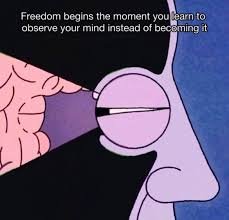
If Thought Never Stops, Who Is the Observer?
Human consciousness is often described as a stream. Thoughts move continuously, one giving rise to another, sometimes slowly and deliberately, sometimes rapidly and chaotically. Even in moments when a person tries to remain still, the mind continues to generate impressions, memories, interpretations, and internal dialogues. Because this stream rarely pauses, a deeper question begins to emerge: if thought never stops, who is the observer of these thoughts? At first, the answer appears obvious. Most people instinctively assume that the observer is the self—the stable identity that exists behind thoughts and experiences. According to this intuition, thoughts are events occurring within the mind, while the self is the entity that notices them. Yet when this assumption is examined carefully, its certainty begins to weaken. The observer itself becomes difficult to locate. When individuals attempt to observe their thoughts directly, they often notice something unusual. A thought appears, remains for a brief moment, and then disappears. Another thought replaces it, often unrelated to the previous one. The sequence continues endlessly, sometimes coherent and purposeful, sometimes fragmented and unpredictable. Yet the observer who notices these thoughts does not appear in the same way. Thoughts can be identified as specific mental events, but the observer seems less tangible. This raises a puzzling possibility. Perhaps the observer is not a separate entity at all. Perhaps what people call the observer is simply another process within the stream of consciousness—a function of attention rather than an independent self. To explore this possibility, it is useful to consider how thoughts actually arise. Thoughts often appear spontaneously, without deliberate effort. A memory surfaces unexpectedly, an image flashes into awareness, or an internal sentence forms without conscious planning. Although individuals may later interpret these thoughts as intentional, the initial emergence often occurs automatically. If thoughts appear spontaneously, then the sense of authorship becomes uncertain. People may feel that they produce their thoughts, yet in many cases they merely become aware of them after they have already begun. The mind generates mental activity continuously, while awareness observes certain parts of that activity. Attention plays a crucial role in determining which thoughts become noticeable. The mind produces far more mental content than consciousness can process at once. Attention acts as a filter, selecting particular thoughts and bringing them into the foreground of awareness. Because of this filtering process, the observer may be better understood as the direction of attention rather than a fixed identity. When attention shifts, the apparent observer shifts as well. A person focusing on bodily sensations may experience themselves primarily as a physical presence, while someone immersed in abstract reasoning may experience themselves as a thinking mind. This fluidity suggests that the observer is not a stable point but a dynamic perspective. It moves with attention, highlighting certain aspects of experience while leaving others in the background. The sense of a continuous observer may therefore arise from the continuity of attention rather than from the existence of a separate self. Memory reinforces this impression of continuity. When individuals recall their past experiences, they usually remember themselves as the central subject of those events. The narrative structure of memory places the same “I” at the center of multiple moments across time. Yet memory is reconstructive. Each recollection involves interpretation and reassembly rather than exact reproduction. The observer that appears in memory may therefore be a narrative construction that connects separate experiences into a coherent story. Emotion further shapes the experience of observation. Emotional states influence which thoughts attract attention and how they are interpreted. A person experiencing anxiety may become highly attentive to threatening possibilities, while someone feeling calm may notice subtler details of their environment. These emotional influences demonstrate that the observer is not entirely neutral. The perspective from which thoughts are observed is colored by mood, expectation, and past experience. This means that the observer is not simply watching thoughts from outside the stream but is itself embedded within the stream. Social experience also contributes to the development of the observing perspective. From early childhood, individuals learn to reflect on their behavior through the imagined perspectives of others. A child gradually develops the ability to evaluate their own actions as if viewing them from the outside. This ability becomes a central component of self-awareness. Adults frequently observe their own thoughts and behaviors through internal dialogues that resemble conversations with others. These internalized perspectives allow individuals to anticipate social consequences and adjust their behavior accordingly. However, this social dimension of observation introduces additional complexity. The voice that appears to observe thoughts may partly reflect internalized expectations from family, culture, or society. The observer may therefore include elements that originated outside the individual’s immediate experience. The relationship between thought and observation becomes particularly interesting during moments of introspection. When individuals deliberately examine their own thinking, they often notice a division between the thought being examined and the awareness examining it. This division can create the impression that two separate entities exist: the thinker and the observer. Yet closer examination suggests that both roles are performed by the same underlying system. The mind temporarily adopts a reflective stance in which certain thoughts become objects of attention. Meditative practices often highlight this phenomenon. When individuals focus on observing their thoughts without reacting to them, they may begin to experience thoughts as passing events rather than as expressions of identity. A thought arises, is noticed, and then fades away. During such moments, the sense of identification with thought may weaken. Instead of feeling that “I am thinking this,” the experience becomes “this thought is appearing.” This shift in perspective can create a sense of distance between awareness and mental activity. However, even in these moments, the observer remains difficult to define. Awareness notices thoughts, yet when individuals attempt to locate awareness itself, they encounter only more experiences: sensations, perceptions, and additional thoughts. This difficulty suggests that awareness may not be an object that can be observed in the same way as thoughts. Instead, it may be the condition that allows observation

Can Awareness Ever Fully Know Itself?
Human consciousness possesses a remarkable capacity for reflection. Unlike many other biological processes, awareness can turn inward and observe its own activity. Thoughts can be examined, emotions can be questioned, and beliefs can be reconsidered. Because of this ability, people often assume that the mind is capable of eventually understanding itself completely. Yet the deeper this assumption is explored, the more uncertain it becomes. If awareness is both the observer and the observed, can it ever fully know itself? The experience of self-reflection gives the impression that such knowledge should be possible. Individuals regularly examine their motives, analyze their emotions, and attempt to understand why they behave in particular ways. Entire disciplines of psychology, philosophy, and neuroscience are devoted to investigating the mechanisms of thought and experience. Despite this extensive effort, however, the structure of consciousness continues to resist final explanation. Part of this difficulty arises from the nature of awareness itself. When people attempt to observe their own thoughts, they often discover that the act of observation changes what is being observed. A thought that is examined may dissolve or transform as attention shifts toward it. The process resembles attempting to hold water in one’s hands: the more tightly one grasps it, the more it slips away. This instability suggests that consciousness may not be a static object that can be inspected in isolation. Instead, it appears to function as a dynamic process that unfolds continuously over time. Each moment of awareness emerges from the interaction of perception, memory, emotion, and expectation. By the time a person reflects on a thought or feeling, that mental event has already passed. The temporal nature of experience complicates self-knowledge. Awareness operates in the present moment, yet understanding often requires reflection on events that have already occurred. This means that the mind is always analyzing a slightly outdated version of itself. The observer is never perfectly synchronized with the process being observed. Memory plays a crucial role in bridging this gap, but memory itself is imperfect. When individuals recall a thought or emotion, they reconstruct it using fragments of the original experience combined with current interpretations. As a result, the remembered version may differ subtly from what was initially experienced. This reconstruction introduces uncertainty into the process of self-understanding. People may feel confident that they remember their motivations or reactions accurately, yet the narrative they construct may reflect present beliefs rather than past realities. The mind therefore attempts to know itself through tools that are inherently flexible and interpretive. Another factor that complicates self-knowledge is the layered structure of cognition. Many mental processes operate below the level of conscious awareness. Perception, emotional evaluation, and decision-making often involve rapid neural activity that occurs before conscious thought emerges. Because these processes are hidden from direct observation, individuals experience only their outcomes. A person may suddenly feel attraction, fear, or dislike without immediately understanding the underlying causes. Conscious reflection may attempt to explain these reactions, but the explanations often rely on assumptions rather than direct insight. The existence of unconscious processing raises an important question: if a significant portion of mental activity occurs outside awareness, can consciousness ever fully understand the system that produces it? The observer may have access to certain signals but not to the deeper mechanisms that generate them. Language further shapes the limits of self-understanding. Human thought is deeply intertwined with linguistic structures. Words allow individuals to categorize experiences, describe emotions, and construct narratives about their lives. However, language also simplifies complex phenomena by fitting them into predefined categories. For example, an individual might describe an emotional state as anxiety or sadness, yet these labels may represent intricate patterns of physiological and psychological activity. The label provides clarity and communicative efficiency, but it does not capture the full complexity of the underlying experience. As a result, language can create the illusion of understanding. When people assign a name to a mental state, they may feel that they have explained it. In reality, the label often serves as a starting point for inquiry rather than a complete explanation. Social influences also shape the process of self-knowledge. Human identity develops through interaction with others. From early childhood onward, individuals receive feedback about their behavior, abilities, and personality traits. These external perspectives gradually become part of the internal narrative of the self. Because of this process, self-understanding often incorporates assumptions about how others perceive us. People may interpret their own actions through the imagined judgments of family members, peers, or cultural norms. This internalization can provide valuable guidance, but it may also obscure personal motivations that do not align with social expectations. The interplay between internal experience and social interpretation creates additional complexity. An individual may struggle to distinguish between beliefs that arise from personal reflection and those that originate from external influence. The boundary between authentic self-understanding and socially shaped identity can become difficult to identify. Emotion introduces another layer of complexity. Emotional states influence how individuals interpret their experiences and their memories. When people feel confident and optimistic, they may perceive their actions as intentional and meaningful. When they feel uncertain or distressed, the same actions may appear misguided or inconsistent. These emotional shifts illustrate that self-understanding is not purely intellectual. It is deeply influenced by mood, physiological states, and environmental conditions. As these factors change, the interpretation of one’s own behavior may also change. Despite these limitations, humans continue to pursue greater insight into their own minds. Reflection, introspection, and psychological inquiry are deeply rooted aspects of human culture. This persistent curiosity suggests that self-understanding serves important psychological functions, even if complete knowledge remains unattainable. One function of reflection is the organization of experience. By examining thoughts and emotions, individuals can identify patterns that might otherwise remain unnoticed. Recognizing these patterns allows people to adjust their behavior and make more deliberate choices. For instance, someone might notice that certain situations consistently trigger feelings of frustration or insecurity. By identifying this pattern, the individual can begin to explore its origins and consider

Where Does the Sense of Self Actually Begin?
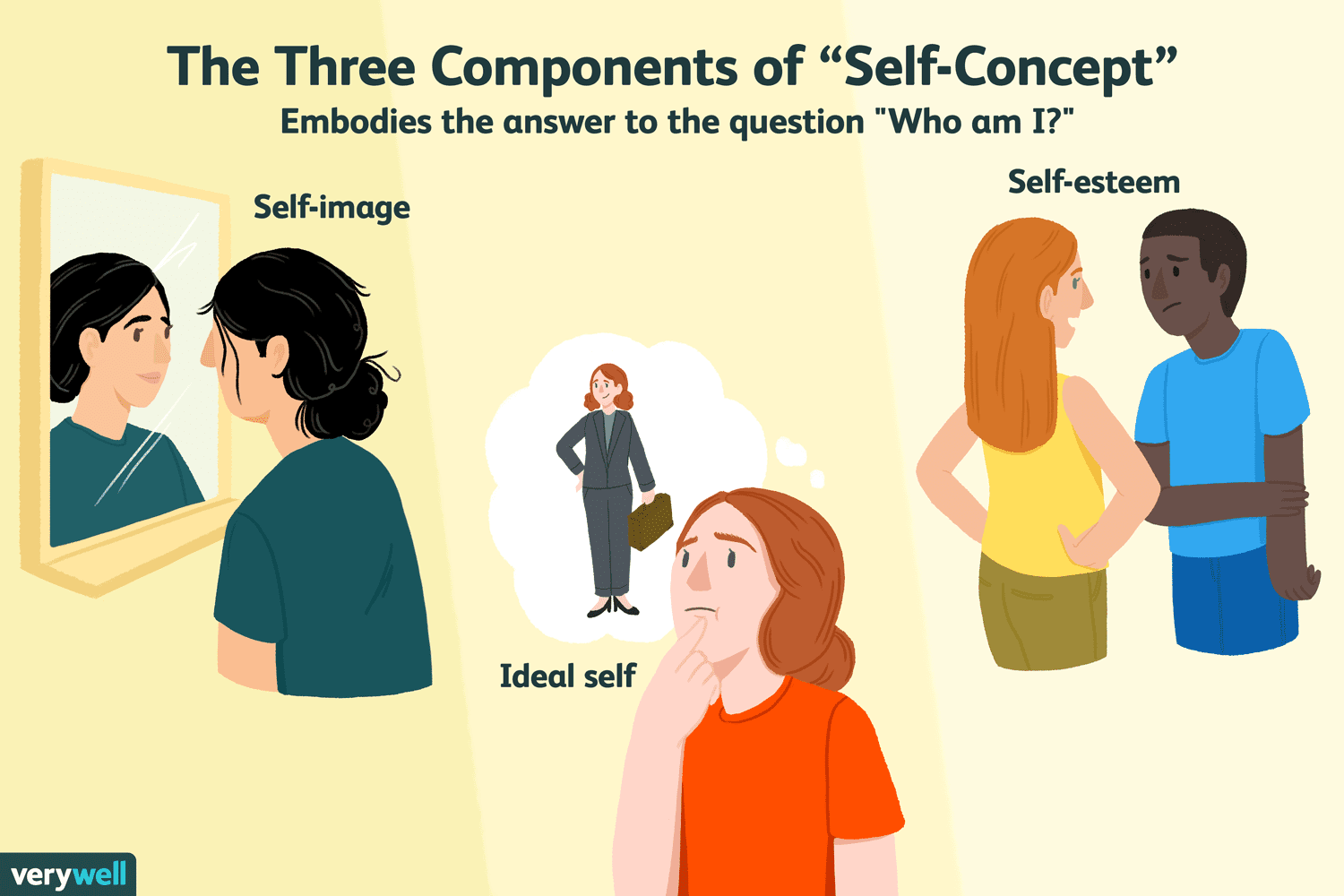
Few psychological questions are as deceptively simple as the question of where the self begins. In everyday life, the answer seems obvious. A person points to their body, their memories, their personality, or their thoughts and says: this is me. Yet once the question is examined more carefully, its simplicity dissolves. The boundary between the self and everything outside of it becomes increasingly difficult to define. The mind, the body, and the surrounding world appear less like separate entities and more like interdependent systems. The deeper the question is pursued, the more uncertain the starting point of the self becomes. The experience of being a self feels immediate and unquestionable. Individuals do not typically wake each morning wondering whether they exist as distinct psychological agents. Instead, the sense of identity operates quietly in the background, organizing perception and behavior without demanding conscious attention. This continuity creates the impression that the self is a stable core, something that persists unchanged beneath the shifting details of life. However, psychological investigation suggests that this impression may be misleading. The self is not a single structure located in one specific region of the mind or body. Rather, it appears to emerge from the interaction of multiple processes that operate across perception, memory, emotion, and social cognition. Each of these processes contributes to the experience of identity, yet none of them alone fully explains it. One of the earliest components of the developing self is bodily awareness. Even before language or complex memory emerges, human infants begin to distinguish between sensations that originate from their own bodies and those that originate from the external world. Movements of the limbs, the rhythm of breathing, and the sensation of touch all contribute to an early sense of physical ownership. This bodily awareness forms the foundation of what psychologists often describe as the minimal self. The minimal self is not a narrative identity or a conceptual understanding of who one is. Instead, it is the immediate feeling of being located somewhere, of occupying a body that interacts with the surrounding environment. Yet even this seemingly basic form of identity is not entirely stable. Experiments in perception have shown that the brain can be surprisingly flexible in determining what belongs to the body. Under certain conditions, individuals can begin to experience external objects as if they were parts of their own bodies. These experiments reveal that the sense of bodily ownership is not fixed but constructed through the integration of sensory signals. As cognitive development progresses, memory begins to expand the boundaries of identity beyond the immediate present. Experiences accumulate and become connected through patterns of recall. Over time, individuals begin to recognize themselves as continuous beings whose past actions and experiences belong to the same person who exists in the present. This continuity gives rise to what might be called the autobiographical self. Through memory, people develop narratives about who they are, where they have been, and how they arrived at their current circumstances. These narratives provide a framework for interpreting new experiences and anticipating future possibilities. However, autobiographical memory is not a perfect archive of past events. Psychological research has demonstrated that memory is reconstructive rather than purely reproductive. Each act of remembering involves interpretation, selection, and sometimes distortion. As a result, the story individuals tell about themselves may shift over time, even if the underlying events remain the same. This reconstructive quality suggests that identity is not simply discovered within memory but actively shaped by it. The self that emerges through narrative is partly the result of ongoing interpretation. Individuals choose which experiences to emphasize, which meanings to assign to them, and how they connect them to one another. Emotion further complicates the formation of identity. Emotional experiences influence how events are encoded in memory and how they are later interpreted. Moments associated with strong emotion—whether joy, fear, shame, or pride—tend to occupy a central place in personal narratives. These emotionally charged experiences often become reference points for understanding the self. A single event may shape the way individuals perceive their abilities, their relationships, or their sense of worth. Yet because emotional interpretations can change over time, the significance of these events may also evolve. Social interaction adds another dimension to the development of identity. Humans do not construct their sense of self in isolation. Instead, identity emerges through ongoing interaction with others. From early childhood onward, individuals receive feedback about their behavior, abilities, and personality traits. This feedback gradually becomes internalized. Over time, people begin to anticipate how others might evaluate their actions, even when those others are not physically present. The internalization of social perspectives becomes a key component of self-awareness. Through this process, the self becomes partially composed of internalized relationships. Individuals carry within their minds the expectations, judgments, and emotional responses of others. These internalized perspectives influence decision-making and shape how individuals interpret their own experiences. Language plays a crucial role in organizing these influences into a coherent sense of identity. Words allow individuals to categorize experiences, describe emotions, and construct narratives that link past events to present circumstances. Without language, the ability to form complex self-concepts would be severely limited. Yet language also introduces abstraction. When individuals describe themselves using categories such as intelligent, shy, confident, or creative, they reduce complex patterns of behavior into simplified labels. These labels can be useful for communication and reflection, but they may also obscure the dynamic nature of identity. The question of where the self begins becomes even more complicated when considering the relationship between perception and interpretation. Every moment of conscious experience involves a continuous exchange between the individual and the environment. Sensory information flows inward while attention and expectation shape how that information is interpreted. In this sense, perception itself may be partly self-related. The way individuals perceive the world reflects their prior experiences, emotional states, and cognitive patterns. Two people observing the same event may interpret it in dramatically different ways because their internal frameworks differ. This observation challenges the

Why Does Consciousness Resist Silence?
There are moments when a person deliberately seeks stillness. The external world quiets, movement slows, and attention turns inward. Yet in these moments an unexpected phenomenon often emerges: the mind becomes louder. Thoughts multiply, fragments of memory surface, imagined dialogues unfold, and subtle anxieties become more noticeable. The silence that was meant to calm the mind seems instead to reveal its restless structure. This raises a deeper question: why does consciousness resist silence? At first glance, silence appears to be merely the absence of sound or activity. In psychological terms, however, silence can represent the reduction of external stimuli. When sensory input decreases, the mind is no longer occupied with processing continuous environmental information. One might expect this reduction to produce calm and emptiness, but the opposite often occurs. Internal processes become more visible, and mental activity intensifies. This reaction reveals an important characteristic of consciousness: it is not designed to remain inactive. Human cognition evolved within environments that demanded constant monitoring and interpretation. The mind continuously anticipates threats, evaluates opportunities, and organizes perception into meaningful patterns. When external input diminishes, the mechanisms responsible for interpretation do not simply shut down. Instead, they redirect their activity toward internal material. Memory becomes one of the primary sources of this internal material. Experiences stored in the past can resurface unexpectedly when the mind is not fully engaged with the present environment. A quiet moment may suddenly trigger recollections of conversations, unresolved conflicts, or distant experiences that had previously seemed insignificant. These memories appear not because they are intentionally summoned, but because the cognitive system remains active in its search for meaning and coherence. The resurfacing of memory during silence highlights another property of consciousness: it tends to organize experience through narrative continuity. Human beings naturally attempt to connect past, present, and future into a coherent storyline. When external distractions fade, the mind often returns to unfinished narratives—events that were emotionally unresolved or cognitively ambiguous. This process explains why silence sometimes intensifies rumination. Without competing stimuli, attention gravitates toward unresolved psychological material. Questions about past decisions, social interactions, or personal identity may repeatedly surface, creating cycles of reflection that are difficult to interrupt. The mind, in its effort to resolve ambiguity, continues to revisit these experiences. Emotion further amplifies this phenomenon. Emotional memories tend to carry greater psychological weight than neutral ones. As a result, they are more likely to emerge during periods of quiet reflection. A single unresolved emotional experience can generate extensive internal dialogue, as the mind attempts to reinterpret the event from different perspectives. From a psychological perspective, this tendency serves an adaptive purpose. Reflection allows individuals to learn from past experiences and adjust future behavior. By revisiting emotionally significant events, the mind can extract patterns and insights that might otherwise remain unnoticed. However, when this reflective process becomes repetitive rather than constructive, it may contribute to psychological distress. Another factor that contributes to the resistance of consciousness to silence is the human need for cognitive structure. The mind prefers organized patterns over ambiguity. Silence, particularly prolonged silence, can create a sense of uncertainty because it removes many of the cues that guide interpretation and decision-making. In the absence of external structure, the mind often generates its own. Internal dialogues, imagined scenarios, and hypothetical conversations become ways of filling the cognitive space that silence creates. These internally generated structures provide temporary coherence, even when they involve worry or speculation. The phenomenon is particularly evident when individuals attempt meditation for the first time. Many people expect meditation to produce immediate calm, yet they are surprised by the intensity of their own thoughts. Instead of emptiness, they encounter a continuous stream of mental activity. This experience can lead to the mistaken belief that meditation is not working. In reality, the practice simply reveals processes that are usually obscured by external engagement. Everyday life provides constant sensory input—conversations, digital media, tasks, and responsibilities—that occupy attention. These inputs do not eliminate internal activity; they merely overshadow it. When they are removed, the underlying processes become visible. Language also contributes to the persistence of mental activity. Human thought is deeply intertwined with linguistic structures. Words allow individuals to categorize experiences, form judgments, and construct narratives about themselves and others. Even when no one is speaking externally, the internal use of language continues. This internal language often takes the form of self-talk. People evaluate their actions, rehearse conversations, or anticipate future events through silent verbalization. Such processes create the impression that the mind is engaged in continuous conversation, even in complete physical isolation. Social cognition further intensifies this internal dialogue. Humans evolved as social beings whose survival depended on understanding the intentions and reactions of others. As a result, the mind frequently simulates social interactions. Individuals imagine how others might respond to their actions or recall past conversations with surprising clarity. These simulated interactions may appear spontaneous, yet they reflect deeply ingrained cognitive mechanisms. The brain continuously models social relationships, predicting how different individuals might behave in various situations. When external stimuli are reduced, these simulations may become more prominent. Another dimension of the resistance to silence involves existential awareness. Silence often creates conditions for introspection, allowing individuals to confront questions that are rarely addressed during everyday activity. Thoughts about meaning, purpose, and mortality may emerge with greater intensity when external distractions disappear. Such reflections can be psychologically unsettling. Confronting fundamental questions about existence requires cognitive and emotional resources that are not always readily available. As a result, the mind may attempt to avoid these reflections by generating alternative streams of thought. This avoidance can manifest in subtle ways. Instead of directly addressing existential concerns, individuals may become preoccupied with minor details or hypothetical scenarios. The mind fills the silence with manageable thoughts rather than confronting deeper uncertainties. At the same time, silence also offers the possibility of profound insight. When individuals learn to tolerate the initial restlessness of consciousness, they may begin to observe patterns in their own thinking. Repetitive worries, habitual interpretations, and
What Remains When Identity Fractures?
At certain thresholds of psychological strain, a subtle yet profound shift begins to occur within human experience. The sense of identity—once stable, continuous, and self-evident—no longer feels entirely coherent. Instead of a unified “I,” the individual may begin to notice discontinuities: contradictions in thought, emotional dissonance, or an unfamiliar distance from one’s own actions. This is not necessarily a dramatic collapse, but rather a gradual loosening of the threads that hold identity together. The question that emerges is not simply who one is, but what remains when the organizing structure of identity begins to fracture. Identity is often assumed to be intrinsic, something that exists independently of circumstance. Yet psychological observation suggests otherwise. What individuals experience as identity is not a singular entity, but a dynamic integration of processes: memory, emotion, perception, language, and social interaction. Under stable conditions, these processes align sufficiently to produce a coherent sense of self. When that alignment is disrupted, the coherence itself becomes unstable. Fracturing does not imply complete disintegration. Instead, it often manifests as partial disconnection between different aspects of experience. A person may feel emotionally detached from memories that once carried significance, or may act in ways that seem inconsistent with previously held values. These inconsistencies are not necessarily signs of pathology in isolation; they can arise in response to stress, trauma, or prolonged internal conflict. One of the most significant contributors to identity fragmentation is unresolved psychological tension. When individuals are unable to reconcile conflicting beliefs, desires, or experiences, the mind may respond by compartmentalizing them. This compartmentalization allows incompatible elements to coexist without direct confrontation, but it also weakens the integration that sustains a unified self. Over time, these compartments can become increasingly distinct. The individual may experience shifts in perspective that feel abrupt or disorienting, as if different “versions” of the self are taking turns in guiding thought and behavior. While these shifts may remain within the bounds of normal variation, they reveal the underlying multiplicity of the mind. Memory plays a crucial role in maintaining identity, yet it is also a point of vulnerability. Traumatic or highly distressing experiences can disrupt the normal integration of memory, leading to fragmentation. Instead of being incorporated into the broader narrative of the self, such experiences may remain isolated, inaccessible, or only partially integrated. This disruption affects not only the content of memory but also the continuity of identity. If certain experiences cannot be fully integrated, the narrative that connects past and present becomes incomplete. The individual may feel as though parts of their life do not fully belong to them, or as though they are disconnected from aspects of their own history. Emotional processes further influence the stability of identity. Intense or chronic emotional states can alter the way individuals perceive themselves and their experiences. For example, prolonged anxiety may lead to a heightened focus on threat and vulnerability, shaping a self-concept centered around fear. Similarly, persistent sadness may influence memory and interpretation, reinforcing a sense of inadequacy or loss. When emotional states fluctuate significantly, the associated self-perceptions may also shift. The individual may struggle to reconcile these differing self-views, leading to a sense of inconsistency or fragmentation. The question then arises: which of these perspectives represents the “true” self, if any? Language and cognition contribute to the construction and maintenance of identity by providing frameworks for interpretation. Through language, individuals categorize experiences, assign meaning, and construct narratives. However, these frameworks can also constrain perception, emphasizing certain aspects of experience while neglecting others. When the existing frameworks become insufficient to account for new or conflicting experiences, the individual may experience a breakdown in meaning. This breakdown can contribute to identity fragmentation, as the structures that once provided coherence no longer function effectively. Social context is another critical factor. Identity is not formed in isolation but through interaction with others. Feedback, expectations, and roles all contribute to how individuals understand themselves. When these external influences are inconsistent or contradictory, they can create internal conflict. For instance, an individual may be expected to embody different roles in different contexts—roles that may not align with one another. The effort to meet these expectations can lead to the development of distinct self-presentations, each adapted to a specific context. While this adaptability is often functional, it can also contribute to a sense of fragmentation if the differences between roles become too pronounced. In more extreme cases, identity fragmentation may involve a disruption in the sense of agency. Individuals may feel as though their thoughts or actions are not entirely their own, or may experience a diminished sense of control over their behavior. These experiences highlight the importance of integration in sustaining the sense of self as an active agent. The phenomenon of depersonalization provides a particularly striking example of identity disturbance. In this state, individuals may feel detached from their own thoughts, emotions, or body, as though observing themselves from an external perspective. The continuity of experience remains, but the sense of ownership is diminished. Similarly, derealization involves a sense of detachment from the external world, which may appear unreal or distorted. Together, these experiences illustrate how the boundaries between self and world can become unstable, further complicating the sense of identity. Despite the unsettling nature of these experiences, they also reveal an important truth: the self is not a fixed entity but a process that depends on ongoing integration. When this integration is disrupted, the underlying components become more visible, exposing the constructed nature of identity. The question What remains when identity fractures? can be approached from multiple perspectives. One possibility is that beneath the fragmented structure of identity lies a more fundamental level of experience—raw awareness, unorganized by narrative or interpretation. This level of experience is not defined by roles, memories, or self-concepts, but by the immediate presence of perception. From this perspective, identity may be understood as a layer imposed upon a more basic form of consciousness. When the structures of identity weaken, this underlying awareness may become more apparent. However, this awareness does