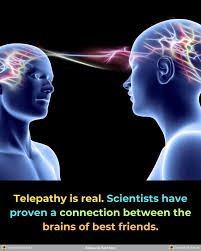
Telepathy has occupied a persistent position within human imagination for centuries. The belief that thoughts, emotions, or intentions can pass directly between minds without conventional sensory communication appears across mythology, religion, literature, and modern paranormal discourse. Although empirical science has not established reliable evidence supporting telepathy as a measurable transmission of thoughts between brains, many individuals report experiences that feel undeniably real: sensing another person’s emotions before they speak, thinking of someone moments before receiving a message from them, or feeling mentally connected in ways that appear to transcend ordinary communication. These experiences raise a psychologically complex question: why does telepathy feel so convincing at the level of subjective experience, even in the absence of definitive scientific confirmation?
To examine this phenomenon, it is necessary to separate the psychological reality of telepathic experience from the empirical question of whether literal mind-to-mind transmission exists. Psychological reality refers to experiences that feel authentic and emotionally compelling regardless of their objective mechanism. Telepathic experiences may therefore reveal important truths about perception, attachment, cognition, and predictive social processing even if they do not involve paranormal communication.
Human beings are profoundly social organisms whose nervous systems evolved specifically to anticipate, interpret, and synchronize with other minds. Social survival depends heavily upon predicting intentions, detecting emotional states, and coordinating behavior rapidly. As a result, the brain continuously generates inferences about what others are thinking or feeling, often with remarkable accuracy.
This predictive social capacity forms one of the foundations of telepathic experience. Through repeated interaction, individuals become highly sensitive to subtle behavioral patterns, vocal changes, facial microexpressions, timing cues, and contextual regularities. Much of this processing occurs outside conscious awareness. Consequently, when a person correctly anticipates another individual’s emotional state or behavior, the experience may feel mysterious because the underlying cues were never consciously recognized.
The illusion of direct mental access emerges partly because unconscious perception operates more efficiently than conscious analysis. The mind constructs conclusions before awareness identifies the intermediate steps. Individuals therefore experience intuitive certainty without understanding how the inference occurred. The resulting perception resembles telepathy because the prediction appears immediate and unexplained.
Attachment relationships intensify this phenomenon. Individuals who share close emotional bonds often develop highly synchronized predictive systems. Over time, repeated interaction creates internal models of one another’s emotional rhythms, behavioral tendencies, and psychological reactions. These models allow remarkably accurate anticipation of each other’s states.
For example, a parent may sense distress in a child before receiving explicit information, or partners may anticipate each other’s thoughts within familiar contexts. Such experiences feel extraordinary because they involve rapid emotional attunement occurring below conscious deliberation. Yet psychologically, they reflect advanced interpersonal prediction rather than necessarily paranormal transmission.
Emotional contagion contributes further to the perception of telepathic connection. Human nervous systems automatically synchronize with surrounding emotional states through mechanisms involving mimicry, autonomic resonance, and affective attunement. Individuals unconsciously mirror facial expressions, postural tension, breathing rhythms, and vocal tones.
This synchronization produces experiences in which emotions seem to transfer invisibly between people. Because the mechanisms are largely implicit, the resulting sense of shared mental space may appear supernatural. In reality, however, it reflects deeply embodied forms of interpersonal regulation.
Memory and selective attention also shape telepathic interpretation. Human cognition naturally prioritizes emotionally meaningful coincidences while ignoring countless irrelevant events. Individuals may think about many people throughout a week without unusual consequence. However, when thinking about someone coincides with an unexpected message or encounter, the coincidence acquires disproportionate emotional salience.
This salience strengthens memory encoding. The coincidence becomes highly memorable precisely because it feels improbable and meaningful. Similar instances in which no correspondence occurred are forgotten rapidly. Over time, selective recall creates the impression that such experiences occur more frequently than they actually do.
Pattern recognition mechanisms reinforce these perceptions. The human brain evolved to detect meaningful connections rapidly, often favoring false positives over missed patterns. This bias increases survival efficiency because detecting potential significance carries adaptive value. Yet it also predisposes individuals to perceive intentional connections within random events.
Telepathic interpretations emerge naturally from this tendency. Coincidences involving emotionally important individuals become integrated into narratives of invisible connection because the mind seeks coherent explanations for meaningful patterns. The emotional importance of the relationship amplifies the perceived significance of the coincidence.
Loneliness and emotional deprivation may strengthen susceptibility to telepathic interpretation as well. Humans possess deep psychological needs for connection, recognition, and relational continuity. Under conditions of isolation or longing, fantasies or perceptions of invisible mental connection may provide emotional compensation.
Importantly, this does not imply deliberate fabrication. The experiences themselves often feel entirely authentic. The mind organizes ambiguous emotional and perceptual experiences into frameworks capable of preserving relational closeness and reducing feelings of separation.
Trauma can intensify these dynamics in complex ways. Individuals exposed to unpredictable or threatening relational environments often develop heightened sensitivity to subtle interpersonal cues. Hypervigilance increases the capacity to anticipate emotional shifts in others because rapid prediction becomes necessary for psychological safety.
As a result, traumatized individuals may appear unusually intuitive regarding others’ intentions or moods. This heightened interpersonal sensitivity can feel telepathic both to themselves and to observers because the underlying predictive mechanisms operate with extraordinary speed and automaticity.
Dissociative processes may also contribute to telepathic experiences. Under conditions of altered consciousness, boundaries between internal imagination and external perception may become less stable. Thoughts, fantasies, and intuitions acquire intensified immediacy, making internally generated impressions feel externally received.
Such states are particularly common during grief, prolonged stress, sleep deprivation, meditation, or intense emotional arousal. Individuals may experience vivid impressions of communication from absent or deceased persons, often interpreted as telepathic or spiritual contact. Psychologically, these experiences frequently reflect the mind’s attempt to preserve attachment continuity under conditions of emotional overwhelm.
Cultural systems shape how these experiences are interpreted. Many societies contain longstanding traditions involving psychic connection, collective consciousness, spiritual communication, or extrasensory perception. These frameworks provide symbolic structures through which ambiguous interpersonal experiences can be understood.
When individuals encounter emotionally striking coincidences or intuitions, cultural narratives influence whether they interpret them as coincidence, intuition, spirituality, or telepathy. Perception is therefore shaped not only by sensation but by available explanatory systems.
Media representations further reinforce telepathic imagination. Films, literature, and digital narratives repeatedly portray invisible mental communication as emotionally meaningful and symbolically powerful. These representations normalize telepathic interpretation and provide imagery through which individuals conceptualize their own experiences.
Neurobiologically, social cognition involves highly integrated networks responsible for empathy, predictive modeling, emotional resonance, and perspective-taking. Mirror neuron systems, limbic synchronization, and autonomic co-regulation all contribute to the experience of interpersonal connection. These mechanisms create the subjective impression that minds can overlap or influence one another directly.
Importantly, the subjective intensity of an experience does not necessarily verify its paranormal interpretation. Human consciousness frequently generates experiences that feel unquestionably real despite arising through internally constructed processes. Dreams, intrusive memories, derealization, déjà vu, and emotional intuition all demonstrate the mind’s capacity to produce compelling realities.
This does not invalidate telepathic experiences psychologically. On the contrary, their significance often lies precisely in what they reveal about attachment, prediction, embodiment, and interpersonal sensitivity. Telepathic feelings illustrate how deeply interconnected human cognition actually is, even through ordinary mechanisms.
Scientific investigations into telepathy have historically produced controversial and inconsistent findings. While some experiments claim small statistical anomalies suggesting possible extrasensory effects, results generally lack replicability strong enough to establish telepathy as accepted empirical fact. Consequently, mainstream neuroscience and psychology remain cautious regarding paranormal interpretations.
However, the persistence of telepathic belief across cultures suggests that the underlying psychological experiences fulfill enduring human needs. Telepathy symbolizes the fantasy of complete understanding without misunderstanding, distance, or linguistic limitation. It represents an imagined state of perfect emotional access between minds.
This fantasy carries profound psychological significance because ordinary communication is inherently incomplete. Human beings often feel isolated within private consciousness, unable to transmit experience fully to others. Telepathy functions symbolically as the elimination of this separation.
In this sense, telepathic narratives express both cognitive tendencies and existential desires. They reflect the wish to overcome loneliness, uncertainty, ambiguity, and interpersonal limitation. The emotional power of telepathy lies not merely in supernatural curiosity but in the longing for unrestricted connection.
The question of why telepathy feels psychologically real therefore reveals broader truths about human cognition and relational experience. The mind constantly predicts, synchronizes, and resonates with other minds through subtle mechanisms operating beneath awareness. When these processes produce emotionally meaningful coincidences or intuitions, the resulting experiences can feel extraordinary.
Rather than viewing telepathic experience simply as irrational belief or paranormal proof, it may be more accurate to understand it as an emergent product of predictive social cognition, emotional attunement, memory bias, attachment processes, and symbolic meaning-making. These mechanisms together generate experiences powerful enough to blur the boundary between intuition and imagined direct connection.
Ultimately, telepathy feels real because human beings are already deeply interconnected psychologically. The nervous system continuously extends beyond isolated selfhood through empathy, prediction, synchronization, and relational imagination. Telepathic experiences emerge at the intersection where these ordinary yet profound mechanisms become emotionally intensified and subjectively mysterious.