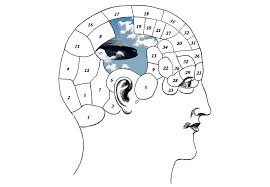
Conspiracy narratives occupy a unique psychological position within human cognition. They are often dismissed as irrational, fantastical, or detached from empirical reality, yet their persistence across cultures and historical periods suggests that they fulfill deeper cognitive and emotional functions. Events such as the alleged Philadelphia Experiment, secret governmental projects, hidden scientific discoveries, or claims of suppressed knowledge repeatedly capture collective attention despite limited verifiable evidence. This raises a psychologically significant question: why do conspiracy narratives feel convincing even when objective proof remains weak or absent?
To understand this phenomenon, conspiracy belief must first be examined not merely as incorrect reasoning but as a complex interaction among perception, uncertainty regulation, social cognition, emotional processing, and meaning-making systems. Human cognition is not designed solely to identify objective truth through detached analysis. Rather, it evolved to detect patterns, anticipate threat, construct explanations, and preserve psychological coherence under uncertain conditions. Conspiracy narratives often exploit these fundamental tendencies.
At the center of conspiracy cognition lies the human intolerance of randomness. The nervous system is structured to search for causality and intention. Ambiguous or chaotic events create psychological discomfort because uncertainty limits predictive control. When individuals encounter events that appear confusing, threatening, or insufficiently explained, the mind instinctively attempts to organize them into coherent narratives.
Conspiracy theories provide this coherence by transforming ambiguity into intentional structure. Instead of random events, they propose hidden actors, concealed motives, and organized systems operating beneath visible reality. Psychologically, intentional explanations are often easier to tolerate than uncertainty because they create the illusion of predictability. Even frightening explanations may feel preferable to randomness because they preserve the assumption that events follow understandable rules.
Pattern detection mechanisms play a crucial role in this process. Human cognition evolved to identify meaningful connections within incomplete information. This ability is adaptive because recognizing patterns increases survival efficiency. However, pattern recognition systems are biased toward false positives. It is psychologically safer, from an evolutionary perspective, to mistakenly detect a pattern than to fail to detect a genuine threat.
Conspiracy narratives exploit this bias by linking unrelated events into apparently coherent structures. Coincidences, inconsistencies, secrecy, or gaps in information become interpreted as evidence of hidden coordination. Once these connections are perceived, they generate a subjective sense of revelation or insight. The individual experiences not merely belief, but discovery.
Importantly, the emotional experience associated with discovery reinforces conviction. Realizing what appears to be hidden truth creates heightened arousal and cognitive salience. Emotional intensity itself is often misinterpreted as evidence of accuracy. The stronger the emotional reaction, the more convincing the narrative may feel internally.
Fear and uncertainty intensify susceptibility to conspiracy thinking. Under conditions of social instability, political conflict, trauma, or existential anxiety, predictive systems become hyperactive. The organism searches aggressively for explanations capable of reducing uncertainty. Conspiracy narratives thrive in such conditions because they offer emotionally satisfying frameworks that appear to explain complex realities through simplified causal structures.
These frameworks frequently divide reality into clear categories of hidden perpetrators and deceived populations. Such binary structures reduce cognitive complexity. Ambiguous systems become transformed into morally organized narratives with identifiable intentions and enemies. This simplification creates psychological relief by reducing uncertainty and fragmentation.
Cognitive closure is especially important here. Many individuals experience discomfort when questions remain unresolved. Conspiracy narratives provide closure by filling explanatory gaps. Even when evidence is incomplete, the narrative itself offers the feeling of completion. This feeling can become more psychologically persuasive than empirical uncertainty.
Memory processes further reinforce conspiratorial belief systems. Once individuals adopt a conspiracy framework, attentional and retrieval biases begin shaping perception. Information consistent with the theory becomes more memorable and emotionally salient, while contradictory evidence is minimized or dismissed. Over time, memory itself becomes reorganized around the narrative.
This process creates self-sealing belief structures. Contradictory evidence does not weaken the theory but may instead strengthen it. Denial by authorities becomes interpreted as confirmation of concealment. Lack of evidence becomes proof that information has been successfully hidden. In this way, the narrative protects itself against falsification.
Social identity also contributes significantly to the appeal of conspiracy narratives. Believing in hidden truths can create a sense of belonging within groups organized around shared skepticism or alternative explanations. These communities provide validation, emotional reinforcement, and collective meaning.
Within such groups, conspiracy belief often functions not only as cognition but as identity. Accepting the narrative signifies membership in a psychologically meaningful in-group that perceives itself as more aware or awakened than the broader population. This identity function increases resistance to contradictory evidence because abandoning the belief may threaten social belonging and self-concept.
Distrust in institutions intensifies these dynamics. Historical examples of secrecy, corruption, manipulation, or unethical experimentation contribute to generalized suspicion toward authority structures. Once trust deteriorates, individuals become more willing to interpret ambiguity as evidence of concealment.
Importantly, conspiracy thinking is not entirely irrational in origin. Human history contains genuine examples of hidden political actions, classified research, and institutional deception. The psychological problem emerges when the expectation of hidden intent becomes generalized excessively, shaping perception regardless of evidence quality.
Trauma and chronic insecurity may further predispose individuals toward conspiratorial interpretation. Traumatic experiences disrupt assumptions about safety, predictability, and trust. As a result, individuals may become hypervigilant toward signs of hidden threat or manipulation. Conspiracy narratives resonate because they align with pre-existing expectations that danger exists beneath apparent normality.
Interoceptive and affective processes influence these interpretations as well. Heightened physiological arousal increases attentional sensitivity to threat-related information. When individuals experience chronic anxiety or hyperactivation, they become more likely to perceive hidden danger within ambiguous stimuli. The body itself contributes to the sense that something concealed or threatening must exist.
Narratives such as the Philadelphia Experiment are particularly compelling because they combine several psychologically powerful elements simultaneously: secrecy, advanced science, military authority, hidden experimentation, altered reality, and forbidden knowledge. These themes activate both fear and fascination. They suggest that ordinary reality may conceal extraordinary truths inaccessible to most individuals.
The involvement of respected figures like Albert Einstein strengthens these effects further. Associating conspiracy narratives with intellectually authoritative individuals increases perceived plausibility through symbolic credibility. Even weak or indirect associations may become psychologically persuasive because authority enhances cognitive acceptance.
The role of science fiction and media amplification is equally significant. Films, books, documentaries, and internet discussions repeatedly expose individuals to conspiracy imagery and narrative structures. Repetition increases familiarity, and familiarity itself often produces perceived truthfulness. Ideas encountered repeatedly begin to feel intuitively plausible regardless of evidence.
Emotionally charged imagery strengthens memory consolidation. Stories involving teleportation, invisible ships, secret experiments, or catastrophic outcomes are more memorable than mundane explanations. Human cognition prioritizes emotionally intense material because such information appears potentially relevant to survival.
Conspiracy narratives also fulfill existential functions. They provide frameworks through which individuals can position themselves within larger historical or cosmic struggles. Ordinary life may feel psychologically insignificant or chaotic, whereas conspiracy systems transform reality into dramatic structures involving hidden meaning and large-scale purpose.
This existential dimension explains why purely factual correction often fails to eliminate conspiratorial belief. The narrative does not function solely as an intellectual hypothesis; it fulfills emotional, social, and symbolic needs simultaneously. Removing the theory without addressing these underlying functions leaves the original psychological needs unresolved.
Neurobiologically, conspiracy thinking involves interactions among salience detection systems, threat-processing networks, memory retrieval structures, and executive regulation. Under heightened uncertainty or emotional activation, threat-related interpretation becomes prioritized. Predictive systems increasingly favor explanations that preserve coherence and vigilance.
Cognitive flexibility plays a central role in determining whether conspiracy thinking becomes rigid or transient. Flexible cognition allows individuals to tolerate ambiguity and revise beliefs in response to evidence. Under chronic stress, however, flexibility often decreases. Rigid explanatory systems become psychologically attractive because they reduce uncertainty quickly.
Importantly, not all conspiracy thinking reflects pathology. Mild forms of suspicious interpretation exist along a continuum within ordinary cognition. Humans naturally speculate about hidden motives and incomplete information. Problems emerge when these interpretations become rigid, self-sealing, emotionally dominant, and detached from corrective feedback.
Intervention therefore requires more than dismissing beliefs as irrational. Effective approaches involve strengthening tolerance for uncertainty, improving critical reasoning, restoring social trust where possible, and addressing underlying emotional dysregulation. Individuals who feel psychologically secure are generally more capable of tolerating ambiguity without resorting to rigid explanatory systems.
Education alone is often insufficient because conspiracy narratives operate affectively as much as cognitively. Emotional regulation, relational stability, and social belonging strongly influence susceptibility. Addressing these dimensions reduces the need for compensatory explanatory systems organized around hidden threat.
The question of why conspiracy narratives feel convincing ultimately reveals fundamental aspects of human cognition. The mind is not a neutral recording device but an interpretive system designed to construct coherence under uncertain conditions. Conspiracy theories exploit adaptive mechanisms originally intended to enhance survival: pattern detection, threat anticipation, meaning-making, and social coordination.
Under conditions of fear, uncertainty, or distrust, these mechanisms become exaggerated. Internally coherent narratives begin to dominate over empirical uncertainty because psychological stability becomes prioritized above strict evidential evaluation. The resulting beliefs feel compelling not necessarily because they are objectively true, but because they satisfy deep cognitive and emotional demands.
In this sense, conspiracy narratives function less as isolated intellectual errors and more as reflections of how human beings regulate uncertainty, construct meaning, and defend coherence within unpredictable realities.