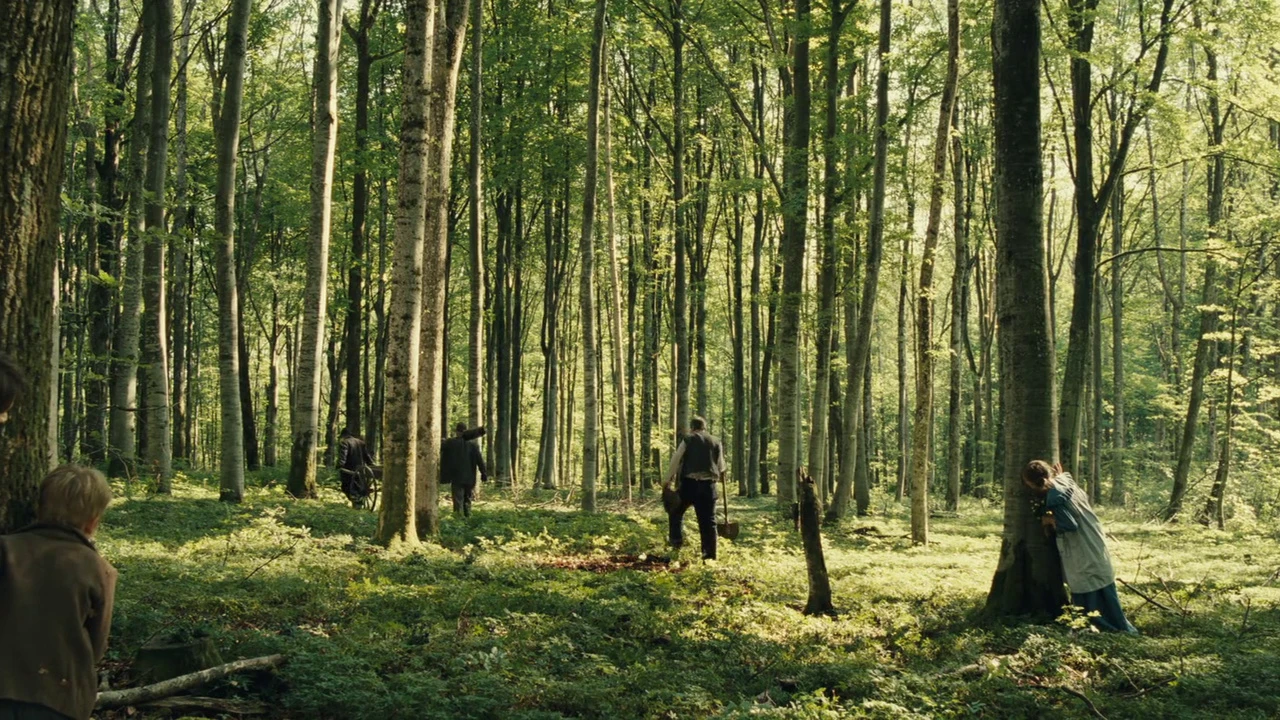
Across cultures and historical periods, human beings have repeatedly described certain locations as possessing unusual psychological atmospheres. Abandoned buildings, empty hospitals, isolated forests, old houses, battlefields, underground corridors, and silent rooms often evoke experiences interpreted as haunting. Individuals report sensations of presence, unexplained fear, altered perception, bodily tension, or the conviction that “something” exists within the environment despite the absence of visible evidence. Even people who reject supernatural beliefs frequently acknowledge that certain places feel psychologically different from ordinary environments. This raises a deeply interdisciplinary question: why do some places feel haunted, and through what psychological and neurobiological mechanisms does space acquire emotional and perceptual intensity?
To approach this question, it is first necessary to understand that perception of space is never neutral. Human beings do not experience environments merely as physical arrangements of objects. Spatial perception is fundamentally emotional, predictive, and embodied. Every environment is interpreted through systems responsible for threat detection, memory association, sensory integration, and social cognition. A “haunted” atmosphere therefore emerges not only from the environment itself but from the interaction between the environment and the perceiving nervous system.
One of the primary mechanisms underlying haunting experiences is uncertainty amplification. The human brain evolved to prioritize prediction and survival. Environments that are visually ambiguous, poorly illuminated, acoustically irregular, or socially empty reduce predictive certainty. Under such conditions, the nervous system becomes more vigilant because ambiguity increases the possibility of hidden threat.
This vigilance alters perception significantly. Attention narrows toward subtle sensory changes, including shadows, sounds, movement, and bodily sensations. Stimuli that would ordinarily be ignored become emotionally salient. Because the brain is actively searching for explanation, ambiguous sensory information may acquire exaggerated significance.
Darkness plays a particularly important role in this process. Human visual systems depend heavily on contextual information to stabilize perception. Low visibility weakens perceptual certainty, forcing predictive systems to compensate more aggressively. The mind begins filling informational gaps using expectation, memory, and imagination. This predictive compensation increases susceptibility to misinterpretation and anomalous perception.
Importantly, the brain evolved to favor false-positive threat detection over missed danger. From a survival perspective, it is safer to mistakenly perceive an agent where none exists than to overlook a genuine threat. Consequently, ambiguous environments naturally bias perception toward the possibility of hidden presence.
This tendency contributes directly to the sensation that someone—or something—is nearby. Minor auditory changes, structural creaks, airflow fluctuations, or peripheral visual distortions become interpreted through social and threat-detection systems. The resulting experience may feel profoundly real despite lacking external confirmation.
The perception of presence is particularly significant in haunting experiences. Many individuals report sensing another being in the environment without directly seeing anyone. Neuroscientific research suggests that this sensation may emerge from disturbances in self-monitoring and spatial representation systems. The brain continuously maps the body in relation to surrounding space, integrating sensory and proprioceptive information into a coherent sense of self-location.
Under conditions of stress, fatigue, sensory ambiguity, isolation, or fear, these integration processes may become unstable. Internal bodily signals may be misattributed externally, creating the impression that another entity occupies nearby space. The “presence” therefore reflects a distortion within self-perception systems rather than necessarily an external being.
Social cognition intensifies this process further. Human beings are deeply specialized for detecting agency. Faces, intentions, movements, and social signals are prioritized automatically because recognizing other agents is crucial for survival. As a result, the mind frequently detects agency within ambiguous patterns—a phenomenon known as hyperactive agency detection.
This explains why shadows appear human-like, why random noises seem intentional, or why still environments feel watched. The brain prefers assigning agency rather than accepting ambiguity because agency provides a psychologically manageable explanation for uncertainty.
Memory systems also shape haunted perception profoundly. Places acquire emotional meaning through associative learning. If an environment becomes linked to fear, grief, trauma, or cultural narratives of death, entering that environment may reactivate associated emotional states automatically. These emotional activations then alter perception itself.
For example, knowledge that a building once functioned as a hospital, prison, or site of violence changes how the environment is interpreted. The space becomes psychologically loaded before any unusual experience occurs. Expectation biases attention toward confirming evidence, increasing the likelihood of anomalous interpretation.
Importantly, this process often occurs unconsciously. Individuals may not realize how strongly contextual narratives influence perception. Yet expectancy profoundly shapes sensory interpretation. When people anticipate strangeness, ordinary environmental stimuli become more emotionally charged and memorable.
Cultural symbolism contributes heavily to the architecture of haunting. Certain spaces repeatedly appear in collective imagination as psychologically charged: abandoned corridors, attics, forests, basements, cemeteries, tunnels, and empty institutions. These environments symbolize uncertainty, hidden memory, death, isolation, and loss of social order.
Because these symbolic meanings are culturally reinforced through stories, films, folklore, and collective narratives, individuals entering such spaces already possess cognitive templates for interpreting them as unsettling. The environment activates pre-existing symbolic frameworks that shape emotional response.
Silence itself is psychologically powerful within these contexts. Humans are adapted to environments containing predictable sensory activity. Extreme silence disrupts perceptual expectations, increasing awareness of internal bodily sensations and minor environmental noises. This sensory amplification can become deeply unsettling.
In silent spaces, individuals become acutely aware of breathing, heartbeat, muscular tension, and subtle sounds. Because the nervous system seeks explanation for heightened arousal, these bodily sensations may become integrated into perceptions of external presence or danger.
Isolation magnifies these effects dramatically. Social environments regulate emotional stability through interpersonal feedback and shared interpretation. Alone in ambiguous settings, individuals lose this stabilizing function. The absence of others increases uncertainty and reduces opportunities for reality-testing.
As isolation increases, internally generated thoughts and perceptions gain greater authority because external corrective input diminishes. Imagination and perception become more closely intertwined, allowing emotionally charged interpretations to dominate awareness more easily.
Trauma and grief can further intensify haunting experiences. Following significant loss, individuals often remain psychologically oriented toward the absent person. The attachment system continues expecting the lost individual’s presence despite conscious awareness of absence. This mismatch may generate vivid impressions of sensing, hearing, or feeling the deceased nearby.
Such experiences are relatively common in bereavement and do not necessarily indicate pathology. They reflect the persistence of relational prediction systems struggling to adapt to absence. Haunted places may therefore function psychologically as environments where unresolved attachment and memory become especially activated.
Dissociation also contributes significantly. Under stress or emotional overload, perception may become altered in ways that produce derealization or depersonalization. Environments feel unreal, dreamlike, distant, or emotionally distorted. These states increase susceptibility to paranormal interpretation because ordinary perceptual stability weakens.
The temporal dimension of haunted places is psychologically important as well. Certain environments feel as though they contain preserved traces of previous experiences. This impression emerges partly because environments associated with abandonment or historical trauma evoke disrupted temporal continuity. The past feels psychologically present within the space.
Human cognition naturally reconstructs narratives around such spaces. Empty environments provoke imagination because the absence of visible activity invites speculation about what occurred there previously. The mind populates silence and emptiness with inferred histories, emotional residues, and imagined presences.
Architectural features can intensify these effects directly. Narrow corridors, decaying structures, low ceilings, irregular acoustics, flickering light, and confined spaces all influence autonomic activation. Such features increase physiological arousal subtly, making environments feel threatening even without conscious awareness of why.
Certain environmental conditions may also produce perceptual anomalies physically. Infrasound—low-frequency sound below conscious hearing thresholds—has been associated with sensations of dread, pressure, anxiety, and unusual perception. Mold exposure, electromagnetic irregularities, poor ventilation, and toxic substances can likewise alter cognition and emotional regulation.
These physiological influences may contribute to haunting experiences by destabilizing sensory integration and emotional processing. Importantly, however, the resulting experiences still feel subjectively authentic because the nervous system interprets altered states through available symbolic frameworks.
Media representations profoundly reinforce haunted perception. Horror films, paranormal narratives, and ghost stories repeatedly associate specific environmental cues with danger and supernatural presence. Over time, individuals internalize these associations deeply. Entering a dim corridor or abandoned building activates culturally conditioned expectations automatically.
Fear itself alters perception significantly. Under heightened arousal, attentional systems prioritize threat-related interpretation. Shadows appear darker, sounds more abrupt, and ambiguities more significant. The environment becomes organized around anticipation of danger.
Neurobiologically, these experiences involve interactions among threat-detection systems, sensory integration networks, memory structures, and predictive processing mechanisms. Under uncertain conditions, predictive systems rely increasingly on expectation and emotional context to interpret ambiguous stimuli. Haunted perception emerges when emotional prediction outweighs sensory certainty.
Importantly, places do not need to contain supernatural phenomena to produce psychologically real experiences. The emotional and perceptual responses involved are entirely authentic at the level of subjective consciousness. Fear, presence, tension, and unreality are genuinely experienced even when generated through ordinary cognitive mechanisms.
This distinction matters because dismissing haunting experiences as mere imagination oversimplifies their complexity. Human perception is inherently constructive. The mind continuously integrates sensation, memory, expectation, embodiment, and cultural meaning into lived reality. Haunted places reveal this construction process vividly.
The fascination with haunted environments may also reflect deeper existential concerns. Such places symbolize mortality, memory, abandonment, and the persistence of the past within the present. They externalize fears regarding death, isolation, and the unknown dimensions of consciousness itself.
Haunted spaces therefore function psychologically as liminal zones—places existing between categories such as life and death, presence and absence, reality and imagination. Humans are especially sensitive to liminality because uncertain boundaries activate both fear and curiosity simultaneously.
This combination explains why haunted places remain compelling despite causing distress. Fear and fascination coexist because the environments engage fundamental cognitive and emotional systems related to survival, meaning, and existential mystery.
The question of why some places feel haunted ultimately reveals that environments are never experienced objectively. Perception emerges through continuous interaction between external space and internal psychological structure. Ambiguity, memory, expectation, fear, embodiment, and cultural symbolism combine to transform ordinary environments into emotionally charged realities.
Hauntedness therefore exists not solely within the environment nor solely within the individual, but within the dynamic relationship between them. The nervous system projects meaning into uncertain space while simultaneously responding emotionally to the meanings it constructs. In this sense, haunted places reveal the extent to which human beings continuously animate the world psychologically, filling silence and ambiguity with presence, narrative, and emotional life.