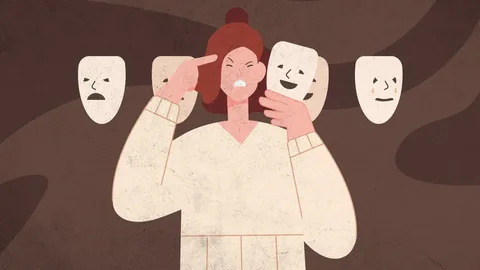
Change is one of the most unavoidable aspects of human life. People change their jobs, relationships, homes, routines, beliefs, and goals. Some changes are desired, while others arrive unexpectedly. Yet even positive changes can produce anxiety. A person may desperately want a new beginning and simultaneously feel afraid of leaving the familiar behind. This contradiction raises an important psychological question: why does the human mind often resist change, even when change could improve life?
The human brain is designed to predict what will happen next. Familiar environments require less cognitive effort because the brain already has information about what to expect. A familiar routine provides a sense of predictability, while an unfamiliar situation contains uncertainty. From a neurological perspective, uncertainty can increase vigilance because the brain must evaluate whether something new represents an opportunity or a potential threat.
This is why people sometimes remain in situations they openly recognize as unsatisfying. A familiar problem can feel psychologically safer than an unfamiliar possibility. Someone may dislike their job but fear changing careers. Another person may feel unhappy in a relationship but be terrified of being alone. A student may want to begin something new but remain attached to a routine that no longer provides growth.
The problem is not necessarily a lack of courage. The brain often prefers predictability because predictable situations are easier to control.
Fear of change can also be connected to previous experiences. If a person experienced painful consequences after making an important decision, they may become more cautious in the future. The brain learns from experience and uses previous outcomes to predict future ones. However, this protective mechanism can sometimes become excessive.
A person who was betrayed in one relationship may begin expecting betrayal from everyone. Someone who failed once may conclude that every future attempt will end in failure. The past becomes a template through which the future is interpreted.
This process can create avoidance. Avoiding an uncertain situation produces immediate relief. However, because the person never experiences the feared outcome—or discovers that they could cope with it—the fear may remain strong.
Psychologists often describe this as a reinforcement cycle. Anxiety increases, the person avoids the situation, anxiety temporarily decreases, and the brain learns that avoidance provided safety. The next time a similar situation appears, avoidance becomes even more likely.
This is one reason gradual exposure to feared situations can be useful in psychological treatment. When appropriate and professionally guided, exposure allows the brain to learn that anxiety can decrease without avoidance and that unfamiliar experiences are not necessarily dangerous.
Change can also threaten identity. People develop ideas about who they are: “I am a teacher,” “I am a successful person,” “I am the responsible one in my family,” or “I am someone who never takes risks.” When circumstances change, these identities may become uncertain.
A career change, for example, may involve more than learning a new skill. It may require redefining one’s identity. The individual may wonder whether they are still successful, competent, or respected.
This explains why some changes feel emotionally larger than their practical consequences suggest.
Relationships provide another example. Ending a long-term relationship does not simply mean losing another person. It can mean losing routines, shared plans, social roles, familiar places, and expectations about the future. The individual must construct a new daily life while simultaneously processing emotional loss.
Grief is therefore not limited to death. People can experience grief after divorce, relocation, retirement, friendship loss, illness, or major changes in identity.
The brain must adapt to the absence of previously expected experiences. A person may automatically reach for their phone to contact someone who is no longer part of their daily life. These automatic behaviors reflect how deeply relationships become incorporated into routines.
Fear of change can also be strengthened by perfectionism. A perfectionistic individual may believe that every important decision must be correct. Because the future cannot be predicted with certainty, they may postpone decisions indefinitely.
But decision-making rarely provides complete certainty. Healthy psychological functioning often requires accepting some degree of uncertainty.
This does not mean making impulsive decisions. It means recognizing that waiting for absolute confidence may prevent meaningful action.
People can also fear positive change because success creates new responsibilities. Someone may want professional advancement but worry about increased expectations. Another person may desire greater independence but fear the responsibilities that accompany it.
Therefore, resistance to change does not always mean that a person dislikes the potential outcome. Sometimes they fear the consequences of obtaining it.
The psychology of change is also connected to control. People generally feel more comfortable when they believe they can influence what happens. Sudden changes remove this sense of control. Even a positive event can become stressful if the individual feels that it is happening to them rather than being chosen by them.
This is why participation in decision-making matters. When people feel that they have meaningful choices, uncertainty often becomes easier to tolerate.
Social expectations can create additional resistance. Families, friends, and communities may have strong ideas about what a person should do. Someone may want to change their career but fear disappointing their family. Another person may want to leave an unhealthy environment but worry about being judged.
In these situations, the psychological conflict is not simply between the individual and change. It is between personal desires and perceived social expectations.
Over time, living according to other people’s expectations can produce dissatisfaction. A person may achieve what others consider success while feeling disconnected from their own values.
This is why psychological development often involves discovering what one genuinely wants rather than simply following familiar expectations.
Change can also expose uncertainty about competence. Beginning something new means temporarily becoming inexperienced. A person who is highly competent in one environment may suddenly become a beginner in another.
This can be uncomfortable because modern culture often associates competence with identity and status. Yet learning necessarily involves periods of incompetence. No one becomes skilled without first being inexperienced.
Accepting this process can make change easier. Instead of interpreting mistakes as evidence of inadequacy, a person can interpret them as part of learning.
The brain itself is capable of adaptation through neuroplasticity. Neural pathways can change as people learn new behaviors and skills. This means that unfamiliar activities can become increasingly automatic with practice.
At first, a new routine may require conscious effort. Later, it may become familiar. The same principle applies to emotional patterns. Repeatedly responding to challenges in healthier ways can gradually make those responses easier to access.
However, change does not always happen quickly. People sometimes become frustrated because they expect immediate psychological transformation. In reality, adaptation often occurs gradually.
Small changes can be more sustainable than dramatic transformations. Establishing one new habit, changing one routine, or taking one manageable step can provide evidence that change is possible.
Another important factor is self-efficacy—the belief that one can influence outcomes through one’s own actions. When people successfully handle small challenges, confidence can increase. This can make larger changes feel more manageable.
Fear of change therefore does not necessarily disappear before action. Sometimes confidence develops because action occurs despite fear.
This is an important psychological distinction. Courage is not the absence of fear. It is the ability to act according to meaningful values while acknowledging that fear exists.
At the same time, not every fear should be ignored. Fear can contain useful information. A person considering a major decision should evaluate risks realistically rather than assuming that every uncomfortable feeling is simply an irrational obstacle.
Healthy decision-making involves distinguishing between danger and uncertainty. Something can be uncertain without being dangerous. A new job may be unpredictable but not necessarily harmful. A new social environment may feel uncomfortable without posing a real threat.
Learning this distinction can reduce unnecessary avoidance.
Mindfulness can also help people tolerate uncertainty. Instead of immediately trying to predict every possible outcome, an individual can focus on what is happening in the present moment. This does not eliminate uncertainty, but it reduces the tendency to mentally rehearse every possible disaster.
Psychological flexibility is another important concept. Flexible individuals can adjust their behavior when circumstances change while maintaining connection with their core values. They do not need every situation to remain predictable in order to function.
Rigid thinking, in contrast, can make adaptation difficult. Statements such as “Things must always be this way” or “If I fail, everything is ruined” leave little room for alternative possibilities.
Life inevitably violates rigid expectations. Developing flexibility therefore becomes a form of psychological resilience.
Change can also reveal strengths that remain hidden during stable periods. A person may discover that they are more capable of adaptation than they previously believed. Difficult transitions can sometimes lead to new skills, relationships, interests, and perspectives.
This does not mean that every painful change is beneficial. Romanticizing suffering can be harmful. Some changes involve genuine loss and should be allowed to be painful. Growth and grief can exist simultaneously.
A person can miss their previous life while building a new one. They can feel afraid while continuing forward. They can regret certain aspects of change while still recognizing that change was necessary.
This complexity is a normal part of adaptation.
Supportive relationships can make transitions easier. When people know they are not facing uncertainty alone, the nervous system may experience greater emotional safety. Encouragement from trusted individuals can provide both practical and emotional assistance.
Professional support can also be valuable when fear of change becomes severe enough to interfere with daily life. Therapy can help identify avoidance patterns, unrealistic beliefs, unresolved experiences, and fears about identity or failure.
The goal is not to force a person to change everything. Instead, therapy can help individuals distinguish between changes they genuinely want and changes they feel pressured to make.
Ultimately, psychological health does not mean remaining unchanged. Human beings develop throughout life. Their values may evolve, relationships may change, interests may shift, and circumstances may require new skills.
A stable identity does not require a stable lifestyle. A person can remain connected to fundamental values while changing the way those values are expressed.
The ability to adapt may therefore be one of the most important forms of psychological strength.
In conclusion, people often fear change because the brain prefers predictability, familiar routines reduce uncertainty, and previous experiences influence expectations about the future. Change can threaten identity, control, competence, and emotional security. Nevertheless, avoidance can sometimes strengthen fear by preventing people from discovering that they are capable of coping with unfamiliar situations. Psychological flexibility, realistic risk assessment, gradual action, supportive relationships, and professional therapy can help individuals adapt more effectively. Change does not always lead to a better outcome, but the ability to face uncertainty without allowing fear to completely control one’s decisions is an essential part of psychological development.