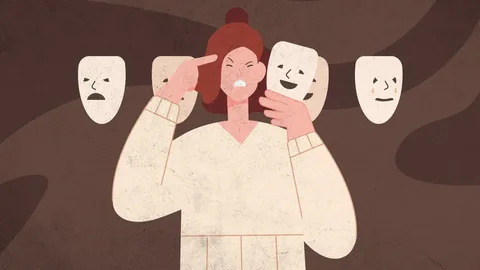
Human beings are social creatures, yet building and maintaining healthy relationships is one of the most complicated psychological tasks of life. People need connection, understanding, affection, trust, and emotional security, but relationships can also become sources of disappointment, conflict, fear, and loneliness. The ability to establish a relationship is therefore not simply a matter of meeting another person. It requires emotional maturity, self-awareness, communication, empathy, boundaries, and the ability to accept another human being as a separate individual.
The famous poet and novelist Rainer Maria Rilke expressed this complexity beautifully when he wrote: “To love another human being is perhaps the most difficult of all our tasks. It is the ultimate test, the final examination and proof of our work.” This idea captures something fundamental about human relationships. Loving someone is not merely experiencing affection. It is learning how to remain connected to another person without losing oneself, how to accept differences without immediately experiencing them as threats, and how to remain emotionally present even when a relationship becomes difficult.
One of the reasons relationships are so complicated is that every person enters them with a psychological history. Childhood experiences, previous relationships, attachment patterns, fears, expectations, and personal beliefs influence the way individuals interpret closeness. Two people may experience exactly the same interaction but understand it completely differently.
For one person, silence may mean peace and comfort. For another, silence may mean rejection. One person may consider frequent communication unnecessary, while another may interpret the absence of messages as evidence that they are no longer loved. These differences are often not about who is right or wrong. They may reflect different emotional histories.
Attachment plays an important role in these differences. Early relationships with caregivers contribute to the development of expectations about closeness and safety. People who experience relatively secure relationships may develop greater confidence that others can be trusted and that conflict does not necessarily mean abandonment. Individuals who have experienced inconsistent or emotionally unpredictable relationships may become more sensitive to signs of rejection.
This sensitivity can influence adult relationships. A person who fears abandonment may constantly seek reassurance. Another person may become uncomfortable with emotional closeness and withdraw when a relationship becomes too intimate. Interestingly, these two patterns can sometimes attract each other, creating a cycle in which one person pursues closeness while the other seeks distance.
The resulting relationship can become emotionally exhausting. The more one person demands reassurance, the more the other may withdraw. The more the second person withdraws, the more insecure the first person becomes.
Communication is therefore essential. However, effective communication is not simply speaking frequently. It involves expressing emotions and needs clearly while also being willing to listen. Many relationship conflicts become worse because individuals communicate accusations instead of experiences.
There is a major difference between saying, “You never care about me,” and saying, “I felt unimportant when you did not respond.” The first statement attacks the other person’s character, while the second communicates an emotional experience.
Healthy communication also requires the ability to tolerate uncomfortable conversations. Avoiding every disagreement does not create a healthy relationship. Conflict is inevitable when two independent people share their lives. The important question is not whether conflict occurs but how it is managed.
Some couples interpret disagreement as evidence that the relationship is failing. Others understand that differences are normal and use conflict as an opportunity to understand one another better.
Empathy is particularly important in this process. Empathy does not mean agreeing with everything another person says. It means making an effort to understand their emotional experience. A person can disagree with a partner while still recognizing that the partner’s feelings are real.
This is one of the deeper meanings of Rilke’s statement. To love another person means accepting that the other person is not simply an extension of oneself. They have different memories, preferences, fears, ambitions, and interpretations of life.
A common relationship problem occurs when people expect their partners to think exactly as they do. When differences appear, they may interpret them as evidence that the relationship is wrong. Yet psychological maturity involves accepting that intimacy does not require complete similarity.
Healthy relationships allow individuality. Partners can have different hobbies, friendships, interests, opinions, and personal spaces while remaining emotionally connected.
Boundaries are therefore another essential component of healthy relationships. Love does not mean unlimited access to another person’s time, emotions, or personal space. A healthy boundary communicates what a person can accept and what they cannot.
Without boundaries, relationships can become characterized by resentment. Someone may repeatedly agree to things they do not want because they fear disappointing the other person. Eventually, suppressed frustration can turn into anger or emotional withdrawal.
A healthy relationship allows people to say “no” without fearing that the entire relationship will collapse.
Self-esteem also influences relationships. Individuals who believe they are unworthy of love may tolerate unhealthy treatment because they fear that they will never find another relationship. They may interpret disrespect as something they deserve.
Conversely, excessive dependence on external validation can create constant demands for reassurance. A person may need their partner to repeatedly prove their love because their internal sense of worth is unstable.
A healthier relationship develops when both individuals possess some independent sense of self-worth. The partner can contribute to happiness, but the partner does not become the sole source of identity or emotional stability.
This does not mean that people should never depend on each other. Emotional interdependence is a normal part of close relationships. The distinction is between healthy dependence and psychological dependence in which one person’s entire sense of worth depends on another person’s behavior.
Trust is another foundation. Trust is not created through promises alone. It develops through consistent behavior. When a person repeatedly behaves in predictable, respectful, and honest ways, the nervous system gradually learns that the relationship is safe.
Broken trust can therefore be difficult to repair. Even after an apology, the injured person may remain alert for signs that the behavior will happen again. Rebuilding trust requires consistency over time rather than a single conversation.
Forgiveness is similarly complex. Forgiving someone does not necessarily mean forgetting what happened or accepting repeated harmful behavior. It can mean releasing some of the emotional burden associated with the past while maintaining appropriate boundaries.
Another important element of relationships is the ability to apologize. A sincere apology requires responsibility. Statements such as “I’m sorry you feel that way” may sound like apologies but do not necessarily acknowledge personal responsibility. A more meaningful apology recognizes the behavior, its impact, and the person’s responsibility for changing it.
People also need to learn how to receive apologies. Suspicion may be understandable after repeated betrayal, but refusing every possibility of repair can prevent relationships from recovering.
Emotional regulation has a major influence on relationship quality. When people become overwhelmed by anger, fear, or shame, they may say things they later regret. Learning to pause before responding can prevent temporary emotions from producing permanent damage.
This does not require suppressing emotions. Emotional suppression can create additional problems. Instead, individuals can learn to recognize emotions and communicate them without allowing those emotions to control their behavior.
The nervous system plays a significant role here. During intense conflict, physiological arousal increases. Heart rate may rise, muscles become tense, and attention becomes focused on threat. In this state, logical problem-solving can become more difficult.
Taking a pause during an intense argument is therefore not necessarily avoidance. Sometimes it is a method of emotional regulation. Returning to the conversation after both individuals have calmed down can make constructive communication much more likely.
Relationships also influence physical and neurological well-being. Supportive social relationships can provide emotional safety and reduce the psychological burden of stress. Chronic interpersonal conflict, on the other hand, can maintain stress responses and negatively affect sleep, mood, and overall functioning.
This demonstrates why relationships should not be considered separate from health. The emotional environment in which a person lives can influence the functioning of the nervous system.
Loneliness provides an important contrast. A person can have many social contacts while lacking a genuinely intimate relationship. Meaningful connection depends less on the number of people around us and more on whether we feel understood, accepted, and emotionally safe.
Rilke’s statement can therefore be understood as a challenge rather than simply a romantic observation. Loving another person requires continuous psychological work. It demands patience when differences appear, courage during difficult conversations, humility when mistakes are made, and respect for another person’s individuality.
At the same time, healthy love should not require self-destruction. A relationship becomes unhealthy when one person must constantly sacrifice their dignity, safety, identity, or fundamental needs to preserve it.
Love and boundaries are not opposites. In fact, strong boundaries can make relationships healthier because they create clarity. When people know what they can expect from each other, emotional security can increase.
Another important component is curiosity. Long-term relationships can become routine, and partners may begin assuming that they already know everything about one another. Yet people continue to change. Their priorities, fears, dreams, and perspectives can evolve.
Remaining curious about another person helps prevent the relationship from becoming based entirely on old assumptions.
The same principle applies to friendships and family relationships. Healthy relationships are not limited to romantic partnerships. Friendships require reciprocity, trust, and emotional availability. Family relationships may involve even greater complexity because shared history can make old emotional patterns difficult to change.
People sometimes continue interacting with family members according to childhood roles long after they have become adults. One person may always be treated as “the irresponsible one,” while another is expected to solve everyone’s problems. Changing these patterns requires conscious communication and boundaries.
Modern technology has introduced another challenge. Digital communication can make people constantly available, but constant availability does not necessarily produce intimacy. A person may communicate throughout the day without having a meaningful emotional conversation.
Social media can also create unrealistic expectations about relationships. People often compare their ordinary experiences with carefully selected images of other people’s lives. This can create the false impression that healthy relationships are always romantic, exciting, and conflict-free.
In reality, every close relationship contains moments of misunderstanding, boredom, disagreement, and emotional difficulty. The presence of conflict does not automatically mean that a relationship is unhealthy.
What matters is whether the people involved can repair the relationship afterward.
Relationship repair is one of the most important but least discussed psychological skills. After an argument, people need to reconnect. This may involve acknowledging harm, explaining intentions, listening to the other person’s perspective, and making concrete changes.
A relationship can sometimes become stronger after a conflict if both people learn something from it.
However, not every relationship should be repaired. Persistent emotional abuse, manipulation, intimidation, violence, or severe disrespect are not simply communication problems. In such circumstances, safety and professional support should take priority.
Psychological maturity includes recognizing the difference between an ordinary relationship difficulty and a fundamentally harmful relationship.
Ultimately, healthy relationships require two people who are willing to see each other as complete human beings. Neither person should be treated as a possession, a therapist, a source of constant validation, or a solution to every emotional problem.
The deepest form of intimacy may be the ability to say, “I see who you are, even when you are different from me, and I do not need to erase your individuality in order to love you.”
This returns us to Rilke’s observation. Loving another human being can indeed be one of life’s most difficult tasks because it requires much more than emotion. It requires self-knowledge, patience, responsibility, empathy, flexibility, and courage.
People often spend years learning how to work, study, earn money, and achieve goals, yet receive relatively little education about how to communicate, manage conflict, express vulnerability, or build emotionally healthy relationships. Perhaps this is why relationships can feel so difficult even for highly intelligent and successful individuals.
The ability to love is not simply something people either possess or lack. It can develop. Communication can be learned. Emotional regulation can improve. Boundaries can become stronger. Empathy can deepen. Patterns from childhood can be recognized and changed.
In conclusion, healthy relationships are among the most complex psychological achievements available to human beings. They require individuals to balance closeness with independence, vulnerability with boundaries, and emotional expression with responsibility. Rainer Maria Rilke’s observation reminds us that loving another person is not merely a feeling but a continuous psychological task. A meaningful relationship does not demand perfection from either person. Instead, it requires two imperfect individuals who are willing to understand themselves, respect one another, repair mistakes, and continue growing together. In this sense, learning how to love may truly be one of the most important forms of psychological development a person can achieve.