There are moments in human life when a person can no longer clearly recognize the person they have become. They may continue performing familiar responsibilities, maintaining relationships, working, caring for others, and following ordinary routines, yet something internally feels unfamiliar. The person may ask themselves: Why do I react this way? Why do I want things that I do not seem to want? Why do I continue relationships that make me unhappy? Why do I understand what I should do but still cannot do it? Such questions point toward a deeper psychological problem than ordinary indecision. They concern the relationship between conscious identity and the less visible processes that influence behavior.
The experience of becoming psychologically unfamiliar to oneself can occur without a formal psychiatric disorder. Human beings are not completely transparent to themselves. Much of psychological functioning occurs outside immediate conscious awareness. People can have motives, fears, expectations, defensive patterns, and emotional associations that influence behavior before they consciously understand them. Consequently, self-knowledge is not simply a matter of looking inward and finding a stable, complete identity. It is an ongoing process of discovering how different parts of psychological life interact.
One reason the self can become difficult to understand is that human identity is constructed through multiple experiences. A person is simultaneously an individual, a family member, a friend, a professional, a parent, a partner, a member of a culture, and a person with private desires and memories. These roles can sometimes support one another, but they can also conflict. The person who is expected to be strong may simultaneously feel exhausted. The person who is expected to care for everyone may secretly desire care themselves. The person who appears confident may be deeply afraid of failure.
Psychological conflict can emerge when these different aspects of the self cannot easily coexist. A person may consciously value independence while simultaneously fearing separation. They may want intimacy but become uncomfortable when someone gets emotionally close. They may want recognition while feeling embarrassed when they receive attention. They may want freedom while becoming anxious when there are too many choices.
Such contradictions do not necessarily indicate hypocrisy. Human psychology is inherently complex. Different needs can coexist within the same person. The difficulty begins when these conflicting needs remain outside conscious awareness and repeatedly produce behaviors that the individual cannot explain.
The idea that people are not fully aware of their own psychological motives has a long history. Psychoanalytic traditions emphasized unconscious processes, while later psychological theories developed different models of automatic cognition, implicit learning, emotional processing, and defensive functioning. Contemporary psychology does not require accepting one particular theory of the unconscious to recognize that people frequently act for reasons they understand only partially.
A person may say, “I do not know why I keep doing this,” and genuinely mean it. The behavior may have become automatic through repetition. It may have once served an important protective function but become less useful as circumstances changed.
This is particularly evident in interpersonal behavior. Someone who grew up learning that conflict was dangerous may become extremely accommodating as an adult. They may avoid disagreement, apologize quickly, and suppress their preferences. They may consciously believe that they simply “do not like conflict.” Yet beneath this preference may exist a learned expectation that disagreement leads to rejection, anger, or abandonment.
The person may therefore experience their behavior as a personality trait rather than as an adaptation. They may say, “I am just this kind of person.” But personality descriptions can sometimes conceal developmental processes.
This does not mean that every characteristic must be explained by childhood. Adults possess agency, and behavior is influenced by current circumstances as well as past experiences. Nevertheless, understanding how a pattern developed can sometimes make the pattern easier to change.
A particularly important psychological distinction is the difference between identity and adaptation. Identity concerns the person’s sense of who they are, while adaptation concerns the ways they learned to function within particular environments. The two can become confused.
A person who learned to remain silent may eventually conclude that they are naturally quiet. A person who learned to anticipate other people’s needs may identify as exceptionally caring. A person who learned not to depend on anyone may describe themselves as completely independent. These descriptions may contain genuine aspects of personality, but they may also include strategies that developed in response to earlier circumstances.
The question then becomes: What happens when an adaptation continues after the original environment has changed?
A strategy that was once protective can become restrictive. Avoiding conflict may have protected a child from unpredictable adults, but the same strategy may prevent an adult from establishing healthy boundaries. Emotional detachment may have reduced vulnerability in an unsafe environment, but later it may interfere with intimacy. Constant self-reliance may have helped someone survive difficult circumstances, yet eventually make receiving support feel uncomfortable.
This is one reason psychological patterns can persist even when people consciously want to change them. The mind does not necessarily evaluate every behavior from the perspective of the present moment. Learned associations can continue influencing behavior automatically.
Change therefore requires more than deciding to behave differently. The person may need to develop an alternative sense of safety.
This becomes particularly important in relationships. An individual may consciously desire a close relationship but become emotionally distant when intimacy increases. Another may desperately want reassurance but become suspicious when reassurance is offered. Someone may repeatedly choose emotionally unavailable people and later wonder why their relationships always feel incomplete.
Patterns like these can sometimes be understood through attachment-related processes, although attachment concepts should not be used as universal explanations. Early relationships can influence expectations about closeness, trust, availability, and rejection, but later experiences can modify these expectations substantially.
The important point is that psychological expectations can operate before conscious reasoning. A person may know intellectually that another individual is trustworthy while emotionally remaining prepared for betrayal. This discrepancy between intellectual knowledge and emotional expectation can be confusing.
It can produce statements such as, “I know they have never done anything wrong, but I still cannot trust them.”
Such experiences illustrate that psychological change may occur at several levels. Understanding something intellectually does not automatically produce an emotional sense of safety. Repeated experiences may be necessary before a new expectation becomes emotionally convincing.
Another source of self-alienation is chronic adaptation to social expectations. Human beings naturally modify behavior according to context. However, if a person constantly monitors how they appear to others, they may gradually lose contact with personal preferences.
The question “What do I want?” can become surprisingly difficult.
This difficulty is not always dramatic. It may appear in small decisions: choosing what to eat, where to go, whether to rest, what opinion to express, or whether to accept an invitation. A person may automatically consider what will make others comfortable before considering their own preference.
Over time, this can produce a subtle form of psychological distance from oneself. The person knows how to fulfill expectations but does not know what they personally desire.
The problem becomes deeper when external approval becomes the primary measure of self-worth. If acceptance from others determines whether the individual feels valuable, then disagreement becomes psychologically threatening. The person may not merely think, “They disagree with me.” They may experience disagreement as evidence that something is wrong with them.
This can create a cycle of self-monitoring. The individual continually observes themselves from the imagined perspective of others. How am I speaking? Did I say the wrong thing? Do they like me? Did I disappoint them? Do I seem intelligent enough? Am I behaving correctly?
When attention is continuously directed toward evaluation, spontaneous experience becomes more difficult. Instead of living an experience, the person observes themselves having the experience.
This phenomenon can be particularly relevant to social anxiety, but self-monitoring can occur without a clinical disorder. Many people occasionally become excessively concerned with how they are perceived.
Another pathway to self-alienation is perfectionism. Perfectionism can create an internal standard that is almost impossible to satisfy. The person may achieve objectively significant accomplishments but experience them as insufficient. Success becomes temporary relief rather than genuine satisfaction.
The internal dialogue may become dominated by evaluation: I could have done better. I should have known this. Other people are ahead of me. I am not doing enough.
Under these conditions, the person may lose contact with intrinsic motivation. Activities are valued primarily according to performance, recognition, or comparison. The question changes from “Is this meaningful to me?” to “Am I good enough at this?”
This distinction has important implications for psychological well-being. Achievement can provide genuine satisfaction, but when achievement becomes the primary source of identity, failure may threaten the entire sense of self.
A person may therefore experience a paradox: the more they accomplish externally, the less internally connected they feel.
Existential psychology offers another perspective on this problem. Human beings must make choices in conditions of uncertainty. There is no universal formula that can determine what every individual should value. People therefore face questions of meaning, responsibility, freedom, mortality, and authenticity.
These questions can become psychologically uncomfortable because freedom includes uncertainty. Choosing one direction means not choosing countless others. Some individuals respond by allowing external expectations to make decisions for them. Following social scripts can reduce uncertainty because the person does not have to ask what they genuinely want.
Yet a life organized almost entirely around external expectations may eventually produce a sense of emptiness.
Existential emptiness should not automatically be equated with depression. A person may continue functioning normally while questioning the meaning of their activities. They may ask why they are working so hard, why they are maintaining certain relationships, or what they actually want from life.
Such questions can be distressing, but they can also represent psychological development. Questioning previously accepted assumptions may create an opportunity for greater self-understanding.
The challenge is that there is no guarantee that the answers will be comfortable.
A person may discover that certain relationships no longer reflect their values. They may realize that a career path was chosen largely to satisfy others. They may recognize that a long-standing identity was built around being useful rather than being known. They may discover desires that conflict with expectations.
Self-knowledge can therefore be liberating and destabilizing at the same time.
This is one reason psychological change is not always experienced as immediate improvement. When old defenses weaken, emotions that were previously avoided may become more noticeable. A person may initially feel worse because they are becoming more aware of experiences that were previously disconnected from consciousness.
This does not necessarily mean that therapy or introspection is harmful. It means that increased awareness can temporarily increase emotional complexity. Psychological growth is not simply the replacement of negative feelings with positive ones.
Sometimes growth involves becoming capable of tolerating feelings that were previously unacceptable.
A person who previously responded to sadness with distraction may learn to remain with sadness long enough to understand it. Someone who avoided anger may learn to recognize anger without becoming aggressive. Someone who feared loneliness may learn that temporary solitude does not necessarily mean abandonment.
This process involves developing a more complex relationship with internal experience.
One of the central difficulties in self-understanding is the tendency to judge emotions immediately. People may think, “I should not feel jealous,” “I should not be angry,” or “I should not want this.” When an emotion is judged before it is understood, the person may attempt to eliminate it rather than investigate it.
Yet an emotion can contain information without providing an accurate interpretation of reality.
Jealousy may indicate fear of losing a relationship, but it does not prove that betrayal is occurring. Anger may indicate a perceived boundary violation, but it does not prove malicious intent. Anxiety may indicate perceived danger, but it does not establish that danger is objectively present.
Emotional awareness therefore requires two forms of attention: attention to the feeling and attention to reality.
This distinction allows a person to say, “My fear is real, but the danger may not be.” Such a statement neither dismisses the emotion nor automatically obeys it.
The same principle can be applied to self-criticism. A person may experience the thought “I am not good enough” with enormous emotional intensity. But the intensity of a thought does not establish its factual accuracy.
Self-critical beliefs can become deeply familiar through repetition. Eventually, they may feel less like thoughts and more like facts.
This is one reason cognitive patterns can be difficult to change. Familiarity creates a sense of truth. If someone has spent years thinking that they are inadequate, an alternative belief may initially feel artificial even when it is more balanced.
Psychological change often requires repeated experiences that contradict old expectations.
For example, a person who believes that saying no always leads to rejection may gradually discover that healthy relationships can survive disagreement. Someone who believes that vulnerability always produces humiliation may experience relationships in which emotional openness is met with respect. Someone who believes that mistakes make them worthless may learn to tolerate failure without losing connection to others.
These experiences can gradually modify internal models.
The self, therefore, is not a fixed object waiting to be discovered. It is partly constructed through relationships, memory, interpretation, behavior, and ongoing experience. This does not mean that identity is imaginary. It means that identity can change.
People often speak about “finding themselves” as though there were a single authentic self hidden beneath all social roles. In reality, authenticity may be less about discovering one permanent identity and more about developing a coherent relationship between values, emotions, choices, and behavior.
A person can change and remain themselves.
This is particularly important when individuals fear that psychological change means losing their identity. Someone who becomes more assertive may worry that they are becoming selfish. Someone who becomes emotionally open may fear becoming weak. Someone who establishes boundaries may believe they are becoming less caring.
These fears often arise because the person has defined themselves through a particular role.
Psychological development may require revising that definition.
Being caring does not require unlimited self-sacrifice. Being strong does not require emotional silence. Being independent does not require refusing help. Being agreeable does not require permanent compliance.
Such distinctions allow identity to become more flexible.
Perhaps one of the deepest aspects of psychological maturity is the ability to hold apparently contradictory truths simultaneously.
A person can love someone and still be hurt by them.
A person can understand another person’s behavior and still disagree with it.
A person can be grateful and dissatisfied.
A person can be strong and vulnerable.
A person can want connection and need solitude.
A person can forgive someone without returning to the same relationship.
A person can understand the origins of a behavior without continuing it.
Psychological complexity becomes possible when contradictions no longer need to be resolved into a single simple identity.
This may be particularly relevant to individuals who tend to think in extremes. If a person believes that someone is either completely good or completely bad, relationships can become unstable. If they believe they are either successful or worthless, ordinary failure becomes psychologically devastating.
A more integrated sense of self allows ambiguity.
The person can recognize imperfections without collapsing into self-rejection. They can recognize positive qualities without requiring perfection. They can experience uncertainty without immediately demanding an answer.
This does not mean that psychological distress disappears. Rather, the person may become more capable of experiencing distress without interpreting it as evidence that something is fundamentally wrong with them.
The development of this capacity can be described as increased psychological flexibility.
Psychological flexibility involves adapting behavior to circumstances while remaining connected to important values. It is not simply changing one’s behavior whenever circumstances become uncomfortable. Nor is it rigidly following one principle regardless of context.
It involves asking: What matters here, and what response is consistent with that value?
Sometimes the answer is confrontation. Sometimes it is withdrawal. Sometimes it is acceptance. Sometimes it is waiting. Sometimes it is asking for help.
The psychologically important ability is not always knowing the correct answer immediately. It is being able to remain present with uncertainty long enough to make a considered decision.
This is where self-awareness becomes different from endless introspection.
Thinking about oneself does not automatically produce self-knowledge. In some individuals, excessive self-analysis can become rumination. The person repeatedly asks why they feel a certain way without moving toward understanding or action.
Healthy reflection should eventually connect internal experience with behavior.
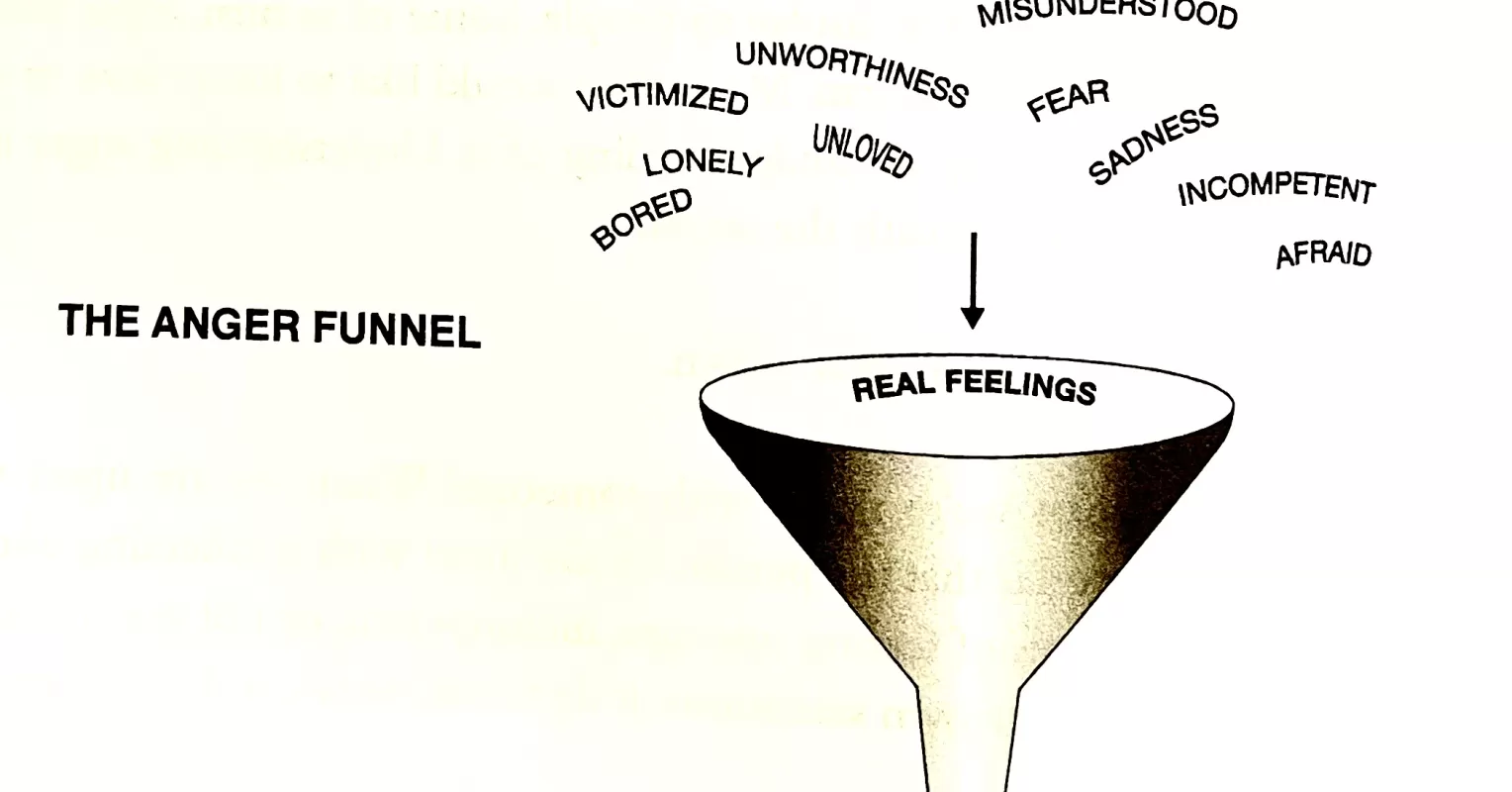
If a person discovers that they repeatedly feel exhausted because they cannot say no, the useful question becomes how to establish a boundary. If they discover that they fear rejection whenever they disagree, they may experiment with expressing a small disagreement. If they discover that loneliness is hidden beneath irritability, they may consider whether connection is needed.
Self-understanding becomes meaningful when it changes the person’s relationship with life.
Perhaps the most difficult realization is that people sometimes participate in patterns that they consciously dislike because those patterns provide psychological benefits. Avoidance reduces anxiety in the short term. People-pleasing reduces the immediate possibility of conflict. Emotional detachment reduces vulnerability. Perfectionism creates a sense of control.
The problem is that short-term psychological protection can create long-term costs.
Understanding this does not require blaming oneself. The question is not, “Why am I doing this to myself?” but rather, “What function does this pattern serve, and what would I need in order to no longer depend on it?”
This is a more compassionate and clinically useful question.
Psychological change becomes more realistic when the protective function of a behavior is acknowledged. A person rarely abandons a long-standing defense simply because someone tells them it is unhealthy. The defense usually exists for a reason.
The goal is not to destroy the defense but to develop alternatives.
A person who learned to avoid conflict may need to develop confidence in boundary-setting. Someone who learned to suppress emotion may need relationships in which emotional expression is safe. Someone who became excessively independent may need experiences demonstrating that dependence and autonomy can coexist.
In this sense, psychological development is not simply removing unwanted characteristics. It involves expanding the individual’s range of possible responses.
The person becomes less trapped by one automatic strategy.
Ultimately, the experience of becoming a stranger to oneself may contain both suffering and possibility. It can indicate that a person’s current way of living no longer fits their psychological needs. The discomfort may signal conflict between old adaptations and emerging values.
The solution is not necessarily to discover a hidden “true self” once and for all. Human beings continue changing throughout life. What may be more realistic is to develop an increasingly honest relationship with one’s own experience.
This relationship requires curiosity rather than constant judgment.
It asks not only, “What is wrong with me?” but also, “What happened here?”
Not only, “Why am I like this?” but, “What did I learn to do?”
Not only, “How can I stop feeling this?” but, “What is this feeling trying to tell me?”
And perhaps most importantly:
“Is the life I am living still consistent with the person I am becoming?”
There may never be a final answer to that question. Human identity remains unfinished. People change through relationships, losses, choices, failures, discoveries, and time.
The psychological task may therefore not be to become completely certain about who we are.
It may be to become sufficiently acquainted with ourselves that we no longer have to live entirely according to identities created by fear, expectation, or other people’s definitions.
A person can remain uncertain and still be authentic.
They can change and still possess continuity.
They can discover parts of themselves they had previously rejected.
They can recognize that some of their strongest characteristics were once adaptations to circumstances they no longer live in.
And gradually, the stranger within may become less strange—not because every contradiction disappears, but because the person becomes willing to listen to all of the different parts of their psychological experience.
Self-knowledge, in this sense, is not the achievement of perfect certainty.
It is the development of a relationship with oneself that is honest enough to tolerate complexity.