Perception is commonly assumed to function as a relatively accurate representation of external and internal reality. Within ordinary consciousness, individuals tend to trust that what they see, feel, interpret, and remember corresponds in meaningful ways to the world around them. Yet psychological and neuropsychiatric research consistently demonstrates that perception is not a passive recording system. Rather, it is an active and interpretive process shaped by expectation, emotion, memory, attention, and physiological regulation. Under certain conditions, perception gradually shifts from reflecting external reality toward reflecting internally constructed models. This transition raises a profound question: when does perception cease to function primarily as a reflection of reality and instead become dominated by predictive or affective distortions?
To address this question, it is first necessary to reconsider what perception actually is. Perception does not emerge directly from sensory input alone. The organism receives incomplete and often ambiguous sensory information, which must be organized into coherent experience through predictive and interpretive processes. The brain continuously generates models about what is likely occurring and compares incoming sensory information against these predictions. Perception therefore reflects an interaction between external stimuli and internal expectations.
Under ordinary conditions, this predictive structure is adaptive. It allows the organism to interpret information rapidly and efficiently without processing every stimulus from the beginning. Expectations help stabilize perception, reduce uncertainty, and facilitate coordinated action. However, because perception depends partly on internal models, it is vulnerable to distortion when these models become excessively rigid, emotionally charged, or detached from ongoing sensory correction.
One of the primary factors influencing this shift is chronic affective activation. Emotional states alter attentional priorities and interpretive biases. When individuals exist in prolonged states of fear, shame, suspicion, or hypervigilance, perception becomes increasingly organized around detecting information consistent with those states. Neutral stimuli may acquire threatening significance, while contradictory information may be minimized or ignored.
This process occurs because emotional systems influence predictive weighting. In predictive processing frameworks, the organism constantly determines how much importance to assign either to prior expectations or to incoming sensory evidence. Under heightened emotional activation, predictions associated with survival or threat often gain disproportionate authority. The system begins favoring expectation over direct sensory correction.
As a result, perception gradually becomes less responsive to reality-based feedback. The organism no longer interprets stimuli primarily according to what is present but according to what is anticipated or feared. Perception remains internally coherent, yet its coherence reflects the logic of emotional prediction rather than external conditions.
Attention plays a crucial role in maintaining this process. Attention is selective by nature; it prioritizes certain forms of information while excluding others. Under ordinary conditions, attentional systems balance novelty, relevance, and contextual demands. Under psychological strain, however, attention narrows around emotionally salient cues.
This narrowing produces confirmation loops. Individuals selectively notice stimuli that reinforce existing expectations while failing to process contradictory information with equal depth. Over time, perception becomes increasingly self-validating. The world appears to confirm pre-existing assumptions because attention continuously filters reality in ways that support them.
Memory systems intensify these distortions. Human memory is reconstructive rather than purely archival. Recollections are shaped by current emotional states, beliefs, and interpretive frameworks. Under chronic psychological stress, memory retrieval becomes biased toward emotionally congruent information. Negative or threatening memories become more accessible, while neutral or stabilizing experiences fade into relative obscurity.
This biased retrieval strengthens distorted perceptual frameworks. The organism develops increasingly stable narratives about reality that are supported by selectively activated memory networks. Because these narratives feel emotionally and cognitively coherent, they are experienced as true even when they diverge significantly from external conditions.
Interoception further complicates the relationship between perception and reality. Internal bodily sensations influence emotional interpretation and environmental evaluation. Changes in heart rate, breathing, muscle tension, or autonomic activation may be interpreted as evidence that danger or instability exists externally. The organism mistakes internally generated activation for confirmation of external threat.
This mechanism is particularly evident in anxiety-related conditions. Minor physiological fluctuations become integrated into predictive models organized around danger. The resulting perception feels convincing because bodily sensations provide experiential immediacy. The organism concludes that fear must correspond to reality because the body itself appears to confirm the threat.
Importantly, these processes do not necessarily involve complete detachment from reality. Distortion exists along a continuum. At milder levels, perception remains broadly reality-based but becomes biased in emphasis and interpretation. At more severe levels, predictive frameworks dominate so strongly that contradictory sensory evidence can no longer effectively modify them.
Trauma represents one of the clearest contexts in which this transition occurs. Traumatic experiences fundamentally alter predictive systems because they reorganize the organism around survival-oriented anticipation. After trauma, the world is no longer perceived neutrally; it is interpreted through models shaped by previous overwhelming experiences.
In traumatic states, the nervous system remains organized around expectation of danger even in objectively safe conditions. Environmental ambiguity becomes interpreted as potential threat because predictive systems prioritize survival over accuracy. This does not reflect irrationality in a simplistic sense but the persistence of adaptive mechanisms beyond their original context.
Dissociation further contributes to perceptual instability. Under overwhelming stress, integrative functions may weaken, disrupting the coordination of sensory, emotional, and cognitive information. As integration deteriorates, perception becomes increasingly fragmented and state-dependent. Different emotional states may produce entirely different interpretations of the same reality.
In severe dissociative conditions, individuals may experience depersonalization or derealization, in which perception itself feels altered or unreal. These experiences illustrate how perception depends not only on external stimuli but on the organism’s capacity to integrate sensory information into coherent conscious experience.
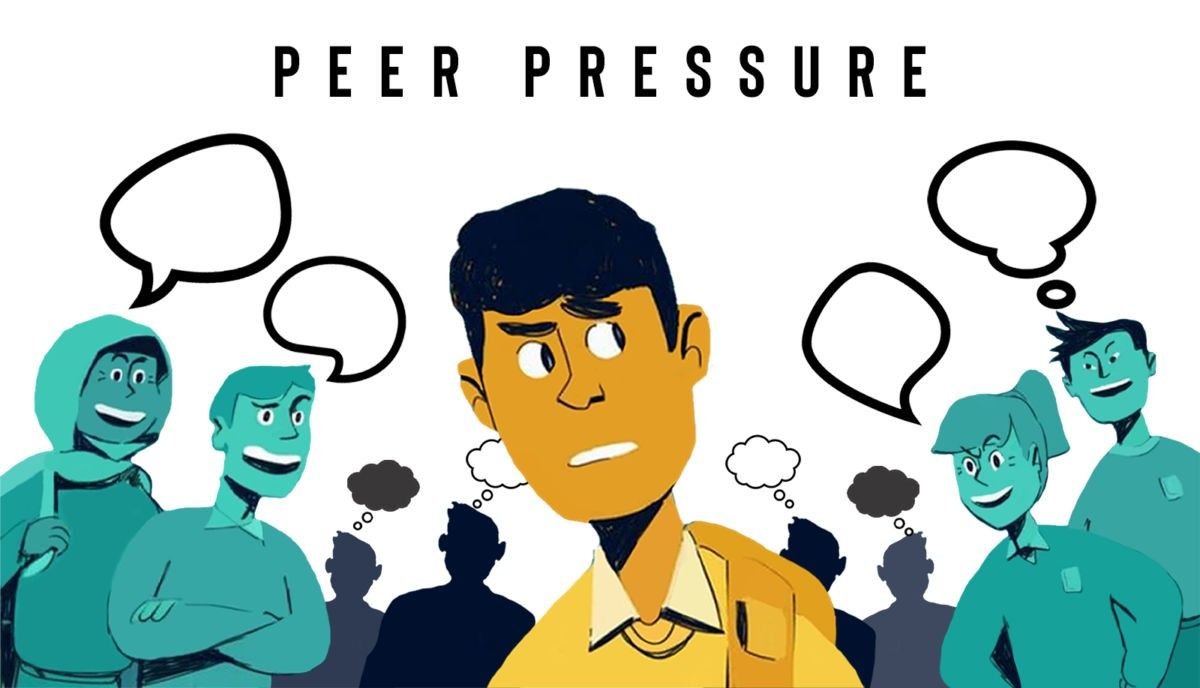
Social and relational processes also shape perceptual reality. Human perception is not formed in isolation; it develops within interpersonal environments that provide shared frameworks of interpretation. Stable relational contexts help calibrate perception through feedback, recognition, and mutual regulation.
When relational environments become invalidating, manipulative, or chronically unstable, perceptual confidence may deteriorate. Individuals may lose trust in their own interpretations or become increasingly dependent on distorted external frameworks. In such contexts, perception becomes vulnerable to fragmentation and external shaping.
Cultural systems similarly influence perception by organizing collective assumptions about meaning, danger, morality, and identity. These frameworks shape what individuals attend to, fear, value, and interpret as real. Perception is therefore always partially mediated through symbolic systems rather than emerging from raw sensory contact alone.
Neurobiologically, the shift away from reality-based perception involves altered coordination among sensory processing regions, affective systems, attentional networks, and executive regulatory structures. Under conditions of chronic stress, survival-oriented neural systems become increasingly dominant, while reflective and integrative functions lose influence.
This imbalance favors rapid interpretation over careful evaluation. The organism prioritizes speed and protection rather than accuracy and nuance. While adaptive during immediate danger, prolonged reliance on this mode gradually destabilizes perception by reducing openness to corrective information.
Hormonal and autonomic dysregulation reinforce these patterns. Chronic activation alters baseline arousal, sleep, attentional flexibility, and emotional tolerance. These physiological changes narrow perceptual range and increase susceptibility to emotionally driven interpretation.
Importantly, perception rarely stops reflecting reality completely. Even highly distorted perceptions usually contain elements derived from genuine sensory or emotional experiences. The issue is not that perception becomes entirely fabricated, but that internally generated predictions increasingly dominate the interpretive process.
This distinction matters clinically because it shifts the focus away from simply correcting “false beliefs” and toward understanding the regulatory and predictive systems sustaining distortion. Perceptual rigidity reflects underlying processes of fear, dysregulation, memory integration, and emotional prediction.
Intervention therefore requires more than intellectual correction. Simply presenting contradictory evidence is often insufficient because distorted perception is embedded within physiological and emotional systems. Effective change requires restoring flexibility to predictive processing itself.
Therapeutic approaches frequently focus on increasing tolerance for uncertainty and enhancing reflective capacity. By strengthening the ability to observe thoughts, sensations, and emotions without immediately accepting them as objective reality, individuals become less dominated by predictive distortions.
Emotional regulation is equally important. As chronic activation decreases, attentional systems become less narrowly focused on threat-consistent information. This broadening allows previously excluded sensory and relational data to re-enter awareness.
Relational safety also supports perceptual recalibration. Stable interpersonal environments provide opportunities for reality-testing through dialogue, attunement, and mutual regulation. Through these experiences, individuals gradually rebuild trust in both perception and corrective feedback.
Mindfulness-based approaches contribute by shifting attention from interpretive narratives toward immediate sensory observation. This reduces automatic fusion between prediction and perception, allowing experiences to be encountered with greater flexibility.
Ultimately, perception stops reflecting reality accurately when internally generated predictive models become more influential than ongoing sensory and relational correction. This shift emerges gradually through interactions among emotion, memory, physiology, attention, and social experience. The organism becomes trapped within increasingly self-reinforcing interpretations that prioritize emotional coherence over external accuracy.
Yet perception remains dynamic rather than fixed. Because predictive systems are shaped through experience, they can also be reshaped through new forms of regulation, relationship, and integration. Restoring perceptual flexibility does not mean eliminating interpretation altogether, since perception is always interpretive. Rather, it involves re-establishing balance between expectation and reality, allowing external experience once again to modify and refine internal models.
In this sense, perception reflects not only the external world but the state of the organism perceiving it. When regulatory systems are overwhelmed, perception narrows around prediction and survival. When integration is restored, perception becomes more open, flexible, and responsive to reality itself.