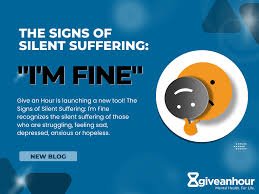
Silence is often understood as the absence of expression—a gap where words, gestures, or overt reactions might otherwise appear. Yet within psychosomatic and clinical psychological frameworks, silence is rarely empty. It can function as an active process, a form of regulation, inhibition, or adaptation. When emotional, cognitive, or relational experiences are not articulated, they do not simply disappear; they may persist in altered forms. This raises a nuanced question: how does silence, as a mode of non-expression, transform into symptom?
To explore this, it is necessary to reconsider silence not as a void but as a structured phenomenon. Silence may arise from multiple sources, including inhibition, uncertainty, lack of symbolic capacity, or learned patterns of non-expression. In each case, it represents a specific configuration of internal processes rather than a mere absence of content.
At the core of this transformation lies the relationship between experience and representation. Psychological experiences become integrated and regulated when they are symbolized—when they are translated into language, imagery, or conceptual frameworks. Symbolization allows experiences to be organized, communicated, and modulated. When this process is disrupted or incomplete, experiences may remain in a pre-symbolic state.
Pre-symbolic experiences are not accessible in the same way as articulated thoughts or emotions. They are not easily named or reflected upon, yet they retain their affective and physiological components. These components continue to influence regulatory systems, even in the absence of conscious recognition or verbal expression.
Silence, in this context, can be understood as a condition in which symbolization is limited or inhibited. This limitation may arise from developmental factors, relational environments, or situational constraints. When individuals are unable or unwilling to articulate their experiences, those experiences remain active within the system without being integrated.
One of the primary mechanisms through which silence becomes symptom involves the persistence of unprocessed affect. Emotional activation that is not expressed or regulated may continue to influence physiological and cognitive processes. Over time, this activation can stabilize into patterns that manifest as discomfort, tension, or functional disturbance.
Importantly, the inhibition of expression is not necessarily conscious. Individuals may not be aware that they are suppressing or avoiding certain experiences. Regulatory systems can operate automatically, preventing certain content from reaching awareness. This automatic inhibition contributes to the maintenance of silence.
The role of early relational experiences is particularly significant in shaping patterns of silence. In environments where emotional expression is discouraged, invalidated, or ignored, individuals may learn to inhibit articulation as a means of maintaining stability. This learned pattern becomes embedded in regulatory systems, influencing how experiences are processed throughout life.
In such contexts, silence functions as an adaptive strategy. It reduces conflict, preserves relationships, or protects the individual from overwhelming affect. However, while it may serve immediate purposes, it can also limit the capacity for integration. Experiences that are not expressed remain unresolved, creating conditions for symptom formation.
Interoceptive processes play a crucial role in this transformation. Internal signals associated with unprocessed experiences may become more prominent when they are not contextualized through symbolic frameworks. These signals may be experienced as vague discomfort, tension, or unease, lacking clear meaning.
Without a narrative or conceptual structure, these sensations may be interpreted as purely physical phenomena. The absence of symbolic linkage between sensation and experience contributes to the perception of symptoms as disconnected from psychological processes. This disconnection reinforces the persistence of silence, as the underlying experiences remain unrecognized.
Cognitive processes further influence how silence is maintained. Beliefs about expression, vulnerability, and control shape whether individuals attempt to articulate their experiences. When expression is associated with risk or inefficacy, silence may be reinforced as a preferred mode of regulation.
Over time, silence can become habitual. It is no longer a response to specific conditions but a generalized pattern of processing. Experiences are consistently inhibited before they reach awareness or expression. This habitual inhibition contributes to the accumulation of unprocessed material within the system.
Memory systems are involved in maintaining these patterns. Experiences that are not symbolized may be encoded in implicit forms, lacking narrative coherence. These memory traces can influence behavior and physiological responses without being accessible to conscious recall. Their persistence contributes to the continuity of symptoms.
Trauma provides a particularly salient example of how silence becomes symptom. Traumatic experiences often involve overwhelming activation that exceeds the capacity for processing. As a result, aspects of the experience may be dissociated from conscious awareness. Silence, in this context, reflects not only inhibition but fragmentation.
The fragments of traumatic experience may persist in sensory, affective, or procedural forms. These fragments can be reactivated by contextual cues, producing responses that are experienced as symptoms. The absence of narrative integration prevents these responses from being recognized as connected to past experience.
The transformation of silence into symptom is also influenced by social context. Interpersonal environments that do not support expression may reinforce silence. When attempts at articulation are met with misunderstanding or dismissal, individuals may retreat into non-expression. This retreat limits opportunities for integration and reinforces the persistence of symptoms.
Cultural frameworks contribute to this process by shaping norms around expression. In some contexts, emotional articulation may be discouraged, leading individuals to rely on alternative modes of expression. Physical symptoms may become a socially acceptable way of conveying distress, further reinforcing the link between silence and symptom.
Neurobiologically, the inhibition of expression involves networks that regulate attention, awareness, and emotional processing. These networks can suppress the activation of certain representations, preventing them from entering conscious awareness. While this suppression may reduce immediate distress, it does not eliminate underlying activation.
The continued presence of this activation influences other systems, including those involved in physiological regulation. Over time, these influences can manifest as persistent patterns of discomfort or dysfunction. The symptom becomes a channel through which unarticulated experiences are expressed.
Hormonal and immune processes may also be affected by prolonged inhibition. Chronic activation associated with unprocessed experiences can alter regulatory balance, contributing to broader patterns of dysregulation. These changes illustrate how silence can have systemic effects beyond immediate perception.
The persistence of symptoms in the context of silence reflects the stability of the underlying patterns. Once established, these patterns operate automatically, maintaining the separation between experience and expression. This separation allows symptoms to continue without resolution.
Intervention requires addressing both the inhibition of expression and the integration of underlying experiences. Therapeutic approaches often focus on creating conditions in which articulation becomes possible and safe. This involves not only encouraging expression but also supporting the development of symbolic capacity.
Language plays a central role in this process. The ability to name and describe experiences allows for their organization and regulation. As individuals develop more nuanced ways of articulating their internal states, previously silent experiences can become integrated into conscious awareness.
Experiential approaches may facilitate access to pre-symbolic material by focusing on sensations, imagery, or affective states. By bringing attention to these elements, it becomes possible to bridge the gap between implicit experience and explicit representation. This bridging supports the transformation of symptom into articulated experience.
Emotional regulation techniques help manage the activation associated with previously inhibited material. As individuals become more capable of tolerating and processing affect, the need for inhibition decreases. This reduction allows for greater openness to experience and expression.
Importantly, the process of breaking silence must be gradual. Sudden exposure to unprocessed material can be overwhelming, particularly when it is associated with past trauma. Effective intervention involves pacing and support, allowing integration to occur without exceeding regulatory capacity.
The question of how silence becomes symptom ultimately reveals the importance of representation in psychological functioning. Experiences that are not symbolized remain active within the system, influencing physiological and behavioral patterns. Silence does not eliminate experience; it alters its form.
In this sense, symptoms can be understood as expressions of what has not been articulated. They are not random or meaningless but reflect underlying processes that have not been integrated into symbolic frameworks. By addressing these processes, it becomes possible to transform symptoms into experiences that can be understood and regulated.
Thus, silence becomes symptom when the pathways of expression and integration are inhibited. The organism continues to process experience, but without the structures necessary for articulation. Through this transformation, unspoken experiences find alternative channels, manifesting as patterns that persist until they are recognized and integrated.